



Brass Inlay Dressing Box
A brass inlay dressing box is a fitted receptacle for personal valuables, combining rich hardwoods with precise metalwork for travelling or tabletop use.
Brass Inlay Dressing Box
When you search for a brass inlay dressing box, you encounter pieces intended for holding jewellery, cosmetics, and personal treasures during the Regency, Victorian, and Georgian periods. These containers often double as vanity cases or writing companions, equipped with internal trays, compartments, and sometimes glass bottles.
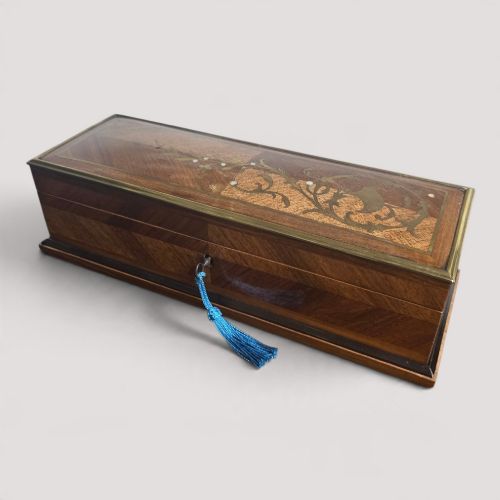
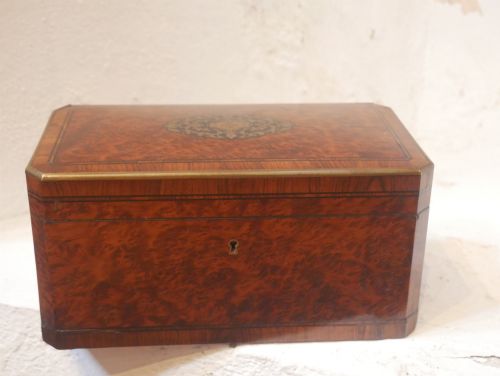
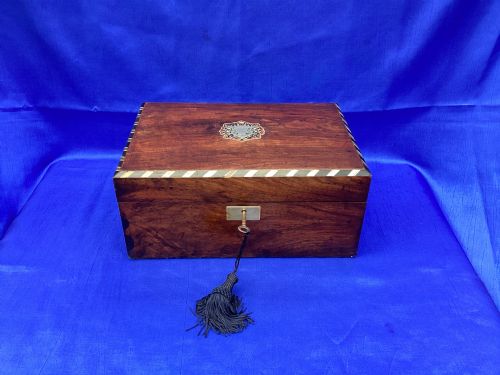
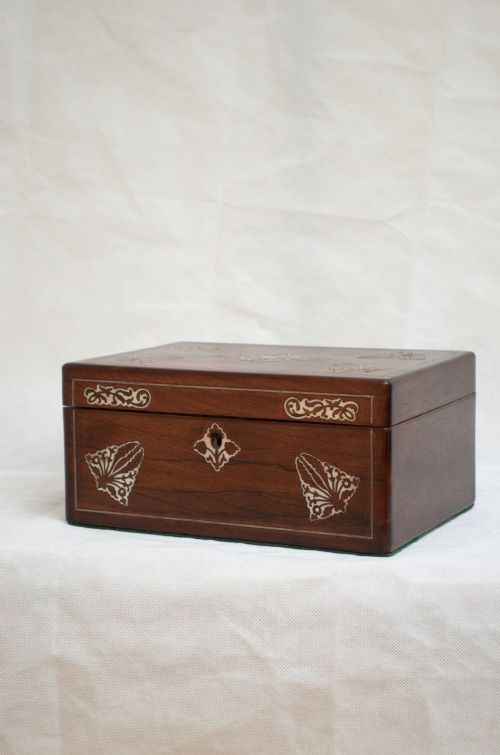
The version you are most likely to meet on this page is a nineteenth century rosewood or coromandel box featuring brass banding, cut brass inlay, or mother-of-pearl accents. Many examples retain velvet linings and working keys, reflecting the careful storage habits of past owners.
What varies in quality
The sophistication of the brass inlay and the choice of primary timber separate standard containers from exceptional examples. Dense exotic woods like coromandel and intricate cut brass work indicate a higher grade of production by skilled workshops.
The completeness and preservation of the fitted interior also determine standard. Boxes retaining original velvet linings, trays, working keys, and matching glass perfume scent bottles demonstrate superior preservation.
Brass Inlay Dressing Box Retail Price Guide 2026
Typical asking prices for brass inlay dressing box among the pieces listed under this phrase on Sellingantiques today, from the lower quarter to the upper quarter. They describe what is for sale here now, not the wider market.
One listed razor set comes from The Waldorf Hotel.
Tahan Paris·H Mitchell·Lund Of Cornhill·JH Browne
The Brass Inlay Dressing Box Glossary
- Coromandel
- A dense, heavily figured Southeast Asian timber prized for dark striping. Cabinet makers used this wood for high-status nineteenth century boxes.
- Boulle
- A method of marquetry using brass and tortoiseshell or similar materials, named after a French royal cabinet maker. This technique adorns decorative caskets.
- Rosewood
- A heavy, oily timber with deep reddish-brown tones and dark grain patterns. It served as a primary material for nineteenth century table cabinets.
- Vanity box
- A compartmented container designed for grooming accessories, toiletries, and jewellery. These objects often include mirrors and glass bottles.
- Mother-of-pearl
- The iridescent inner layer of certain mollusc shells, shaped into thin plaques for inlay. It provides white contrast against dark hardwoods.
Brass Inlay Dressing Box: Frequently Asked Questions
What fits inside a brass inlay dressing box?
These boxes accommodate personal items such as rings, necklaces, and small trinkets within custom compartments and lift-out trays. Some variations incorporate glass scent bottles and razor sets.
Larger travelling vanity cases provide space for grooming tools and correspondence materials alongside jewellery compartments.
How do I care for rosewood and coromandel?
Keep the wood away from direct sunlight and sudden temperature changes to prevent the timber and brass inlay from warping or separating. Dust gently with a dry cloth and avoid harsh chemical polishes.
Condition the wood sparingly with appropriate conservation wax when the surface appears dry.
How do I distinguish Regency from Victorian boxes?
Regency boxes often feature crisp, linear cut brass inlay set into dark rosewood or satinwood, reflecting neoclassical design tastes from the early nineteenth century. They tend to have restrained proportions and architectural profiles.
Victorian examples frequently display bolder brass banding, mother-of-pearl accents, and more elaborate internal lifting mechanisms for trays and compartments.
Were these boxes used by men or women?
Both gentlemen and ladies utilised fitted boxes, though the internal layout often reveals the intended owner. Ladies' dressing cases typically emphasise jewellery storage, perfume bottles, and trinket trays.
Gentlemen's cabinets often incorporate compartments for razors, writing equipment, and smaller personal effects.