
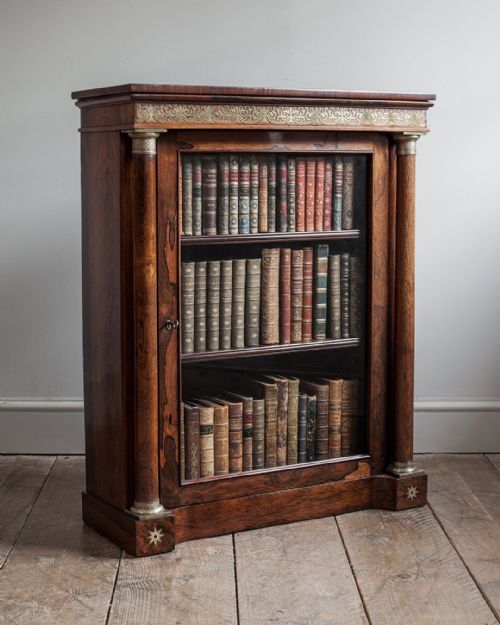
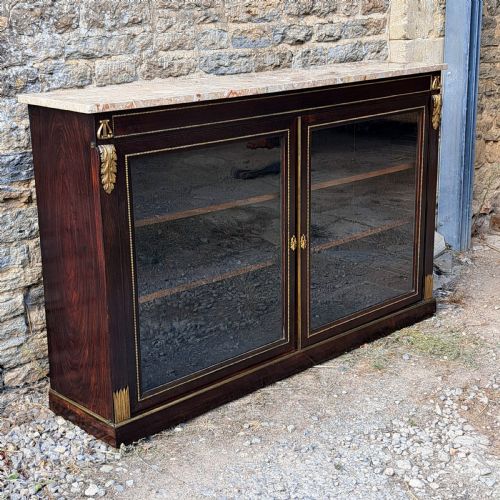
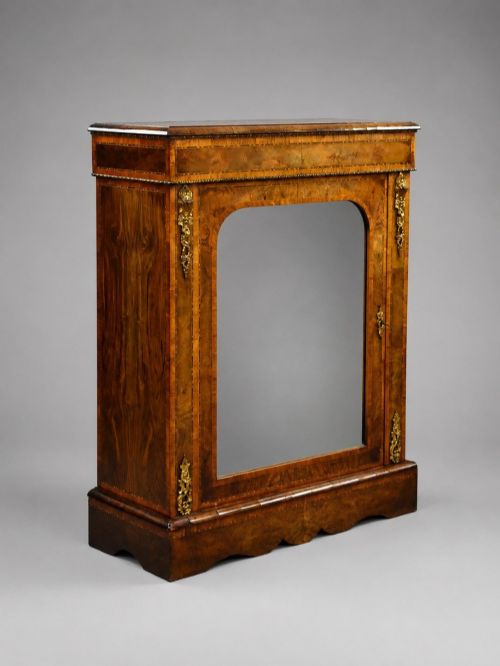
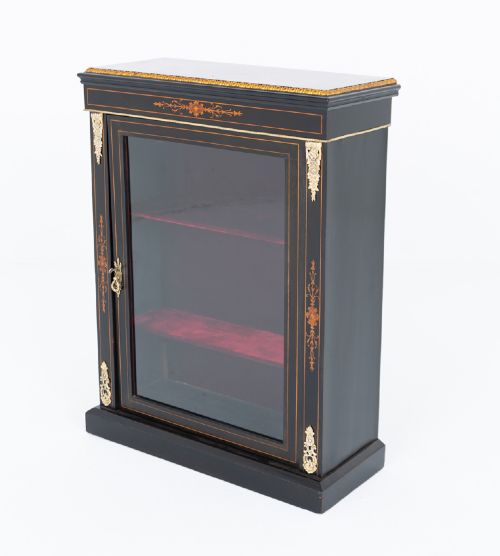



Brass Inlay Bookcase
A brass inlay bookcase brings together figured timbers and precise metalwork, offering a refined setting for a collection of books.
Brass Inlay Bookcase
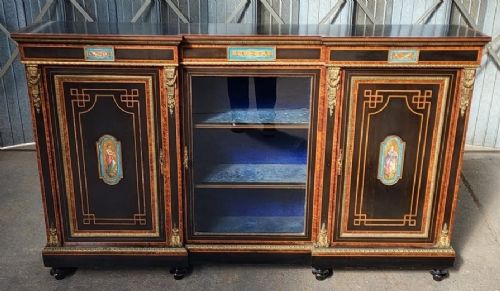
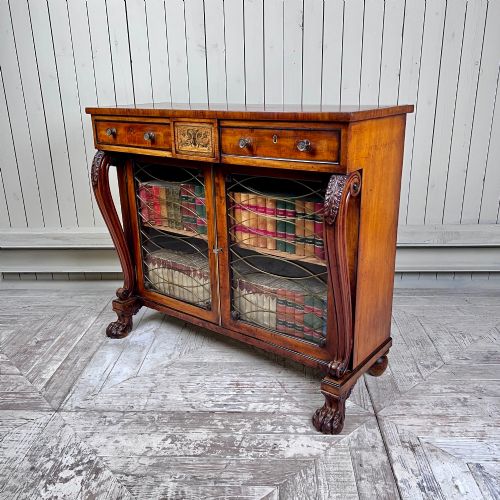
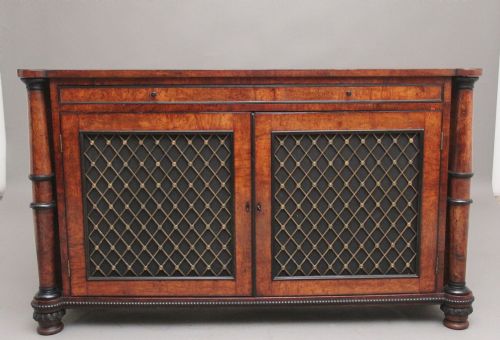
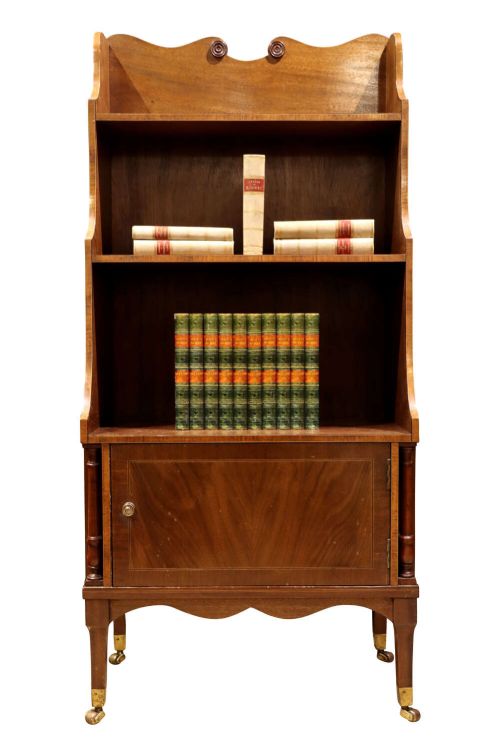
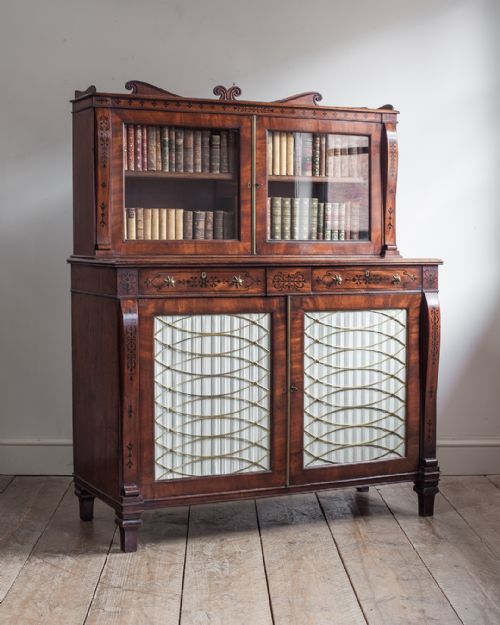
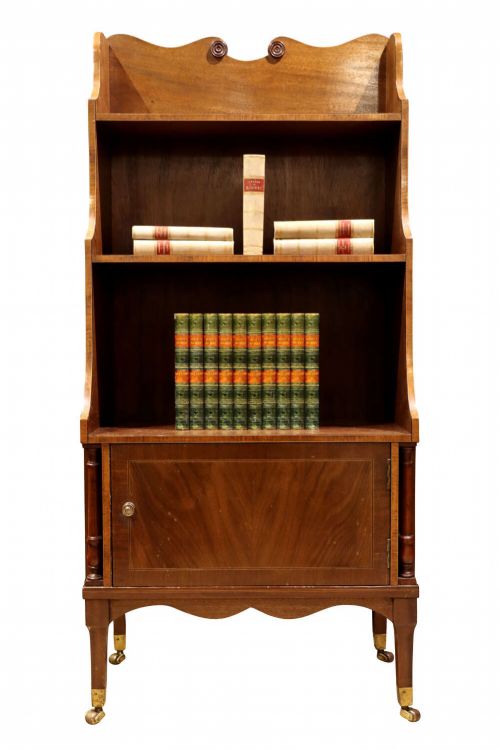
A brass inlay bookcase appears in several distinct architectural forms, ranging from open display shelves to enclosed side cabinets and chiffoniers. The pieces span the Regency, Victorian, and Edwardian periods, with frequent examples emerging from the nineteenth century.
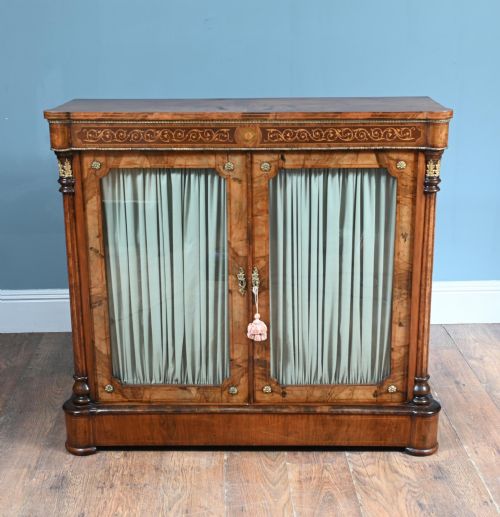
Buyers will most commonly encounter rosewood and mahogany open bookcases or glass-fronted pier cabinets embellished with fine brass lines and mounts. These items serve to organise volumes while introducing warmth and pattern to a room.
Originating in English workshops and French cabinets, the selection includes breakfront library pieces and compact side cabinets designed for domestic interiors. Each format utilises timber carcasses combined with metal details to create a structured silhouette.
Materials and technique
Cabinet makers constructed the primary carcasses using dense tropical and domestic hardwoods, specifically selecting rosewood, mahogany, walnut, and ebonised wood for their deep natural colour and grain. These timbers provide a stable foundation for intricate surface decoration.
The characteristic brass inlay involves cutting precise channels into the timber surface to receive thin strips or elaborate brass motifs, often accompanied by ormolu mounts and ebony stringing. Glass panels and marble tops appear on selected display cabinets and revolving book tables.
One exceptional piece includes a novel coromandel book slide designed to keep your favourite volumes upright on a desk.
Distinctions in construction
The standard of a piece rests on the precision of the metal inlay and the quality of the timber selection. Sharp, flush fitting between the brass lines and the surrounding wood indicates disciplined workshop practice.
Proportion and secondary timbers further separate standard examples from finer commissions. Solid brass mounts, well-figured veneers, and original castors contribute to the integrity of an antique cabinet.
Collinson & Lock London·Edwards and Roberts
The Brass Inlay Bookcase Glossary
- Chiffonier
- A low cabinet featuring shelves or enclosed storage below, frequently fitted with a raised superstructure. It functions well for housing modest book collections.
- Pier cabinet
- A narrow display cabinet designed to fit wall spaces between windows. These pieces often incorporate glass doors and brass mounts.
- Ebonised wood
- Timber treated with a dark finish to imitate ebony. It provides a stark contrast against bright brass inlay.
- Ormolu
- Gilded bronze cast into decorative mounts and appliqués. It frequently accents the corners and panels of nineteenth-century cabinets.
- Breakfront
- A piece of furniture where the central section projects forward from the flanking sides. This layout adds architectural depth to large bookcases.
Brass Inlay Bookcase: Frequently Asked Questions
What periods do these bookcases date from?
The pieces span the Regency, Georgian, Victorian, and Edwardian eras, with a strong concentration from the nineteenth century.
Maker styles from these periods employ rosewood, mahogany, and ebonised timber combined with brass metalwork.
How were these cabinets used originally?
They functioned primarily for the storage and display of valued library volumes and decorative objects in domestic drawing rooms.
Enclosed cabinets kept dust from fine bindings, while open variants allowed easy access to frequently read books.
How do I identify brass inlay work?
Brass inlay consists of thin metal strips or cast motifs set directly into channels carved into the timber surface.
On finer examples, the metal sits completely flush with the surrounding rosewood or mahogany veneer.
What timbers appear most frequently?
Rosewood and mahogany form the base for the majority of these cabinets, often accompanied by ebony stringing and walnut.
Ebonised wood also appears as a dark ground to highlight bright brass mounts.