


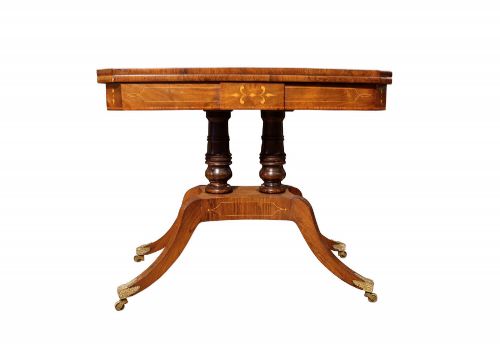
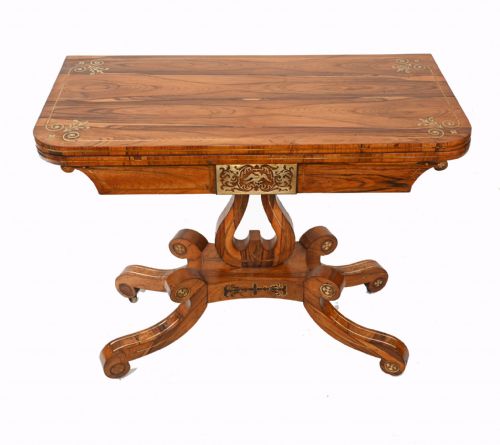
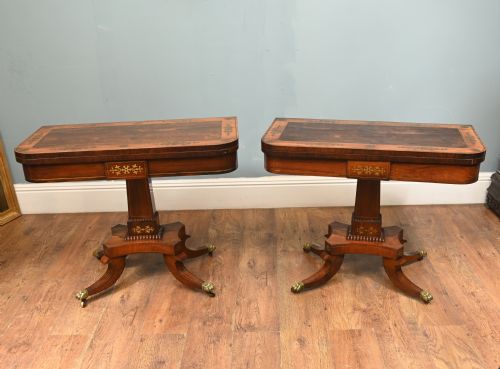


Brass Inlaid Rosewood Furniture
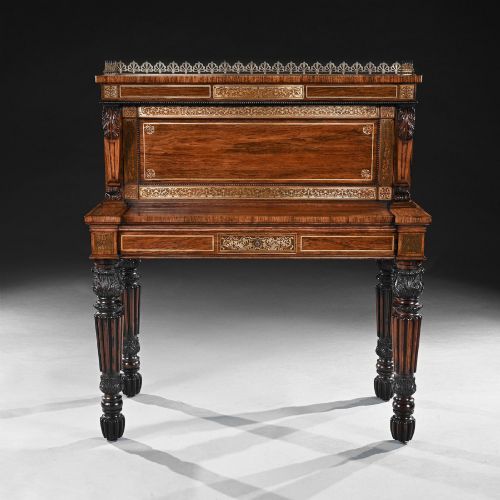
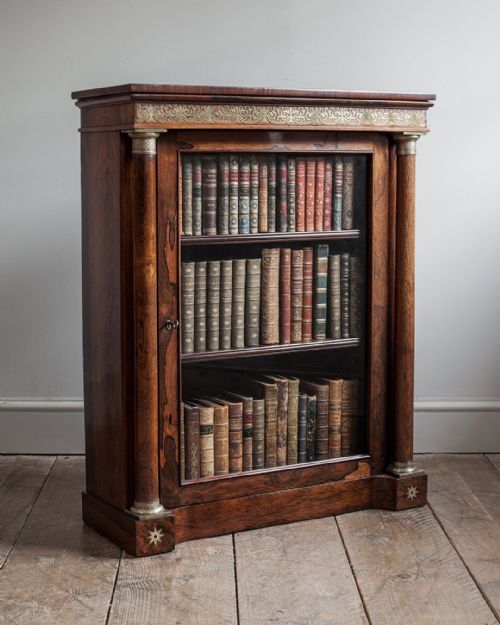
Brass inlaid rosewood furniture combines dark tropical timber with bright metallic ornament, creating formal tables and cabinets suited to period interiors.
Brass Inlaid Rosewood Furniture
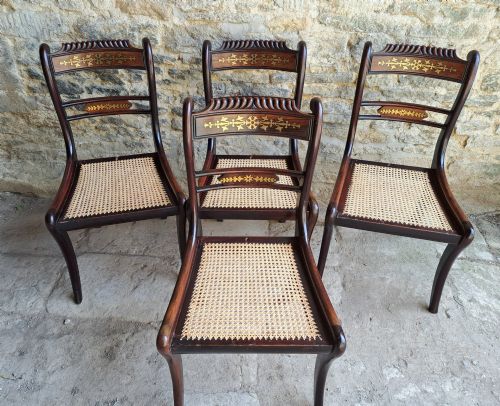
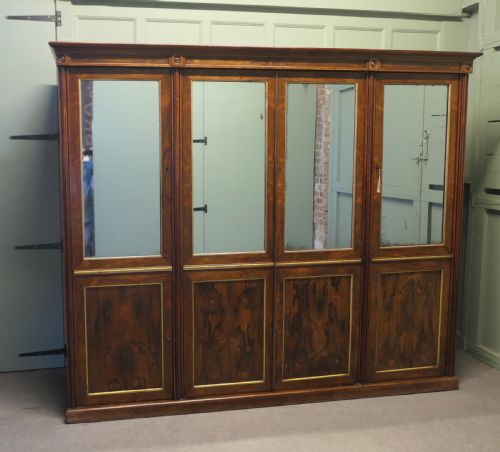
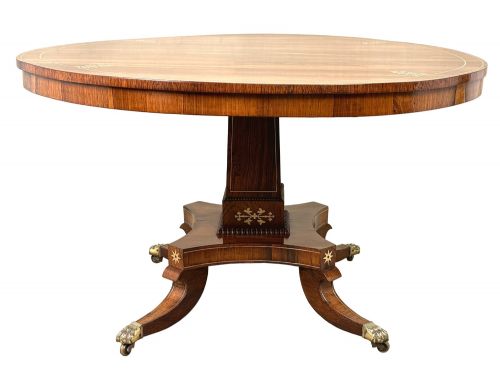
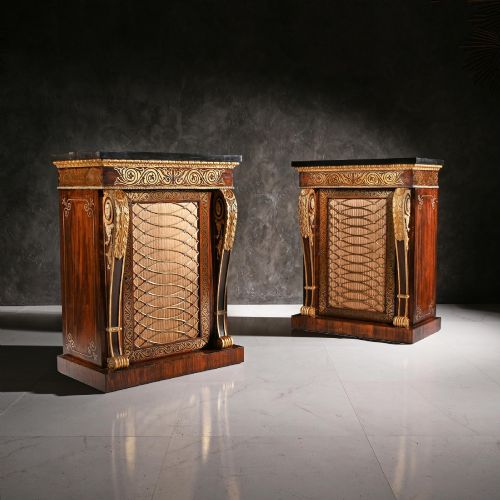
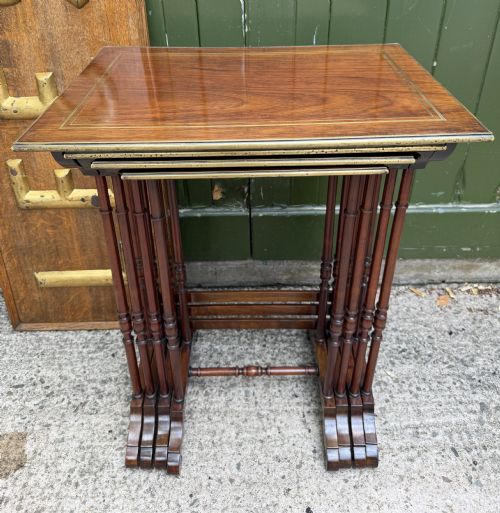
Brass inlaid rosewood furniture chiefly encompasses Regency and 19th Century tables and cabinets designed for formal reception rooms. Card tables, centre tables, and sofa tables appear frequently alongside dining chairs and side cabinets.
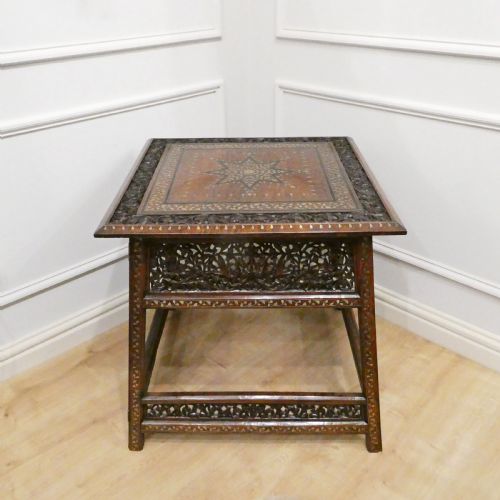
The selection ranges from British Regency workshops to Anglo-Indian and Hoshiarpur productions, reflecting varied geographic origins within the same overarching material palette. Pieces span from the early 19th Century through later Victorian revivals.
Materials and Technique
Craftsmen utilised dense dark rosewood as a dark foundation for intricate brass inlay and cut brass mounts. Ormolu, glass, and marble occasionally supplement the primary timber and metal construction.
Joinery techniques combined traditional cabinet making with precise metal recessing, securing thin brass lines and motifs directly into the dense wood grain.
Listings span from the 18th Century through 1930, with Regency periods dominating the selection of rosewood and brass furnishings.
Craftsmanship and Proportion
The standard of a piece rests on the precision of the metal inlay and the balance of the proportions. Crisp brass work integrated flush with the timber distinguishes superior examples from simpler executions.
Attribution to documented makers or specific workshops elevates the standing of certain card tables and writing desks, reflecting the skill of period cabinet makers.
Gillows Oxford Street Workshop·George Bullock·Louis Constantin Le Gaigneur·Donald Ross
The Brass Inlaid Rosewood Furniture Glossary
- Rosewood
- A dense, heavy tropical timber featuring pronounced dark grain patterns. It serves as the primary structural and visual base for these furnishings.
- Card Table
- A folding table designed for gaming and social use, frequently featuring a rotating or swing top with baize lining.
- Sofa Table
- A rectangular table traditionally positioned in front of or beside a sofa, typically fitted with small drop leaves and drawers.
- Sabot
- A metal sleeve or mount fitted to the foot of a table or cabinet leg for protection and decoration.
- Compactum
- A large multi-functional wardrobe or linen press designed for efficient clothing storage.
Brass Inlaid Rosewood Furniture: Frequently Asked Questions
How do I date brass inlaid rosewood furniture?
Dating relies upon stylistic markers such as Regency furniture proportions, sabots, and leg designs. Examining the construction methods inside drawers and cabinets also assists in establishing the period.
Peculiarities in brass cutting techniques and secondary timbers offer further clues regarding whether an item originates from the early 19th Century or a later Victorian revival.
Where were these pieces originally placed?
These items belonged in principal reception rooms, libraries, and drawing rooms of grand houses. Card tables and sofa tables occupied central spaces for entertaining guests.
Cabinets and bookcases stood against perimeter walls to house books, ceramics, and decorative objects, combining display function with formal presence.
How should I care for rosewood surfaces?
Maintaining rosewood requires consistent indoor humidity levels and protection from direct sunlight to prevent timber splitting and fading. Gentle dusting with a dry lint-free cloth preserves the polished finish.
Harsh chemical polishes damage both the wood and the flush brass inlay, so mild cleaning methods suit historical timber best.
What is Anglo-Indian furniture?
Anglo-Indian pieces reflect British design commissions executed by craftsmen in India using local dense timbers. These items combine familiar European forms with distinct regional carving and inlay traditions.
Such works demonstrate stylistic exchange between British collectors and foreign workshops during the 19th Century.