
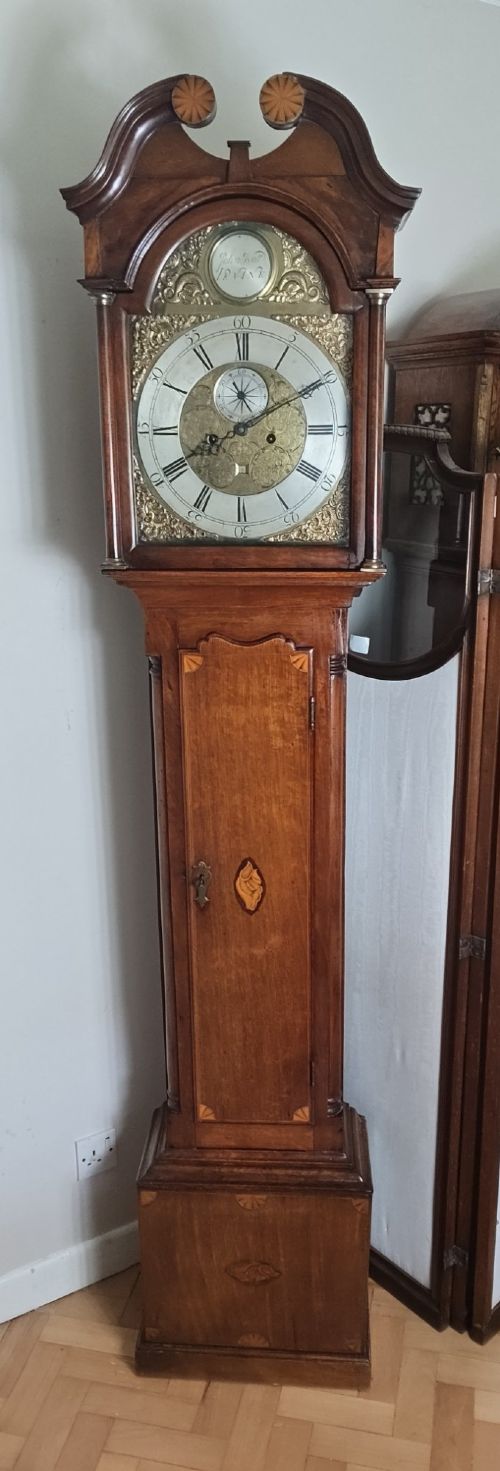
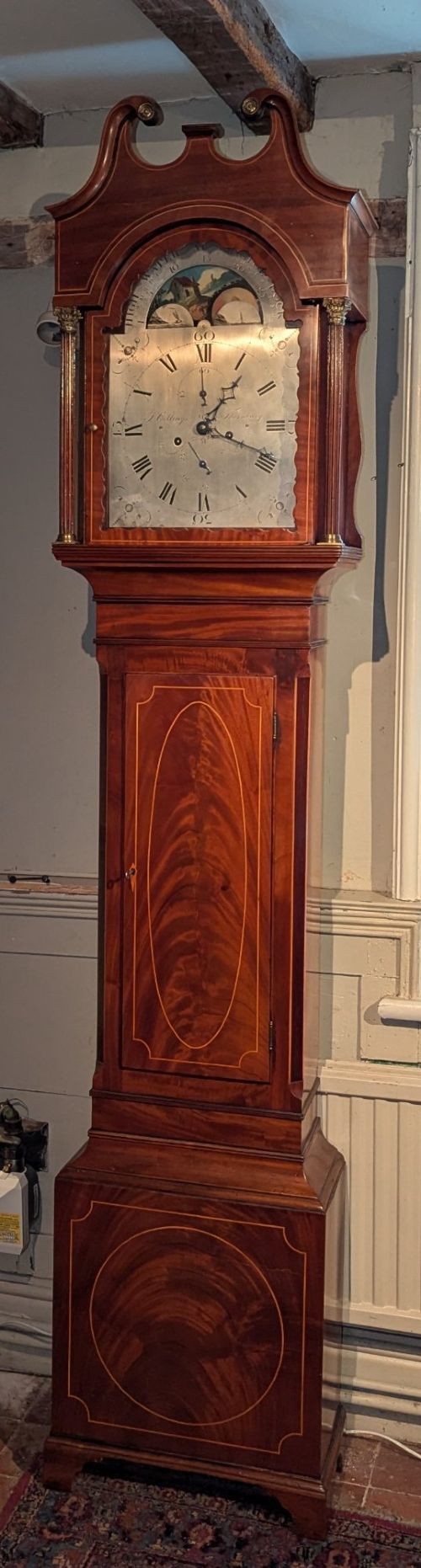
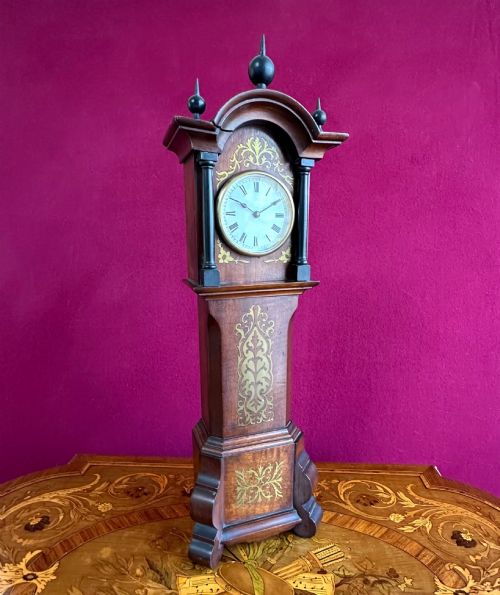
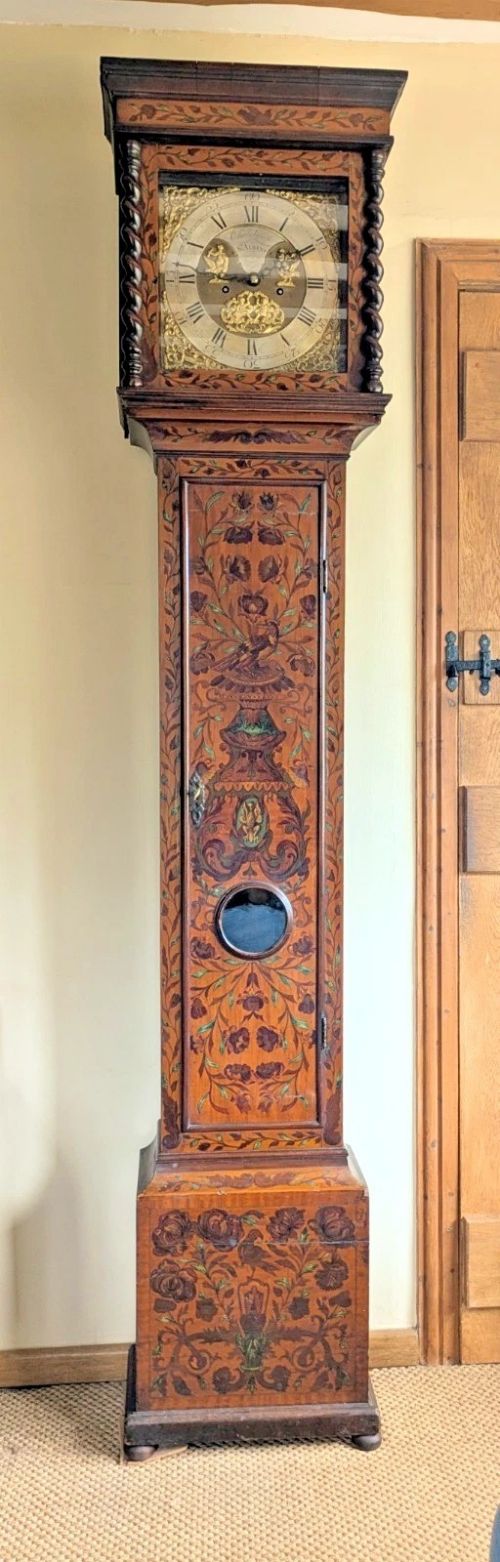
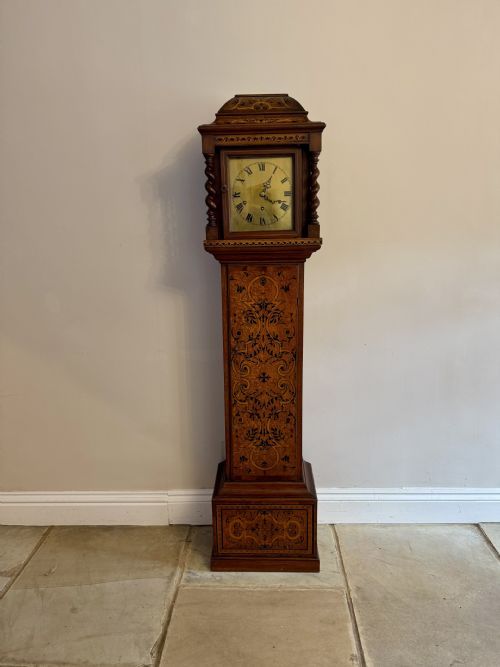


Brass Inlaid Longcase Clock
A brass inlaid longcase clock combines mechanical precision with cabinet-maker artistry, anchoring a room with centuries of rhythm.

Brass Inlaid Longcase Clock
A brass inlaid longcase clock stands tall as a floor-standing timepiece, enclosing a weighted movement within a timber case. These pieces emerge primarily from the seventeenth, eighteenth, and nineteenth centuries, spanning Georgian, Regency, and Edwardian periods.
The most common examples on this page are mahogany cases featuring brass dial work and delicate inlay, alongside oak and walnut variations. Makers from London, provincial towns, and Scotland contributed regional dials and movements to this tradition.
Grandmother and grandfather clocks appear in both full height and scaled-down proportions, housing eight-day movements, moon phases, or musical chimes. The survival of original dials and cabinetry defines the core of what is available.
Materials and construction
Cabinet-makers constructed cases using solid timbers such as mahogany, walnut, and oak, often applying contrasting satinwood inlay or floral marquetry. Brass formed the dial plates, spandrels, and bezel rings, while steel was shaped for the intricate interior gear trains and springs.
Glass protected the dial behind a hinged door on the hood, allowing light to reach the engraved brass face. Timber panels were joined with traditional cabinetry methods to house the heavy hanging weights safely within the trunk.
Tidal dials hidden inside some Scottish and provincial clocks prove that past owners worried just as much about the local harbour as they did about dinner.
Gradations in craftsmanship
Quality separates standard regional work from the specialised output of named metropolitan makers through the crispness of dial engraving and the depth of timber figure. Finer examples display intricate marquetry panels and sophisticated movements such as quarter-striking or moon phases.
The integrity of the case construction and the retention of original brass elements dictate the standing of a piece. Retaining signed dial plates by recorded clockmakers elevates the historical standing of the entire clock.
Charles Louch St Albans·William Moon London·Nathaniel Pyne·David Morice of Auchtermuchty·Edward Stanton·Peter Wise London·Henry Massy of London·Richard Baker London·Joseph Lum·G Brown Edinburgh·Sam Robson·Iames Richards Liverpool
The Brass Inlaid Longcase Clock Glossary
- Longcase clock
- A tall, weight-driven pendulum clock enclosed in a wooden case, commonly known as a grandfather clock.
- Marquetry
- Decorative inlay work where pieces of wood, brass, or shell are fitted into a veneer to form geometric or floral patterns.
- Moon dial
- A secondary dial on the clock face that tracks the lunar cycle and phases of the moon.
- Spandrel
- The ornamental corner piece on a clock dial, often cast in brass and chased with floral or scroll motifs.
- Quarter-striking
- A movement mechanism that chimes the quarters of the hour in addition to tolling the full hours.
Brass Inlaid Longcase Clock: Frequently Asked Questions
How do I wind an eight-day longcase clock?
Use the winding key to gently lift the weights via the cords or chains until they reach the top of the trunk. Care must be taken not to overwind the movement.
Ensure the pendulum remains undisturbed during the process to keep the beat even and accurate.
Why does the clock run fast or slow?
Pendulum regulation controls the speed of the clock through a small nut on the suspension rod. Turning the nut raises or lowers the bob to adjust the timekeeping.
Temperature changes in the room can also affect timber cases and metal pendulums, requiring minor seasonal tweaks.
How do I tell an 18th-century clock from a 19th-century one?
Eighteenth-century examples often feature square brass dials with cast spandrels and simpler architectural hoods. Nineteenth-century versions frequently introduce arched painted or brass dials with more robust mahogany veneers.
Regional cabinet styles and signature engravings on the movement backplate also help pinpoint the era.
Where should I place a longcase clock in my home?
Position the clock against a sturdy interior wall away from direct sunlight, central heating vents, and damp doorways. Stability prevents vibrations from interfering with the pendulum swing.
Level the base carefully on firm flooring so the anchor and escape wheel maintain an even beat.