
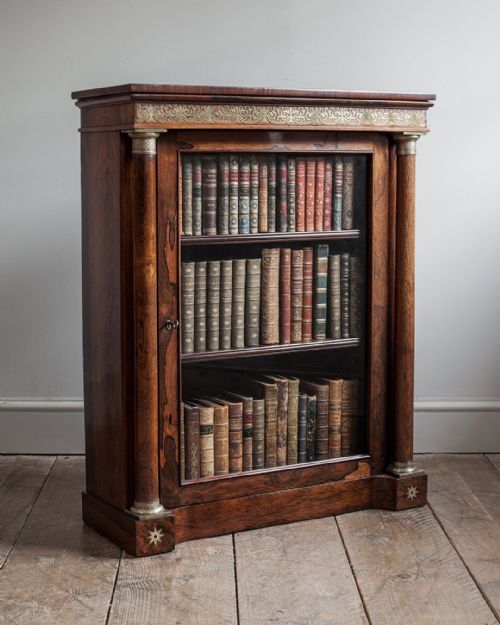
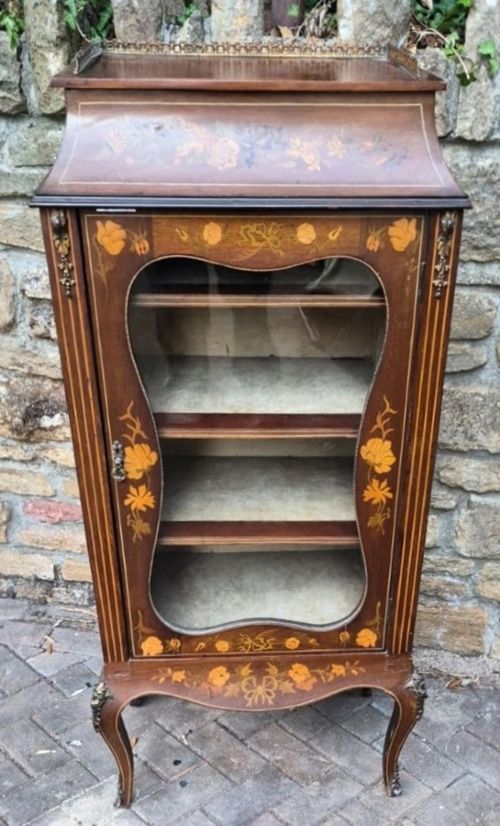
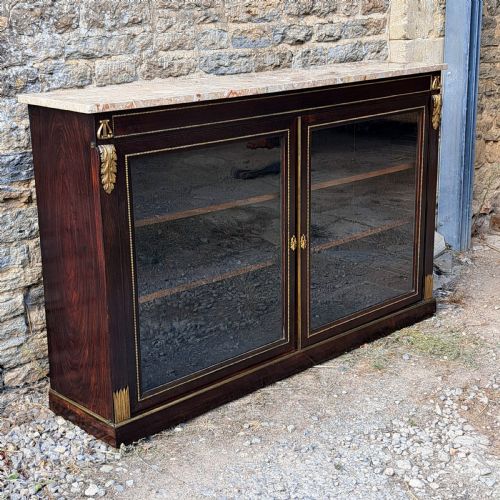
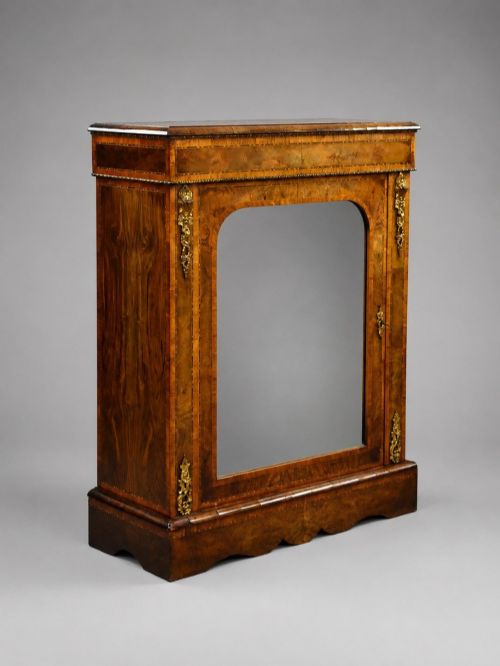



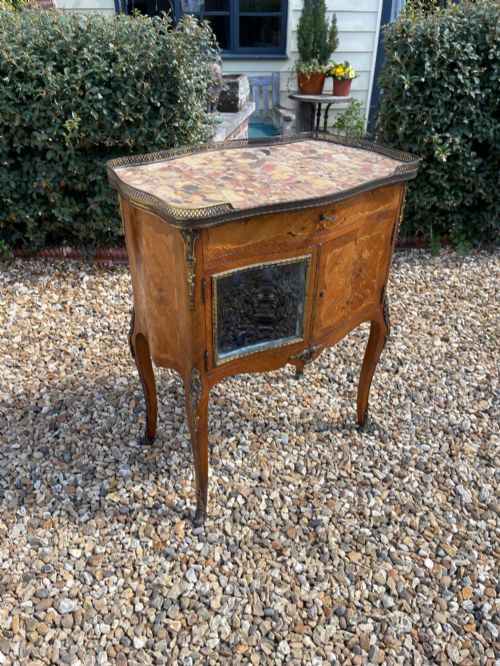
Brass Inlaid Display Cabinet
A brass inlaid display cabinet brings refined timber and gleaming metalwork together to showcase treasured objects inside a room.
Brass Inlaid Display Cabinet
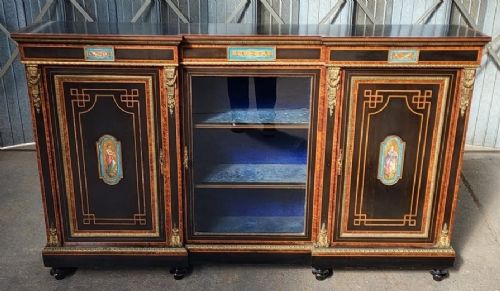
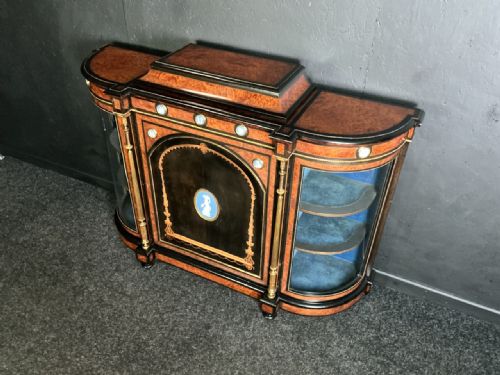
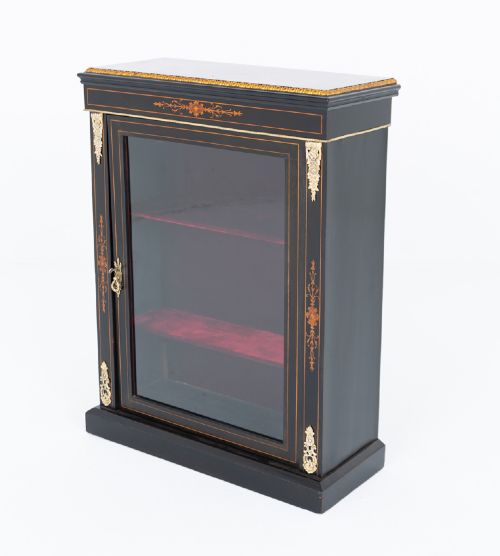
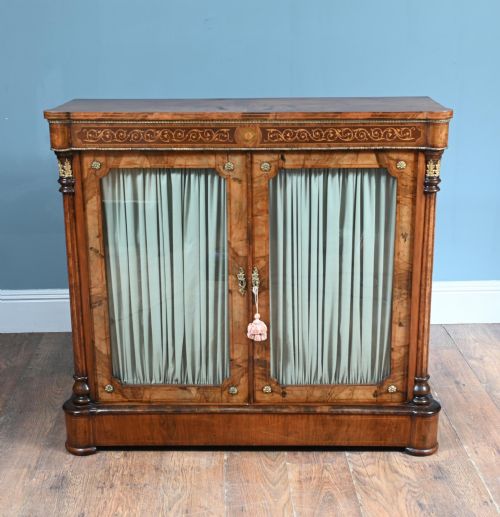
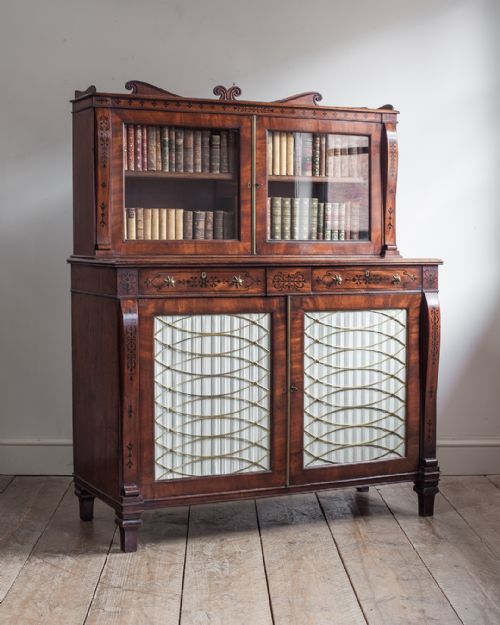
A brass inlaid display cabinet is a storage and viewing piece designed to hold books, ceramics or curiosities behind glass panels. The selection combines freestanding display cases, breakfront credenzas, and compact pier cabinets intended for drawing rooms.
Most examples originate from the nineteenth century, spanning Regency, Victorian, and Edwardian periods, alongside French Napoleon III and Louis XV revival forms. Makers and workshops utilised dense hardwoods like rosewood, mahogany, walnut, and ebonised timber as a dark ground for metal decoration.
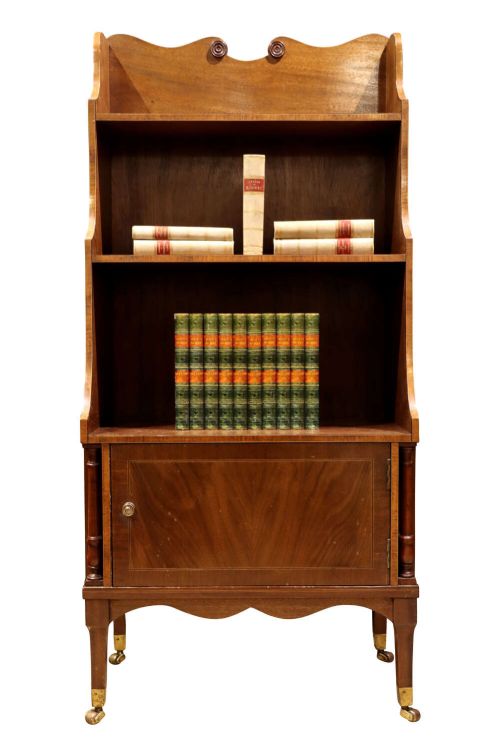
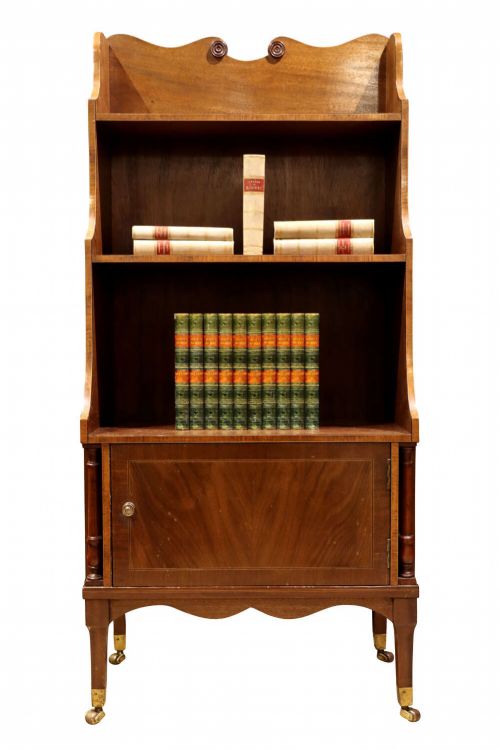
Buyers encounter various configurations, from narrow single door pier cabinets to large three door credenzas and open bookcases fitted with brass castors. Many incorporate glazed doors, shelving, and mirrored backs to enhance the internal light.
How they were made
Cabinets are constructed from a sturdy timber carcass veneered in figured rosewood, mahogany, walnut, kingwood, or amboyna, providing a rich background for inlay work. Artisans set thin brass lines and elaborate marquetry motifs directly into the wooden surface.
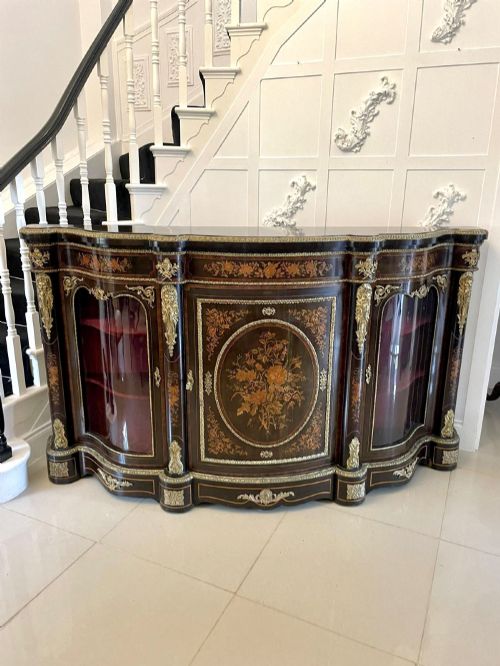
Metal components extend beyond flat inlay to cast ormolu mounts, brass castors, and Boulle work combining brass with tortoiseshell. Glazing bars divide glass panels into geometric or curved panes, while interior spaces utilise adjustable wooden shelving.
The archive and active stock include Victorian, Regency, Edwardian, and French Napoleon III periods.
What varies in quality
Quality rests upon the precision of the brass inlay work and the depth of figure in the underlying timber veneer. Sharply cut brass lines sit flush with the wood, whereas lesser execution shows gaps or uneven filling.
Collinson and Lock of London·Edwards and Roberts
The Brass Inlaid Display Cabinet Glossary
- Ormolu
- Gilded bronze mounts applied to cabinet furniture for decorative accent. These metal ornaments frame doors and corners on Victorian and French revival pieces.
- Boulle
- Marquetry technique utilising brass and tortoiseshell cut in contrasting patterns. This French method decorates ebonised surfaces on nineteenth century credenzas and vitrines.
- Pier Cabinet
- A narrow freestanding cabinet designed to fit against the wall space between windows. These pieces often feature glass doors to display small collectibles.
- Credenza
- A low cabinet form frequently fitted with three doors and central display space. Victorian and French examples often include marquetry and ormolu mounts.
- Vitrine
- A glass fronted display cabinet intended for the presentation of porcelain and curiosities. Many nineteenth century examples stand on slender legs or plinth bases.
- Marquetry
- Decorative veneer patterns formed from pieces of wood, brass, and other materials. Craftsmen assemble these patterns to create floral or geometric designs across the cabinet front.
Brass Inlaid Display Cabinet: Frequently Asked Questions
How do I style a display cabinet at home?
Place the cabinet against a principal wall in a drawing room or dining space where natural light catches the glass doors and brass details. Group collections of ceramics, glassware or small books inside to maintain a balanced visual arrangement.
Allow surrounding furniture to complement the dark wood tones, whether rosewood, mahogany or ebonised timber. Keep the top surface uncluttered to let the proportions and inlaid details remain the focal point.
What is the difference between a pier cabinet and a credenza?
A pier cabinet is typically a tall, narrow single door case designed to occupy a specific wall pier between windows. These upright forms suit compact corners and smaller collections.
A credenza is a wider, lower sideboard style cabinet featuring multiple doors, often with sweeping serpentine or breakfront shapes. These larger pieces provide substantial surface area and storage capacity.
Can I adjust the shelves inside an antique cabinet?
Many nineteenth century cabinets feature fixed wooden shelving systems built directly into the structural interior. Later or higher grade examples sometimes incorporate pegged supports for height adjustment.
Review the internal construction before planning to store oversized volumes or tall objects. Do not force alterations into original timber housings.
How do I distinguish Regency from Victorian cabinets?
Regency pieces dating from the early nineteenth century favour architectural restraint, clean linear brass stringing, and rich rosewood or mahogany grains. The forms reference classical proportions and simpler neoclassical motifs.
Victorian and later revival pieces often introduce heavier ormolu mounts, elaborate floral marquetry, ebonised finishes, and Boulle work. The decorative vocabulary becomes denser and more eclectic towards the middle and late nineteenth century.