
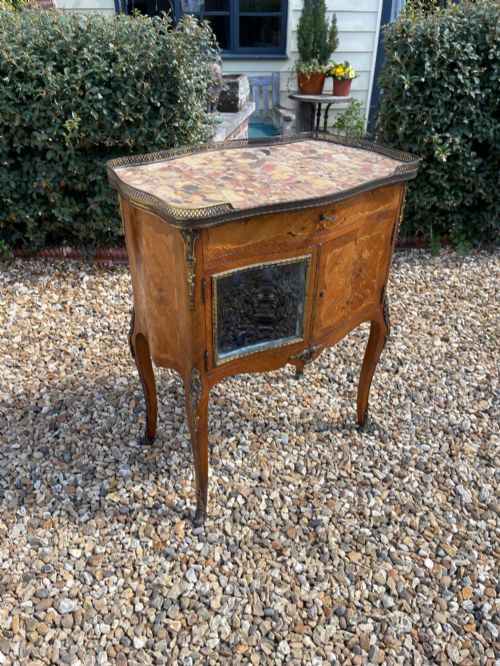


French Brass Inlay Cupboard
These french brass inlay cupboard pieces bring unmistakable continental elegance into a room through meticulous metalwork and rich timber.
French Brass Inlay Cupboard
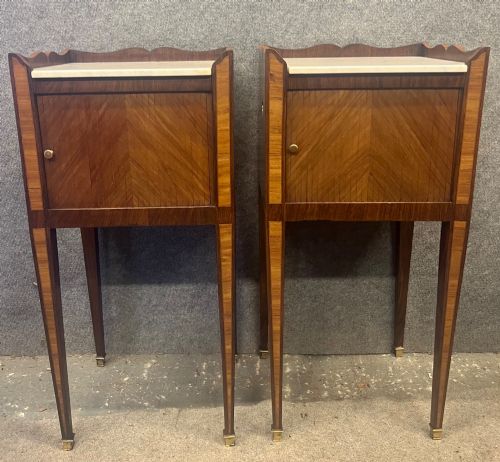
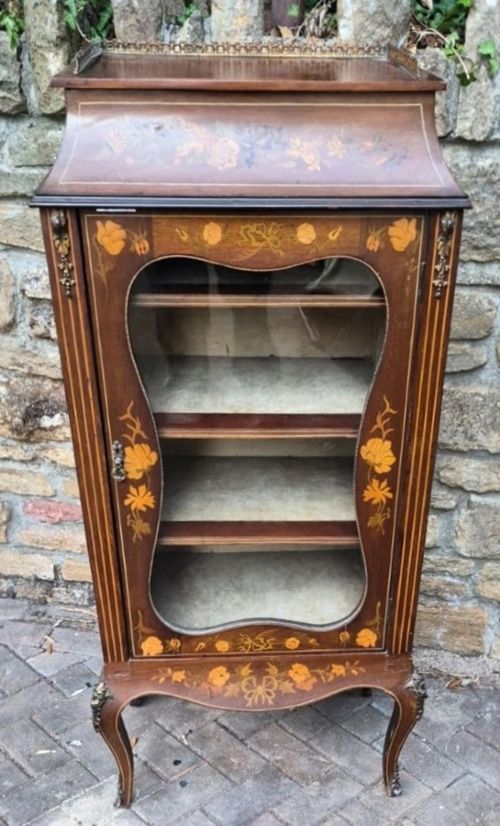
When you search for a french brass inlay cupboard, you encounter decorative storage furniture spanning the nineteenth century up to the nineteen-twenties. These pieces take forms such as side cabinets, display cabinets, bedside tables, pier cabinets, console tables, and credenzas.
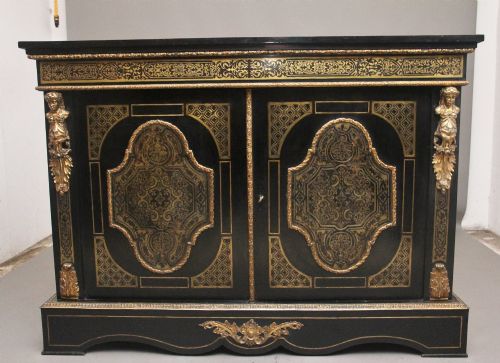
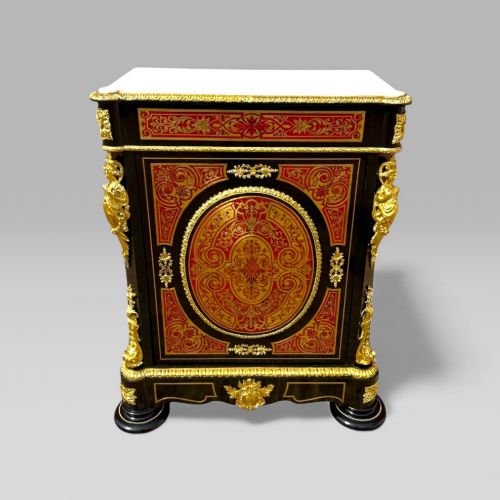
The aesthetic draws heavily on French Napoleon III, Louis XV Revival, Louis XVI style, and French Rococo Revival movements. You are most likely to meet ebonised boulle work or marquetry designs featuring distinct brass detailing across this selection.
Materials and construction
Cabinet makers utilised structural timbers including walnut, mahogany, kingwood, rosewood, and ebonised wood as a dark foundation for ornate decoration. Surfaces frequently incorporate tortoiseshell alongside inlaid brass elements and ormolu mounts.
Many examples are topped with fitted marble slabs, particularly on pier cabinets, consoles, and bedside chests. Glass panels appear on display cabinets, while intricate marquetry patterns form intricate floral or geometric imagery across door and drawer fronts.
The selection includes pieces spanning the nineteenth century, Victorian era, Edwardian period, and nineteen-twenties.
What separates the best examples
Quality rests upon the precision of the brass inlay work and the complexity of the underlying marquetry. Sharper execution in the metal cutting and tighter joints elevate certain pieces well above standard production.
The selection of secondary timbers and the richness of the ormolu mounts define the upper tier. Heavier, more substantial marble tops and genuine tortoiseshell rather than imitation surfaces also distinguish finer examples.
The French Brass Inlay Cupboard Glossary
- Boulle
- A form of marquetry consisting of tortoiseshell and brass inlaid in contrasting patterns. This technique originates from seventeenth-century France and defines many nineteenth-century ebonised cabinets.
- Ormolu
- Gilded bronze used for decorative mounts and feet on fine furniture. It adds bright metallic highlights to dark timber surfaces.
- Marquetry
- The art of applying small pieces of veneer to a structure to form decorative patterns and pictures. Makers use various exotic woods to achieve naturalistic shading.
- Pier Cabinet
- A narrow cabinet designed to stand against a wall between two windows. These often feature glass doors and marble tops.
- Demi-Lune
- Half-moon shape used for console tables and cabinets with curved fronts. This form fits neatly against flat walls while offering a softened silhouette.
French Brass Inlay Cupboard: Frequently Asked Questions
Where should I place a boulle cabinet?
These cabinets suit reception rooms, grand hallways, or drawing rooms where their reflective brass and tortoiseshell surfaces catch the light.
Keep them away from direct sunlight and sudden temperature changes to protect the delicate veneer and metal inlay.
How do I clean marble top cabinets?
Wipe the marble surface gently with a soft, damp cloth using mild, neutral soap if needed.
Avoid acidic cleaning solutions or abrasive sponges that can etch or dull the polished stone surface.
How do I identify Napoleon III furniture?
Napoleon III pieces often feature ebonised wood combined with elaborate brass boulle work and gilt bronze mounts. The style reflects a revival of earlier French royal aesthetics from the mid-nineteenth century.
Look for rich material combinations, curved serpentine fronts, and decorative marquetry panels.