





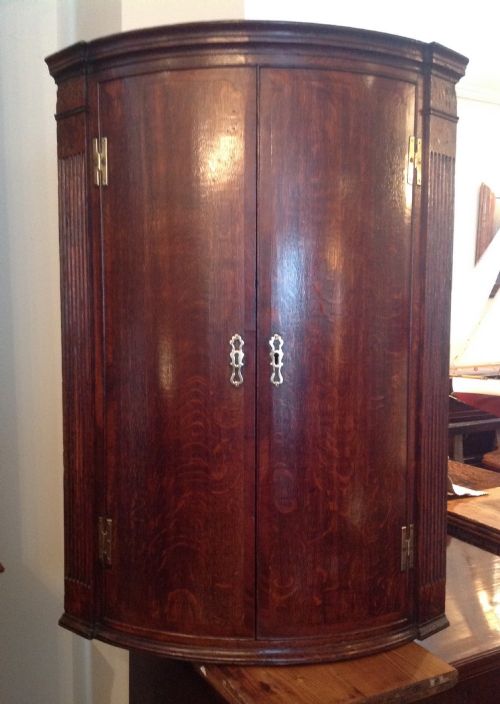


Brass Hinged Corner Cupboard
A brass hinged corner cupboard brings domestic woodwork into tight spaces with timber and metal working together.
Brass Hinged Corner Cupboard
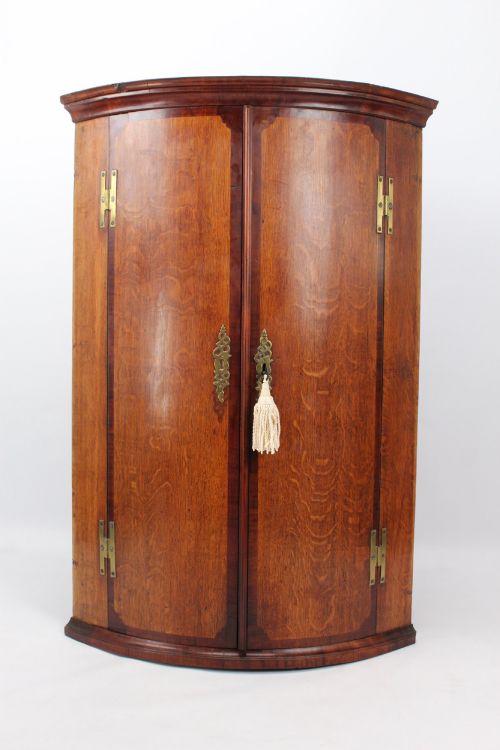
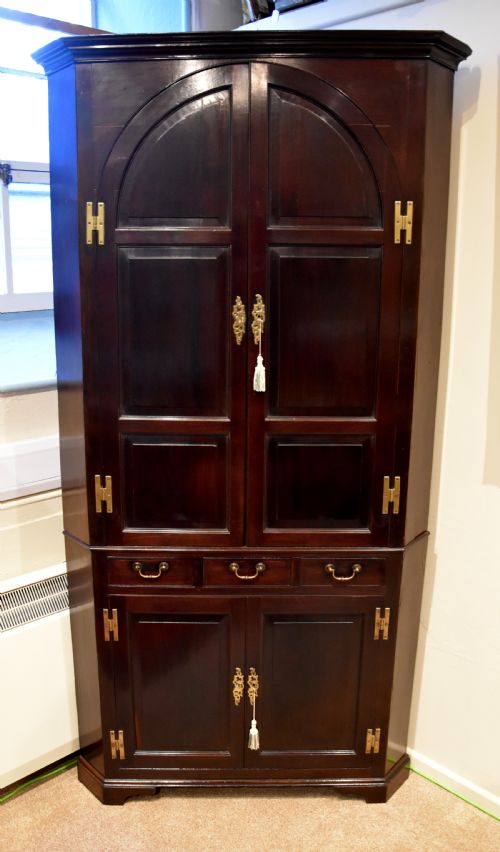
A brass hinged corner cupboard uses fitted wall storage to occupy neglected angles in a room. These pieces appear in forms from simple hanging models to bow fronted cabinets designed to stand or hang.
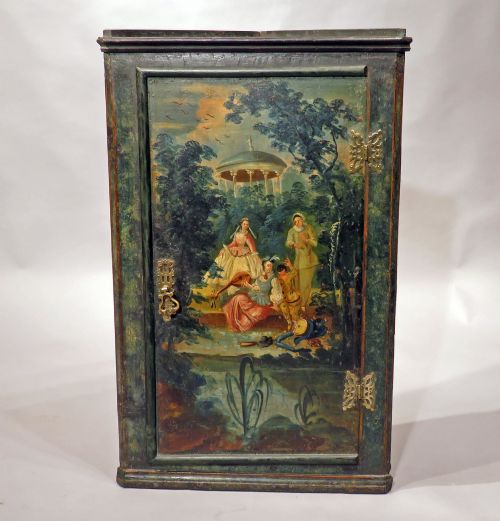
The versions met on this page span the Georgian and Victorian periods, drawing on styles such as George III, Gothic Revival, and Arts and Crafts. Timber construction ranges from oak and pine to mahogany and painted wood.
Makers shaped these corner cupboards for domestic interiors where floor space required efficient storage. The presence of brass hinges secures doors of varying sizes, from small antique hanging cabinets to larger bow front examples.
How they were made
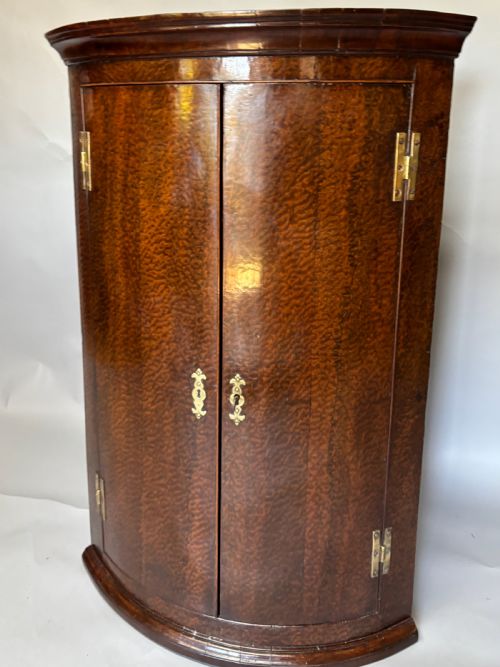
Makers utilised solid timbers including oak, pine, and mahogany, alongside painted wood surfaces and flame veneer. Cuban mahogany and plum pudding mahogany appear in specific pieces, showing selection of distinct grain patterns.
Construction relies on traditional cabinet making joins to form the corner profile, paired with brass hardware. Hinges and fittings provide structural movement and visual contrast against the dark or painted wood.
Brass Hinged Corner Cupboard Retail Price Guide 2026
Typical asking prices for brass hinged corner cupboard among the pieces listed under this phrase on Sellingantiques today, from the lower quarter to the upper quarter. They describe what is for sale here now, not the wider market.
Cabinet styles span George III, Gothic Revival, and Arts and Crafts movements.
What varies in quality
The grade of timber dictates the character of the piece, with figured grains like flame and plum pudding mahogany sitting apart from standard pine or plain oak. Timber selection governs the visual weight of the cabinet.
The execution of the bow front and the integration of brass hinges mark the difference between standard utility furniture and finer cabinet work. Proportion and surface finish determine the success of the piece.
The Brass Hinged Corner Cupboard Glossary
- Bow front
- A convex curved front facade. This shape softens the angular geometry typical of corner furniture.
- Hanging corner cupboard
- A wall mounted cabinet designed for room corners. These pieces save floor space while offering enclosed storage.
- Cuban mahogany
- A dense, dark timber harvested in the Caribbean. Cabinet makers prized it for rich colour and fine grain.
- Flame veneer
- Wood sliced to reveal a flickering flame pattern. It decorates the primary surfaces of superior cabinets.
Brass Hinged Corner Cupboard: Frequently Asked Questions
How do I hang a corner cupboard safely?
These cabinets attach directly to wall studs through internal fixing points built into the corner framing. Solid timber construction adds weight, requiring secure wall anchors to bear the load.
Professional installation prevents movement and protects the brass hinges from strain over time.
What woods were used for these cupboards?
Makers constructed these cabinets from oak, mahogany, pine, and painted wood. Variations include Cuban mahogany and plum pudding mahogany for decorative effect.
Timber choice often reflects the period and the intended formality of the room.
How do I date a corner cupboard?
Stylistic markers such as George III lines, Gothic Revival details, or Arts and Crafts simplicity point to specific eras. Timber varieties and construction methods also help narrow the decade of manufacture.
Georgian examples tend to feature mahogany or oak, while Victorian pieces introduce varied stylistic revivals.
Why use a bow front shape?
The curved front projects further into the room than a flat panel, increasing internal capacity while softening the sharp angle of the corner. This shape showcases figured veneers like flame mahogany.
Cabinet makers utilised this form to add elegance to functional storage.