
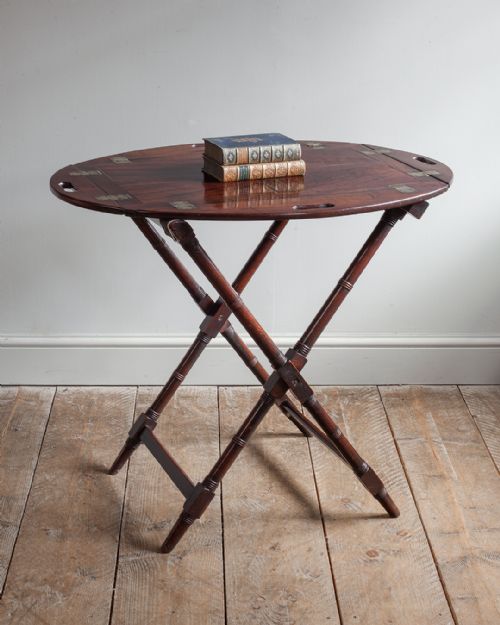


Brass Hinge Table
A brass hinge table offers a clever folding surface, bringing Georgian practicality into modern rooms through sturdy mahogany and gleaming metal.
Brass Hinge Table
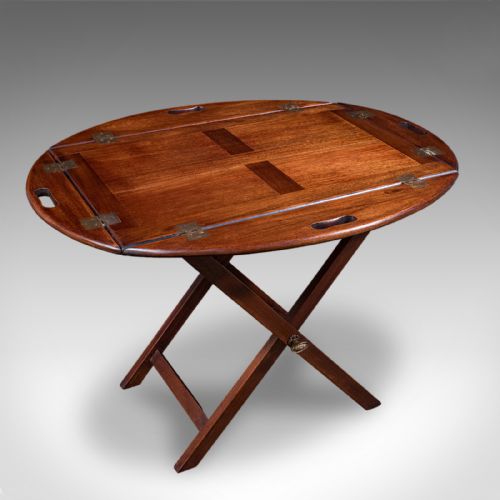
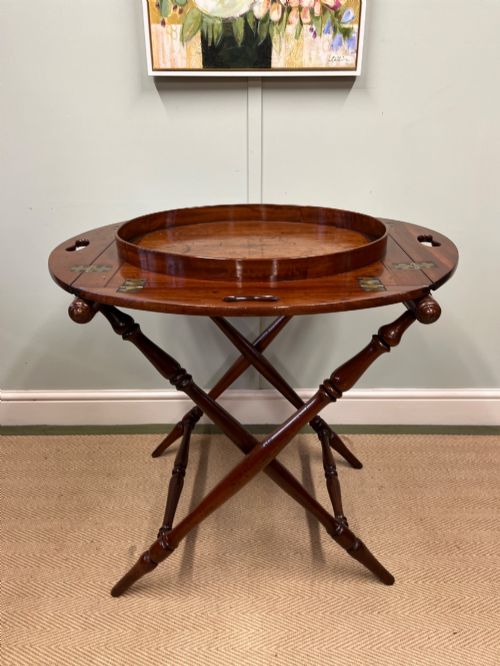
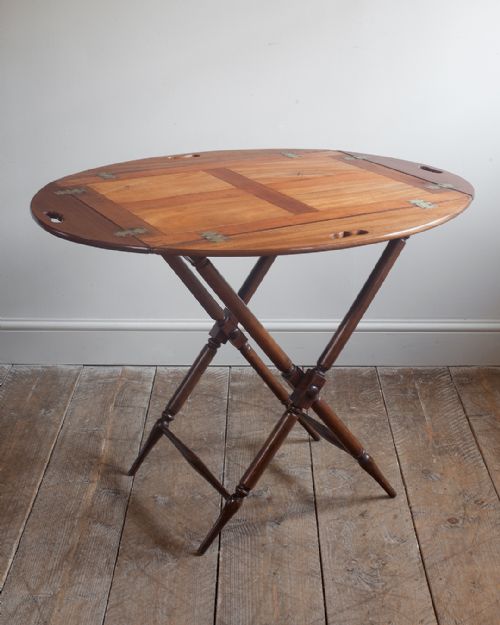
A brass hinge table combines a portable tray top with a folding stand, creating a practical piece designed for easy serving and storage.
The versions met on this page span the 18th century, Georgian, Regency, Victorian, Edwardian, and 1930 periods, taking the form of tray tables, coffee tables, occasional tables, butlers tray tables, side tables, and boxes and caddies.
What varies in quality
Quality rests in the choice of timber, where figured Cuban mahogany demonstrates superior selection compared to standard grain timbers.
The precision of the brass hinges and the integrity of the folding mechanism dictate the mechanical success of the piece.
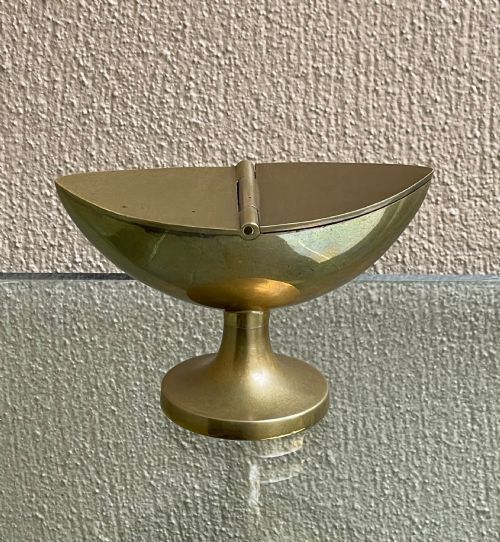
Some tables double as snuff boxes, proving that even the Victorians appreciated a miniature hinge.
The Brass Hinge Table Glossary
- Navette
- A boat-shaped decorative form often seen in Georgian box designs. It provides an elongated oval outline with pointed ends.
- Drop-flap
- A hinged section of a tabletop that lowers when not in use. This feature allows the surface area to expand or contract.
- Cuban mahogany
- A dense, richly figured timber native to the Caribbean. Cabinet makers favoured it for high-status furniture during the 18th and 19th centuries.
- Butler's tray
- A portable wooden tray with hinged or cutout sides designed for carrying service items. It typically rests upon a separate folding stand.
Brass Hinge Table: Frequently Asked Questions
What is a brass hinge table?
A brass hinge table is a portable serving surface featuring a wooden tray top connected to a folding stand by metal hinges.
These pieces were originally designed for domestic service, allowing staff to clear rooms and store furniture efficiently.
How do I use a butler's tray table?
You place the wooden tray securely onto the folding wooden stand, utilising the hinges to adjust any drop-flaps.
They function well as coffee tables or occasional side tables in contemporary living spaces.
What woods were used for these tables?
Cabinet makers constructed these tables predominantly using mahogany, Cuban mahogany, and oak.
These hardwoods provided the structural durability required for frequent folding and carrying.
How do I identify the period?
Period identification relies on timber selection, cabinet making techniques, and the styling of the brass hardware.
Georgian and Regency pieces display specific proportions and craftsmanship that distinguish them from Edwardian and 1930 reproductions.