
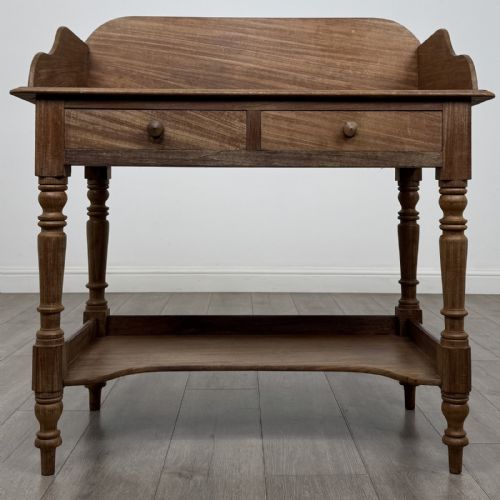
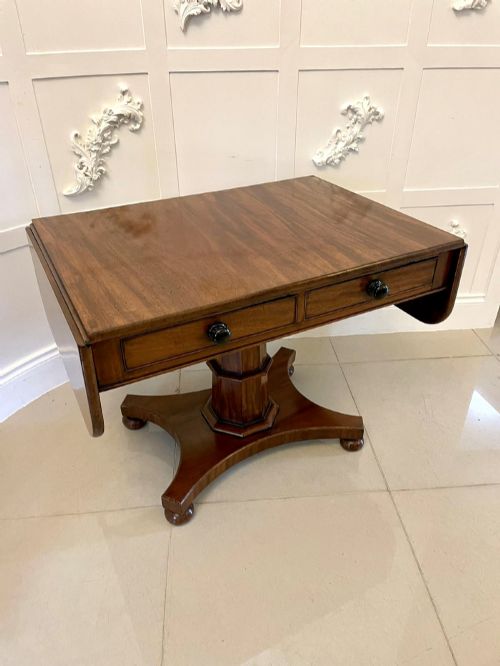
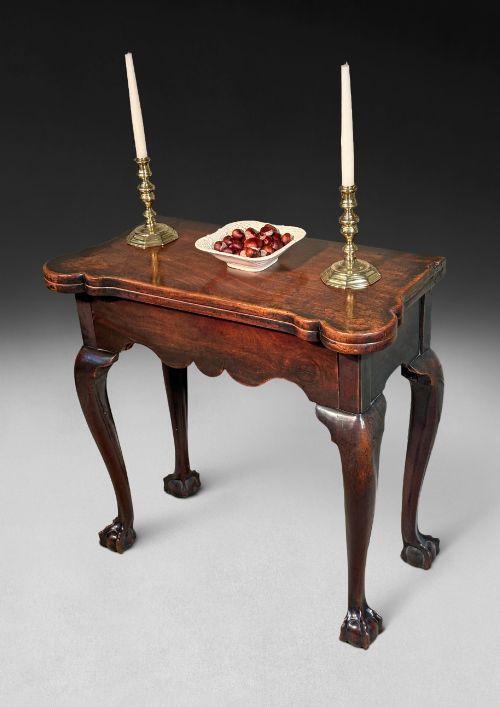
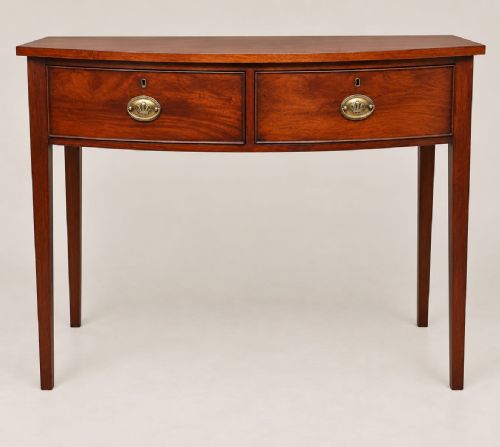
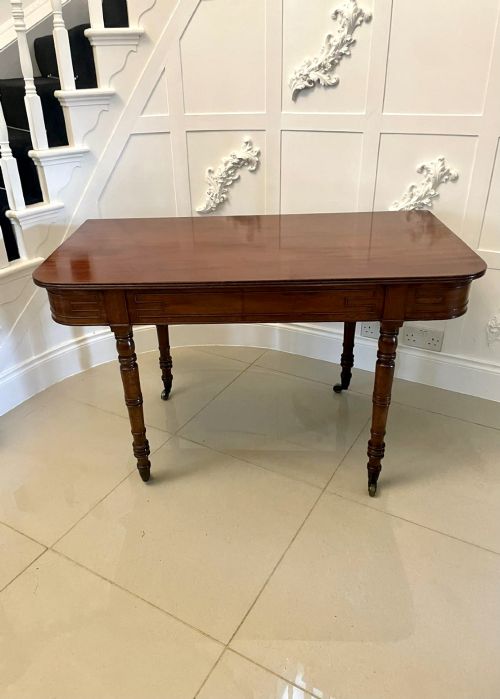
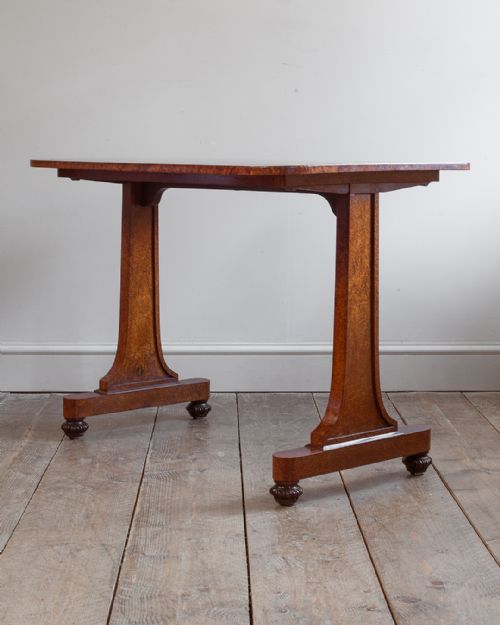
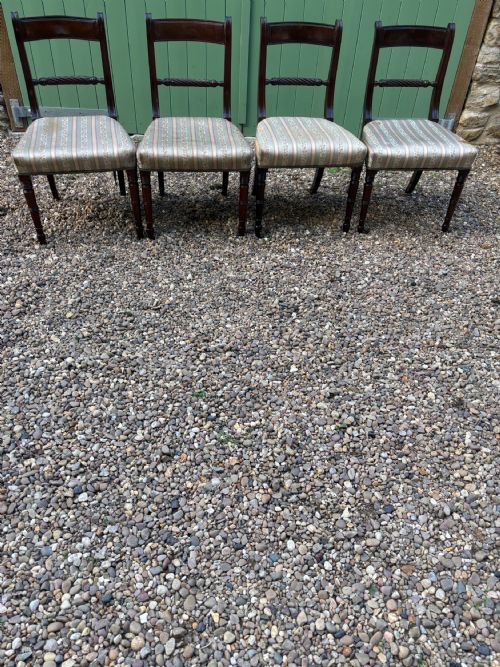
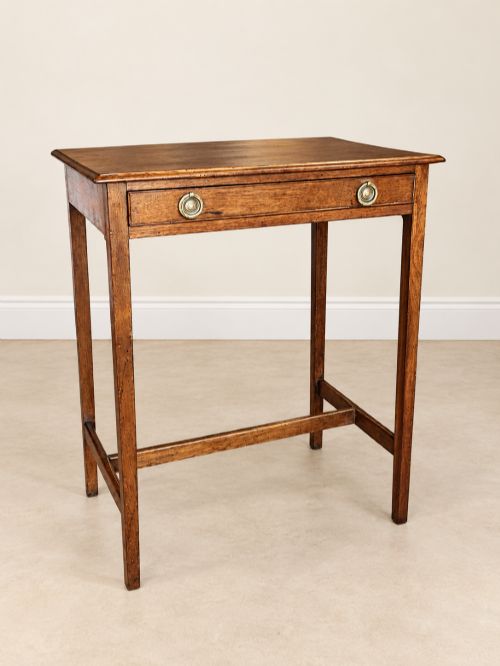
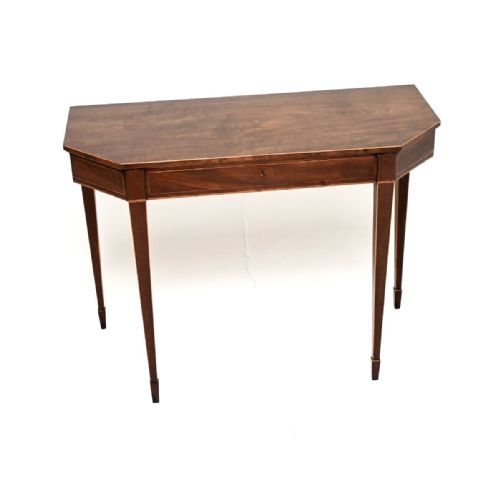
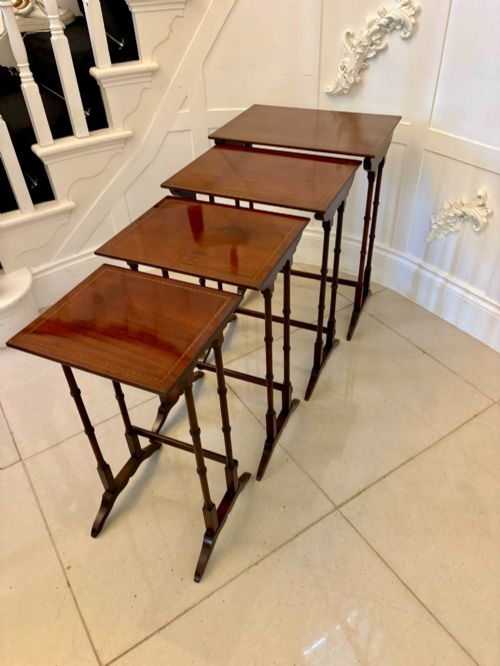
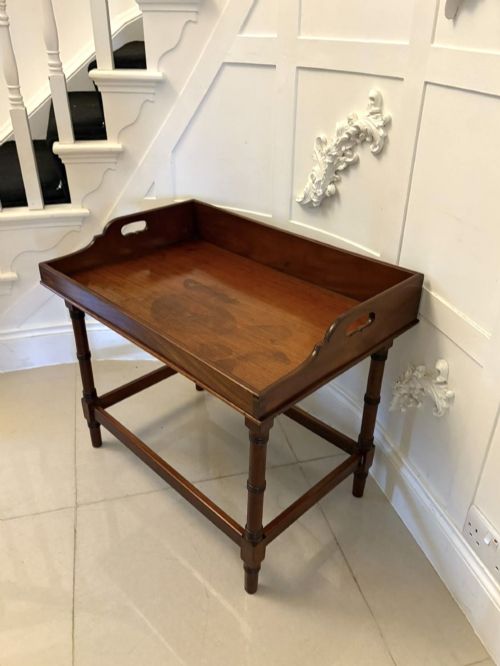
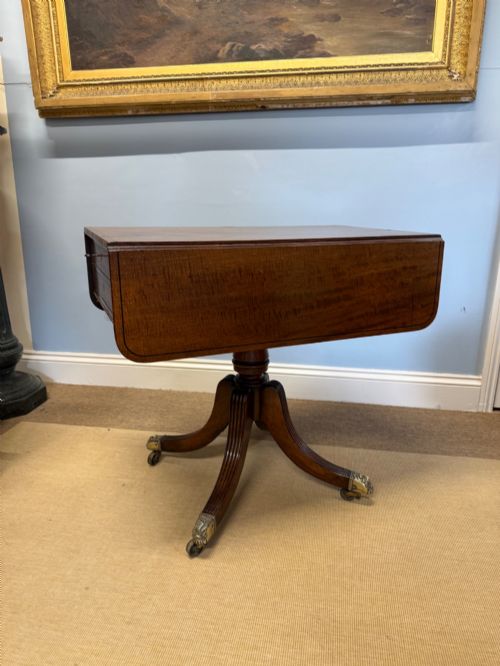
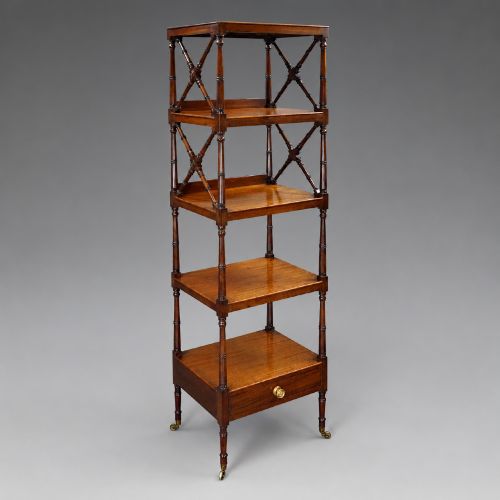


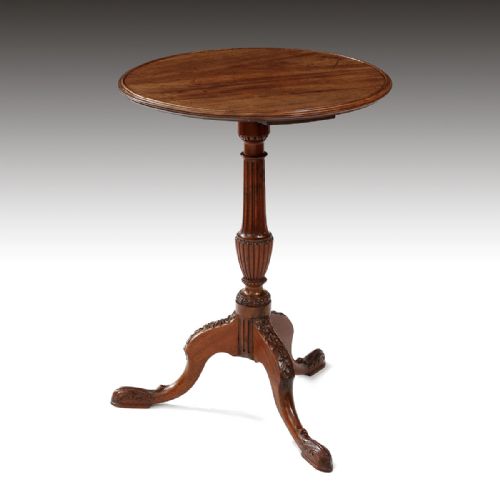
Period Mahogany Side Table
A period mahogany side table delivers surface and storage in timber that deepens richly over the centuries.
Period Mahogany Side Table
A period mahogany side table encompasses a diverse group of domestic furnishings designed for support, display, and occasional writing across the eighteenth and nineteenth centuries. Buyers searching for a period mahogany side table will encounter Georgian forms such as lowboys and tripod wine tables alongside later Regency and Victorian consoles.
The survival rate of these tables spans simple drop-leaf Pembroke designs to elaborately carved Chippendale and Sheraton examples. Most pieces appearing here reflect domestic utility, functioning originally as serving pieces, lamp stands, or compact desks.
Proportions vary from small freestanding occasional tables to broader partner desks and console formats. The predominant styles bridge the George III era through to the Regency period, offering disciplined classical lines and stable timber construction.
Materials and Construction Methods
Makers utilised solid mahogany and figured veneers, frequently mounting them over secondary structural woods to achieve strength and decorative grain patterns. Surfaces gained contrast through delicate boxwood stringing and satinwood inlay.
Hardware details incorporated cast brass handles, drop rings, and occasionally brass bound decoration along tray edges or feet. Joinery relied on traditional methods, ensuring that tripod bases, folding leaves, and drawer frames remained structurally sound across generations.
Listings feature mahogany, brass, satinwood, and leather across Georgian, Regency, and Victorian periods.
Distinctions in Quality and Execution
The grading of a piece rests heavily on the selection of the timber, where highly flamed or figured mahogany tops distinguish finer examples from plain utility pieces. The crispness of carved details, such as fretwork or scroll legs, indicates the hand of a skilled workshop rather than standard production.
Proportional harmony and the retention of original brass hardware elevate certain tables above standard domestic survivors. Structural integrity, clean drawer linings, and untouched patination mark the highest tier of surviving examples.
Gillow·Chippendale·Hepplewhite
The Period Mahogany Side Table Glossary
- Lowboy
- A small kneehole dressing table or side table featuring one or more rows of drawers, popular during the eighteenth century.
- Pembroke table
- A small rectangular table with hinged drop leaves on either side, often fitted with a single drawer.
- Tripod table
- A freestanding table supported by a central pillar resting on three spreading legs, frequently designed with a tilt-top mechanism.
- Stringing
- A narrow inlaid line of contrasting timber, such as boxwood, used to edge drawer fronts and tabletops.
- Gueridon
- A small circular occasional table, often drawing on French decorative traditions and supported by a central column.
- Figured mahogany
- Timber cut to reveal distinctive grain patterns like flames or fiddleback, prized for decorative tabletops.
Period Mahogany Side Table: Frequently Asked Questions
What is the difference between a lowboy and a side table?
A lowboy is a specific form of low dressing or side table equipped with drawers beneath the surface, typically dating from the eighteenth century. General side tables encompass a much broader range of formats, including console tables, tripod tables, and drop-leaf designs.
While both served domestic utility in reception rooms or chambers, the lowboy prioritises enclosed storage within a compact pedestal frame.
How do I identify a Regency period table?
Regency tables generally date from the early nineteenth century and display influences from classical antiquity, featuring bolder mahogany grains and restrained brass mounts. They often incorporate architectural pedestals, sabre legs, or brass inlay rather than the intricate carved fretwork of earlier Georgian pieces.
The overall aesthetic shifts toward heavier, monumental forms inspired by Greek and Roman design principles.
Where were these tables used in a historic home?
These versatile pieces stood against walls in dining rooms for serving food, held lamps in drawing rooms, or served as writing surfaces in private chambers. Drop-leaf and Pembroke versions moved easily about the floor to accommodate changing daily activities.
Their freestanding nature allowed them to function wherever supplementary surface space was required.
How should I care for antique mahogany timber?
Protect the wood from direct sunlight and sudden temperature shifts to prevent the timber from drying out or splitting. Regular dusting with a soft, dry cloth maintains the finish without requiring heavy polishing.
Keeping indoor humidity stable preserves both the solid mahogany structure and any delicate satinwood inlay.