


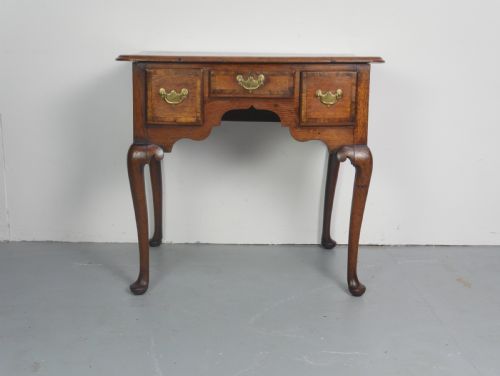

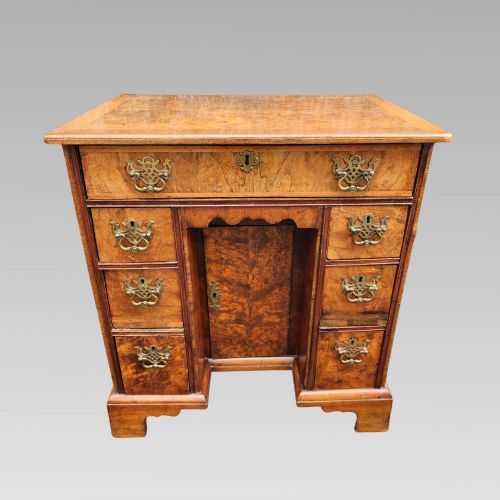


Brass Handle Vanity Table
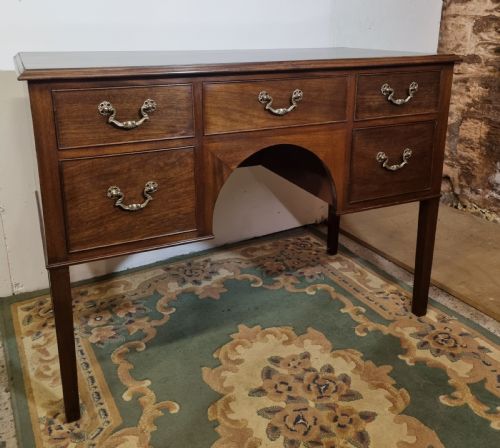
These brass handle vanity table pieces combine functional drawer storage with period timbers, offering dressing and writing surfaces shaped by Georgian, Victorian and Edwardian craftsmanship.
Brass Handle Vanity Table
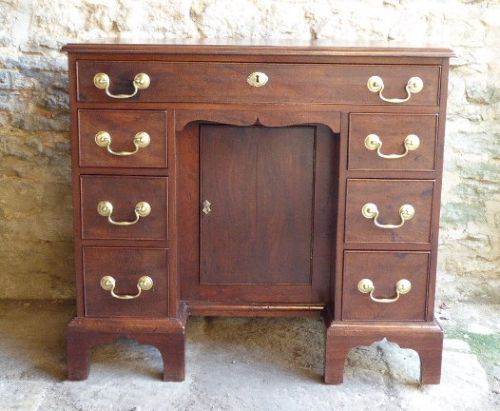
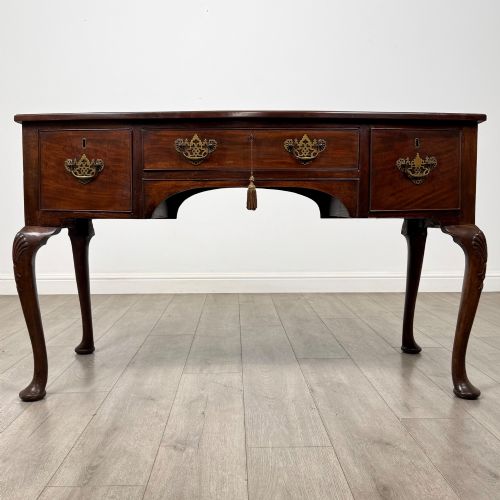
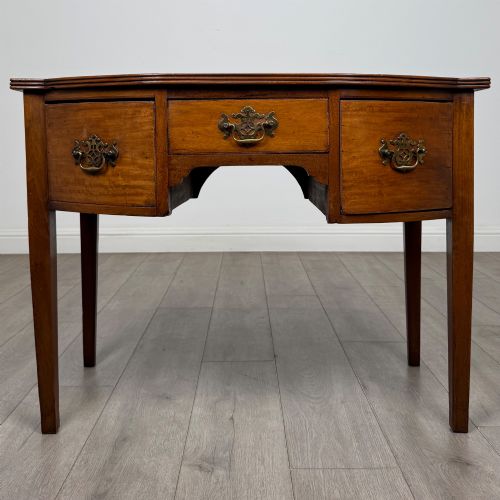
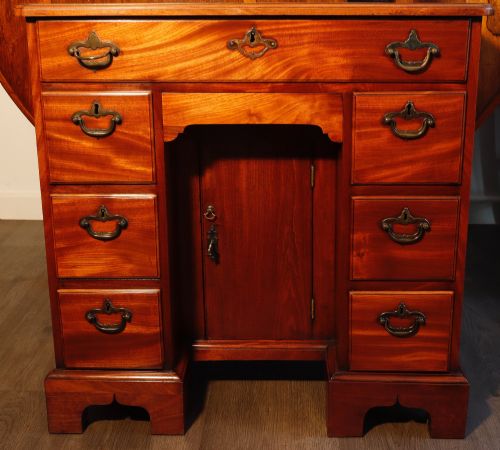
A brass handle vanity table encompasses lowboys, kneehole desks, writing tables and dressing chests designed for personal grooming and private correspondence. These forms serve domestic chambers and dressing rooms with dedicated surface space and operable storage drawers.
The selection on this page spans the eighteenth century through to the early twentieth century, taking in Georgian, Victorian and Edwardian iterations alongside revival styles. Mahogany, oak and walnut form the structural core of these examples.
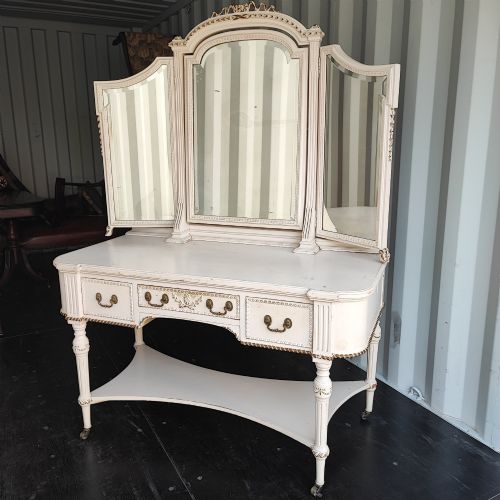
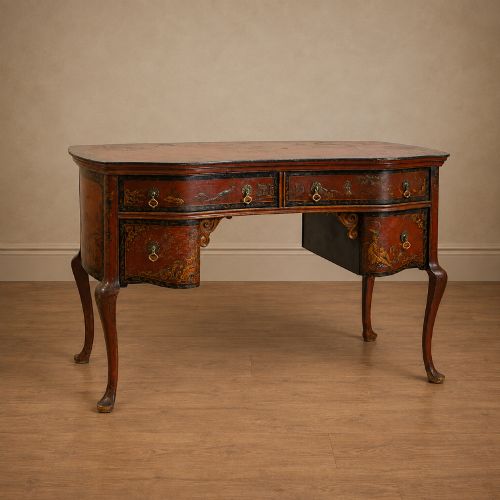
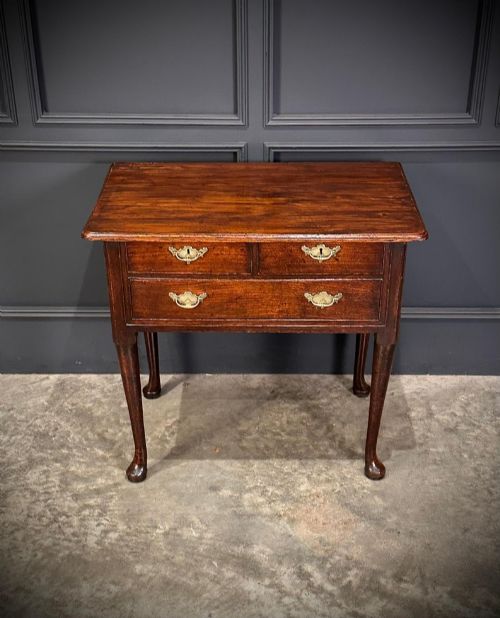
Makers such as Maples of London contribute refined painted and walnut variations to the selection, while simpler oak lowboys represent earlier vernacular forms. Each piece bridges the requirement for surface utility with period cabinet-making traditions.
How they were made
Cabinet-makers constructed these pieces primarily from solid mahogany, oak and walnut, frequently applying burr walnut veneer or lacquer to create decorative surface patterns. Timber selection dictated the structural integrity and visual character of each dressing surface and drawer frame.
Brass handles and pulls secure the drawer fronts, providing functional hardware that contrasts with the dark timber tones. Specialised techniques such as Chinoiserie lacquer and painted finishes appear on specific nineteenth and twentieth century examples.
Listings span the eighteenth, nineteenth and twentieth centuries, featuring mahogany, oak, walnut and lacquer surfaces.
What varies in quality
The refinement of timber selection and veneer matching distinguishes standard examples from exceptional ones, particularly where burr walnut or figured mahogany is employed. Cabinet-making precision is evident in the flush alignment of drawers and the subtlety of carved revival details.
Original hardware, such as cast brass handles and matching backplates, elevates the integrity of a piece. The presence of specialised finishes, including period lacquer or painted decoration, introduces further distinction across the range.
Maples of London
The Brass Handle Vanity Table Glossary
- Lowboy
- A small side table or dressing table featuring a low waist and multiple drawers, commonly produced in oak or mahogany during the eighteenth century.
- Kneehole desk
- A compact desk or dressing table with a central recessed space for the legs, flanked by pedestals of small drawers.
- Chinoiserie
- A decorative style reflecting European interpretations of Chinese art, frequently executed in lacquered finishes on furniture from the Victorian period.
- Veneer
- A thin layer of figured wood, such as burr walnut, applied to a secondary timber base to create a decorative surface pattern.
Brass Handle Vanity Table: Frequently Asked Questions
What is a brass handle vanity table?
These items are period furniture forms including dressing tables, lowboys and kneehole desks equipped with drawer storage and brass hardware.
They serve as functional surfaces for grooming and writing while reflecting eighteenth, nineteenth and twentieth century cabinet-making styles.
How were these tables used originally?
Occupants used them in bedchambers and dressing rooms for morning grooming routines, hair dressing and writing personal correspondence.
The integration of drawers allowed for the storage of cosmetics, documents and small personal items close to hand.
How do I identify a Georgian piece?
Georgian examples are characterised by solid mahogany or oak construction, restrained proportions and traditional joinery without heavy revival ornamentation.
They frequently take the form of lowboys or kneehole desks dating from the eighteenth century.
How should I care for timber surfaces?
Maintain the wood by keeping the pieces away from direct heat sources and fluctuating humidity that can affect veneers and solid timbers.
Apply gentle cleaning methods appropriate for antique polished wood and lacquered surfaces to preserve the finish.