



Brass Handle Copper Scuttle
A brass handle copper scuttle brings warmth and practical fireside utility to a room, combining durable metalwork with traditional hearth design.
Brass Handle Copper Scuttle
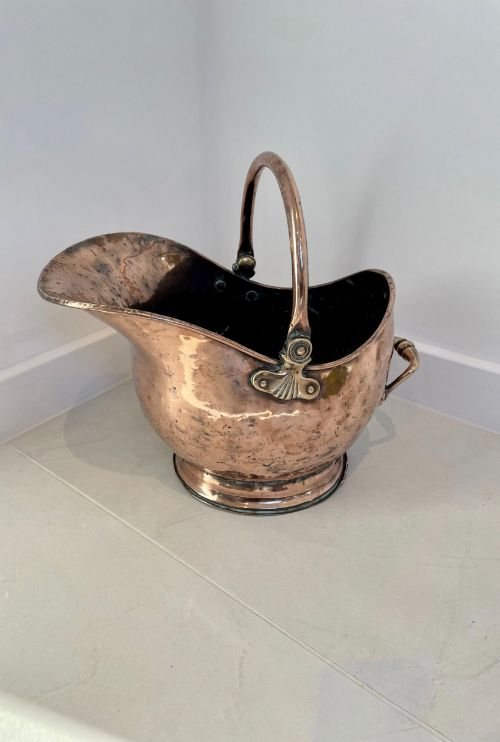
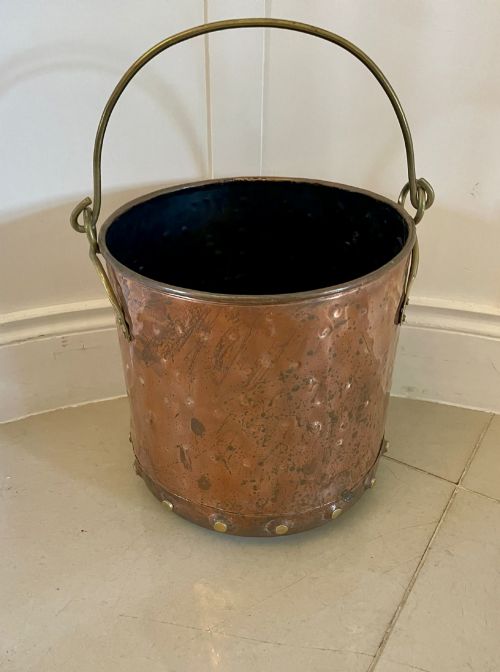
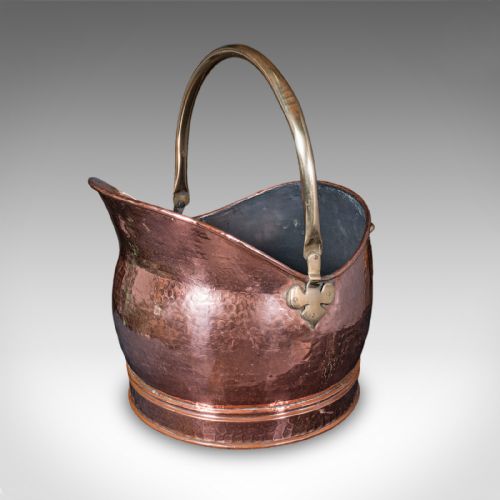
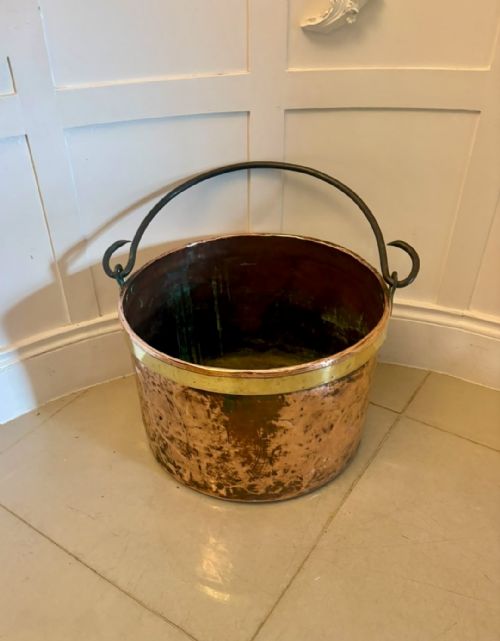
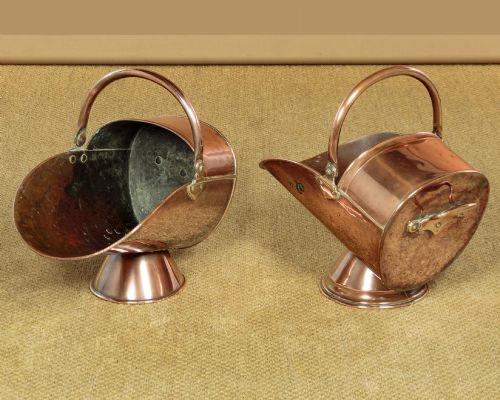
A brass handle copper scuttle serves as a heavy-duty container designed for holding coal or logs by the fireplace. When you search for this phrase, you encounter vessels shaped as helmets, buckets, cauldrons, and Gladstone bags.
The majority of pieces belong to the Victorian period and the nineteenth century, alongside examples from the Georgian era, the Arts and Crafts movement, Edwardian times, and Art Deco design. Makers and artisans utilised these forms for both practical hearth service and decorative indoor planting.
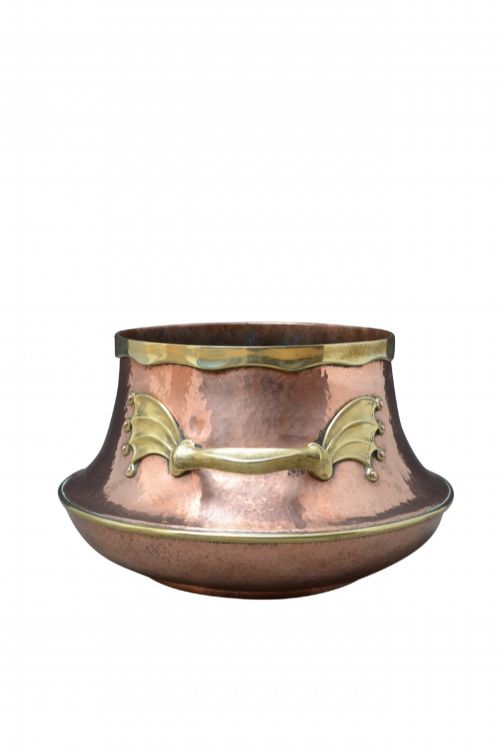
Beyond standard coal storage, many of these metal vessels double as large planters, jardinieres, and log bins. The combination of a warm metallic body and contrasting fittings defines the visual character of the group.
How they were made
Craftsmen shaped sheets of copper into deep bodies using hand-hammered and spun techniques, creating seamless or dovetailed seams. Brass fittings, including swinging handles, feet, and rims, were riveted or cast separately before being attached to the main copper body.
Iron and wrought iron components occasionally reinforce the structural framework, particularly on larger log bins and buckets. Wood elements appear on handles and grips, providing an insulated touch point for daily use.
Brass Handle Copper Scuttle Retail Price Guide 2026
Typical asking prices for brass handle copper scuttle among the pieces listed under this phrase on Sellingantiques today, from the lower quarter to the upper quarter. They describe what is for sale here now, not the wider market.
One recorded piece includes German trench art fashioned from a shell marked 1915 with the British Royal Artillery coat of arms.
What varies in quality
The thickness of the metal sheet dictates the structural integrity and weight of the vessel, with heavier gauge copper commanding greater durability. Superior examples display refined hand-hammering and secure, well-fitted brass mounts rather than flimsy attachments.
Proportion and form separate standard utilitarian items from finer decorative pieces, particularly in helmet shapes and cauldrons. The crispness of detail on handles and the quality of historical joins indicate the level of craftsmanship involved.
William Soutter & Sons
The Brass Handle Copper Scuttle Glossary
- Scuttle
- A metal bucket or coal container featuring an angled opening and a swinging handle for carrying fuel. It sits beside the fireplace to supply coal or logs.
- Helmet scuttle
- A coal bucket with a flared, peaked rim resembling a classical helmet, designed to direct fuel cleanly into the grate. This shape is common in Victorian examples.
- Dinanderie
- A term for various objects made of brass, copper, or bronze, often associated with decorative vessels and Art Deco metalwork. It denotes artistic metalware production.
- Jardiniere
- An ornamental pot or stand for holding flowers and plants indoors. Many historical coal buckets are repurposed into these large planters.
Brass Handle Copper Scuttle: Frequently Asked Questions
What is a copper coal scuttle used for?
These vessels were originally manufactured to store and transport coal to the hearth for domestic heating.
Today, they frequently serve as decorative log bins, umbrella stands, or large indoor planters.
How do I identify a Victorian scuttle?
Victorian pieces often feature characteristic helmet shapes, riveted brass mounts, and hand-beaten copper bodies dated to the nineteenth century.
Stylistic markers include sturdy swinging brass handles and sometimes accompanying shovels.
Can I use an antique scuttle for plants?
Many people repurpose these metal vessels as indoor planters and jardinieres to display large foliage.
Using a plastic liner inside protects the historical copper and brass from moisture damage.
What materials are used in these pieces?
The primary body is constructed from copper, paired with cast or sheet brass handles, rims, and feet.
Some examples incorporate iron, wrought iron, or wooden elements for structural support and gripping.