
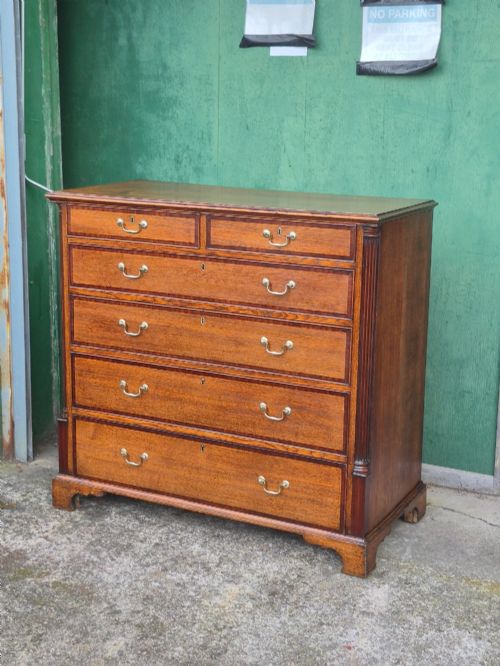
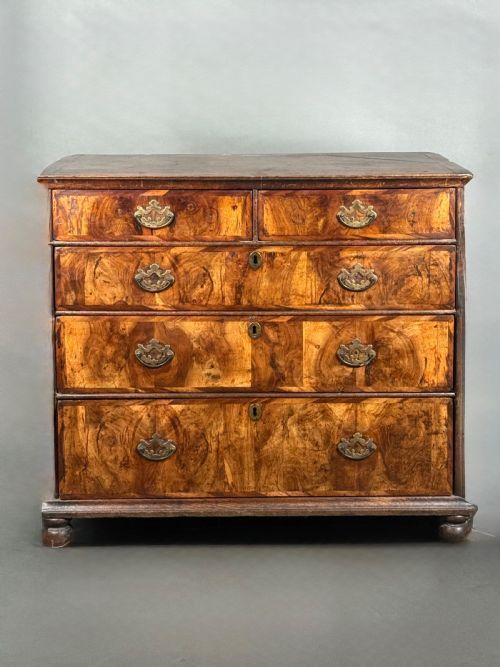
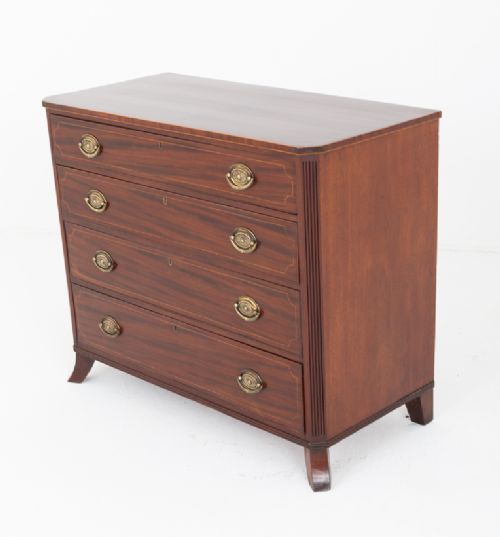
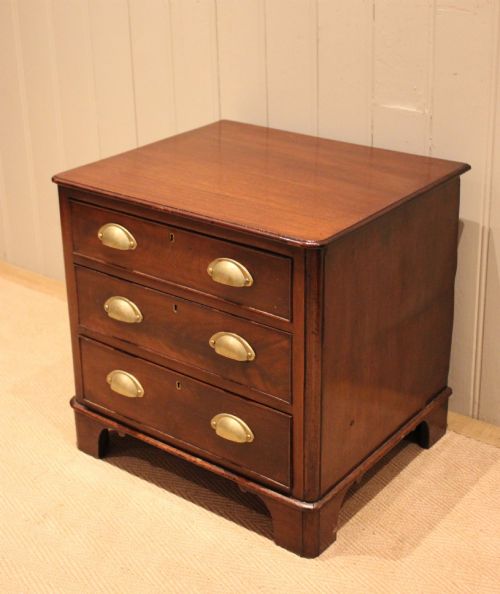
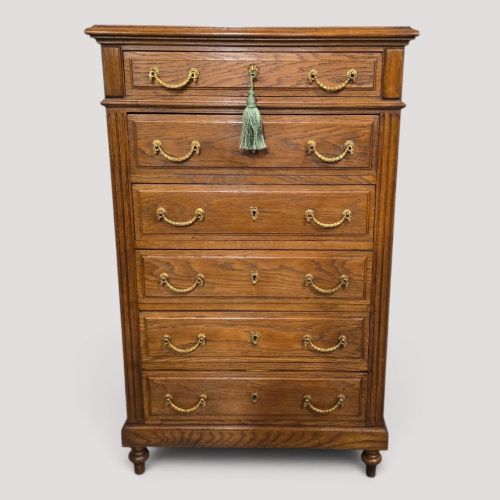
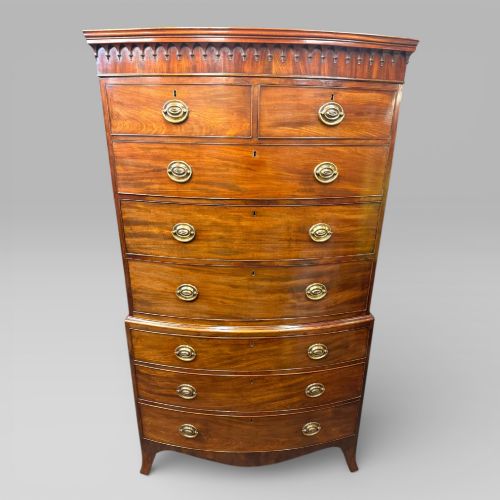
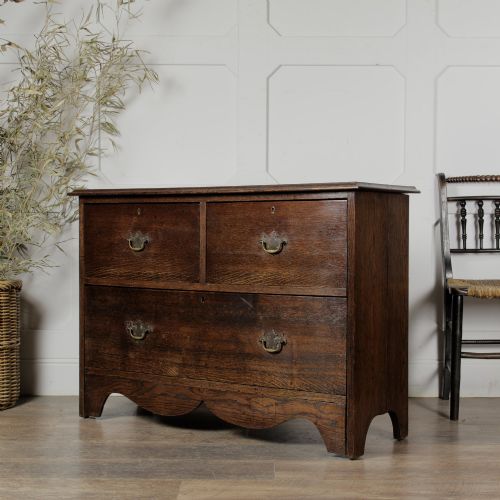
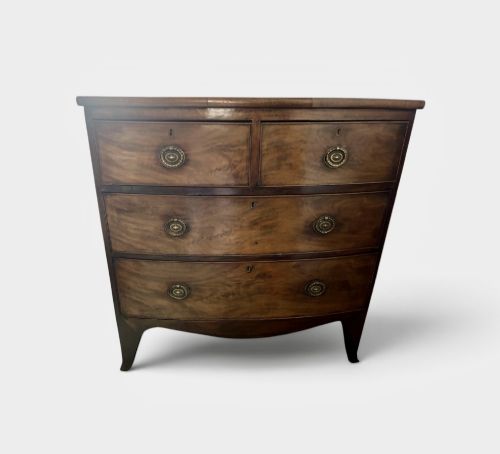
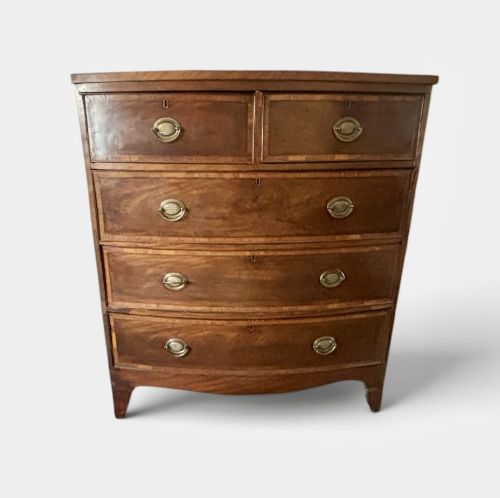


Brass Handle Chest of Drawers
A brass handle chest of drawers brings period storage into a room, combining substantial timber construction with functional metalwork.
Brass Handle Chest of Drawers
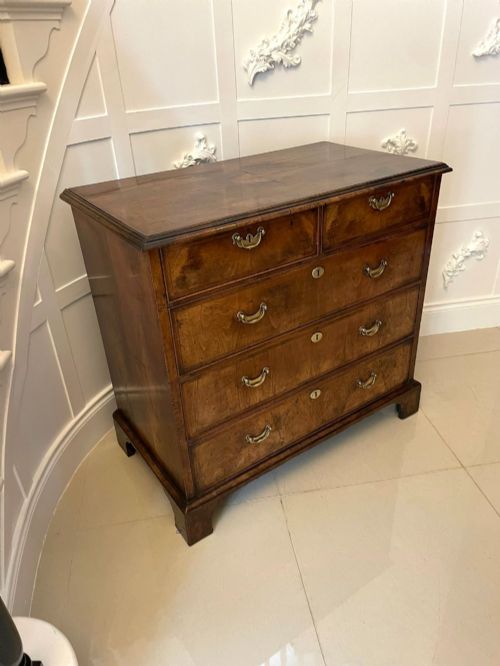
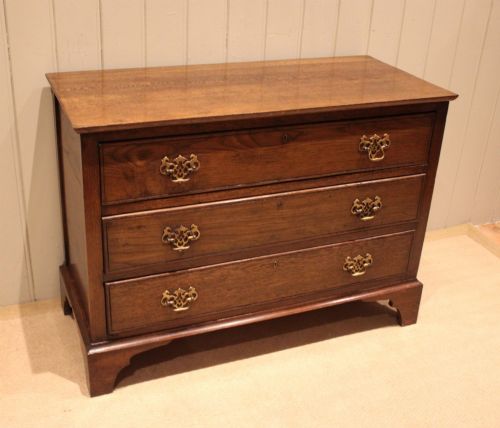
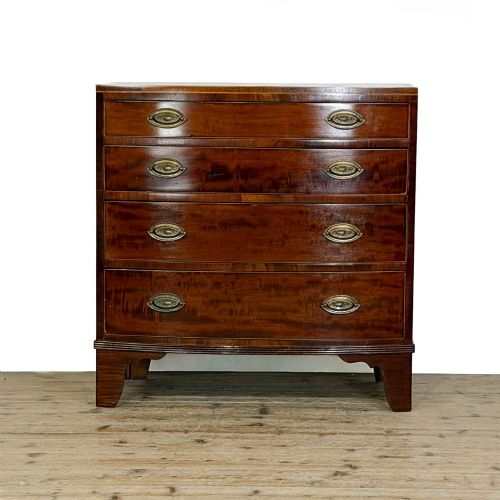
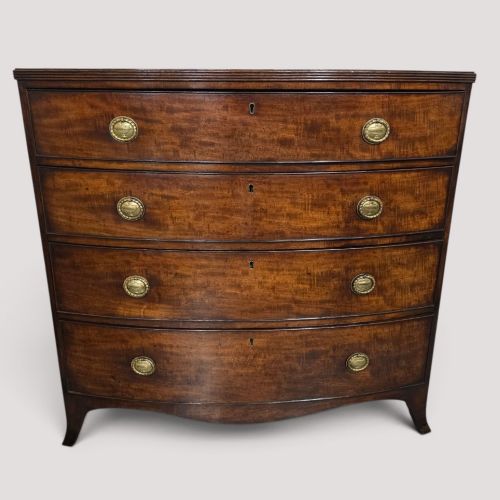
A brass handle chest of drawers spans multiple centuries of furniture making, originating in domestic interiors from the seventeenth century through to the Edwardian period. Buyers encounter various regional timbers and configurations, including compact bow fronts, tallboys, and campaign models equipped for travel.
The pieces appearing on this page range from early oak and walnut examples of the Queen Anne and Georgian eras to later mahogany and satinwood designs of the Regency and Victorian periods. Most survivors follow traditional drawer proportions such as two short drawers over three long ones, fitted with matching metal pulls.
Materials and Construction
Cabinet makers constructed these pieces primarily using dense hardwoods like mahogany, oak, and walnut, often accentuating drawer fronts with burr veneers, satinwood banding, or boxwood stringing. Carcasses feature sturdy dovetail joinery on the drawer boxes and oak linings on better quality period examples.
Hardware forms an integral part of the construction, utilising cast and stamped brass shaped into swan neck handles, oval plates, drop rings, or lion mask pulls secured through the drawer timber.
Lion head brass handles roar silently from nineteenth-century drawer fronts, giving polite storage a remarkably fierce expression.
Evaluating Standards
Quality in these items depends upon the selection of figured timber veneers, the crispness of decorative crossbanding, and whether the brass mounts and handles remain original to the piece. Finer examples display meticulous dovetailing, symmetrical wood grain patterns across all drawer tiers, and well-proportioned ogee or bracket feet.
Lesser versions often utilise simpler secondary woods, plain unfigured primary timbers, or replacement hardware that disrupts the period aesthetic established by the original maker.
J Moorcroft
The Brass Handle Chest of Drawers Glossary
- Bow front
- A convex curved front profile popular on Georgian and Regency chests of drawers. This shape softens the corners of the furniture while increasing central storage capacity.
- Brushing slide
- A pull-out shelf located above the top drawers, historically used for folding clothes or writing. It slides flush into the cabinet frame when not in use.
- Swan neck handle
- A metal pull shaped like an elongated double curve, fastened to backplates on early eighteenth-century and Georgian drawers. They offer a comfortable grip for opening deep timber drawers.
- Campaign chest
- A portable form of furniture made in sections with recessed brass handles and corner brackets, designed for military officers on the move during the nineteenth century.
- Dovetail
- An interlocking joint used at the corners of drawer boxes, prized for its tensile strength and resistance to being pulled apart. Hand-cut variations help indicate the age of a piece.
Brass Handle Chest of Drawers: Frequently Asked Questions
How do I date a chest of drawers?
Dating relies on observing a combination of timber selection, construction methods, and hardware styles. Early pieces often feature oak linings and hand-cut dovetails, while specific shapes like the bow front or serpentine outline point toward the Georgian and Regency periods.
The evolution of the brass handles provides further clues, transitioning from early swan neck designs on engraved plates to oval drop handles and later ring pulls in the Victorian and Edwardian eras.
Are the brass handles original?
Determining originality involves looking closely at the interior of the drawer timber around the fixing holes for ghost marks or filled previous screw paths. Original brass handles usually match the period of the wood and show consistent signs of age and wear alongside the surrounding cabinet.
Replacements are common in antique furniture due to centuries of daily use, though matched period replacements still function well in daily life.
How do I care for antique wood?
Caring for these items requires keeping them away from direct heat sources and dramatic humidity fluctuations, which can cause timber panels to split or warp. Regular dusting with a soft, dry cloth preserves the finish without requiring heavy polishes.
Applying occasional appropriate wax feeds the antique grain, maintaining the natural lustre of walnut, mahogany, and oak over decades of domestic use.