

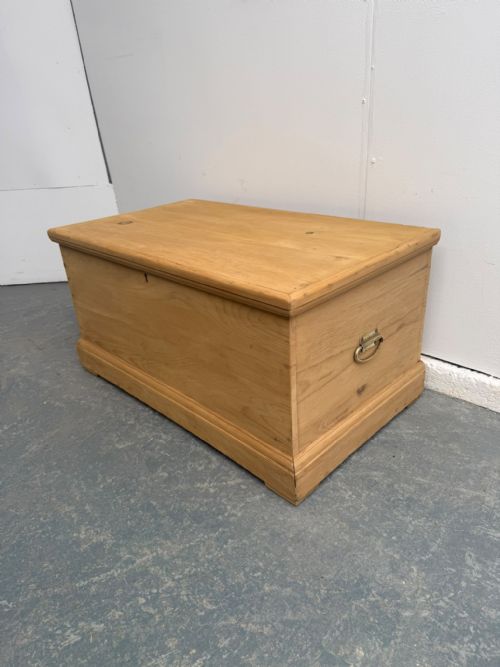


Brass Handle Blanket Box
These brass handle blanket box items offer sturdy timber storage shaped by Georgian and Victorian utility.
Brass Handle Blanket Box
A brass handle blanket box serves as a robust storage container fashioned for household goods, travelling and martial deployment, bringing historical utility into contemporary rooms. When you search for this phrase, you encounter solid timber forms designed to store linens, apparel and personal effects safely.
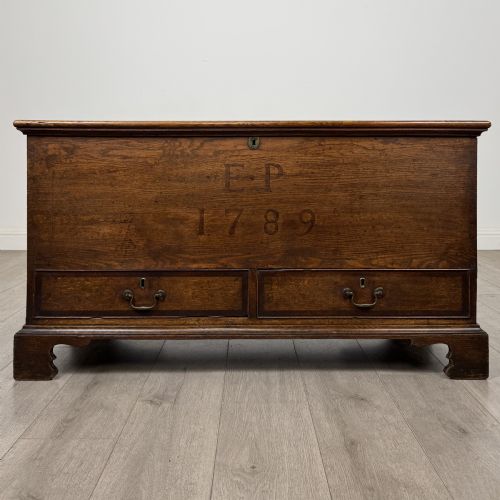
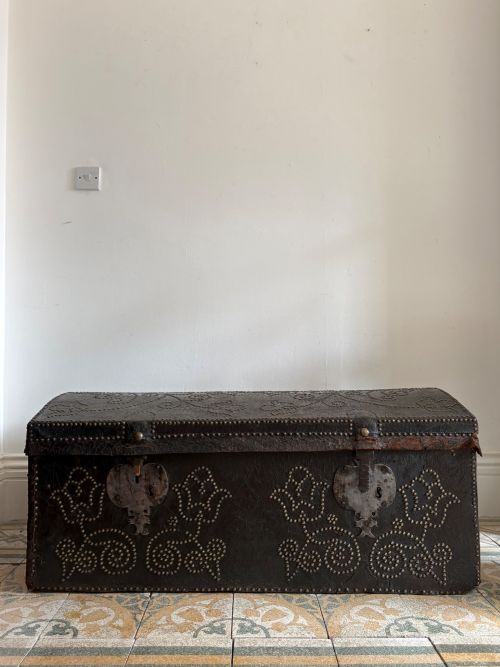
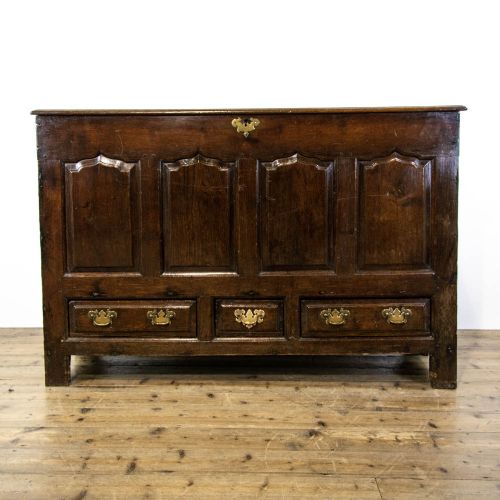
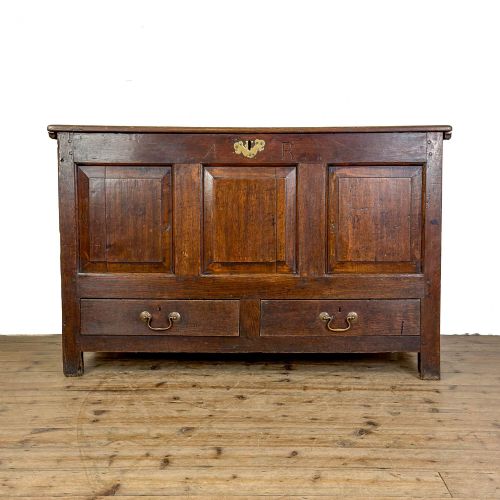
The selection on this page draws heavily from Georgian and Victorian periods, alongside specific regional pieces such as Welsh vernacular mule chests and 18th century Dutch trunks. These items range from simple domestic coffers with internal compartments to brass-bounded campaign trunks built for transport.
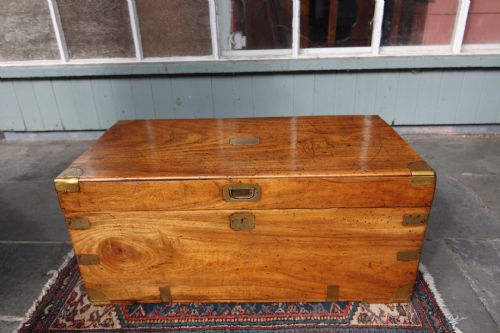
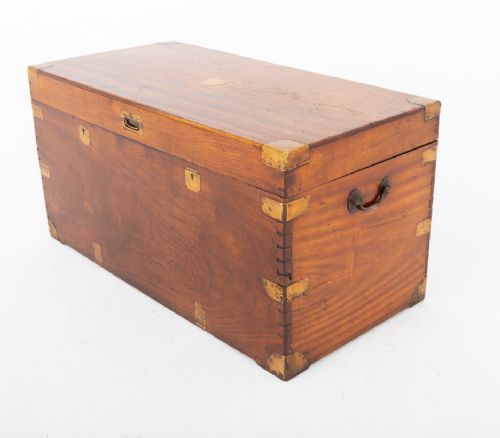
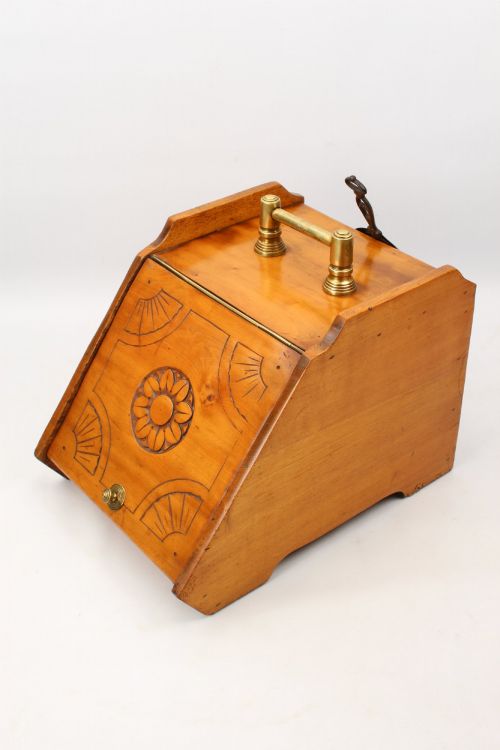
Camphorwood, oak and mahogany dominate the offerings, appearing as plain boards, panelled facades or wax-polished surfaces fitted with metal carrying hardware. Buyers will find that many of these heavy-duty chests retain their original drop handles, inset grips and locking mechanisms intended for secure transit.
Materials and construction methods
Carpenters constructed these boxes primarily from durable hardwoods like oak, mahogany and camphorwood, selecting each timber for its resilience and grain. Camphorwood provided natural insect-repellent qualities suited to storage, whilst oak and mahogany offered the structural rigidity required for heavy domestic use or arduous travel.
Joinery techniques combined pegged tenons, dovetails and panelled construction to ensure the carcase withstood the strains of movement and weight. Metalwork played an essential structural role, with brass carrying handles, iron straps and leather studding reinforcing the corners and edges against impact.
Evaluating construction and material quality
Quality rests upon the selection of timber and the integrity of the original hardware, distinguishing utilitarian containers from finer cabinet-maker pieces. Superior examples display dense, well-figured grain, solid timber carcases without excessive replacement panels, and robust brass fittings securely fixed to the wood.
The sophistication of the internal layout and joinery further separates standard items from exceptional ones. Boxes featuring cleanly dovetailed drawer construction, original locking mechanisms with functional keys, and well-preserved secondary timbers demonstrate superior craftsmanship.
The Brass Handle Blanket Box Glossary
- Mule chest
- A storage chest featuring one or more drawers at the base beneath a primary lift-lid compartment. This form evolved in vernacular workshops to combine coffer storage with accessible drawer space.
- Campaign trunk
- A portable chest built in sections or with recessed brass handles for military officers on active service. These pieces prioritised sturdy construction and ease of transport.
- Coffer
- A heavy wooden box with a hinged lid used traditionally for storing valuables and textiles. Early examples rely on robust plank construction and sturdy framing.
- Cellarette
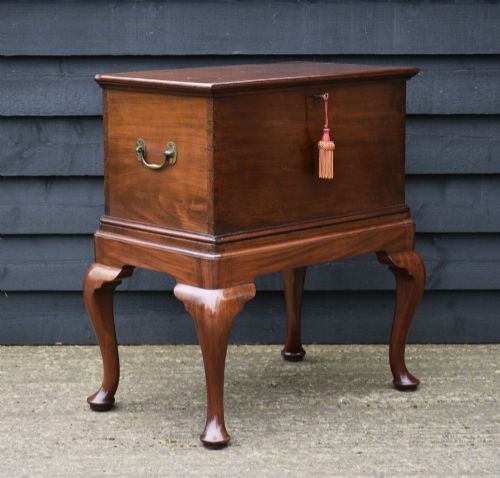
- A lockable container designed for holding bottles or wine, often finished in mahogany and lined for thermal or protective storage. These appear in formal dining spaces.
- Secondary timber
- The interior or structural wood used in cabinet-making that remains hidden from view, such as drawer linings or base boards. Examining these timbers helps identify the period and regional origin.
Brass Handle Blanket Box: Frequently Asked Questions
What were camphor wood trunks used for?
Camphor wood trunks served primarily to store garments, blankets and textiles during long voyages and domestic storage. The natural aromatic oil within the timber repelled moths and insects effectively.
Officers and sailors favoured these boxes for maritime transport because the wood resisted moisture and kept contents fresh in humid climates.
How do I care for an antique wooden chest?
Maintain antique wooden chests by keeping them away from direct heat sources and sudden humidity changes that cause timber to split. Apply a microcrystalline wax occasionally to nourish the surface without building up excessive residue.
Avoid placing damp items directly onto the interior wood to prevent staining and water damage to the historic finish.
What is the difference between a coffer and a mule chest?
A coffer consists simply of a deep box with a lid attached by hinges, designed entirely for top-loading storage. It represents one of the earliest forms of domestic furniture.
A mule chest adds one or more drawers beneath the main lift-lid compartment, allowing users to retrieve smaller items without disturbing the contents piled above.