

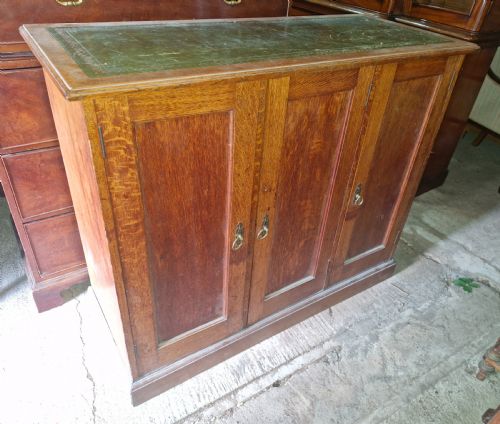


Three Panel Chest
A three panel chest is a sturdy timber storage piece built to hold linens and valuables, offering robust construction and enduring character.
Three Panel Chest
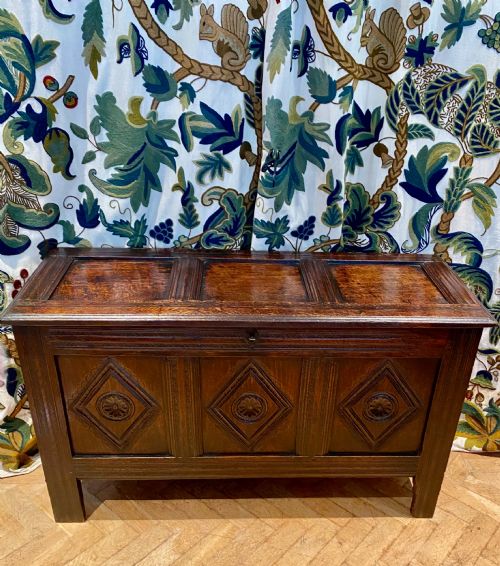
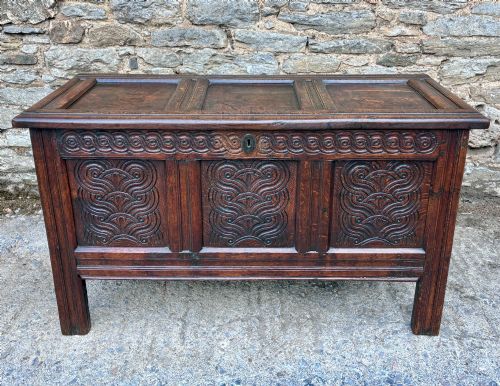
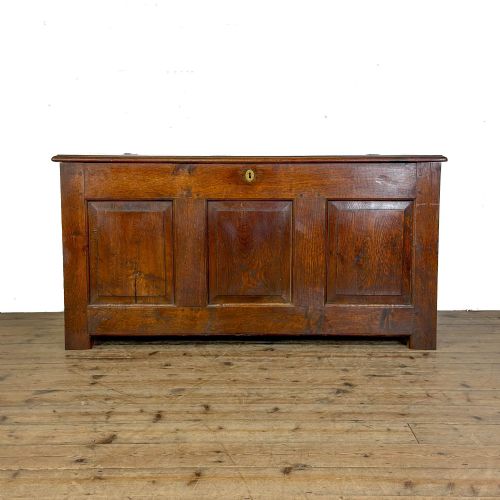
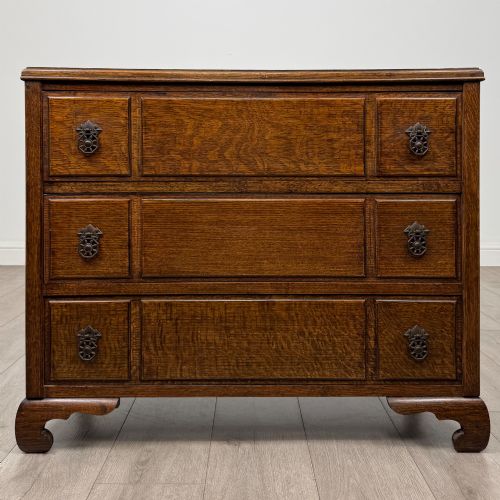
When you search for a three panel chest, you are looking at substantial storage furniture built primarily from solid oak across several centuries. The pieces on this page span from the seventeenth century through the Georgian era and into the twentieth century, taking the form of coffers, blanket chests, and mule chests with storage drawers at the base.
You will most frequently encounter English country pieces produced in solid oak, reflecting traditional joinery methods. These items range from early joined chests dating back to the sixteen-eighties through to later revival styles and painted timber variations.
How they were made
Makers built these chests using solid oak, employing traditional frame and panel construction to allow the timber to expand and contract naturally with seasonal changes in temperature and humidity. Iron and brass fittings such as hinges, latches, and occasional handles reinforce the heavy wooden structures.
Surface treatments vary from natural waxed finishes highlighting the grain of the oak to painted timber bases. Carved decoration appears on select examples from the seventeenth and eighteenth centuries, whilst other pieces rely on the simple geometry of fielded or arched panels for visual texture.
Listings feature pieces spanning from the seventeenth century through the Edwardian period, executed primarily in solid oak with occasional painted timber finishes.
What varies in quality
Quality in these chests rests upon the integrity of the timber, the crispness of any hand-carved ornamentation, and the survival of original structural elements such as boards, feet, and hinges. Pieces retaining their early joined construction and internal fittings like candle boxes sit at a higher level than heavily altered examples.
The balance of proportions and the quality of the oak figure also determine the standing of a piece. Finer examples display thoughtful grain selection in the three panels and tight, precise joints that have remained stable across centuries of use.
The Three Panel Chest Glossary
- Cofer
- An early term for a strongbox or chest used for storing valuables, linens, and documents. These pieces usually feature a hinged lid and solid timber construction.
- Mule chest
- A storage chest fitted with one or more drawers at the base beneath the main trunk compartment. This form bridges the gap between the traditional blanket box and the chest of drawers.
- Fielded panel
- A wooden panel with a central raised area surrounded by a thinner bevelled edge that fits into a grooved frame. This technique adds depth to the facade and helps prevent the wood from splitting.
- Joined chest
- Furniture constructed using mortise and tenon joints secured with wooden pegs rather than modern fasteners. It represents a hallmark of early English cabinet making.
- Candle box
- A small internal compartment built inside a chest, traditionally used to store tallow candles away from linens and pests. Its survival adds practical interest to older pieces.
Three Panel Chest: Frequently Asked Questions
What is a three panel chest used for?
These pieces were historically utilised for storing household textiles, blankets, clothing, and valuables safely away from damp and pests. Today they function well in modern homes as living room coffee tables, hallway blanket boxes, or bedroom storage trunks.
The deep interior compartment accommodates bulky items easily, whilst the flat top surface provides a display area for lamps, books, or decorative objects.
How do I date a three panel chest?
Dating relies on examining the construction methods, tool marks, timber characteristics, and style of the carving or panels. Seventeenth-century examples often feature pegged frame and panel joinery with hand-split oak boards and simple geometric carvings.
Later pieces from the Georgian era frequently incorporate lower drawers, ogee mouldings, or fielded panels. Comparing the patination and wear patterns on the oak also helps establish the age of the piece.
What is the difference between a coffer and a mule chest?
A coffer is essentially a box with a hinged lid for top-loading storage, representing one of the oldest forms of domestic furniture. A mule chest adds one or more drawers beneath the main trunk compartment.
This addition of lower drawers makes a mule chest more accessible for everyday items without requiring you to remove objects stacked on top of the main compartment.
How do I care for an antique oak chest?
Keep antique oak furniture away from direct heat sources and dramatic humidity fluctuations to prevent the timber from splitting or warping. Feed the wood occasionally with a traditional beeswax polish to maintain the natural lustre and protect the surface.
Avoid using modern silicone-based sprays, as these can penetrate the pores of older timber and damage the accumulated patination built up over centuries.