

Brass Hallway Holder
These brass hallway holder pieces gather sticks and umbrellas in utilitarian metal and warm oak, bringing functional entry furniture into daily domestic use.
Brass Hallway Holder
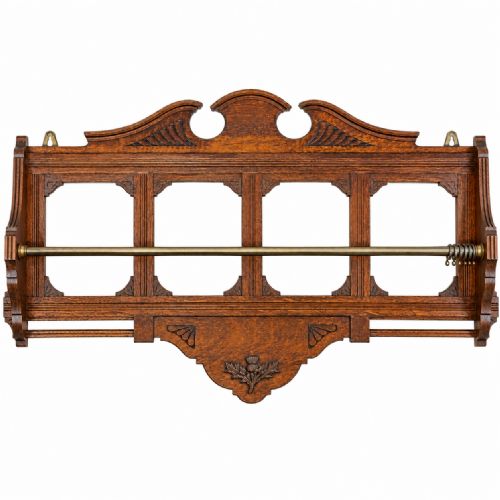
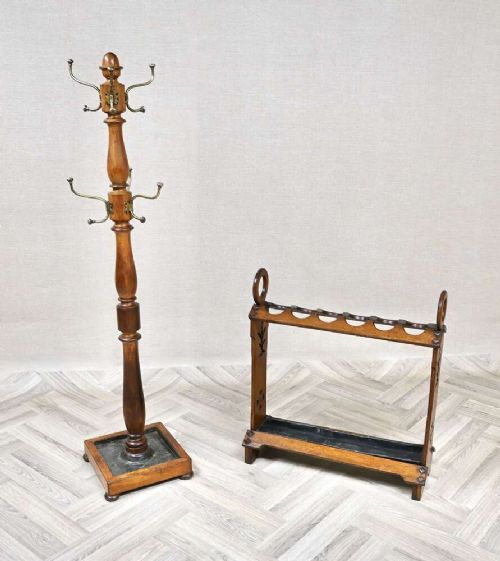
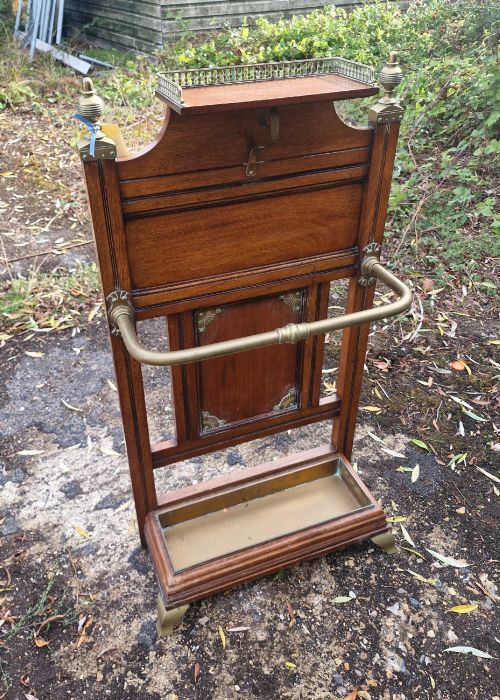
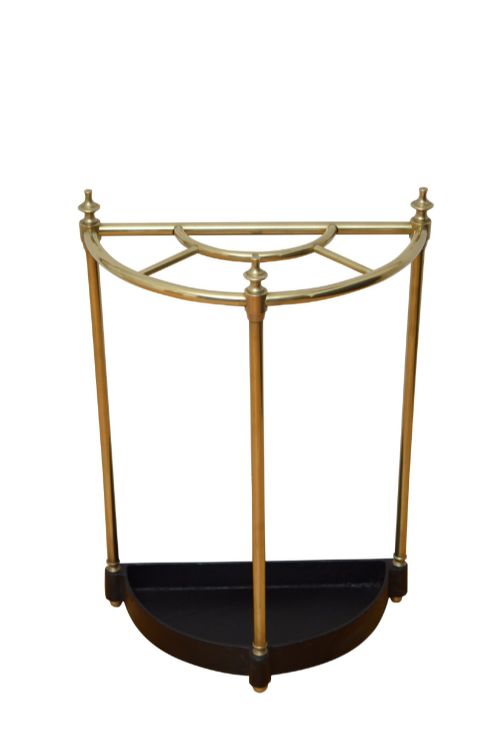
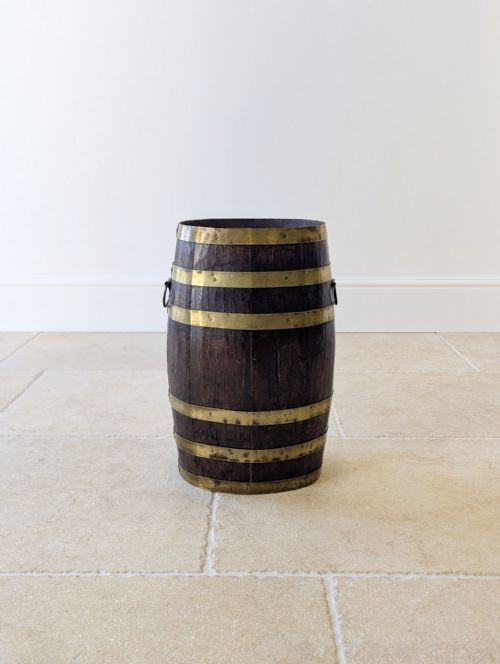
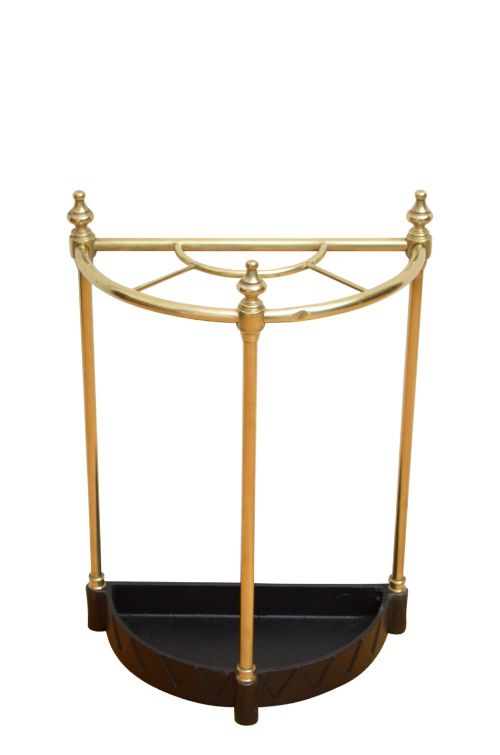
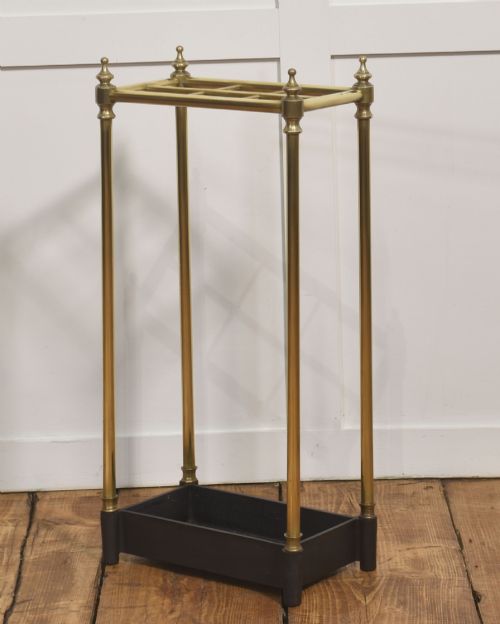
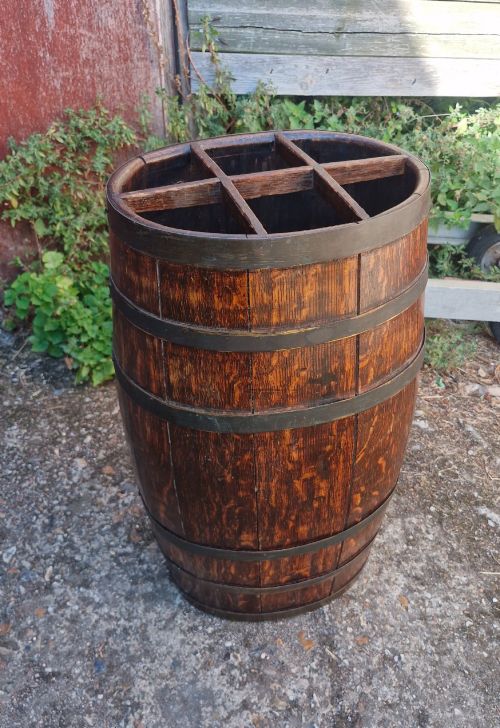
A brass hallway holder typically takes the form of a stick stand, umbrella stand, or coopered barrel designed for domestic entrances. These items emerge primarily from the Victorian and Edwardian eras, spanning the nineteenth and early twentieth centuries.
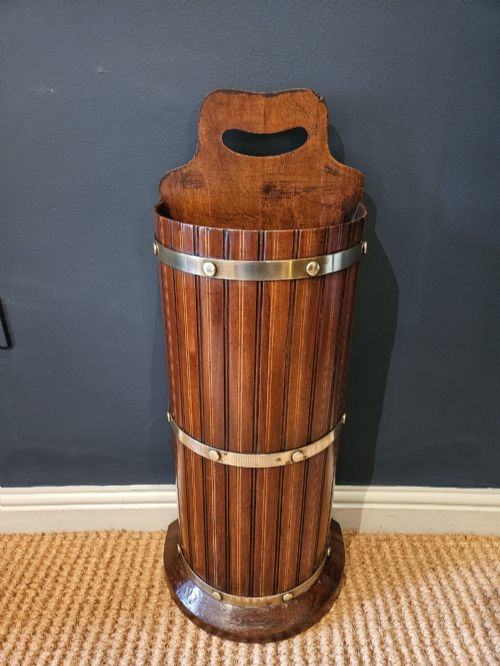
Makers shaped these hall furnishings in diverse profiles, including semi-lune wall-fitting designs, oval shapes, and upright cylindrical barrels. Common variations feature combinations of solid timber and metal frameworks to manage damp walking aids upon entering the house.
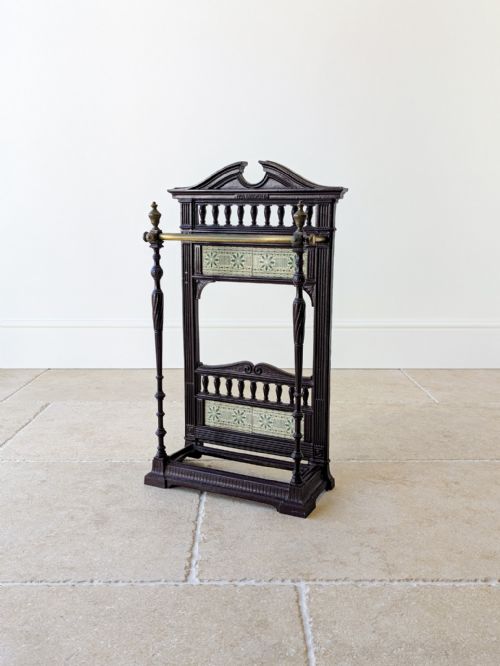
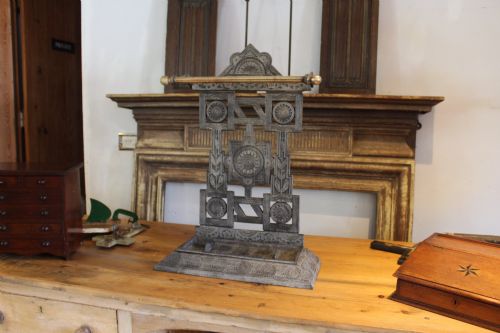
The collection includes traditional British and English country house designs alongside specific stylistic expressions such as the Aesthetic Movement and Arts and Crafts. Such variety reflects the changing demands of nineteenth-century and early twentieth-century domestic hallway organisation.
Materials and construction methods
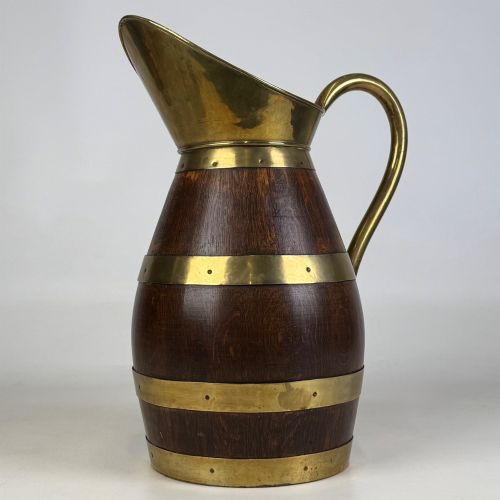
Construction relies heavily on structural timbers such as oak and mahogany, paired with sheet brass, cast iron, and copper. Coopered barrels utilise wooden staves held tightly together by metal bands or braces.
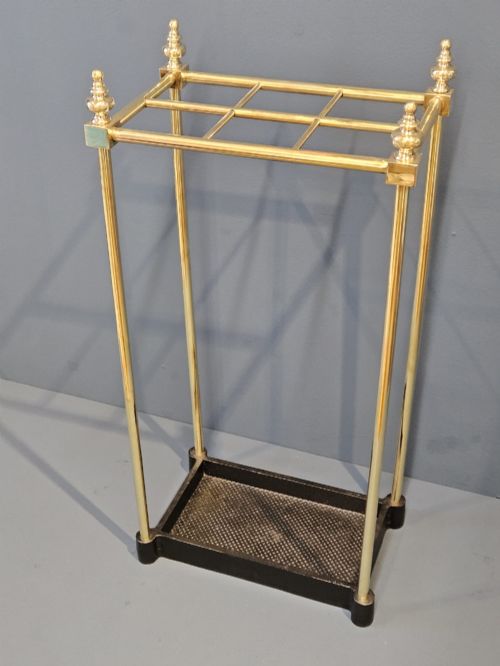
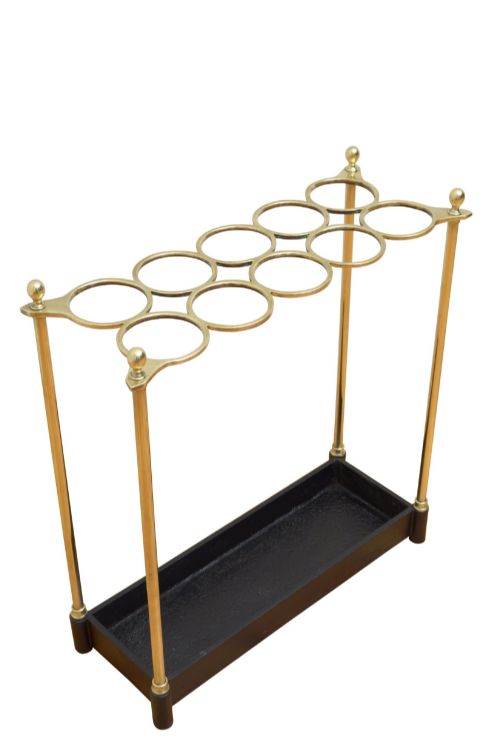
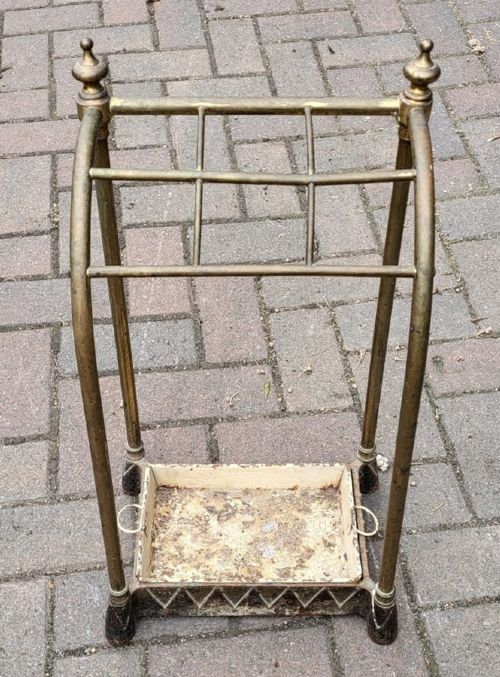
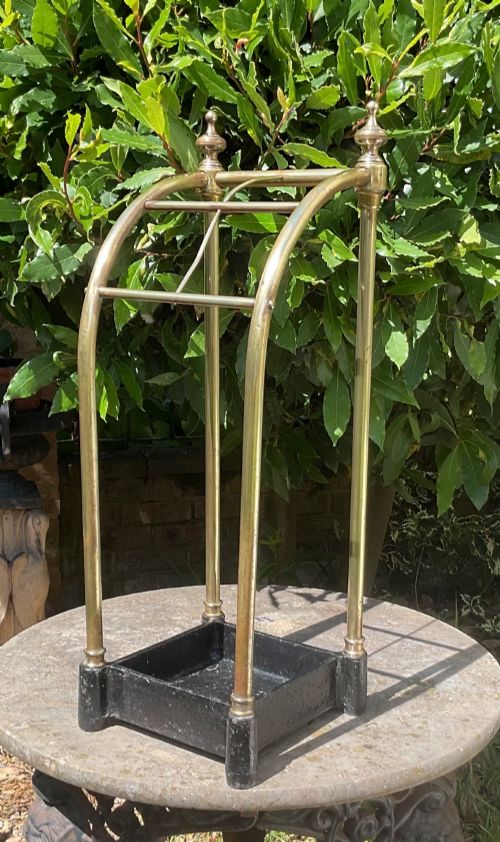
Metal components involve cast iron frames, spun brass bodies, and applied brass mounts, often accented with ball finials or dog-tooth drip trays. Artisans secured these elements with traditional joinery, rivets, and metal banding to withstand the weight of heavy walking canes.
Brass Hallway Holder Retail Price Guide 2026
Typical asking prices for brass hallway holder among the pieces listed under this phrase on Sellingantiques today, from the lower quarter to the upper quarter. They describe what is for sale here now, not the wider market.
Certain oak barrels proudly display the English coat of arms, ensuring guests are formally greeted by royalty while depositing muddy walking sticks.
Distinctions in standard and design
Quality rests upon the substance of the metalwork and the integrity of the timber framing. Thicker gauge brass and substantial cast iron bases provide greater stability than lighter, pressed metal alternatives.
Superior examples display thoughtful detailing such as integrated drip trays to catch moisture, decorative finials, and skilled cooperage on wooden barrels. The presence of identifiable maker craftsmanship elevates the standard above standard commercial utility items.
Coalbrookdale·Thomas Jeckyll·Shoolbred
The Brass Hallway Holder Glossary
- Demi-lune
- A half-moon shape designed to sit flat against a hallway wall. This profile saves floor space in narrow entrance passages.
- Coopered
- Constructed from wooden staves bound together by metal hoops, similar to barrel-making. This technique provides natural water resistance for umbrella storage.
- Drip tray
- A removable metal dish placed at the base to catch water from wet umbrellas. It protects hallway flooring from moisture damage.
- Ball finial
- A rounded decorative terminal capping the top of a metal rod or frame. It adds a finished aesthetic touch to utilitarian items.
- Aesthetic Movement
- A late nineteenth-century design style emphasising visual beauty over narrative meaning. Pieces from this movement often incorporate stylized floral or geometric motifs.
Brass Hallway Holder: Frequently Asked Questions
What periods do these pieces date from?
The pieces span the Victorian and Edwardian eras, reaching from the nineteenth century into the early twentieth century.
Most examples date between the eighteen-eighties and nineteen-thirties, reflecting period hallway fashions.
How were these stands used originally?
Households placed them in entrance halls and lobbies to store walking sticks, canes, and wet umbrellas.
The integrated trays caught rainwater, keeping hallway floors dry and orderly for arriving visitors.
What materials are most common?
Brass and oak dominate the construction, often combined with cast iron, copper, and mahogany.
Coopered wooden barrels feature metal bands, while other versions utilise solid brass frames and iron bases.