
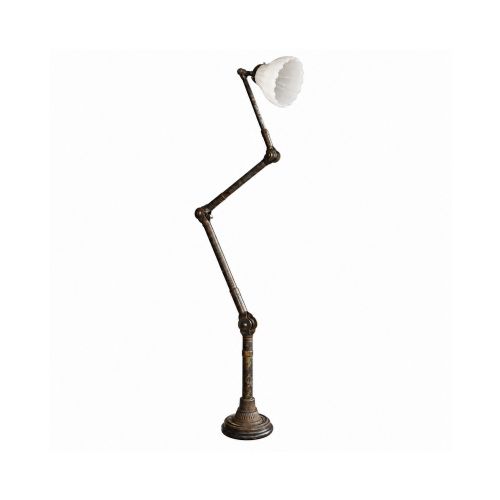

Brass Glass Shade
Brass glass shade lighting spans eras from Victorian oil lamps to Art Deco pendants, offering warm illumination through metal and translucent bowls.
Brass Glass Shade
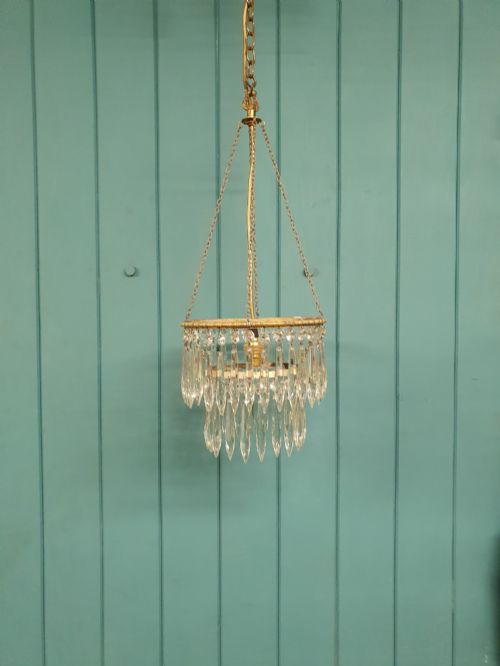
A brass glass shade selection comprises ceiling lights, oil lamps, chandeliers, and table lamps originating from the nineteenth and twentieth centuries. These fixtures combine metallic frameworks with blown, pressed, or cut glass diffusers.
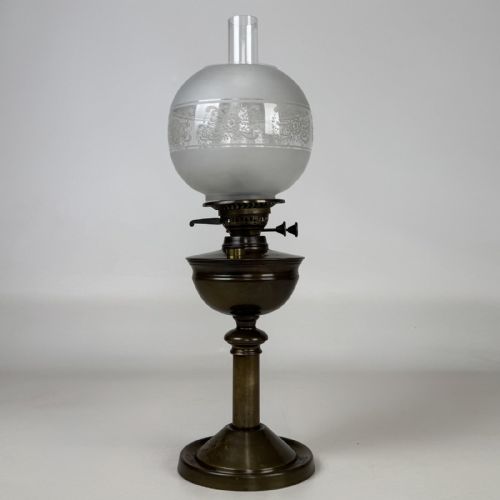
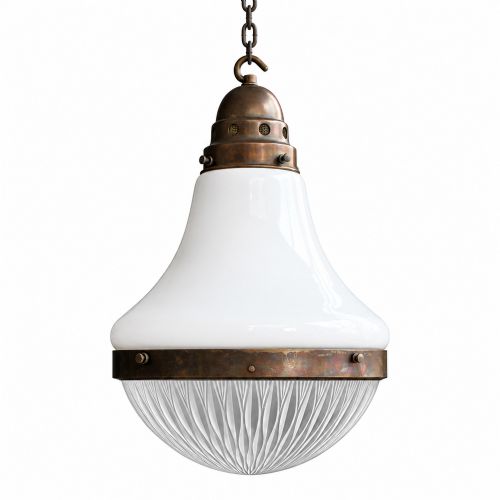
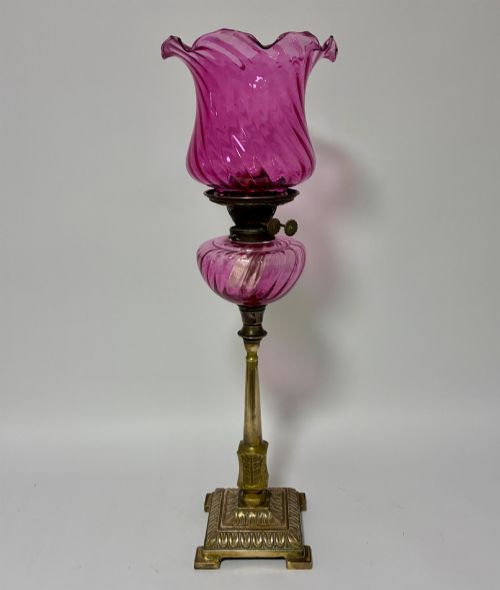
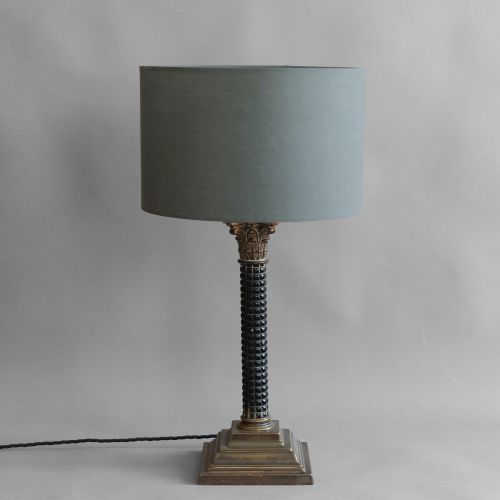
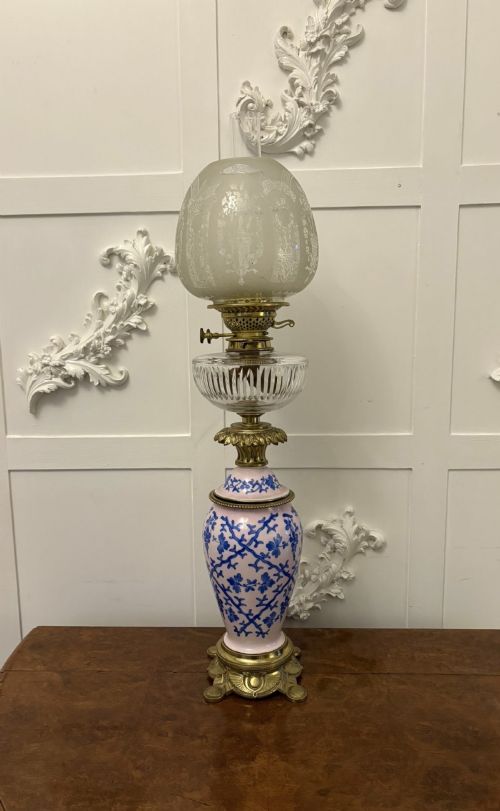
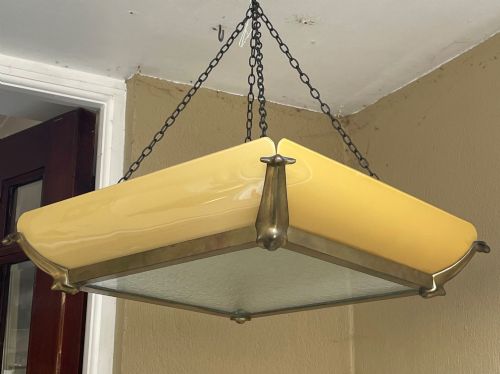
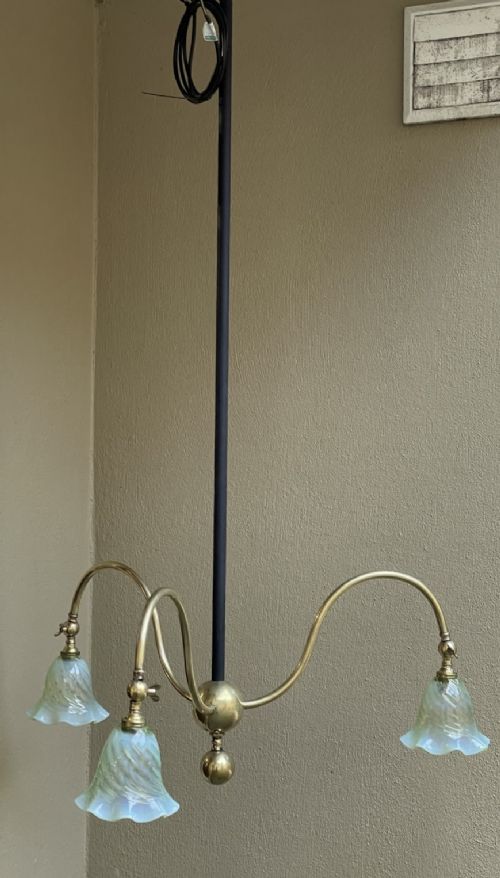
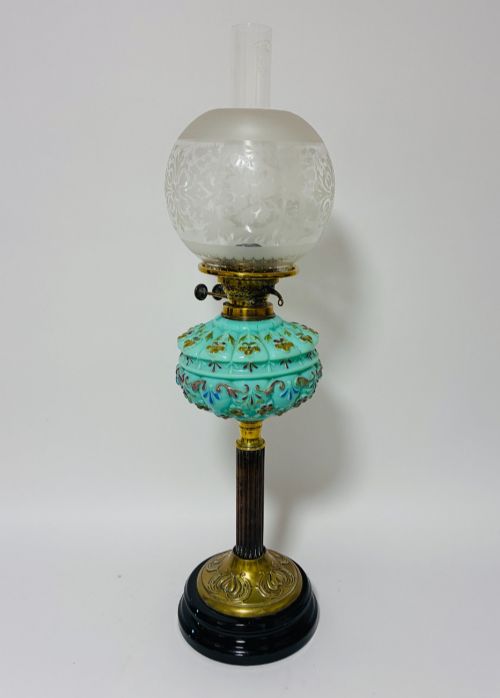
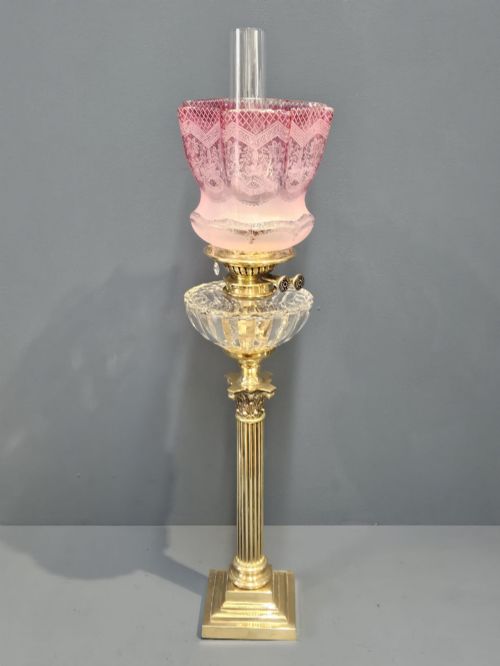
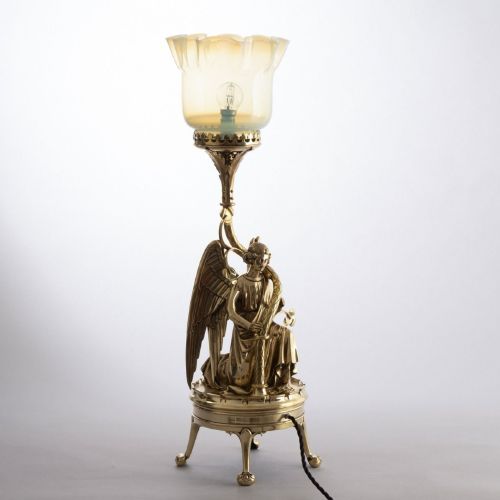
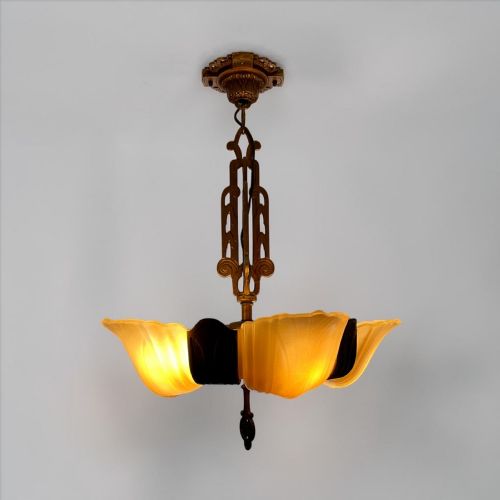
Victorian and Edwardian examples lean towards Corinthian column oil lamps and multi-arm gasoliers fitted with cranberry, vaseline, or opaline shades. Later Art Deco and industrial variations introduce geometric slip shades, moonstone glass, and simple pendant bowls.
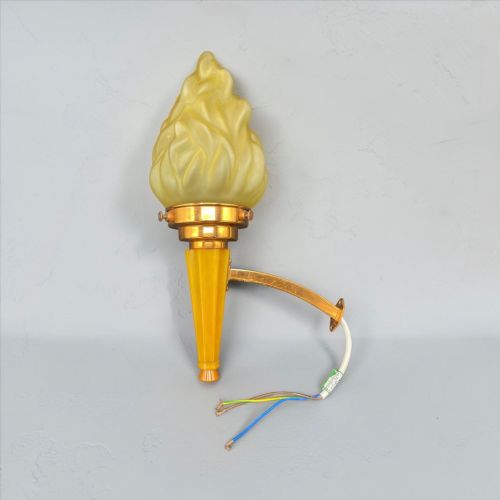
Domestic and public interiors alike utilise these luminaires, ranging from hotel wall lanterns to residential rise and fall ceiling lights. The core format pairs a solid brass body with a decorative glass component designed to soften direct light.
How they were made
Cast and spun brass form the structural skeleton of these lamps, providing sturdy galleries, arms, and columns to support the heavy glass components. Workshops utilised traditional foundry methods to produce detailed leaf motifs, columns, and adjustable mechanisms.
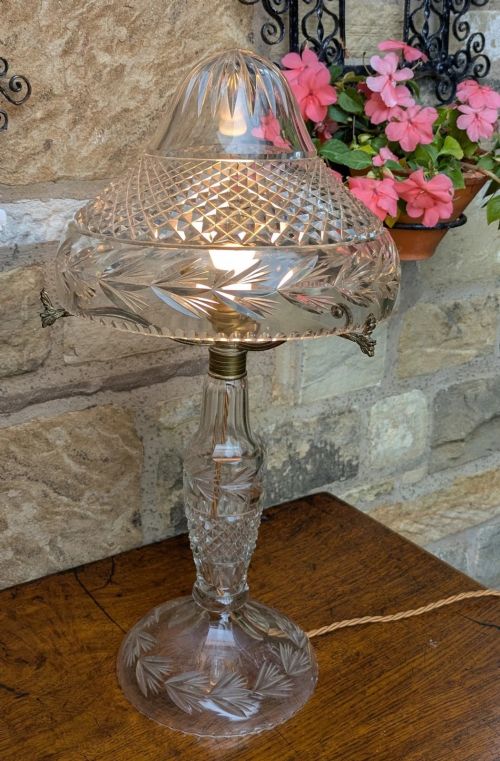
The glass elements are created through hand-blowing, moulding, or acid-etching, frequently incorporating minerals to achieve characteristic hues like cranberry, amber, and vaseline. Cut glass and crystal shades required precise wheel-cutting to generate geometric surface patterns.
Listings feature brass and glass lighting spanning from Victorian oil lamps to 1940s industrial pendants and Art Deco globes.
What varies in quality
Quality rests upon the weight of the cast brass and the depth of its detailing, alongside the clarity and coloration of the glass shade. Superior pieces display crisp casting marks, hand-finished details, and original blown glass rather than modern replacements.
The integration between metal galleries and glass rims dictates structural integrity, where heavier mounts securely hold thick, evenly distributed glass without excessive play.
The Brass Glass Shade Glossary
- Vaseline glass
- A transparent yellowish-green glass containing uranium dioxide that glows under ultraviolet light. It appears frequently in Victorian and Edwardian lighting.
- Opaline glass
- An opaque or translucent pale glass, often milky white or pastel tinted, used to diffuse light softly. It gained popularity during the nineteenth century.
- Gasolier
- A branching ceiling fixture originally designed to burn coal gas before conversion to electricity. These often feature multiple arms and matching shades.
- Rise and fall
- A mechanical pulley system utilising counterweights to allow the height of a suspended ceiling light to be adjusted easily. It was common in Edwardian interiors.
- Plafonnier
- A ceiling-mounted bowl light that sits close to the surface, popular in early twentieth-century domestic settings.
Brass Glass Shade: Frequently Asked Questions
How do I date a brass glass shade?
Dating relies on combining the manufacturing style of the brass mount with the coloration and production technique of the glass shade. Victorian pieces often feature heavy columnar designs or gasolier arms, while twentieth-century examples shift towards streamlined Art Deco or industrial forms.
Examining fixings, screw threads, and the presence of gas keys or burner mechanisms provides further chronological clues. Archived designs show clear stylistic evolutions from ornate nineteenth-century oil lamps to utilitarian 1930s pendants.
Were these lights originally electric?
Many fixtures originating from the nineteenth century were initially configured for oil or gas lighting before later conversion to electricity. Transitional models and twentieth-century pieces were built to house electrical wiring from their inception.
Fittings such as rise and fall chandeliers and wall brackets frequently accommodated different fuel sources depending on the decade of manufacture. Rewiring is standard practice for safe modern integration.
How do I clean an antique glass shade?
Cleaning requires removing the glass shade from its brass gallery to prevent stress on delicate metal screws and rims. Warm water and mild soap suit most smooth or moulded surfaces, avoiding abrasive pads that scratch historic glass.
Brass components benefit from minimal intervention to preserve patination, dusting them gently rather than applying harsh metal polishes. Original etched or frosted surfaces demand particular care during washing.