



Brass Glass Display Box
These brass glass display box pieces are glazed containers framing precious keepsakes, drawing the eye to small treasures.
Brass Glass Display Box
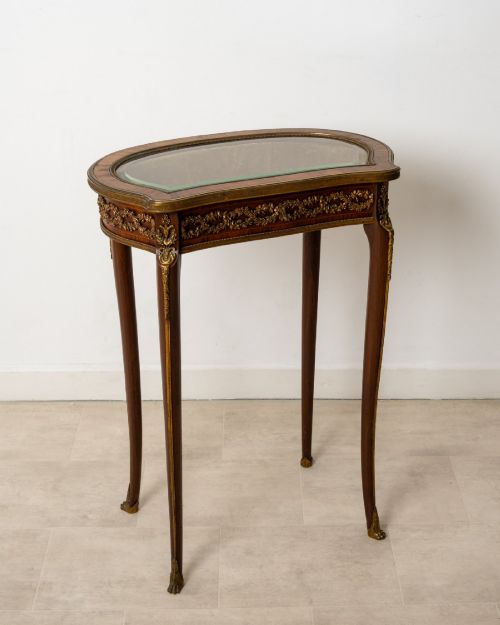
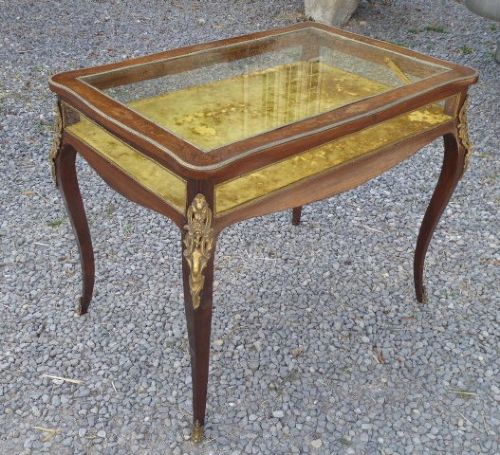
A brass glass display box serves as a vitrine or small cabinet designed to showcase precious trinkets, jewellery, and curiosities. When exploring a brass glass display box, a buyer typically encounters table cabinets, bijouterie tables, and trinket boxes hailing from the Victorian era up to the early twentieth century.
The selection ranges from French Rococo Revival or Napoleon III pieces featuring ormolu mounts to sturdy English maritime industrial examples and mahogany or rosewood bijouterie tables. Most pieces integrate clear glazed panes with metal frames to protect contents while offering an all-round view.
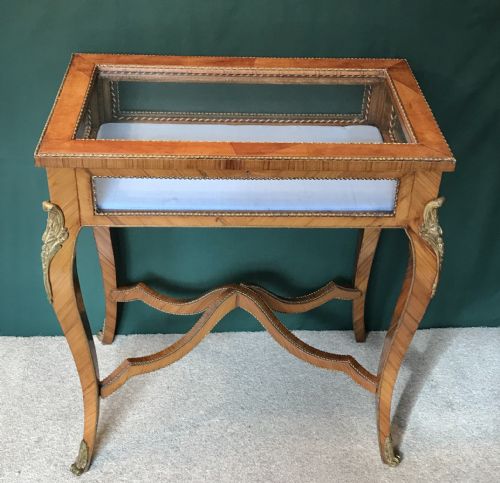
Victorian examples often incorporate bevelled glass drop-front doors or hinged lids lined with velvet. These objects function as tabletop display cases, key cabinets, and dedicated jewellery boxes intended for domestic drawing rooms or utilitarian service.
Materials and construction
Makers constructed these pieces using solid hardwoods such as mahogany, rosewood, kingwood, and burr walnut as supportive carcases or framing. They integrated brass, ormolu, and gilded bronze for structural mounts, inlaid stringing, and decorative hinges.
Glazing typically involved fitted glass plates, frequently bevelled at the edges to catch the light, secured within metal channels or wooden rebates. Interiors were lined with fabrics such as black velvet to cushion delicate items like jewellery and medals.
Brass Glass Display Box Retail Price Guide 2026
Typical asking prices for brass glass display box among the pieces listed under this phrase on Sellingantiques today, from the lower quarter to the upper quarter. They describe what is for sale here now, not the wider market.
A night porter needed a secure place for guests' keys, resulting in specialised brass-framed key cupboards.
Indicators of quality
Quality rests in the precision of the metalwork, the weight and gilding of the ormolu mounts, and the choice of cabinet timbers. Superior examples display crisp brass inlay, tightly mitred corners, and heavy bevelled glass panes that sit flush within their frames.
The sophistication of the decorative style dictates the tier of the piece, moving from plain maritime or utility items to ornate French revival designs with elaborate cast bronze ornamentation. Interior finishing, including intact velvet linings and working locks with keys, marks higher grades of manufacture.
The Brass Glass Display Box Glossary
- Bijouterie
- A small cabinet or table specifically constructed with glass panels for displaying trinkets and jewellery. These pieces became popular in nineteenth-century drawing rooms for showing off personal collections.
- Ormolu
- Gilded bronze used for decorative mounts and framing on furniture and boxes. The technique involves applying a gold amalgam to bronze before heating.
- Bevelled glass
- Glass panes with edges ground and polished at an angle to create a decorative border. This treatment adds depth and refracts light across the displayed contents.
- Napoleon III
- A French design style spanning the mid to late nineteenth century that revived Rococo and Renaissance motifs. It is characterised by opulent ormolu mounts and exotic timber veneers.
- Marquetry
- The art of applying pieces of veneer to a structure to form decorative patterns and pictures. Makers utilised various woods to create contrasting geometric or floral designs on cabinet surfaces.
Brass Glass Display Box: Frequently Asked Questions
What is a bijouterie table?
A bijouterie table is a glazed display table designed to hold and exhibit small valuable items like jewellery and medals. They typically feature hinged glass tops or drop-front doors.
These tables were placed in Victorian drawing rooms to allow guests to inspect curiosities without handling them directly.
How do I clean the glass?
Clean the glass panes gently using a soft cloth and a mild glass cleaner applied to the cloth rather than sprayed directly. This prevents moisture from seeping into the wooden framing or tarnishing the brass.
Exercise caution around older ormolu mounts and velvet linings to avoid chemical damage or staining.
Can I store heavy items inside?
These boxes and cabinets are intended for lightweight personal items such as rings, trinkets, and documents rather than heavy objects. The internal velvet shelves and glass panels support delicate pieces best.
Placing excessive weight on glass bases or delicate table legs risks structural damage to the historical joints.
How do I date a piece?
Dating relies on identifying timber choices, construction techniques, and stylistic influences such as Victorian revival or Napoleon III ormolu. Examining the glass bevelling and brass casting methods also helps narrow the period of manufacture.
Cabinetry from the mid nineteenth century often displays heavier solid timber construction compared to later twentieth-century iterations.