




Brass Display Case
A brass display case brings order to small treasures, framing delicate objects behind glass while metalwork catches the light.
Brass Display Case
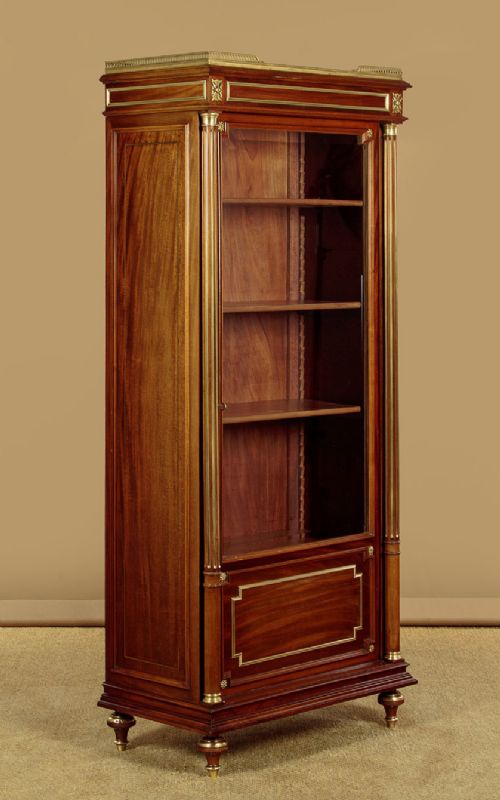
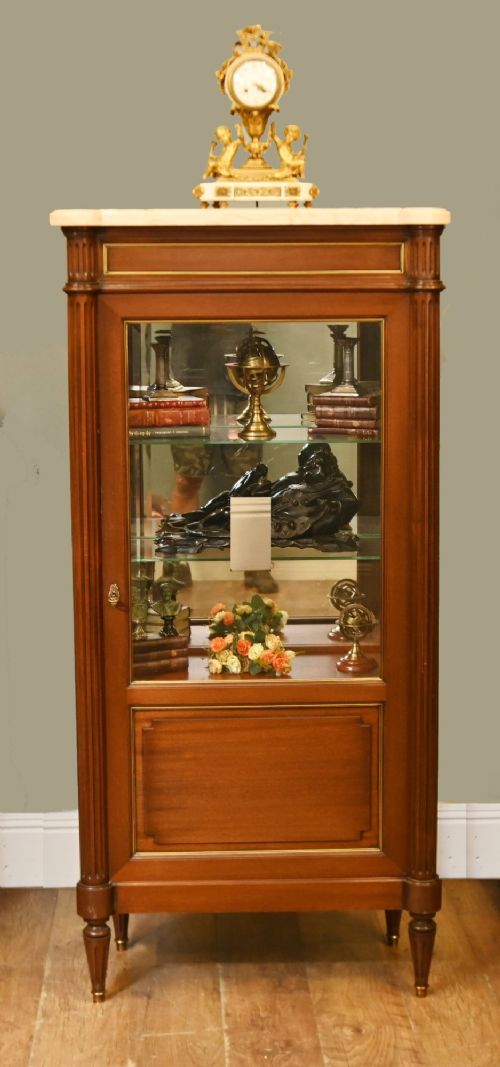
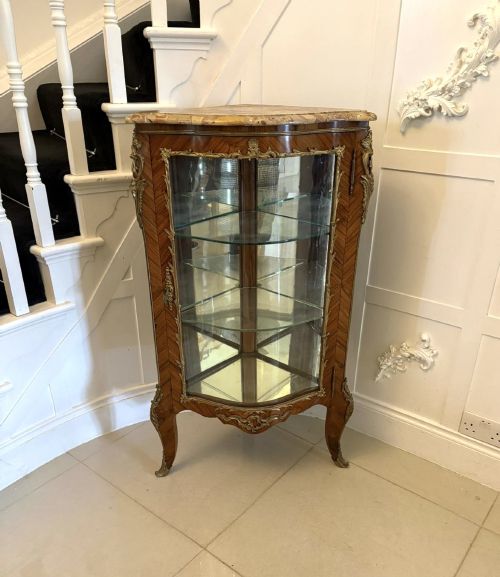
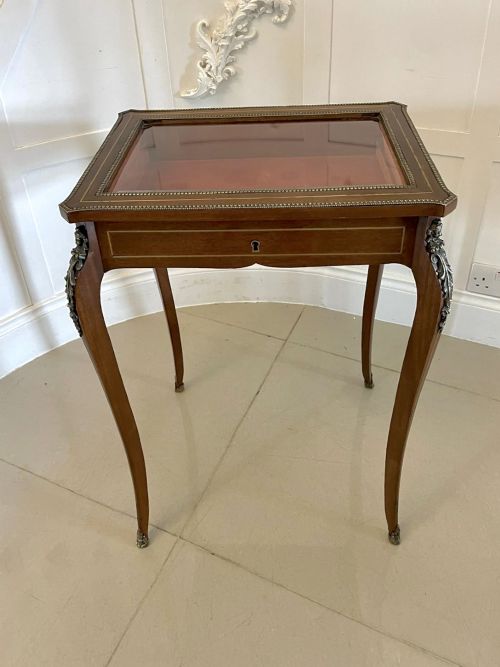
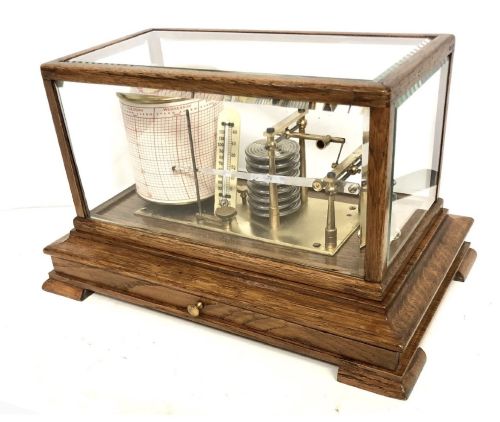
A brass display case gathers items designed to show off collections, jewellery, instruments or small curiosities safely behind glass. Pieces matching this brass display case search span domestic vitrines, shop counters and table cabinets made across the nineteenth and early twentieth centuries.
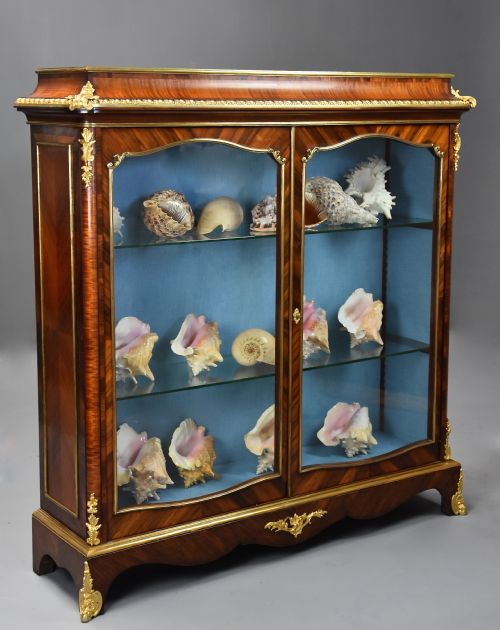
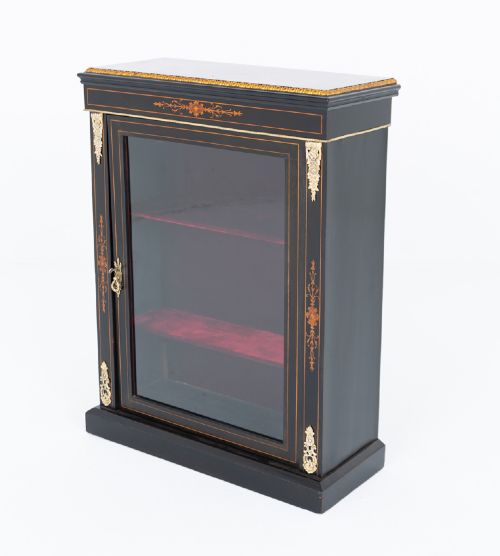
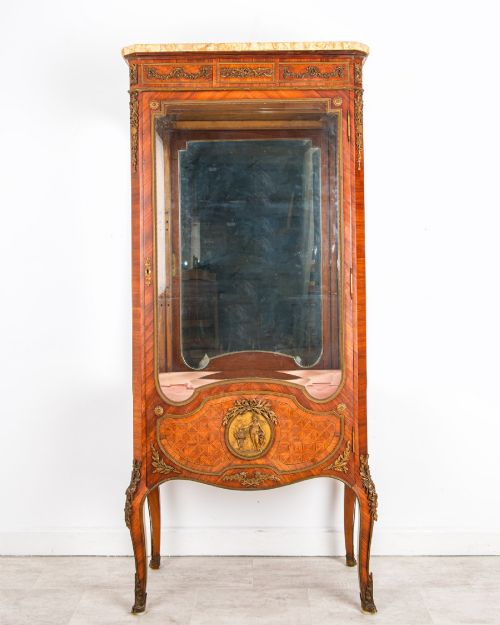
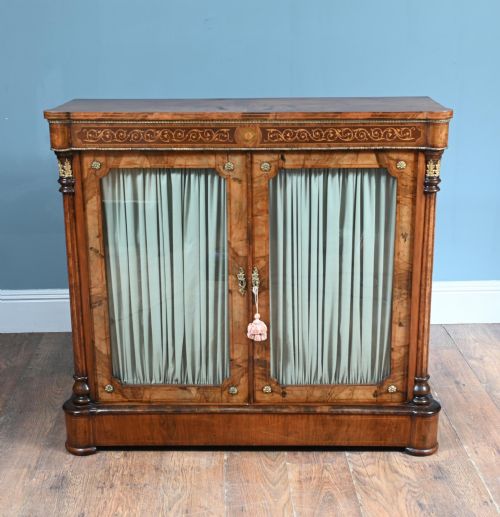
The most common domestic examples take the form of Victorian walnut pier cabinets or French kingwood vitrines with ormolu mounts, while commercial spaces yield Edwardian and 1920s mahogany or oak shop display counters.
These forms reflect periods from Victorian and Edwardian eras through to 1920s commercial design, utilising timber frames enriched with brass wire, mounts or framing.
How they were made
Cabinet makers combined dense hardwoods such as mahogany, walnut, kingwood and oak with structural brass elements, glass panels and occasionally velvet or mirror linings. Ormolu, or gilded bronze, frequently accented the timber frames and glazed doors.
Joinery methods ranged from intricate Boulle inlay and French polishing to robust commercial framing for shop counters. Bevelled glass panels and brass hinges supported the weight of opening doors while maintaining clear sightlines into the interior.
Brass Display Case Retail Price Guide 2026
Typical asking prices for brass display case among the pieces listed under this phrase on Sellingantiques today, from the lower quarter to the upper quarter. They describe what is for sale here now, not the wider market.
Even nineteenth-century night porters needed secure organisation, as evidenced by lined key cupboards nestled among the glass cases.
What varies in quality
Quality rests in the crispness of the brass casting, the depth of the timber figuring and the precision of the joinery. Finer pieces display heavily chased ormolu mounts, well-matched wood veneers like burr walnut or kingwood, and tightly fitted bevelled glass.
Simpler commercial counters rely on sturdy oak or mahogany frames built for utility, whereas domestic vitrines and bijouterie tables focus on decorative refinement and polished brass detailing.
F. Sage & Co.·Saml. Elliott & Sons·Maison Jansen·Charles Wastell Dixey & Son
The Brass Display Case Glossary
- Vitrine
- A glass-fronted cabinet designed for displaying fine china, curiosities or books. These pieces often feature glazed sides to maximise light penetration.
- Bijouterie table
- A glass-topped display table intended for jewellery, medals and small ornaments. They frequently stand on slender legs with gilt metal mounts.
- Ormolu
- Gilded bronze applied as decorative mounts to furniture frames. The technique involves a mercury amalgam method on older pieces.
- Pier cabinet
- A narrow cabinet built to fit the wall space between windows. Victorian examples often incorporate glass doors and velvet linings.
- Boulle
- Marquetry technique utilising tortoiseshell and brass inlay. Named after French cabinet maker André-Charles Boulle, it appears on nineteenth-century pieces.
Brass Display Case: Frequently Asked Questions
What fits inside a brass display case?
These cabinets suit small collections, pocket watches, scientific instruments, ceramics and medals. The enclosed glass protects delicate items from dust while keeping them visible.
Larger shop counters and bookcases accommodate books, textiles and bulkier curiosities across adjustable wooden shelves.
How do I light the interior?
Most antique cabinets rely on ambient room light passing through glass panels and mirrored backs. Many period pieces incorporate mirrored interiors specifically to bounce daylight around the displayed objects.
Modern LED strip lights can be discretely installed behind internal wooden lips if additional illumination is needed for dark rooms.
Where should I place a vitrine?
Position cabinets away from direct sunlight to protect internal linings, paper items and organic materials from fading. Floor-standing pier cabinets and vitrines require stable, level placement to ensure doors align properly.
Table cabinets and countertop models sit comfortably on sideboards, desks or dedicated stands at eye level.
How do I tell Victorian from Edwardian cases?
Victorian examples often feature darker figured timbers like walnut, heavy ormolu mounts, and rich velvet linings. Styles frequently draw on French Revival aesthetics with curved glass and serpentine fronts.
Edwardian and 1920s pieces tend toward cleaner lines, lighter mahogany or oak frames, and commercial shop fittings built for practical retail use.