
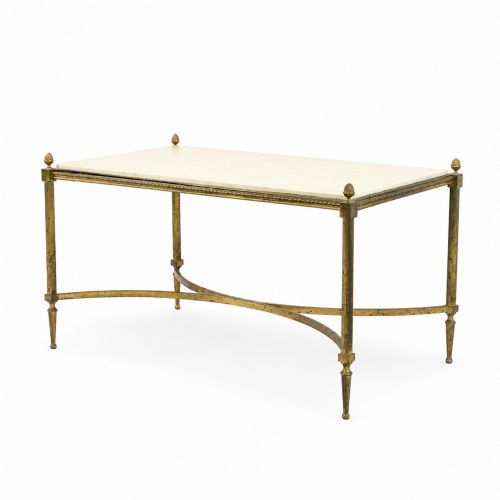


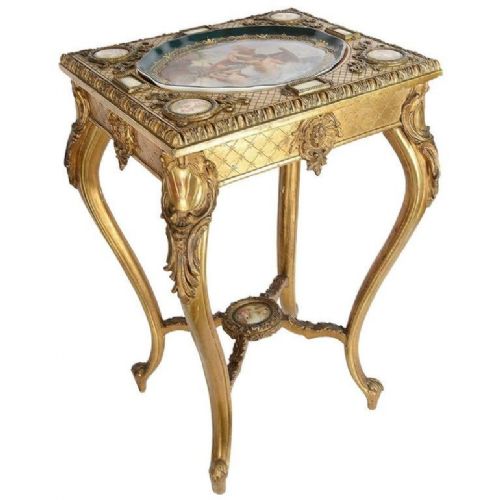

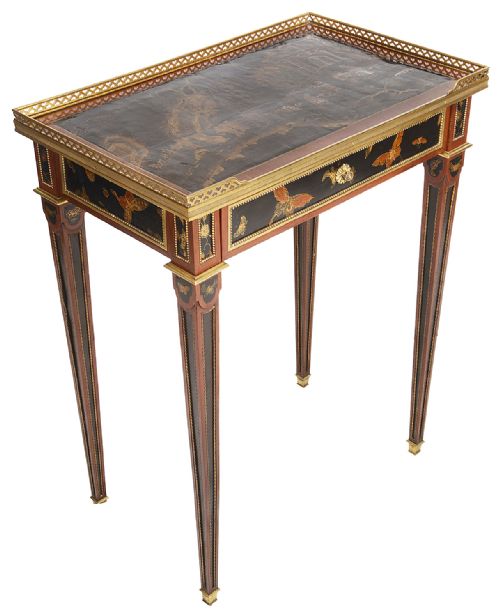

Brass Gilt Coffee Table
A brass gilt coffee table brings heavy cast mounts and bright metal frames into a room, offering a solid stage for lamps and books.
Brass Gilt Coffee Table
A brass gilt coffee table combines metal framing with wood, marble, or lacquer surfaces, spanning the nineteenth century through to the mid-twentieth century. Buyers search for these pieces to anchor a sitting room with French revival curves or clean Regency lines.
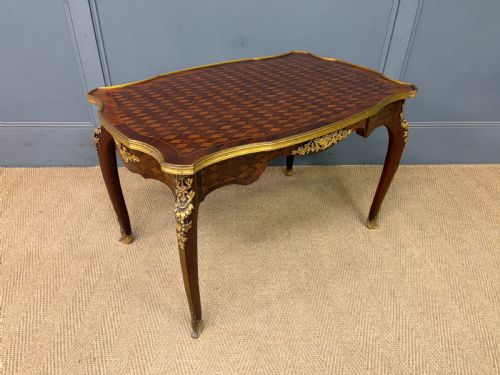
The versions most commonly met on this page date from the Edwardian era and the early twentieth century, drawing heavily on Louis XV and Louis XVI style vocabulary. Makers adapted earlier palace designs into lower proportions suited for twentieth-century entertaining.
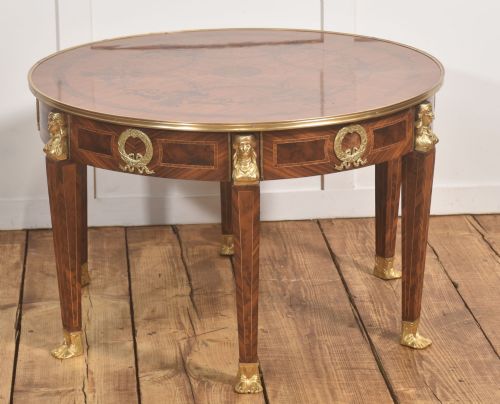
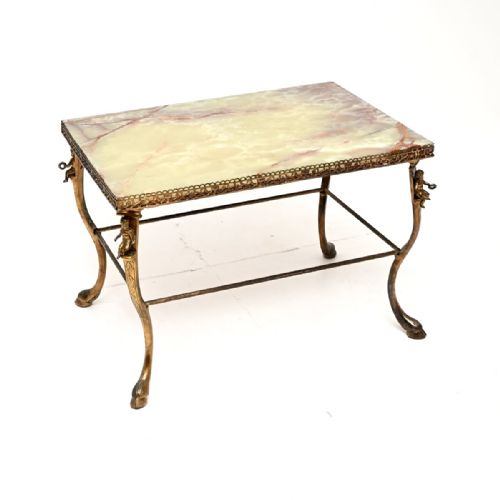
Forming the core of the selection are low coffee tables alongside adapted occasional tables, centre tables, and nesting sets. Many examples incorporate glass, onyx, or marble inserts within gilt metal borders.
Construction and materials
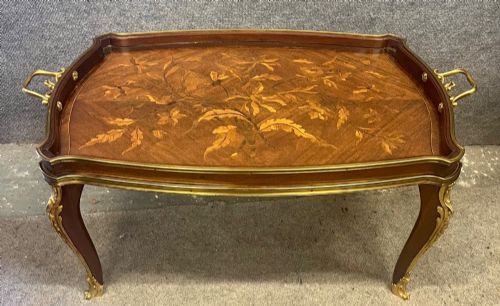
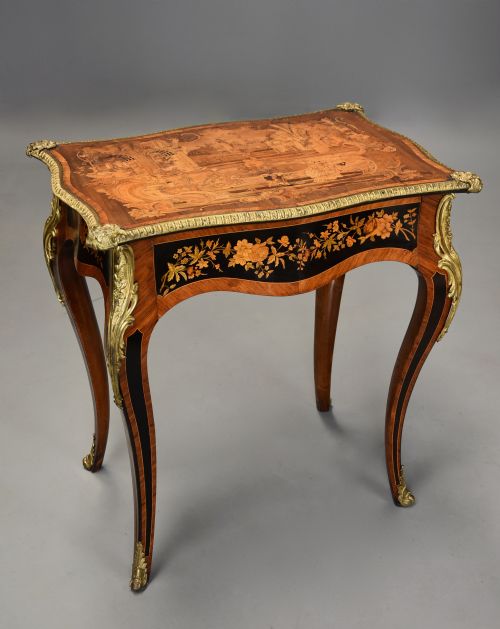
Frames rely on cast brass, ormolu, and gilt metal, often shaped around hardwood carcases of mahogany, kingwood, or lacquered panels. Metal mounts are pinned or screwed to the wooden structure to accent corners and legs.
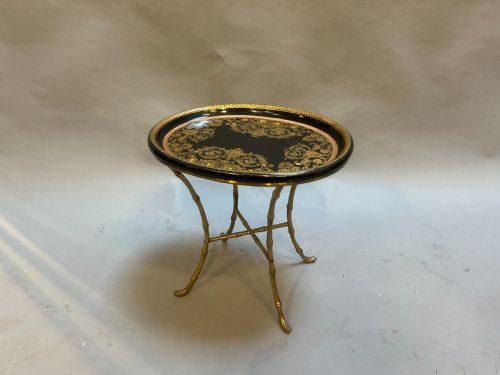
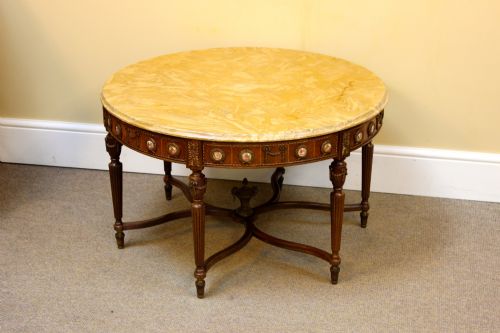
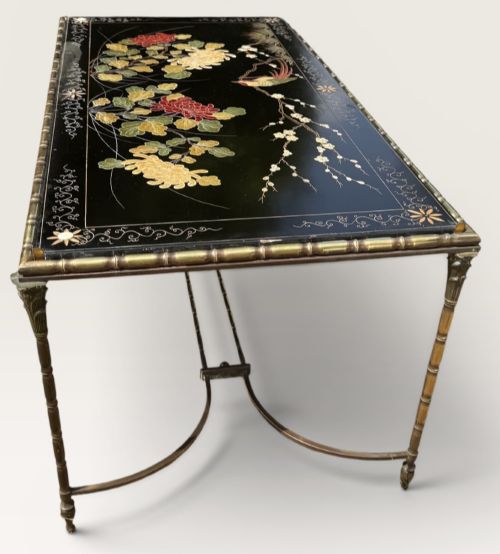
Marble and onyx tops sit inset within rebated wooden or metal frames, relying on their own weight for stability. Lacquered tables use built-up layers of varnish to create smooth dark surfaces, sometimes decorated with hand-painted Chinoiserie motifs.
Dolphin bases swim through the selection, proving that nineteenth-century metalworkers loved sea life just as much as floral scrolls.
Judging quality and execution
The weight and crispness of the cast brass mounts separate finer pieces from simpler production. Sharp chasing on ormolu details and cleanly fitted marble slabs indicate higher workshop standards.
Cabinetwork underneath the gilt framing reveals the underlying standard, seen in tight joints and well-figured mahogany or kingwood veneers. Tables with hand-lacquered decoration show depth in the finish rather than flat printed patterns.
Maison Bagues·Masion Ramsay
The Brass Gilt Coffee Table Glossary
- Ormolu
- Gilt bronze or brass mounts applied to furniture. The technique involves a mercury-gilding process that creates a dull gold surface.
- Kingwood
- A dense, richly figured Brazilian timber used for veneers. It shows dark purple and brown stripes that contrast against lighter woods.
- Chinoiserie
- European decorative style imitating Chinese artistic traditions. It employs lacquered grounds and painted gilt figures or landscapes.
- Parquetry
- Geometric wood inlay forming patterned surfaces. Artisans cut small blocks of contrasting timber to fit precise floor or table top designs.
- Marquetry
- Pictorial veneer work using various woods and organic materials. Craftsmen assemble detailed floral or scroll motifs within a contrasting background.
Brass Gilt Coffee Table: Frequently Asked Questions
Are these tables sturdy enough for daily use?
Most pieces handle normal living room use, holding cups, books, and decorative objects without difficulty. Heavier marble or onyx tops provide stable surfaces.
Move tables by lifting them from the main frame rather than pulling by the legs. The decorative gilt mounts and slender legs can loosen if dragged across carpets.
How do I spot a later reproduction?
Examine the construction methods beneath the frame, looking at screw types and wood ageing. Older pieces show hand- cut fixings and natural timber shrinkage.
Modern copies often use uniform machine-cast brass with bright, even chemical patination. Genuine period items display minor wear consistent with decades of handling.
Can I place a hot cup on marble tops?
Marble and onyx resist heat better than wood, but sudden temperature shifts can still crack vulnerable stone. Use coasters to protect polished stone and lacquer surfaces alike.
Spills should be wiped away immediately, especially on older lacquer or polished wood. Acidic liquids can etch marble finishes if left unattended.