

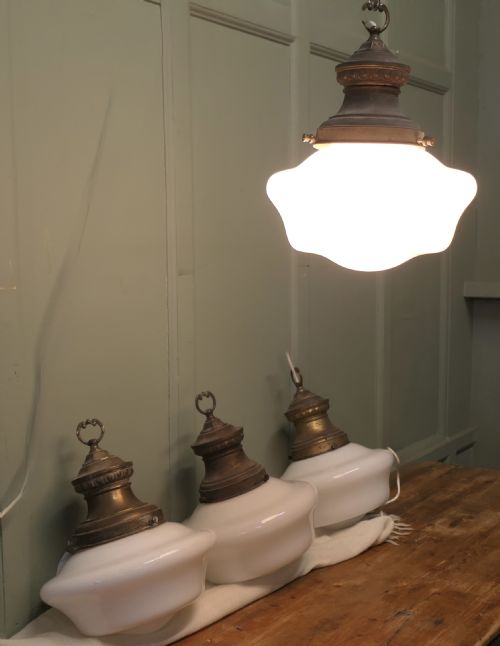
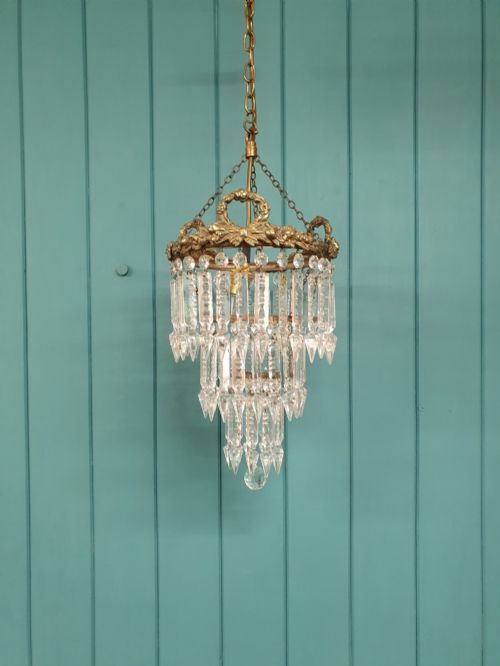


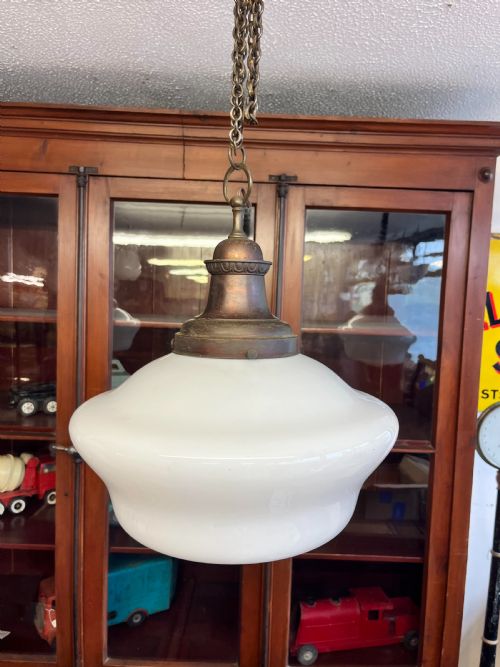


Brass Gallery Light Fixture
These brass gallery light fixtures combine solid metal frames with heavy glass shades to provide functional illumination and period character.
Brass Gallery Light Fixture
A brass gallery light fixture brings together robust metalwork and specialised glass to create a distinctive ceiling light for domestic or commercial spaces. When you search for brass gallery light fixture, you encounter pieces spanning the nineteenth century through the nineteen-thirties, taking forms such as single pendants, pairs, sets, and compact chandeliers.
The selection on this page relies heavily on Edwardian examples and nineteen-twenties or thirties designs. You will find items featuring opaline glass, prismatic shades, cut glass, and mirrored glass housed within brass mountings or roses.
How they were made
The construction of these fixtures centres on cast or spun brass components paired with moulded glass shades. Makers utilised brass for ceiling roses, galleries, and fitters because the metal offered durability alongside a warm metallic finish.
Glass elements ranged from pressed opaline and prismatic patterns to hand-cut crystal and mirrored surfaces. These shades were secured into brass galleries using screws or galleries specifically sized to hold the heavy glass securely.
Listings feature brass combined with opaline, prismatic, cut, and mirrored glass across Edwardian and 1930s periods.
What varies in quality
Quality in these fixtures is defined by the weight of the brass and the clarity or finish of the glass. Heavier castings, substantial brass roses, and thick opaline or prismatic glass indicate a higher standard of manufacture.
The presence of named shade designs like Holophane, alongside fine enamelling or intricate cut glass detailing, separates standard utilitarian lighting from superior examples. The crispness of the brass work and the integrity of the glass edges remain reliable indicators of execution.
The Brass Gallery Light Fixture Glossary
- Opaline glass
- A milky, semi-translucent glass popular in early twentieth-century lighting. It diffuses light evenly without harsh glare.
- Prismatic glass
- Glass moulded with intricate geometric ribs or prisms on the surface. This design refracts and distributes light efficiently across a room.
- Ceiling rose
- The decorative circular plate mounted flush against the ceiling. It conceals the wiring junction and supports the drop of the pendant.
- Bag chandelier
- A compact light fixture enclosed in a teardrop or bag-shaped net of cut glass crystals. These small fittings were designed for vestibules and hallways.
Brass Gallery Light Fixture: Frequently Asked Questions
Where should I hang a pendant light?
These single pendants and small chandeliers work well in hallways, kitchens, or over dining tables. Their downward illumination focuses light precisely where needed in domestic interiors.
Ensure you hang them at a height that clears head height while complementing the proportions of the room and ceiling height.
Are these lights ready to wire?
Most antique and vintage fixtures require professional rewiring to meet current electrical standards. A qualified electrician should check the internal lampholders and wiring before installation.
The original brass fittings and galleries can typically be retained while updating the internal flex for safety.
What is a Holophane shade?
Holophane refers to a patented type of prismatic glass designed to direct and diffuse light precisely. These shades appear frequently on Edwardian and early twentieth-century pendants.
The scientific ribbing on the glass exterior is a signature characteristic that collectors and interior designers look for.