
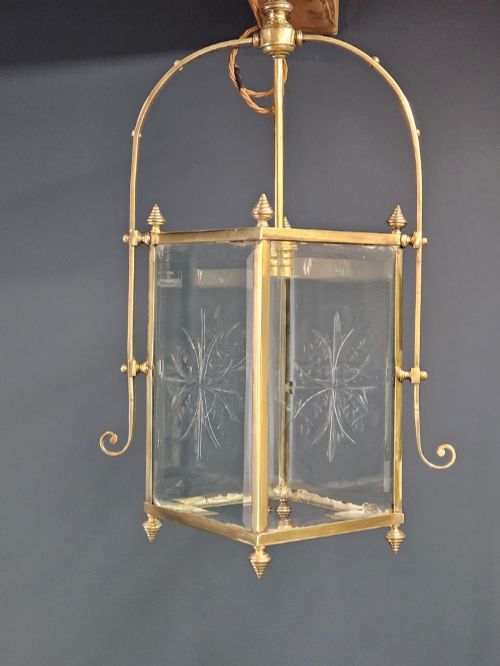


Edwardian Cut Glass Lantern
These edwardian cut glass lantern examples combine brass frames and refractive glass to brighten halls with period elegance.
Edwardian Cut Glass Lantern
An edwardian cut glass lantern brings period character to entrance halls and landings through structural metal frames holding refractive glass panels. The selection spans distinct forms including pendant lights, ceiling lighting, and multi-light hanging fixtures.
Makers utilised brass, bronze, and silver plate for the metalwork, pairing these alloys with cut glass, etched glass, frosted glass, and lead crystal. Pieces frequently adopt stylistic touches from the Edwardian era, alongside neoclassical, Art Nouveau, Gothic revival, and French chateau influences.
Most items date from the Edwardian period or around nineteen hundred, with related examples stretching from the late Victorian era through the nineteen thirties. Buyers meet single hanging lanterns alongside paired fixtures designed for balanced symmetry in larger spaces.
How they were made
Metals such as brass, bronze, and silver plate form the supporting frames and suspension mounts of these ceiling fixtures. Workshops joined structural bands and collars to secure the glass components safely overhead.
Cut glass, lead crystal, and frosted or etched glass panels slide or fit into the metal framing to diffuse and refract light. Artisans shaped the glass surfaces with geometric cuts or surface etching to enhance visual sparkle.
Design influences include neoclassical, Art Nouveau, Gothic revival, and French chateau styles applied to hanging lantern forms.
What varies in quality
Quality rests in the crispness of the glass cutting and the weight of the bronze or brass framework. Deeper facet cuts on lead crystal create sharper light refraction than plain or thinly pressed panes.
Heavier metal casting in the ceiling mounts and frames provides better structural integrity and longevity. Finer items integrate detailed decorative casting styles that reflect cohesive design periods like Art Nouveau or neoclassical.
F and C Osler
The Edwardian Cut Glass Lantern Glossary
- Cut glass
- Glass decorated by grinding facets and patterns into the surface using wheel-cutting techniques. This process creates sharp edges that catch and multiply light.
- Lead crystal
- Glass containing metal oxides that increase weight, clarity, and refractive index. It allows for deeper, more brilliant cutting.
- Pendant light
- A hanging light fixture suspended from the ceiling by a single rod, chain, or cord. These fixtures direct illumination downward into hallways and rooms.
- Etched glass
- Glass treated with acid or abrasives to create opaque decorative designs on the surface. It softens bulb glare while maintaining a patterned appearance.
- Frosted glass
- Glass rendered translucent by sandblasting or acid-etching the entire surface. This treatment diffuses light evenly across the panel.
Edwardian Cut Glass Lantern: Frequently Asked Questions
Where do these hang?
These lanterns suit entrance halls, stairwells, and porches where overhead ceiling illumination is required. Their compact hanging profiles fit well in spaces with moderate ceiling heights.
Positioning a pendant lantern centrally creates a welcoming focal point upon entering a home. Paired configurations work effectively over longer hallways or double staircases.
How are they wired?
Many antique fixtures arrive rewired for modern electrical standards while retaining original lamp holders and ceiling roses. Professional electricians can connect them directly to standard household circuits.
Internal wiring runs safely through the frame channels or central stems to conceal the cable. Low-heat LED bulbs help protect historical glass and metal components from thermal stress.
Can glass panels be replaced?
Original glass panels feature specific bevels, thicknesses, and cuts tied to their period of manufacture. Sourcing matching antique replacement glass requires patience when a panel breaks.
Specialist restorers can sometimes cut replacement glass to match historical patterns. Preserving the original glass panels maintains the visual authenticity of the fixture.
How do I clean them?
Dust metal frames gently with a dry or slightly damp cloth to preserve patination on brass and bronze. Avoid harsh chemical cleaners that strip historical surface finishes from plated or solid metals.
Glass and crystal panels can be washed with mild soapy water while removed from the frame. Ensure all components dry thoroughly before reassembly and reinstallation.