
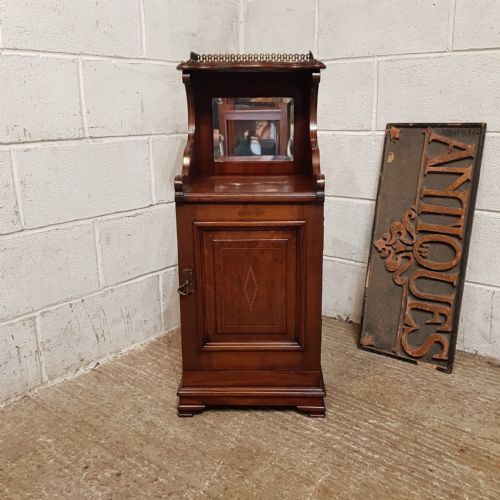

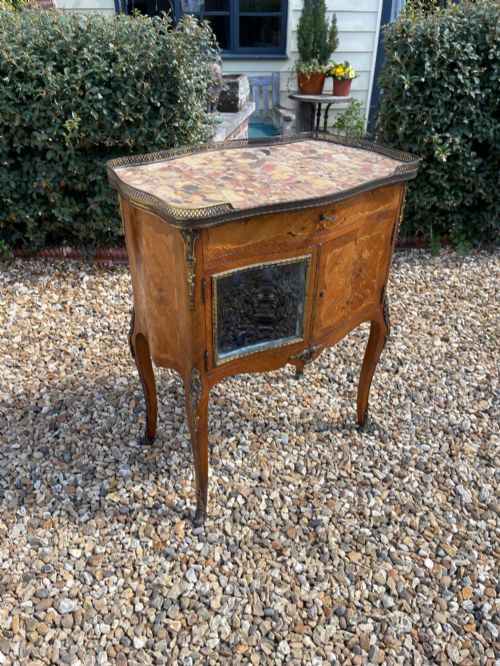


Brass Gallery Bedside Cabinet
A brass gallery bedside cabinet combines practical bedside storage with the refined gleam of a pierced metal rail.
Brass Gallery Bedside Cabinet
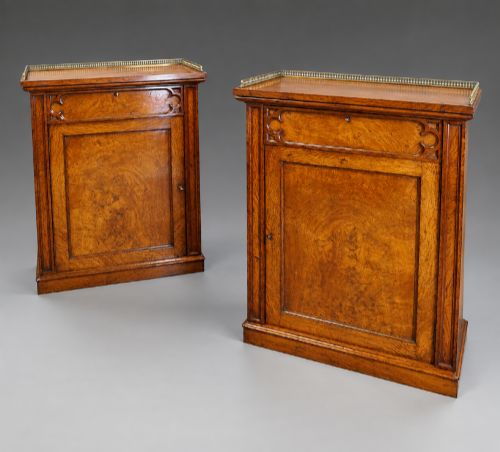
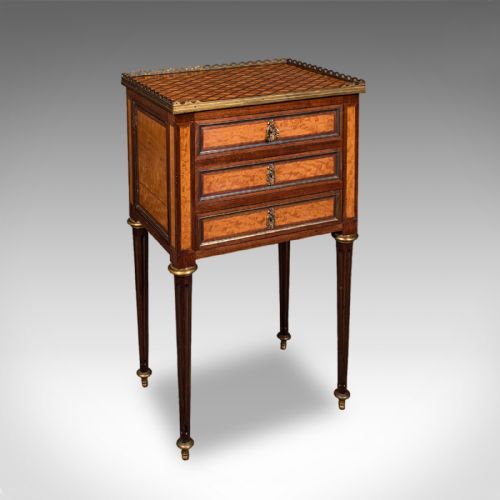
A brass gallery bedside cabinet offers enclosed storage beside the bed, topped with a distinctive metal railing designed to keep small items from sliding off the surface. These pieces range from compact Victorian cupboards to decorative French commodes and nightstands featuring marble surfaces.
The selection here draws heavily on nineteenth-century and early twentieth-century examples, spanning Georgian origins through Victorian revivals and later 1930s pieces. Walnut, mahogany, and inlaid kingwood form the primary carcasses, frequently paired with breche d'alep marble or glass.
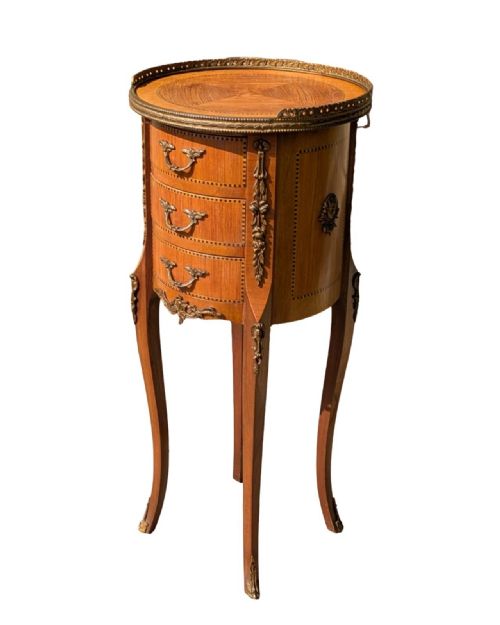
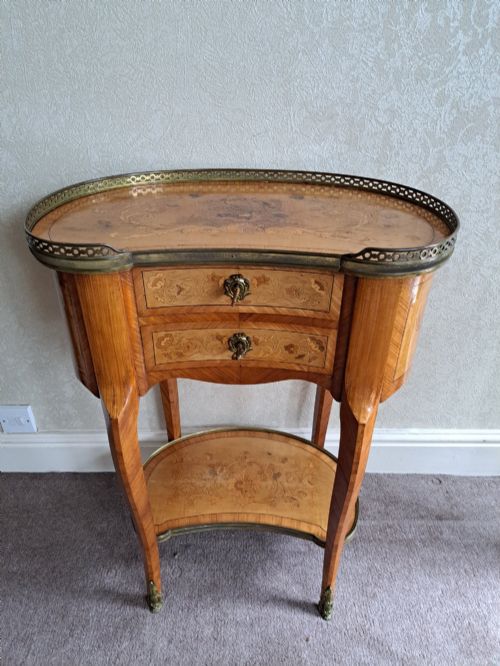
French styles dominate the available forms, particularly Louis XVI and Rococo revivals, alongside utilitarian English oak and mahogany cupboards. Buyers encounter everything from simple cylindrical pot cupboards to kidney-shaped nightstands and multi-tiered etageres.
What varies in quality
The refinement of the timber selection and the precision of the marquetry set the finer examples apart from simpler utility pieces. Dense, figured grain and complex floral or geometric veneers indicate superior craftsmanship.
The weight and casting quality of the brass gallery and mounts distinguish standard production from exceptional work. Crisp detailing in the metalwork and well-fitted marble tops demonstrate a higher standard of original construction.
Listings span several distinct periods from Georgian and Victorian eras through to early twentieth-century French production.
The Brass Gallery Bedside Cabinet Glossary
- Brass gallery
- A low pierced metal railing fitted around the top edge of a cabinet or table to prevent objects from rolling off. This feature is particularly common on French bedside tables and marble-topped commodes.
- Marquetry
- The art of applying decorative pieces of veneer to a structure to form intricate picture designs or geometric patterns. Makers frequently utilised kingwood and tulipwood for this detailed surface work.
- Ormolu
- Gilded bronze or brass mounts applied to furniture for decorative effect, prevalent in French Empire and revival pieces. These fittings highlight corners, feet, and drawer fronts.
- Table en chiffonnière
- A small French occasional table or cabinet featuring multiple drawers, designed for sewing or general storage. These pieces often incorporate delicate inlay and slender legs.
- Pot cupboard
- A compact bedside cabinet historically designed to house a chamber pot behind a single door. Many examples feature marble tops and roll-top or door enclosures.
Brass Gallery Bedside Cabinet: Frequently Asked Questions
What is a brass gallery?
A brass gallery is the protective metal railing fitted around the perimeter of a tabletop or cabinet top. It keeps items secure while adding a decorative metallic accent to the piece.
Cabinetmakers integrated these galleries closely with marble or wooden surfaces, securing them through the top slab or attaching them directly to the wooden rim.
How do I date a bedside cabinet?
Dating relies on identifying the underlying timber, construction methods, and stylistic revival influences present in the piece. Victorian and Georgian examples often show heavier joinery, while French revival pieces from the late nineteenth and early twentieth centuries employ specific veneer types.
Hardware styles and secondary woods inside the drawers also provide clear indicators of the manufacturing period.
Are marble tops original?
Marble tops on these cabinets are generally original to the piece, particularly on French commodes and nightstands designed to resist water and staining. Stones like breche d'alep were selected specifically to complement the timber.
Examine the underside of the stone and the seating rebate in the wood to confirm the fit aligns with period manufacturing standards.
Where should I place these in a room?
These cabinets suit placement beside a bed as functional nightstands, or in a reception room as compact side tables and etageres. Their finished backs and detailed marquetry often allow them to stand freestanding.
Keep them away from direct heat sources to protect the delicate wood veneers and historic polish.