

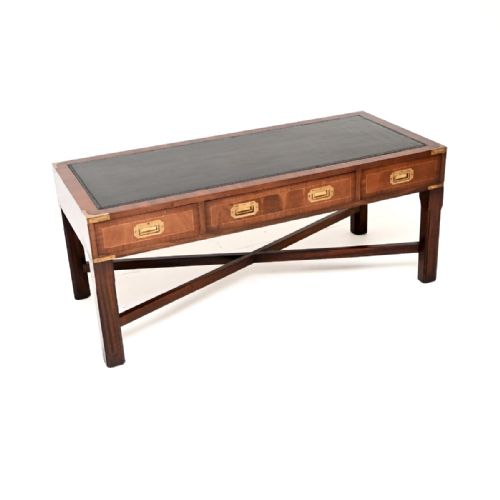
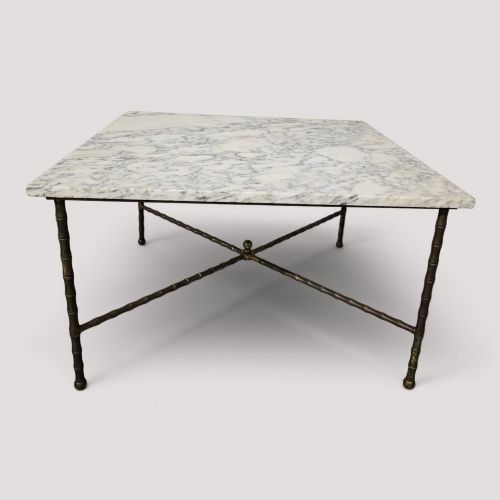
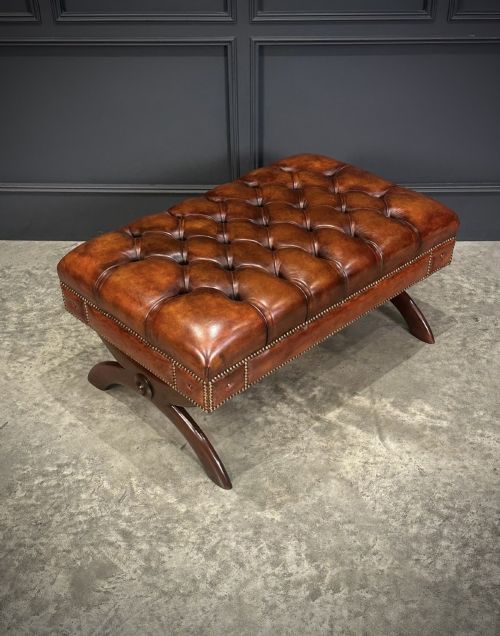
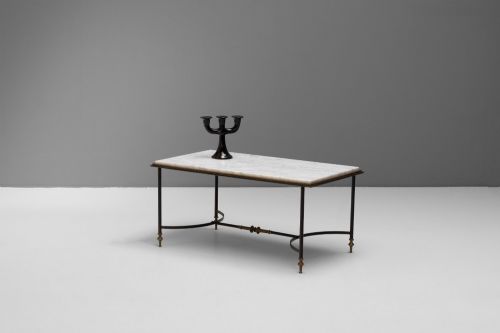



Brass Framed Coffee Table
These brass framed coffee table designs combine metal framework with timber, glass, or marble surfaces for domestic serving and display.
Brass Framed Coffee Table
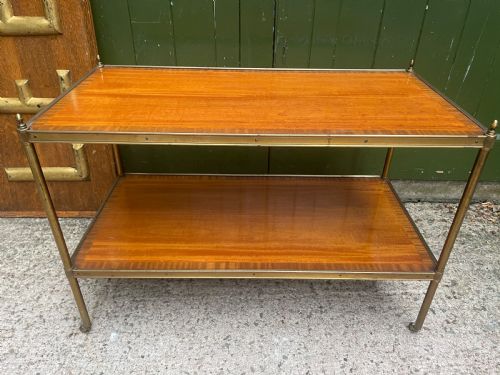
When you search for a brass framed coffee table, you encounter low occasional furniture drawn from various periods, including early twentieth century examples and nineteenth century pieces. The selection spans standard coffee tables, tray tables, etagere tables, and side tables utilising metal framework.
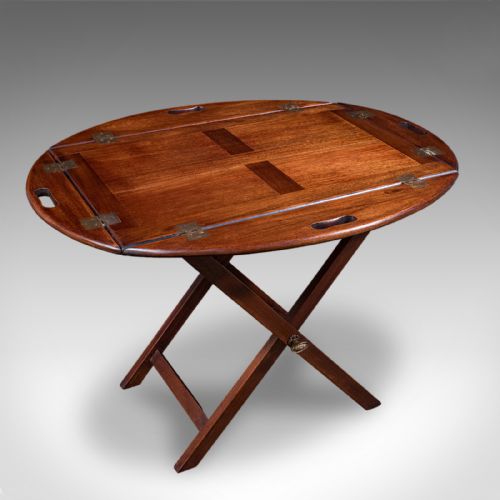
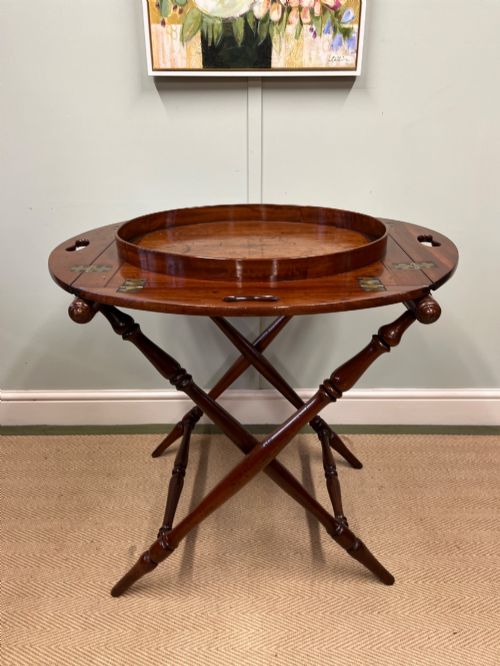
You are most likely to meet pieces featuring brass alongside mahogany, satinwood, oak, or rosewood, often taking the form of adapted butler trays or low rectangular display surfaces. Styles range from Victorian and Edwardian iterations to Hollywood Regency and Mid-Century Modern designs.
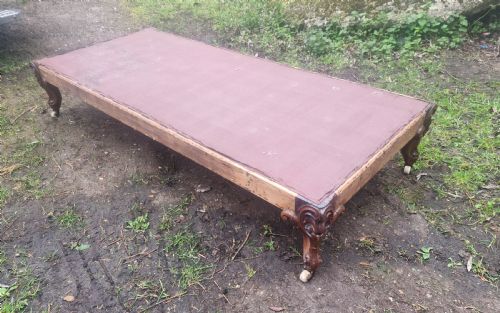
The category encompasses both purpose-built low tables from the twentieth century and earlier utilitarian serving trays elevated onto stands. These items serve central living spaces as functional low surfaces with metallic structural elements.
How they were made
Makers constructed the framework using brass, sometimes combined with iron, supporting timber tops in mahogany, satinwood, rosewood, and oak. Inlay techniques such as marquetry decorate the surfaces of specific twentieth century pieces, while other examples incorporate inset marble or glass panels.
Structural methods involve joined timber bases, drop-flap mechanisms on butler trays, and two-tier etagere configurations secured with metal framing. Certain pieces utilise faux bamboo style turned wooden or metal bases to achieve specific aesthetic periods like Hollywood Regency.
Brass Framed Coffee Table Retail Price Guide 2026
Typical asking prices for brass framed coffee table among the pieces listed under this phrase on Sellingantiques today, from the lower quarter to the upper quarter. They describe what is for sale here now, not the wider market.
Several tables disguise their sturdy frames as Asian grass, utilising faux bamboo turning to fool the eye.
What varies in quality
The standard of timber selection and the precision of brass construction dictate the grade of each piece, distinguishing utilitarian items from high-status decorative furniture. Fine marquetry inlay and well-executed faux bamboo turning demonstrate superior craftsmanship compared to simpler structural forms.
The integrity of the structural joints and the quality of inset materials, such as polished marble or heavy glass panels, separate standard production items from finer examples in the range.
Peter Ghyczy
The Brass Framed Coffee Table Glossary
- Butler's tray
- A removable wooden tray with hinged or fixed sides, originally designed for serving and resting upon a folding stand. Later examples often feature the tray permanently fixed to a framed base.
- Etagere
- A set of open shelves or tiers used for displaying small objects or serving items, frequently constructed with multiple levels supported by metal columns.
- Marquetry
- The art and craft of applying pieces of veneer to a structural object to form decorative designs and patterns, often utilising contrasting timbers.
- Faux bamboo
- A decorative style where wood or metal is carved, turned, or shaped to imitate the segmented stalks of natural bamboo.
- Neoclassical
- A style inspired by the classical architecture and decorative arts of ancient Greece and Rome, characterised by symmetry and restrained ornamentation.
Brass Framed Coffee Table: Frequently Asked Questions
What is a brass framed coffee table?
A low surface featuring a metal frame combined with timber, glass, or marble, utilised for serving and display in reception rooms.
These pieces range from early twentieth century etageres to adapted nineteenth century serving trays.
How do I date a brass framed coffee table?
Dating relies on examining the timber species, construction methods, and stylistic markers such as Victorian turning or Hollywood Regency brass work.
Earlier nineteenth century pieces often show utilitarian tray origins, while twentieth century items demonstrate purpose-built low table formats.
Were butler trays originally coffee tables?
Butler trays were originally portable serving trays placed on folding wooden stands for domestic domestic service in large houses.
Modern living transformed these functional serving items into permanent low coffee tables by mounting them onto fixed or X-frame bases.
What materials are used in these tables?
Construction materials include brass and iron for the structural framework, paired with timber surfaces in mahogany, satinwood, rosewood, and oak.
Some designs incorporate inset marble slabs, glass panels, or decorative marquetry veneer across the top surface.