

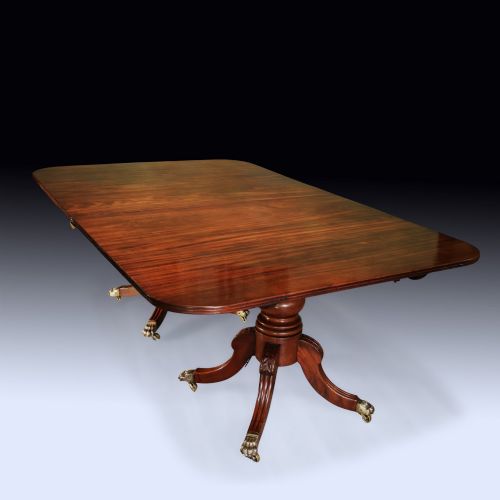
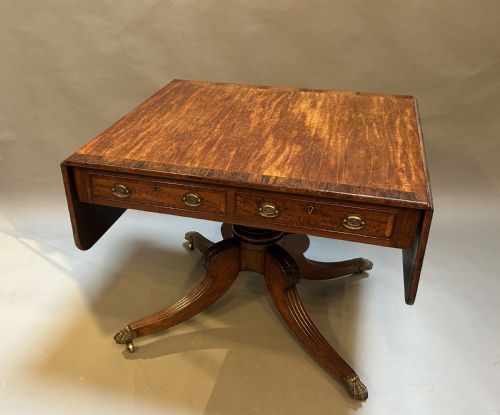
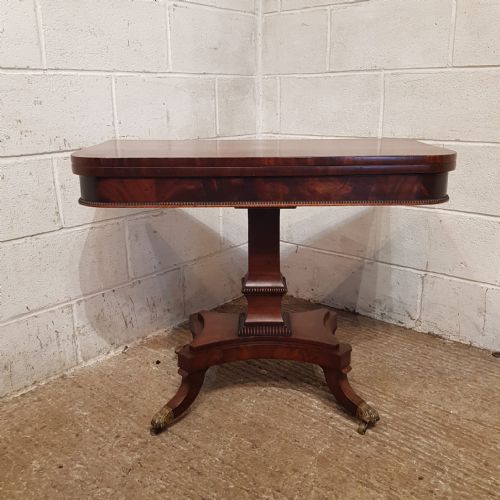
Brass Footed Pedestal Table
A brass footed pedestal table brings together timber and metal on a central support, offering a practical surface with architectural presence.
Brass Footed Pedestal Table
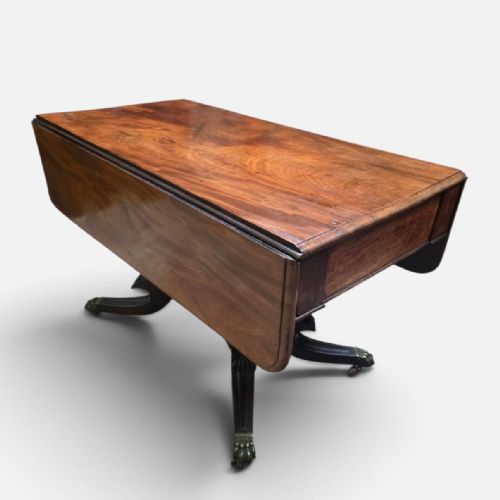
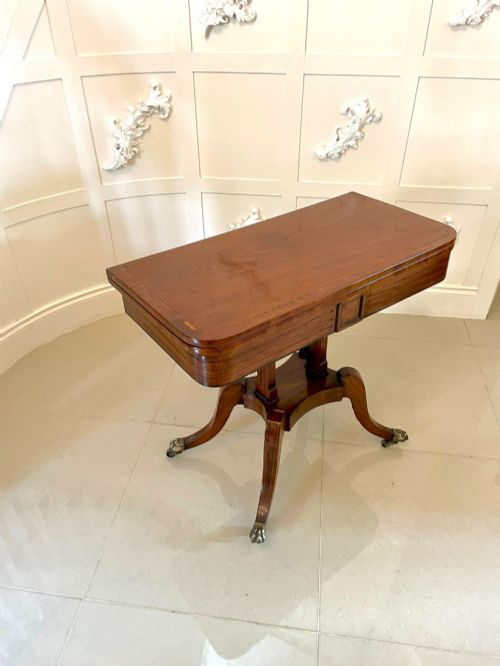
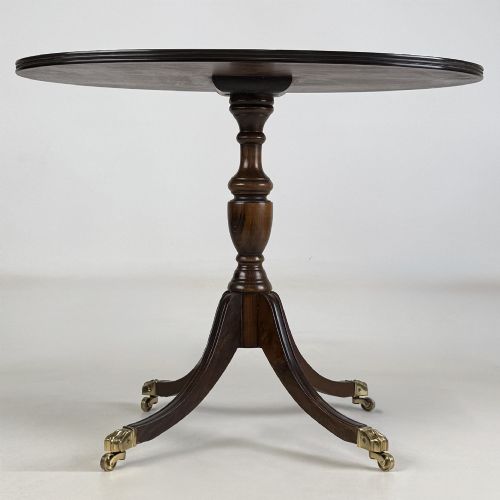
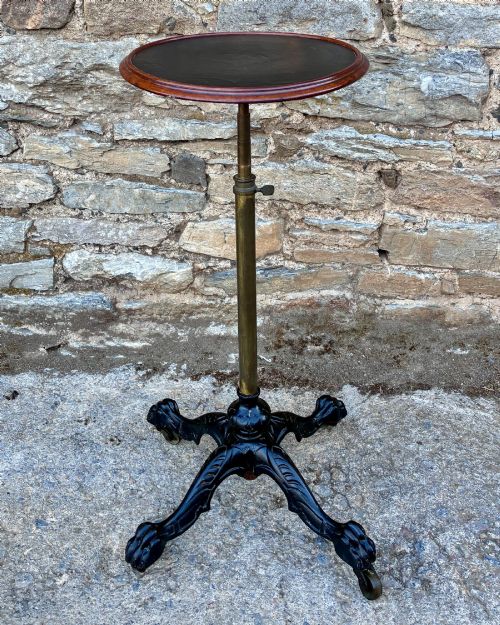
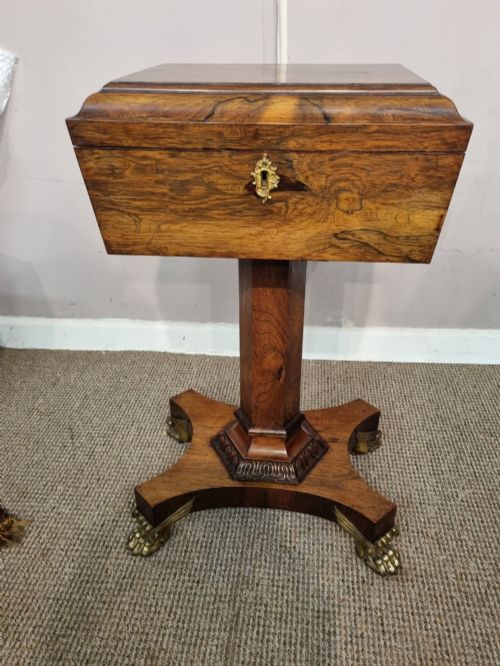
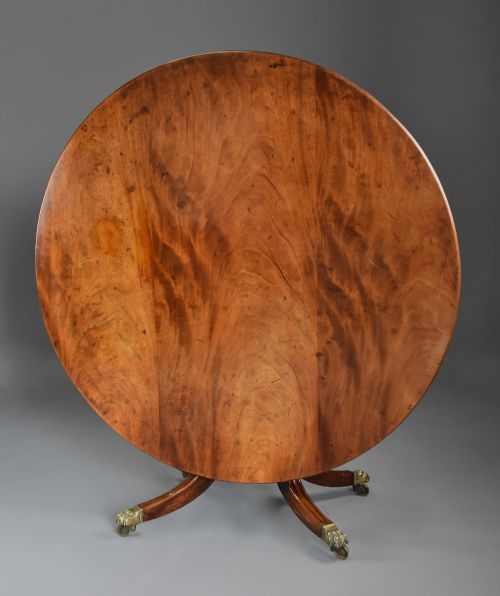
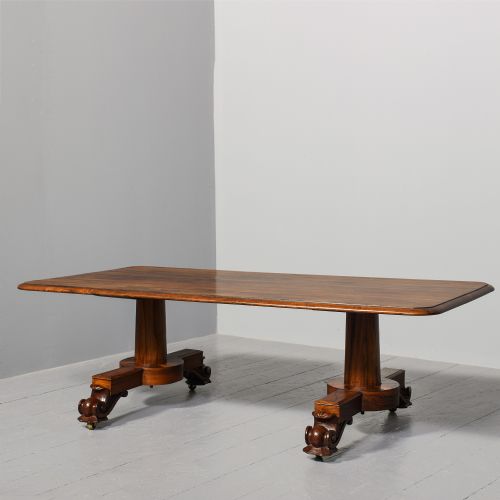
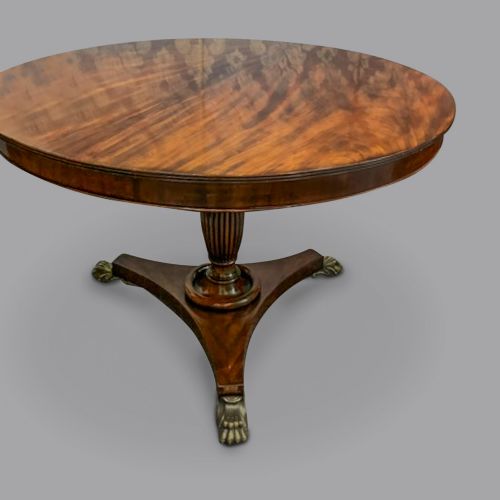
A brass footed pedestal table stands on a central column rather than four corner legs, often raised on castors or bracket feet. You will frequently find this form expressed as a card table, centre table, breakfast table, or sofa table originating from the Georgian, Regency, and Victorian eras.
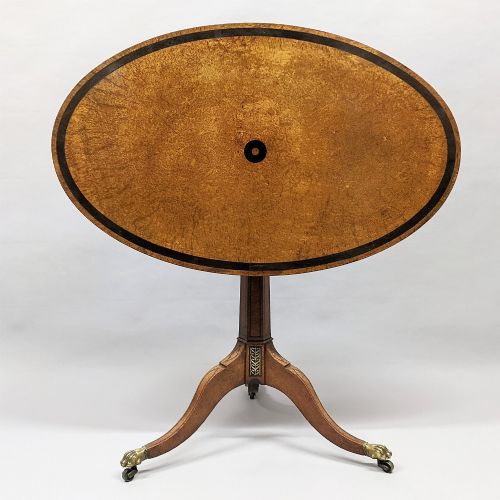
The materials span rich timbers like mahogany and rosewood, accented with brass mounts, inlay, or Ormolu. Makers frequently utilised satinwood, ebony, and ebonised wood to create contrast on top surfaces and friezes.
Most examples date from the nineteenth century, including revival pieces from later decades. The pedestal construction allows for generous legroom while anchoring the piece firmly in a room.
How they were made
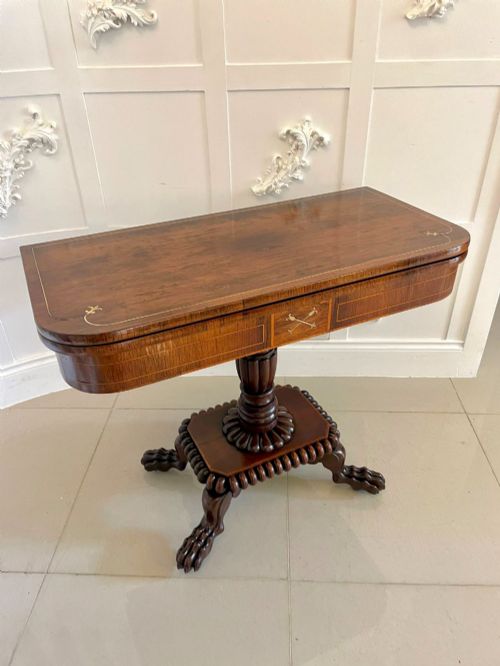
Cabinet makers constructed these pieces using solid and veneered timbers such as mahogany, rosewood, and burr oak over sturdy secondary woods. Surfaces often received elaborate brass inlay, stringing, or gilded mounts fixed securely into the timber grain.
Pedestal bases required robust internal framing and weighted feet to support tilt-top mechanisms, drop leaves, or heavy extending dining leaves. Joinery relied on precise tenons, dovetails, and turned central pillars fixed to platform or scroll bases.
Listings feature mahogany, rosewood, burr oak, and satinwood, frequently accented with brass inlay and Ormolu mounts across the Regency and Victorian periods.
What varies in quality
The refinement of the carving and the choice of timber grain dictate the distinction between standard and superior pieces. Figures on top surfaces, such as highly figured mahogany or dense rosewood, show careful selection by the maker.
The precision of the brass inlay and the casting quality of mounts reveal the workshop's investment in detail. Substantial pedestal proportions and stable mechanisms separate master cabinet work from simpler production.
George Bullock
The Brass Footed Pedestal Table Glossary
- Pedestal table
- A table supported by a single central pillar rising from a base. This design maximises seating space around the perimeter.
- Card table
- A folding table designed for gaming or writing, typically featuring a baize-lined interior and a fold-over top. Many examples rest on a central pillar with brass feet.
- Ormolu
- Gilded bronze used for ornamental mounts and feet. It provides a bright metallic contrast against dark woods like rosewood and mahogany.
- Tilt top
- A tabletop mechanism that allows the surface to pivot vertically for storage. This construction is common on breakfast and occasional tables.
- Sofa table
- A rectangular occasional table designed to stand in front of a sofa, usually featuring drop leaves and end supports or a pedestal base.
Brass Footed Pedestal Table: Frequently Asked Questions
What rooms suit a pedestal table?
These tables adapt well to living rooms, dining spaces, and libraries. Their central column footprint makes placement flexible without corner legs obstructing chairs.
Smaller card and occasional versions fit snugly beside seating, while larger breakfast or centre formats anchor open spaces.
How do I identify a Regency piece?
Look for classical architectural motifs, rosewood or mahogany veneers, and brass inlay. Scroll pedestals and sabre legs with brass paw feet are typical hallmarks.
Proportions tend to be clean and balanced, drawing inspiration from ancient Greek and Roman designs.
Can I use a card table daily?
Fold-over tables function reliably for writing, display, or casual dining. The hinges and pivoting tops handle regular opening if treated with care.
Keep polished timber surfaces protected from moisture and direct heat to preserve the finish.
What is a tilt top used for?
The tilting mechanism allowed historical owners to store tables flat against walls when not in use. Today, this feature offers insight into the original engineering of the pedestal.
Ensure the catch mechanism remains secure if you choose to display the table in a vertical position.