





Brass Fitted Medicine Chest
A brass fitted medicine chest is a portable pharmacy built for travel, offering remarkable compartmentalised storage and ingenious folding mechanism.
Brass Fitted Medicine Chest
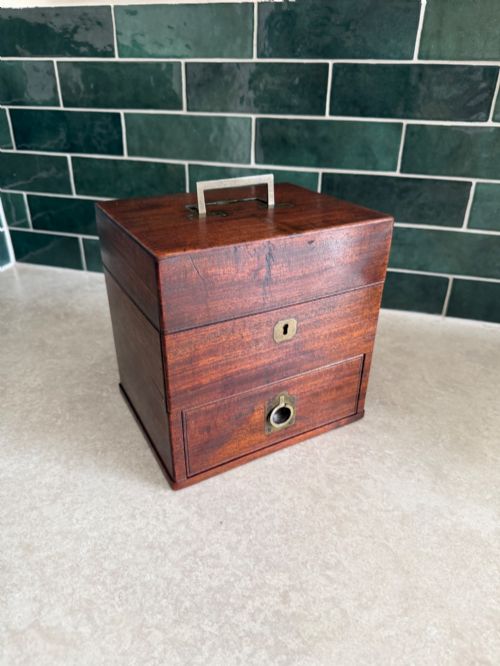
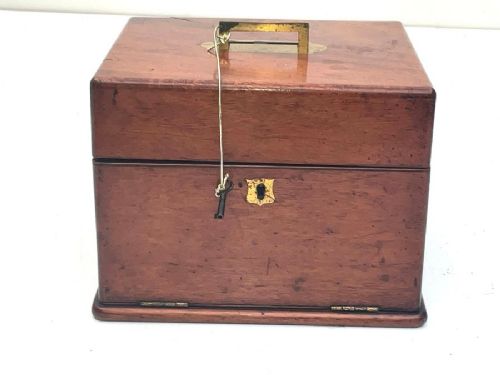
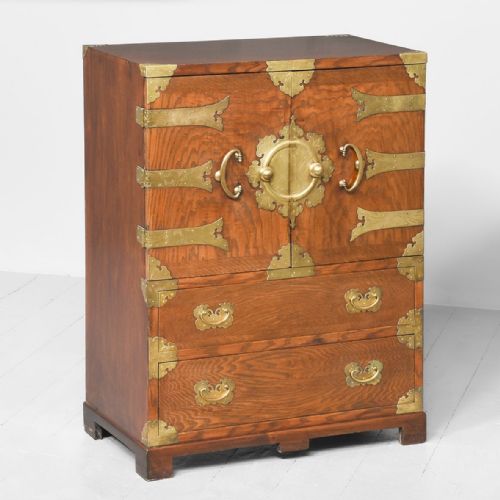
When you search for a brass fitted medicine chest, you encounter compact timber boxes engineered to carry glass bottles, scales and powders securely across continents or through domestic rooms. The pieces available on this page span the Georgian, Regency and Victorian eras, alongside a Korean side cabinet, reflecting a global tradition of portable apothecary storage.
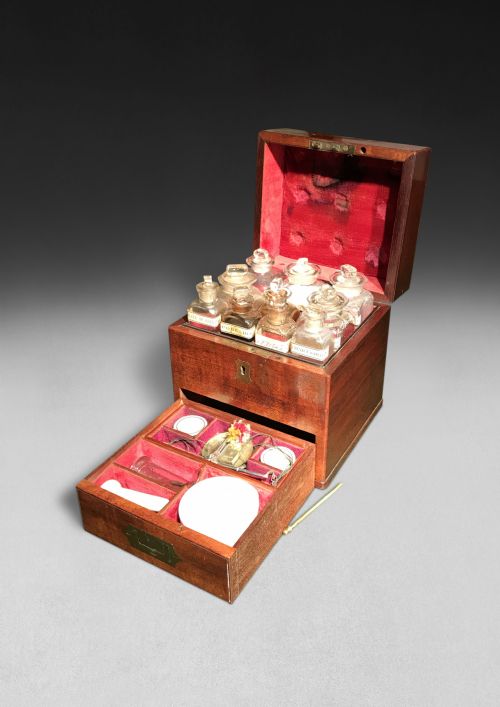
Mahogany forms the primary body across the Georgian and Regency examples, frequently reinforced with brass corners, straps and flush carrying handles designed to withstand the knocks of campaign travel. Interiors reveal velvet linings, paper labels, ceramic mortars and fitted compartments tailored to hold fragile glassware upright during movement.
The most common form on this page is the apothecary box or travelling case, often containing its original collection of glass bottles and lower drawer storage. These functional pieces range from miniature campaign boxes to larger fitted chests with complete contents intact.
How they were made
Cabinetmakers constructed the main carcase in solid mahogany or elm, joining the timber with tight corner joints to endure shifting climates and rough handling. They integrated brass hardware by sinking hinges, handles and corner brackets flush into the wood surface to prevent snagging during transit.
Interiors required precise carpentry to create tiered platforms and individual pigeonholes lined with velvet or paper, securing glass bottles of varying heights. Craftsmen fitted sliding lids, hidden compartments and secret drawers operated by concealed latches within the woodwork.
Brass Fitted Medicine Chest Retail Price Guide 2026
Typical asking prices for brass fitted medicine chest among the pieces listed under this phrase on Sellingantiques today, from the lower quarter to the upper quarter. They describe what is for sale here now, not the wider market.
Materials recorded across these items include solid mahogany, elm, brass, glass, velvet, leather, paper and ceramic components.
What varies in quality
The distinction between standard utility boxes and superior examples lies in the integrity of the original contents and the complexity of the internal engineering. Pieces retaining their full complement of original glass bottles, ceramic jars and measuring instruments command greater interest than empty shells.
Timber selection and the weight of the brass mounts also set pieces apart, with heavier brass banding and well-figured mahogany indicating higher workshop standards. The presence of secondary drawers, clever locking mechanisms and legible original chemist labels elevates the execution of the design.
The Brass Fitted Medicine Chest Glossary
- Campaign case
- A portable box or chest designed for military officers or travellers, featuring recessed brass handles and reinforced corners to endure rough journeys. These items dismantled or folded to minimise space.
- Apothecary box
- A fitted wooden container holding medicinal bottles, scales and mixing equipment for preparing remedies on the move. They typically include a lower drawer for weights and powders.
- Flush handle
- A metal lifting grip inset into the wood surface so it sits completely level with the exterior panel. This prevents the hardware from catching on luggage or clothing during transport.
- Fitted interior
- An internal arrangement of partitions, shelves and lined recesses built specifically to hold delicate objects securely in place. In these chests, it ensures glass bottles remain upright.
Brass Fitted Medicine Chest: Frequently Asked Questions
What is a brass fitted medicine chest?
A brass fitted medicine chest is a portable wooden box designed to hold glass bottles, medical scales and remedies for travel. They feature brass corners and flush handles to protect the timber during movement.
Inside, the chests use precise wooden partitions and lined compartments to keep fragile glassware secure. These pieces date predominantly from the Georgian, Regency and Victorian periods.
How were medicine chests used?
Travellers, military officers and households used these chests to store and dispense medicines while away from permanent apothecaries. Doctors and laymen alike relied on them to mix powders, measure liquids and treat illnesses on campaign.
The lower drawers often held pestles, mortars and scales for compounding doses directly from the bottles stored in the upper compartment.
Are original bottles usually included?
Some chests retain their original glass bottles and fitted instruments, while others survive as empty boxes. Surviving bottles often feature ground glass stoppers and original chemist labels indicating their contents.
Listings specify whether a box includes its original contents or is offered empty. Both complete sets and empty cases reflect historical domestic and travel use.
How do I date a medicine chest?
Dating relies on timber choices, brass hardware styles and construction techniques typical of periods like the Georgian and Victorian eras. Mahogany was widely used in the eighteenth and nineteenth centuries, alongside specific brass corner bracket designs.
Interior paper labels, maker stamps and the presence of secret drawers also provide clues to the decade of manufacture.