



Fitted Apothecary Chest
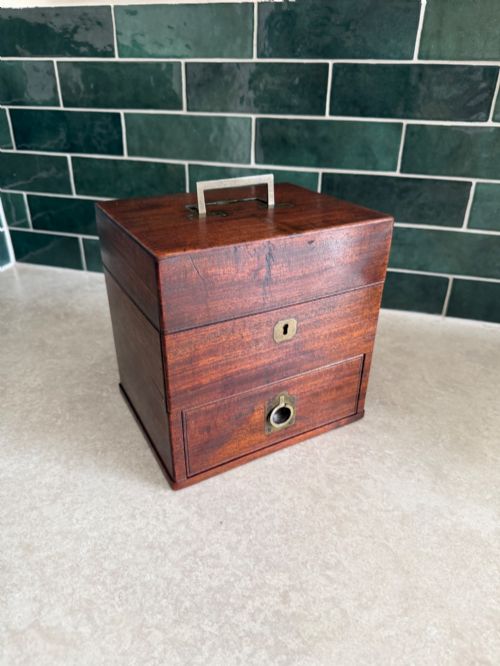
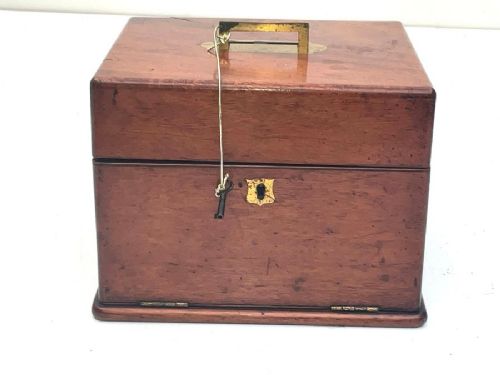
A fitted apothecary chest packs portable medical readiness into dense mahogany and brass, offering the precise compartmentalisation that Victorian and Georgian practitioners relied upon.
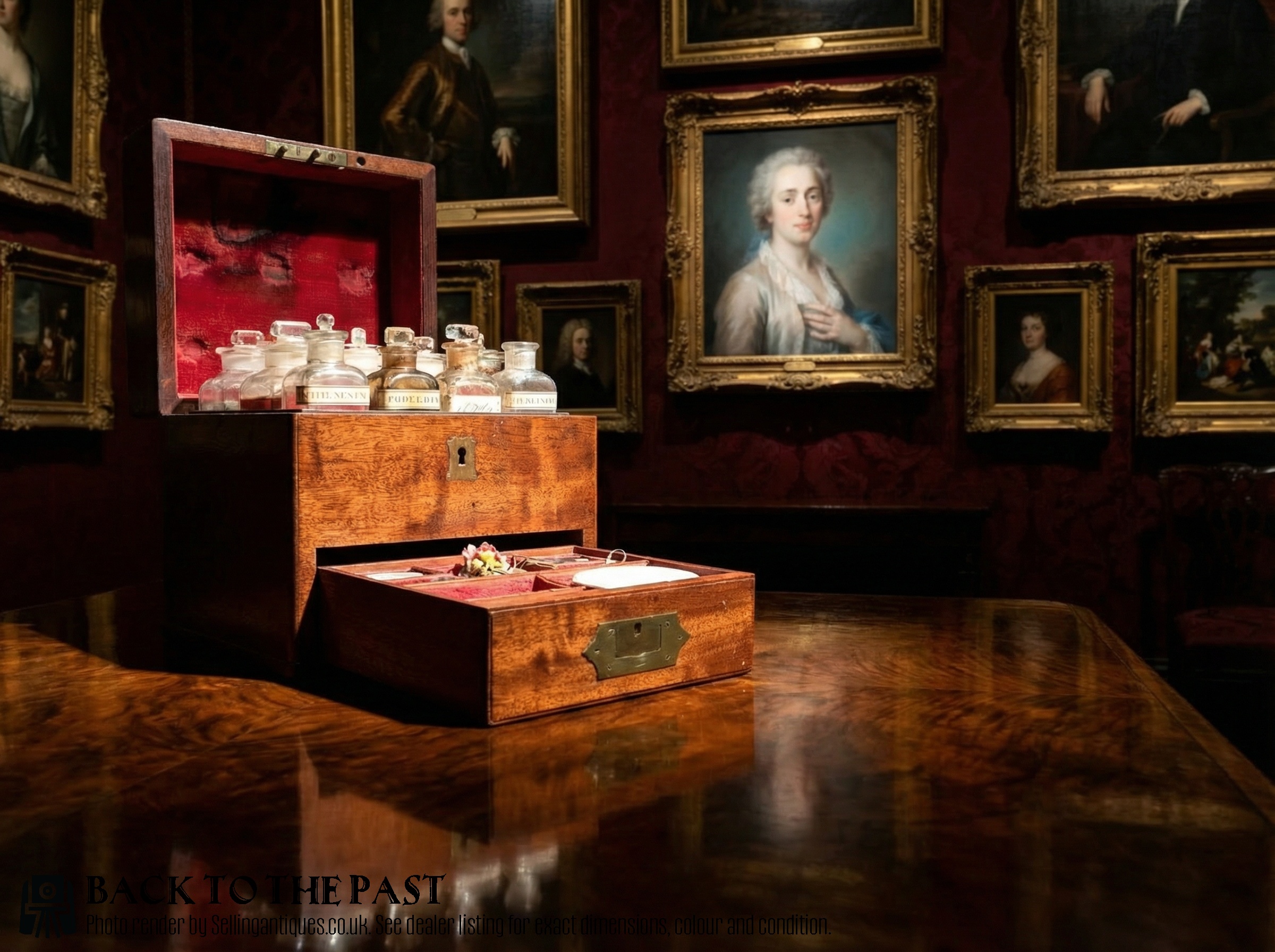
Fitted Apothecary Chest
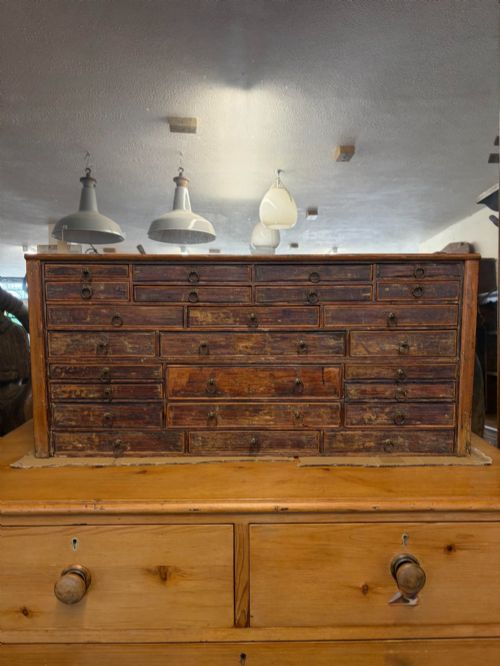
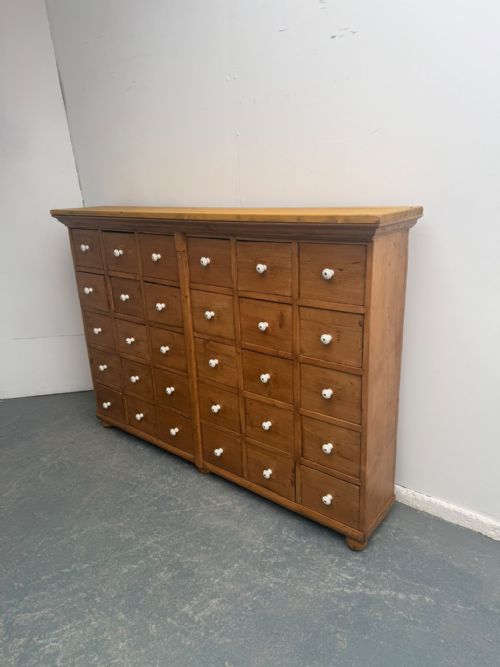
A fitted apothecary chest represents the intersection of medical utility and fine cabinet-making, encompassing both portable travelling cases and larger stationary cabinets. When searching for a fitted apothecary chest, buyers encounter compact campaign boxes designed for movement alongside substantial banks of drawers originating from chemists' shops and domestic estates.
The materials span rich mahogany and walnut alongside robust pine and painted shop fittings. Origins trace across Georgian, Regency and Victorian eras, presenting everything from modest medicine chests with original glass bottles to multi-drawer commercial storage units.
How they were made
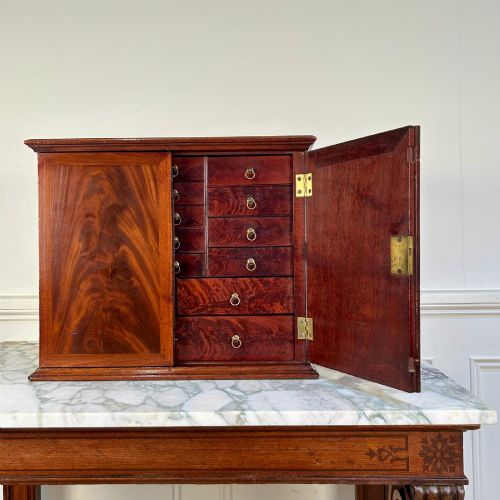
Makers utilised dense timbers such as mahogany and walnut for high-status travelling cases, incorporating flush brass carrying handles and robust locking mechanisms to withstand transport. Pine served as the primary structure for larger shop fittings and banks of drawers, frequently finished with painted surfaces in white, cream, or green.
Interiors required meticulous joinery to create snug compartments for fragile glass bottles, scales, and mortars. Brass insets, velvet linings, and hidden secret drawers completed the construction of these complex internal layouts.
Fitted Apothecary Chest Retail Price Guide 2026
Typical asking prices for fitted apothecary chest among the pieces listed under this phrase on Sellingantiques today, from the lower quarter to the upper quarter. They describe what is for sale here now, not the wider market.
One tiny campaign box still holds its original miniature bottles, ready for a very small Victorian house call.
What varies in quality
The standard of craftsmanship shows most clearly in the precision of the internal partitioning and the survival of original contents such as glass bottles and pharmaceutical accessories. Superior examples maintain their fitted layouts intact without alteration, whilst lesser pieces show significant replacement of internal elements or missing hardware.
Timber selection and exterior finish further distinguish the hierarchy. Finely figured mahogany with professional brass inlay sits at the upper end, contrasted by utilitarian pine shop fittings intended purely for commercial storage.
Luxmore's of Ilfracombe
The Fitted Apothecary Chest Glossary
- Apothecary box
- A portable wooden case fitted with internal compartments specifically designed to hold medical bottles, scales, and ingredients. These compact units were essential for doctors making house calls.
- Bank of drawers
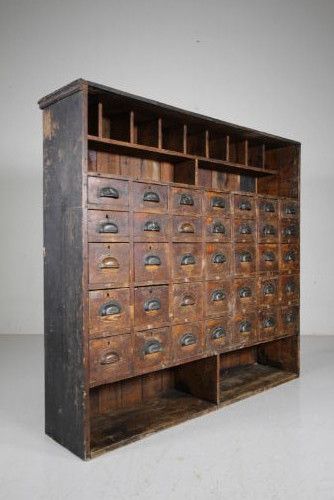
- A multi-drawer cabinetry unit built for commercial shop use or large estate storage. They provide extensive compartmentalised space for organising small items.
- Campaign case
- A piece of furniture constructed for military campaigns or travel featuring brass corners and flush handles. These elements protected the edges from heavy transit damage.
- Shop fitting
- Fixtures and furniture built specifically for commercial retail premises such as chemist and draper shops. They are typically constructed from utilitarian timbers like pine.
- Inlaid mahogany
- Furniture construction where contrasting wood or brass strips are embedded flush into a mahogany surface. This technique adds decorative geometric detail to the exterior.
Fitted Apothecary Chest: Frequently Asked Questions
What did they use fitted apothecary chests for?
Practitioners utilised these chests to store and transport liquid medicines, powders, scales, and mixing tools safely. The internal layout ensured that fragile glass bottles remained secure during transport.
Domestic households also kept medicine chests for treating common ailments before modern pharmacies became widespread. The locked compartments kept dangerous compounds away from children.
How do I date a Georgian apothecary chest?
Georgian chests typically display dense mahogany construction, hand-cut dovetails, and understated brass hardware without excessive ornamentation. Their internal layouts focus purely on functional medicine storage.
Looking closely at the construction joints and the style of the brass handles helps distinguish a Georgian piece from later Victorian reproductions or revivals.
Are original bottles usually included?
Some chests retain their complete sets of original glass bottles, stoppers, and small scales, whilst others survive empty or partially filled. Finding a chest with its original apothecary bottles intact enhances its historical completeness.
Many surviving pieces lost their contents over decades of use or repurposing, leaving only the compartmentalised wooden shell behind.
Where should I place a bank of drawers?
A substantial bank of drawers or shop fitting works well as a statement storage piece in a hallway, kitchen, or study. Their numerous small drawers provide practical organisation for modern collections.
Placing these large wooden units away from direct heat sources prevents the timber from warping and protects any original painted finishes.