

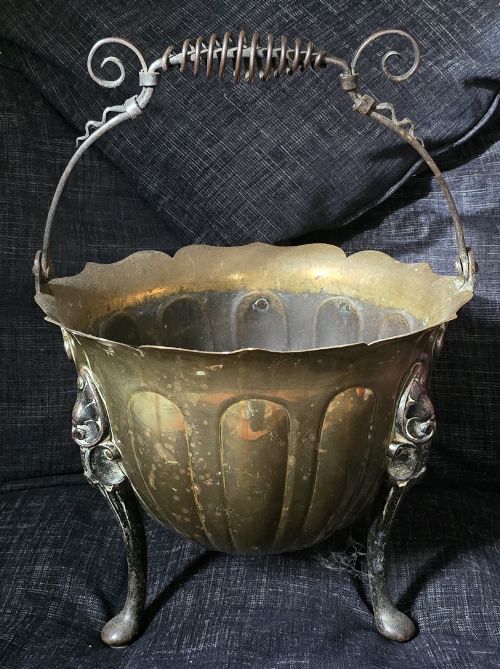
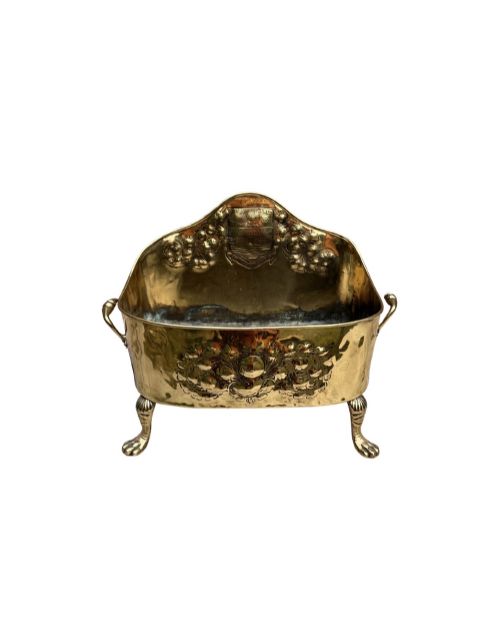
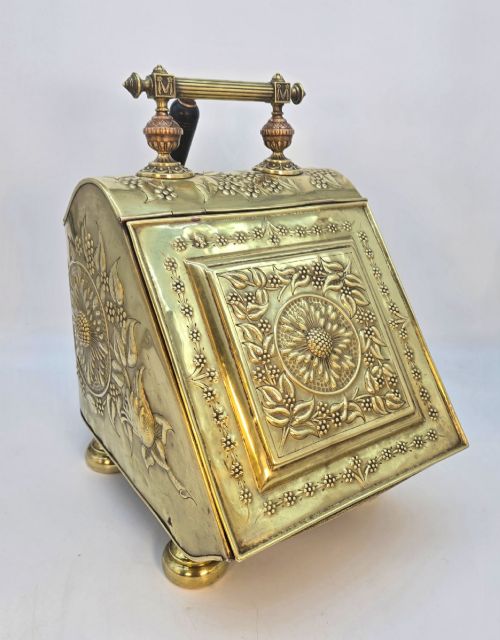
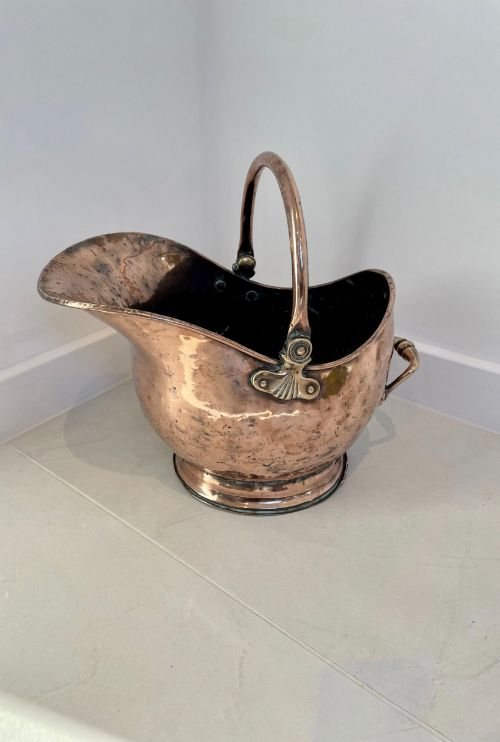


Brass Fireplace Coal Holder
These brass fireplace coal holder pieces bring practical warmth and polished character to a hearth, offering sturdy storage for fuel.
Brass Fireplace Coal Holder
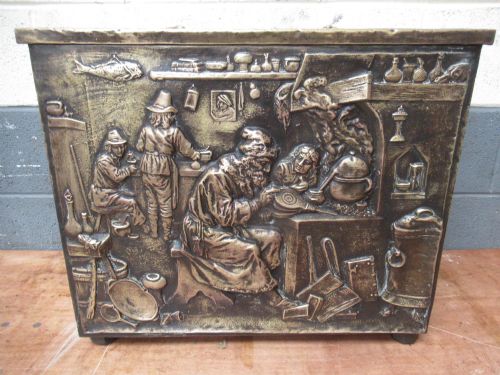
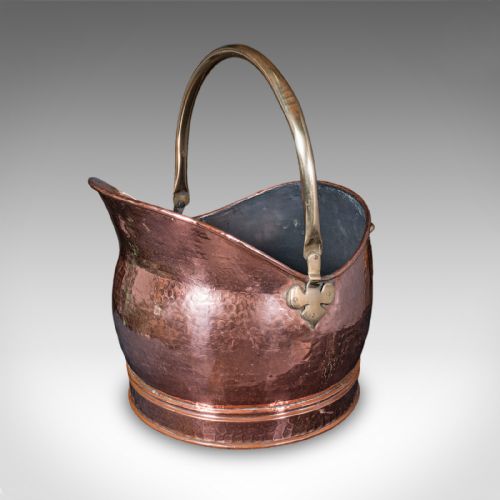
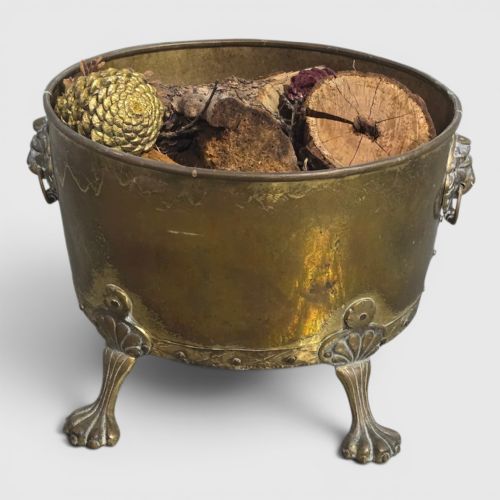
A brass fireplace coal holder is a utilitarian fireside vessel designed to store solid fuel near the grate. When exploring these listings, a buyer encounters robust coal buckets, helmet-shaped scuttles, and lidded log boxes originating mainly from the Victorian and Edwardian eras, alongside pieces stretching back to the Georgian period.
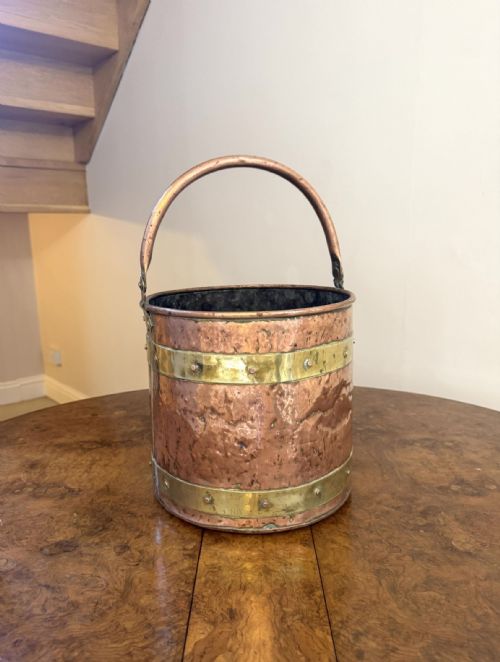
The selection ranges from simple cylindrical bins to ornamented vessels intended to sit prominently on the hearth. Many incorporate swing handles and matching shovels, blending daily domestic function with the decorative metalwork styles of the nineteenth and early twentieth centuries.
Materials and construction
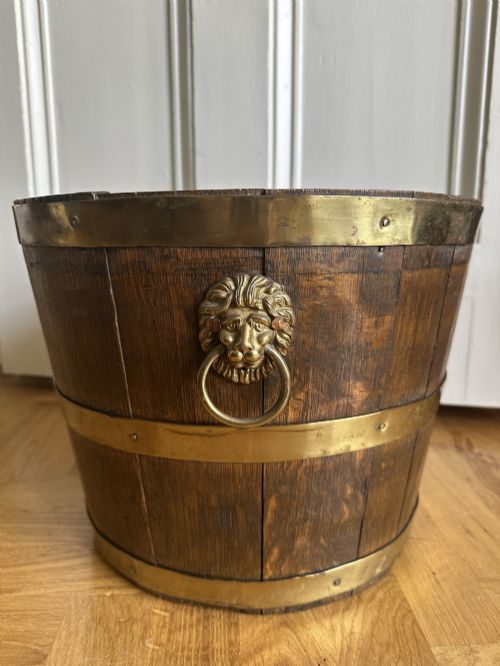
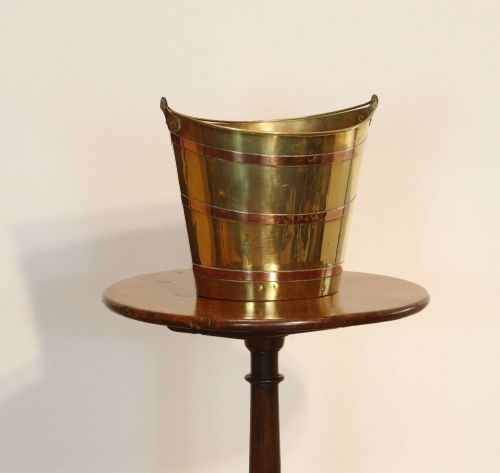
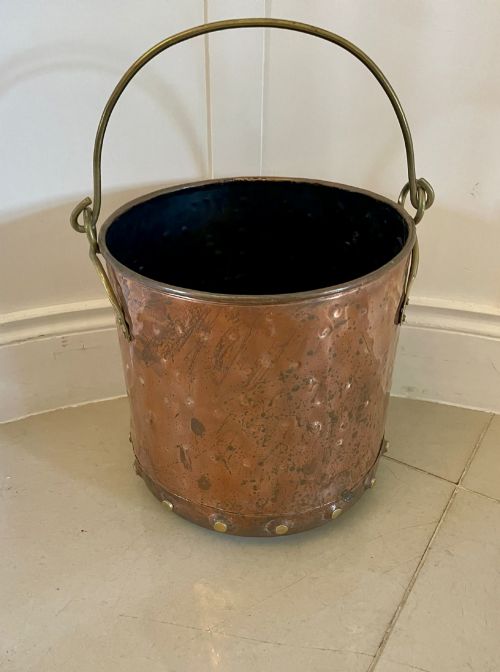
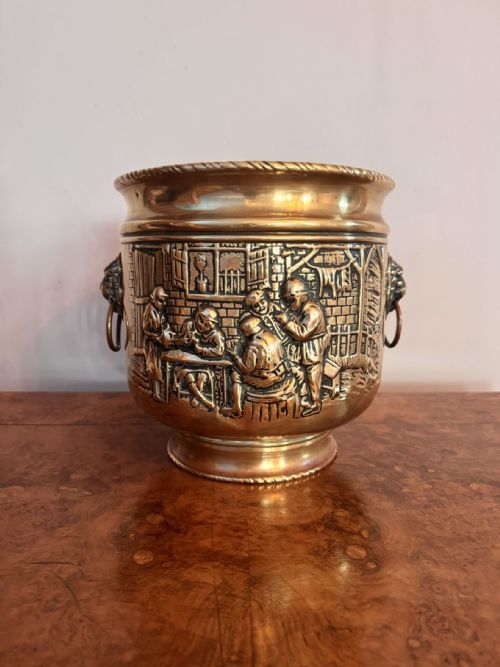
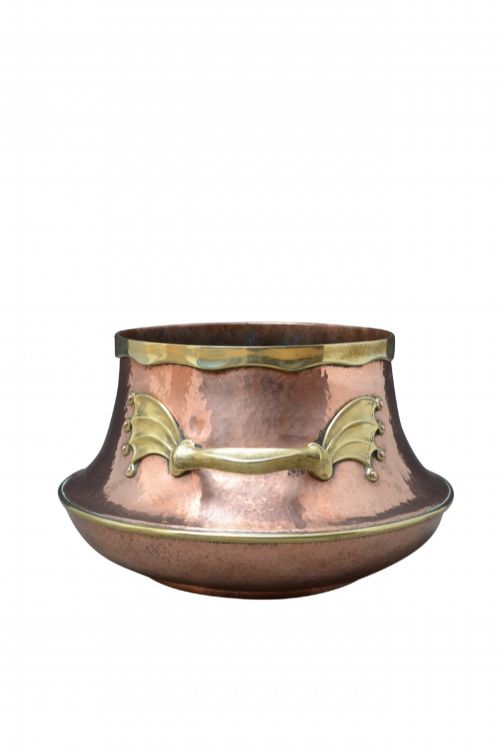
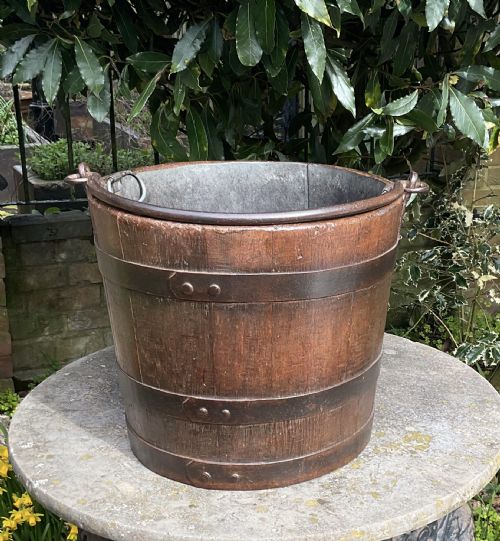
These items are constructed primarily from sheet brass and copper, frequently combined with iron fittings, wooden liners, or sturdy mahogany and oak bodies. Metalworking techniques visible in the evidence include hand hammering, repoussé embossing, and traditional coopered wooden construction bound in brass bands.
Makers utilised contrasting metals, pairing warm red copper with bright brass trim or dark timber staves. Riveted joints, sturdy drop handles, and applied feet provide the structural durability needed to carry heavy loads of coal or logs.
Brass Fireplace Coal Holder Retail Price Guide 2026
Typical asking prices for brass fireplace coal holder among the pieces listed under this phrase on Sellingantiques today, from the lower quarter to the upper quarter. They describe what is for sale here now, not the wider market.
Some nineteenth-century coal scuttles came equipped with tiny shovels tucked neatly into side sleeves so nobody had to touch the coal.
Craftsmanship and condition
Quality in these vessels depends on the thickness of the metal gauge, the crispness of the hand-hammered or embossed surface decoration, and the integrity of any internal liners. Finer examples display careful attention to detail in the handles, rivets, and overall proportions rather than simple pressed sheet construction.
The presence of original matching shovels and intact wooden or metal components elevates a piece. Superior items maintain their structural rigidity and balanced form despite the heavy use inherent to a working hearth.
Henry Loveridge·Petrus Ramus
The Brass Fireplace Coal Holder Glossary
- Repoussé
- Metalwork hammered into relief from the reverse side. This technique creates raised decorative patterns on the bodies of brass and copper scuttles.
- Dinanderie
- Art objects made of brass or bronze, typically associated with Belgian or French metalworking traditions. It describes heavy, patinated vessels designed for domestic utility.
- Helmet scuttle
- A coal container featuring a high back and a sloping, spout-like front. This traditional shape allows coal to be poured neatly onto the fire.
- Coopered
- Constructed from curved wooden staves joined together with metal bands, much like a barrel. This method forms durable round buckets suited for holding logs.
Brass Fireplace Coal Holder: Frequently Asked Questions
How were these holders used?
They served as the primary storage vessels for household fuel before central heating systems became common. Servants or homeowners filled them from larger outdoor coal bunkers to feed the parlour fireplace.
Many designs included a small compartment or matching internal shovel specifically for transferring fuel cleanly onto the burning coals.
How do I date a piece?
Dating relies on observing the manufacturing techniques, metal alloys, and decorative styles characteristic of different eras. Victorian items often feature bold repoussé work, while earlier Georgian examples tend to show simpler helmet shapes in heavy copper.
Examining the construction of the handle mounts and interior liners also helps distinguish nineteenth-century production from later twentieth-century reproductions.
Can I use them today?
These vessels remain entirely functional for storing logs, kindling, or coal beside a working open fire or wood-burning stove. Their robust metal and wood construction is built to handle heavy day-to-day use.
When not holding fuel, many people repurpose them as large planters or decorative umbrella stands in a hallway.