


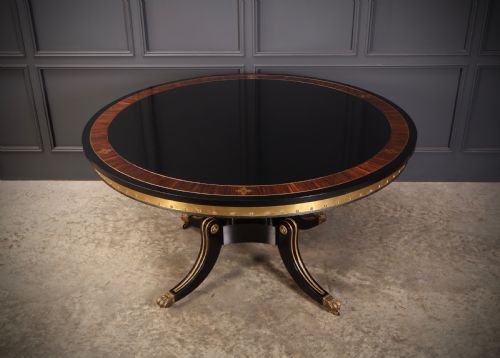


Brass Feet Dining Table
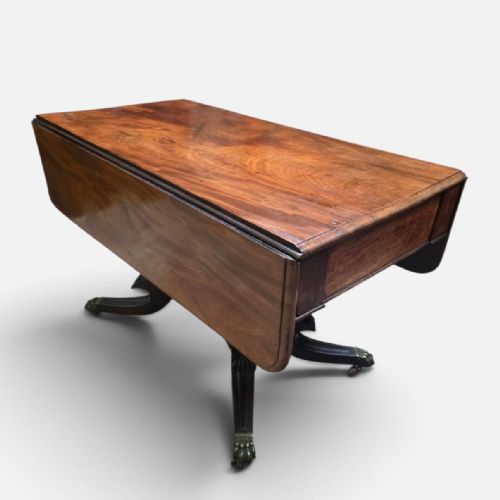
A brass feet dining table anchors a room with period proportion, carrying the heavy timber and warm metal mountings that define the Regency and Georgian eras.
Brass Feet Dining Table
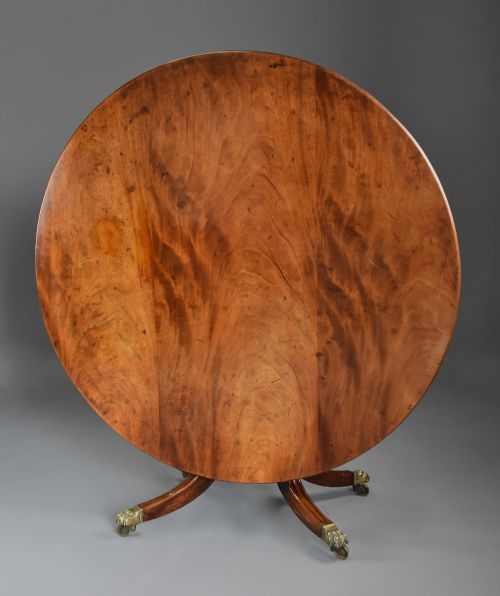
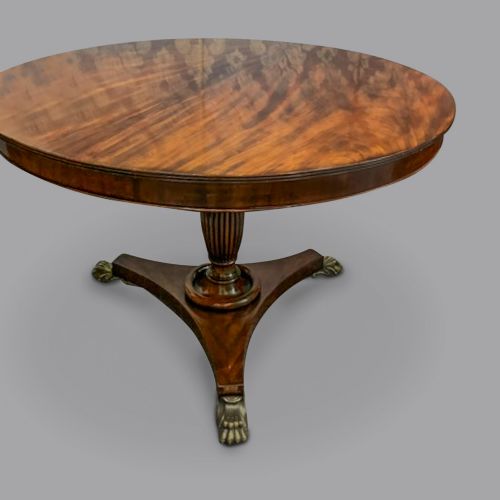
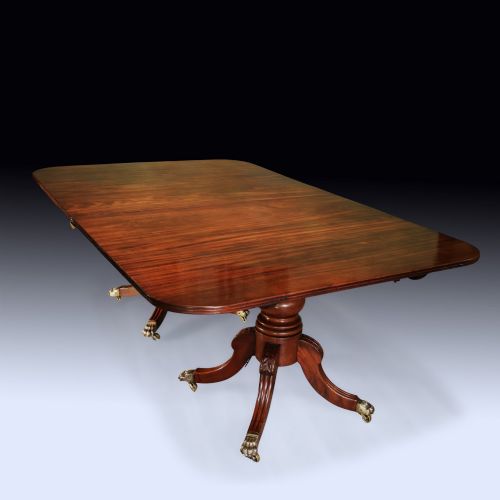
A brass feet dining table brings together timber frames and cast metal terminals, appearing most frequently in forms dating from the early nineteenth century. Buyers searching for a brass feet dining table encounter large extending pedestal formats alongside tilt-top breakfast tables and fixed centre tables.
The prevailing timbers on this page are mahogany and rosewood, often paired with ebonised wood, marquetry inlay, and lacewood banding. Most examples belong to the Regency, George III, and George IV periods, though later twentieth-century interpretations also appear.
Materials and construction
Cabinet makers utilised solid mahogany and wood veneers over sturdy carcases, often applying elaborate marquetry inlay or lacewood banding to top surfaces. Pedestal bases required substantial timber blocks to support multiple pillars and heavy extending leaves.
Metal components took the form of cast brass feet, sometimes incorporating castors to allow movement on heavy dining and breakfast tables. Ebonised wood was occasionally used for contrast against the warm brown tones of the primary timber.
Several tables here include tilting tops designed to fold flat against the wall, proving that antique space-saving engineering predates modern flats by two centuries.
Assessing the workmanship
Quality rests in the selection of figured mahogany veneer and the crispness of the brass casting on the feet and mountings. Superior examples display balanced proportions across multiple pillars and smooth mechanisms for extending leaves or tilting tops.
Less distinguished pieces show simpler turning on the pedestals and standard timber selection without banding or elaborate inlay. The integration of the brass feet into the leg base separates standard production from finer cabinet work.
Gillows·William Trotter
The Brass Feet Dining Table Glossary
- Pedestal
- A central support column holding up the table top, often dividing into multiple pillars on larger dining tables. These columns frequently stand on splayed legs fitted with brass feet.
- Breakfast table
- A tilt-top table originating in the Georgian and Regency periods, designed to be moved against a wall when not in use. They share the same timber and brass foot characteristics as larger dining tables.
- Lacewood banding
- A decorative border inlay utilising figured lacewood timber around the perimeter of a table top. This technique frames the primary mahogany veneer.
- Ebonised wood
- Timber treated to resemble ebony, providing dark contrast within the table design. It appears alongside brass inlay on round centre tables.
Brass Feet Dining Table: Frequently Asked Questions
How do I care for a mahogany table top?
Apply bees wax periodically and buff with a soft cloth to protect the timber finish from moisture and dry air. Avoid placing hot dishes directly onto the polished wood surface.
Keep the table away from direct heat sources and strong sunlight to prevent the mahogany or rosewood from fading or splitting over time.
What is the difference between a breakfast table and a dining table?
Breakfast tables typically feature a tilting mechanism on a single central pedestal, allowing the top to stand vertically when cleared. Dining tables rely on fixed multi-pillar frames designed to support larger gatherings.
Both forms utilise timber construction and brass foot mountings, but breakfast tables served multi-purpose roles in period interiors.
How do I identify a Regency period table?
Regency pieces often feature bold mahogany grain, brass inlay, and sabre legs terminating in cast brass paw feet or castors. The styling reflects neoclassical influences popular during the early nineteenth century.
Look for robust pedestal construction and clean architectural lines rather than the heavy carving associated with earlier Victorian furniture.
Can I seat ten people comfortably at these tables?
Extending twin or triple pedestal dining tables provide the length required for seating ten or more guests. The modular nature of pillar tables allows leaves to be added or removed depending on the occasion.
Check the leg clearance and pedestal placement beneath the table to ensure chairs slide in without obstruction from the central supports.