
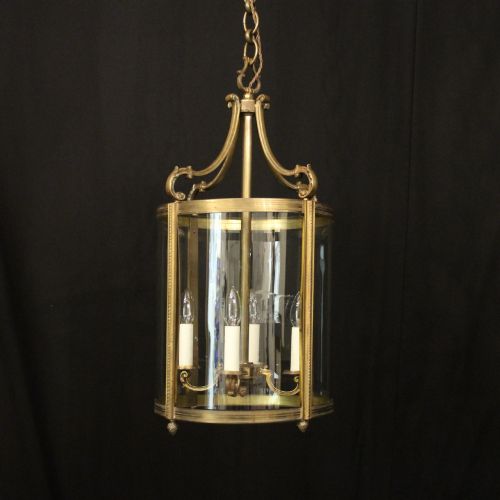
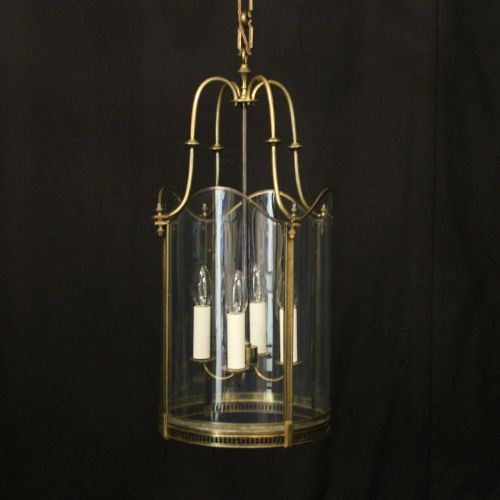
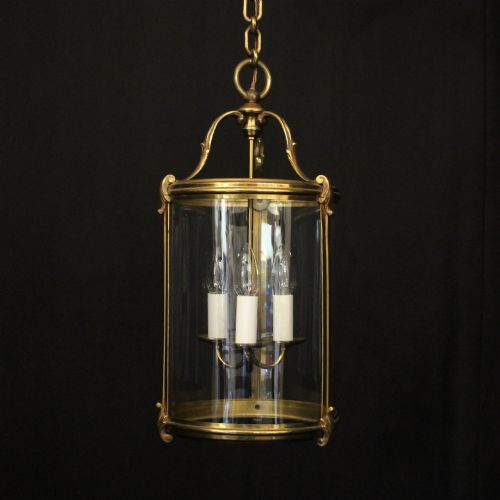
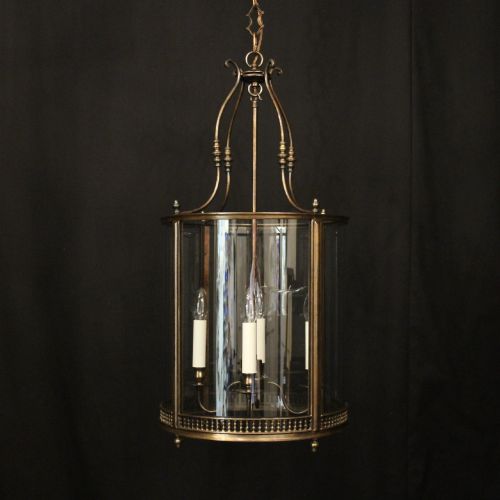


Brass Entryway Lighting
Brass entryway lighting brings period warmth to a hallway, offering structural glass and metal forms designed to hang overhead.
Brass Entryway Lighting
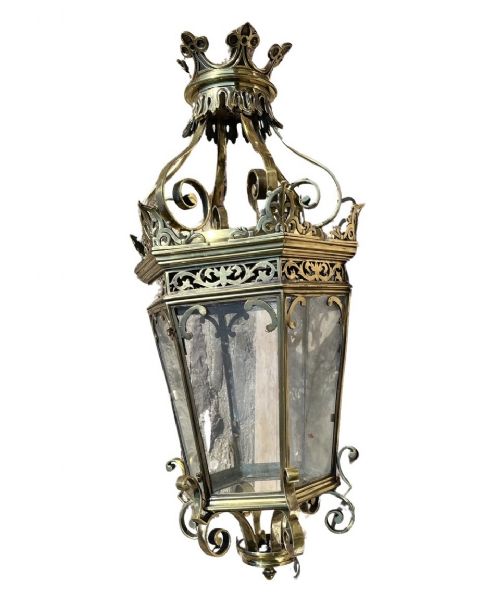
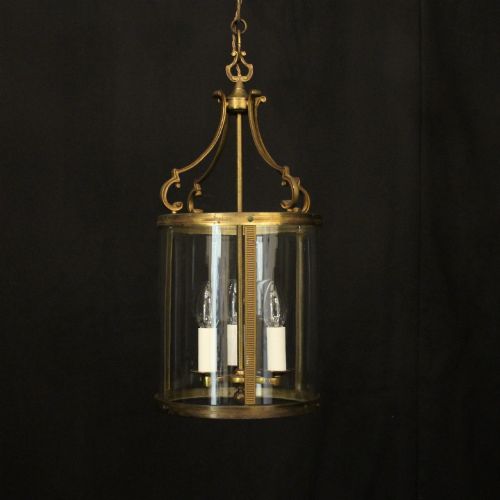
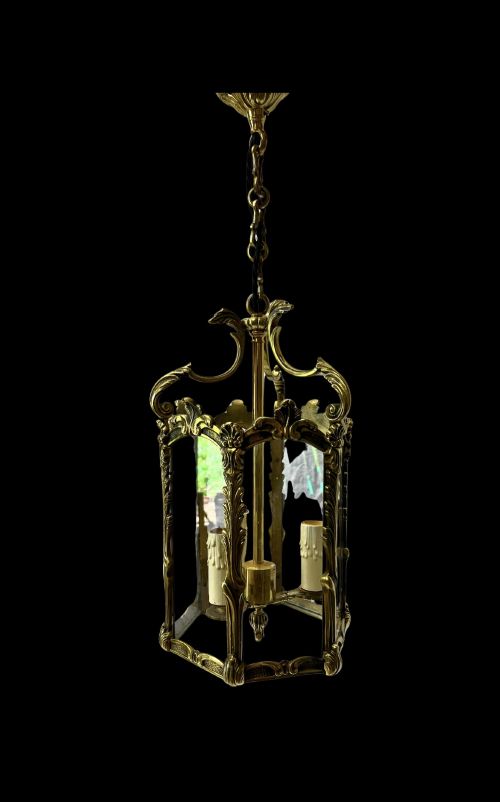
Brass entryway lighting comprises hanging fixtures designed specifically for hallways and entrance spaces, drawing from periods such as the Edwardian era and the nineteen-twenties. These pieces take the form of hall lanterns, ceiling lights, and pendant lights that combine metal frameworks with transparent panels.
The selections available here lean heavily toward French lanterns featuring convex glass panes and multiple internal lights. Alongside these French examples appear English pieces, including large brass lanterns with access doors and porch fixtures mixing brass with copper.
Styles range from Gothic Revival and English Regency to French Louis XVI and Rococo interpretations. Most items date from the late nineteenth century through to the nineteen-thirties, with nineteen-twenty being a particularly common date.
How they were made
Makers constructed these lanterns using heavy metallic frames in brass, bronze, gilt brass, and gilt bronze. Metalwork was frequently cast, gilded, or polished to create sturdy structural housings for the lighting components.
Transparent enclosures were formed using shaped or convex glass panes fitted securely into the metal frames. Access doors were often integrated into the design to allow internal bulb or candle maintenance.
Materials across the selection include standard brass alongside gilt variants, bronze, copper, and glass.
What varies in quality
Quality differences emerge in the weight and complexity of the metal casting, with heavy bronze and detailed gilding sitting above simpler brass construction. The presence of multiple internal lights or custom convex glass panels also distinguishes more elaborate workshop output from basic utility designs.
The fineness of decorative detailing in styles such as French Louis XV or Neo-Classical dictates the overall refinement of a piece. Robust structural engineering, particularly on large hall lanterns and those with opening doors, marks out superior examples.
The Brass Entryway Lighting Glossary
- Hall lantern
- A hanging light fixture designed primarily for entrance halls and corridors, typically enclosed in glass and metal. These fixtures often feature doors or removable panels for access.
- Convex glass
- Curved glass panels used in lantern construction to diffuse light and provide a rounded profile. This technique appears frequently on French examples from the early twentieth century.
- Gilt bronze
- Bronze metal treated with a thin layer of gold or gold-coloured finish. This material provides a durable and decorative surface for high-end lighting fixtures.
- Gothic Revival
- An architectural and decorative style drawing inspiration from medieval forms. Pieces in this style often incorporate pointed arches and heavy tracery.
- Pendant light
- A solitary light fixture suspended from the ceiling by a chain, cord, or rod. In entrance spaces, these serve as primary overhead illumination.
Brass Entryway Lighting: Frequently Asked Questions
What is a hall lantern?
A hall lantern is an enclosed hanging light fixture designed to illuminate entryways and corridors.
They combine metal frameworks with glass panels to protect the light source while casting an even glow across the space.
How do I hang a heavy lantern?
Hanging a heavy brass or bronze lantern requires securing the mounting directly into ceiling joists or structural supports.
Professional installation ensures the weight of the metal frame and glass panels is safely sustained.
Are these lanterns electrified?
Many period lanterns have been adapted for modern electricity over time.
Some retain older wiring configurations while others are updated for contemporary domestic use.
How do I clean glass panels?
Glass panels can be wiped down gently using a soft cloth and mild glass cleaner.
Care should be taken around gilt bronze and brass surfaces to avoid harsh chemical contact with the metal finish.