


Brass Entry Lighting
Brass entry lighting sets the tone of a hall, greeting visitors with period metalwork and glass.
Brass Entry Lighting
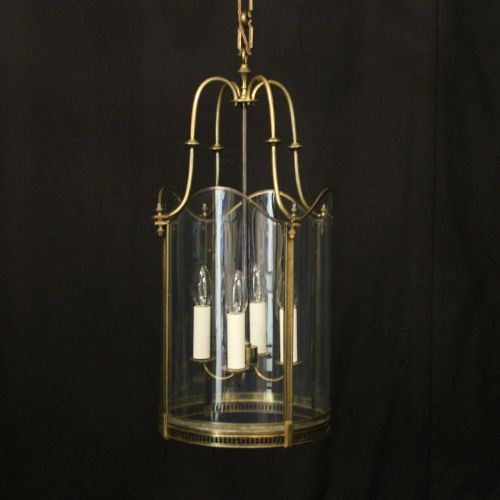
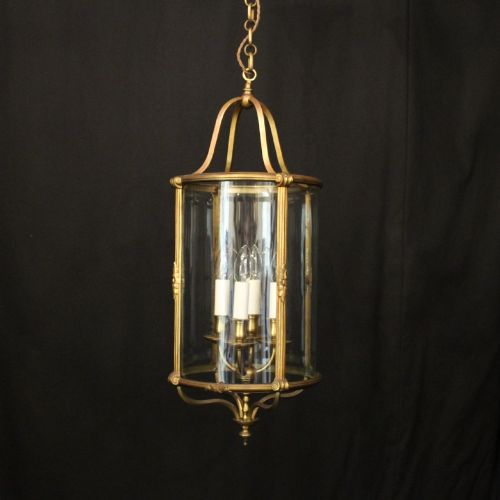
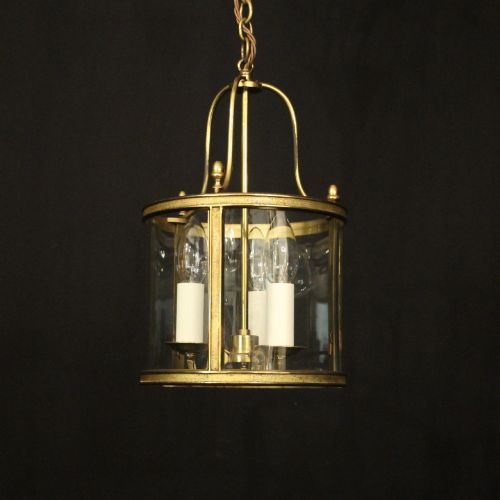
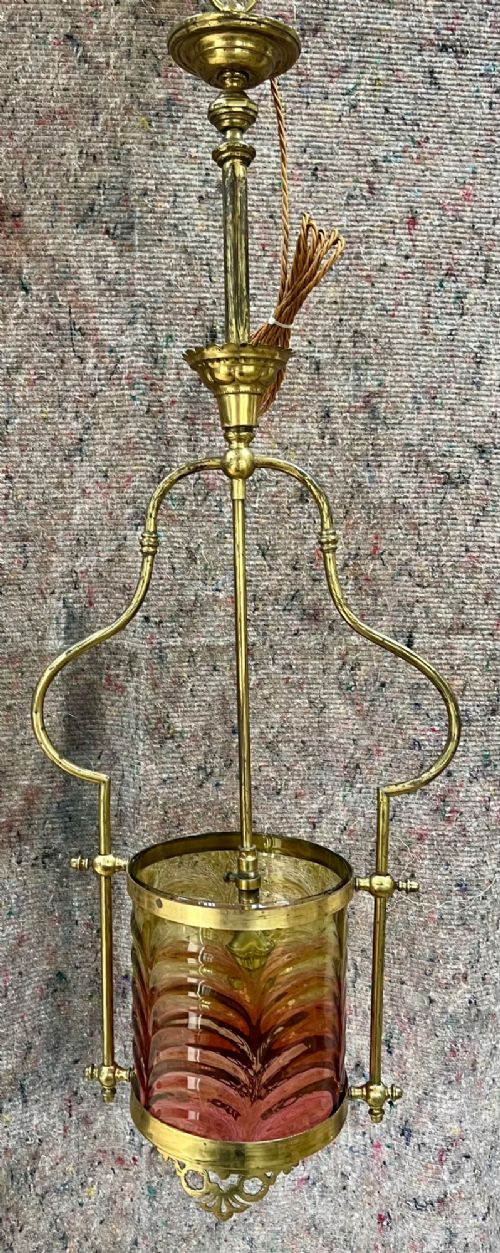
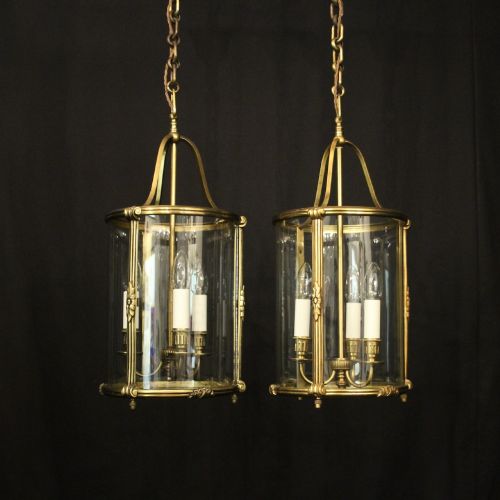
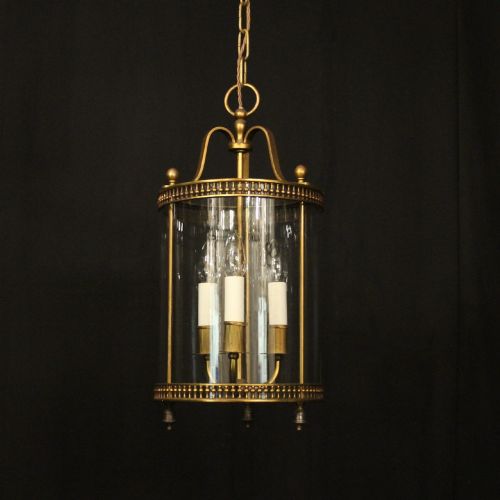
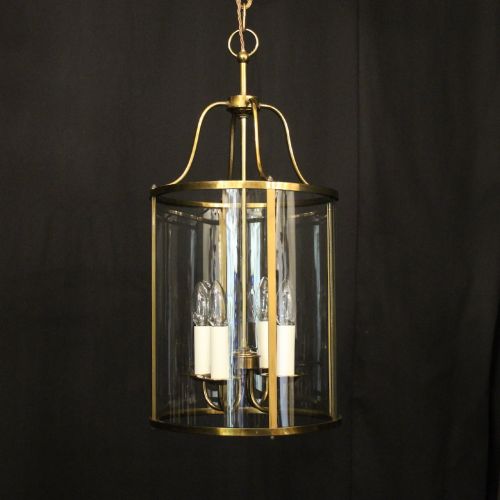
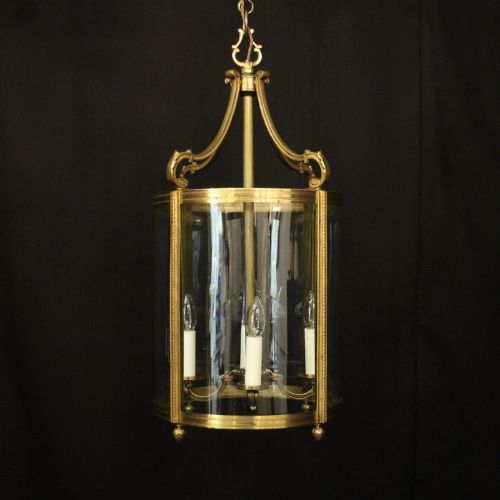
Brass entry lighting comprises hanging hall lanterns, ceiling lights, and pendant lights designed to illuminate vestibules, corridors, and entranceways. When searching for brass entry lighting, buyers encounter pieces primarily originating from French workshops and English makers spanning the nineteenth and early twentieth centuries. These fixtures range from single-light brass frames to large multi-light gilded bronze examples.
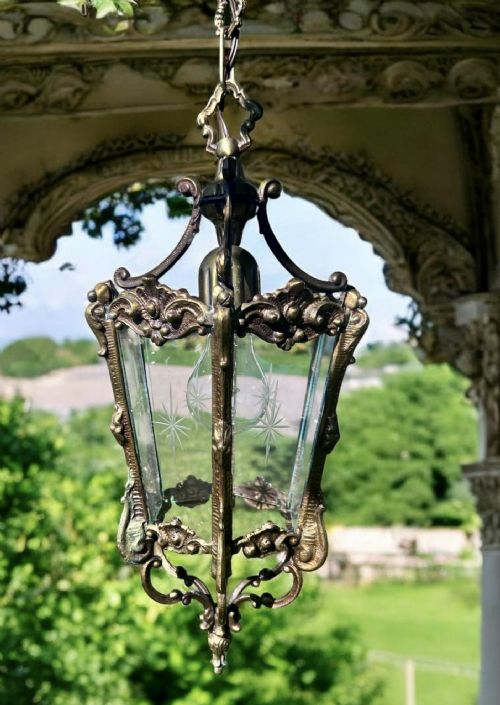
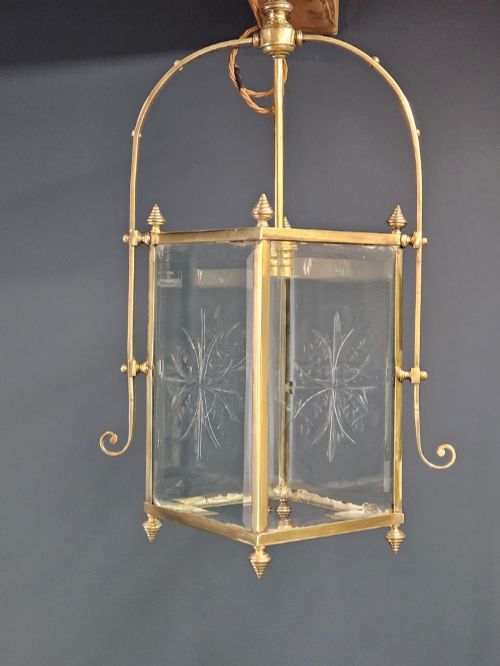
The version most commonly met on this page is the French hall lantern from the early twentieth century, particularly the 1920s. Such pieces typically feature glazed panels, convex glass, and metalwork cast in the French neoclassical, rococo, or chateau styles. English interpretations from the Edwardian period and the 1830s also appear among the selection.
How they were made
The construction relies heavily on cast brass, bronze, and gilt bronze frameworks assembled to hold transparent glass panels. Metal components are frequently gilded or silver-gilded, displaying patinated surfaces achieved through traditional casting and finishing techniques.
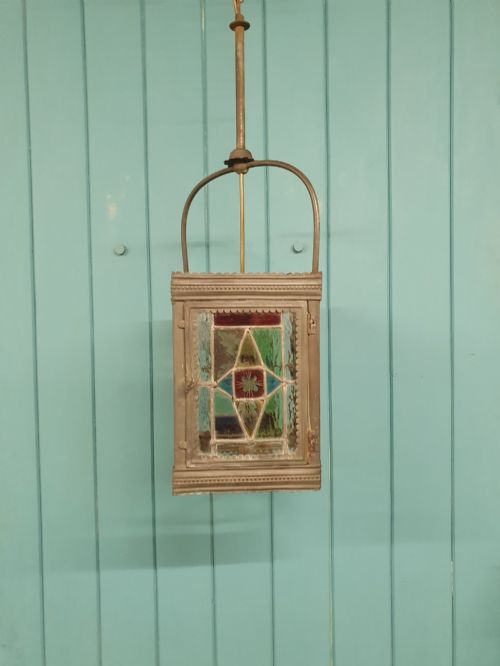
Glazing methods include flat, leaded, cut, and heavy convex glass panes secured within metal cages or frames. Many lanterns incorporate multiple internal light fittings, suspended securely from chains or rigid mounts designed for high ceilings.
Listings feature pieces spanning from the nineteenth century through the 1930s, constructed predominantly from brass, bronze, and glass.
What varies in quality
Quality diverges notably in the crispness of the metal casting and the depth of the gilding applied to the bronze or brass structure. Finer pieces exhibit deeply chased ornamentation, substantial weight, and well-proportioned decorative mounts.
The nature of the glass panels also dictates standard, with heavy convex or cut glass panes representing higher execution than plain flat glass. The integration of structural elements, such as robust hinging and secure framing, separates standard utility pieces from grand salon lanterns.
The Brass Entry Lighting Glossary
- Hall lantern
- A ceiling-hung light fixture specifically scaled for corridors, vestibules, and entrance halls. These fixtures are enclosed in glass and metal to project light safely downward.
- Convex glass
- Curved glass panels that bulge outward, creating distorted reflections and a wider spread of internal illumination. This type requires specialised moulding.
- Gilt bronze
- Bronze metal treated with a thin layer of gold or gold leaf, also known as ormolu in French pieces. It provides a durable, warm metallic finish that resists tarnishing.
- Bevelled glass
- Glass panes with edges cut and polished at an angle, catching the light and creating subtle prismatic effects. This technique denotes superior finishing.
- Rococo style
- An ornate design movement characterised by asymmetrical curves, scrollwork, and naturalistic motifs derived from shell and plant forms. It appears frequently on nineteenth-century French lantern frames.
Brass Entry Lighting: Frequently Asked Questions
What is brass entry lighting?
Brass entry lighting refers to hanging lanterns and ceiling fixtures constructed from brass, bronze, or gilt metals designed for hallways and entryways.
These pieces combine metal frames with glass panels to illuminate transitional spaces with period character.
How do I live with antique lighting?
Living with these fixtures involves adapting period wiring to modern electrical standards while retaining the original exterior housing. Professional installation ensures that heavy bronze and brass lanterns hang securely from structural ceilings.
Regular, gentle dusting preserves the gilded or patinated surface without removing the accumulated character of the metal.
How do I tell the periods apart?
Periods are identified through stylistic cues, such as the heavy proportions of nineteenth-century pieces compared to the sleeker lines of 1920s Art Deco or Edwardian designs.
Material finishes also provide clues, with nineteenth-century examples often showing deeper bronze patination and cast ornamentation.