

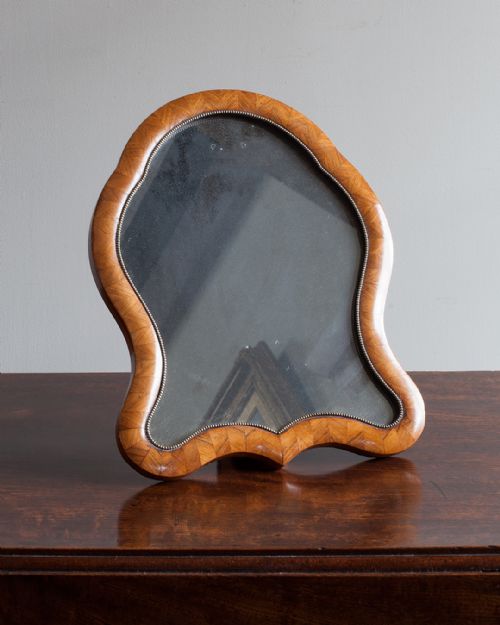


Brass Easel Frame
A brass easel frame holds your portraits and photographs upright with architectural metalwork, offering a decorative stand for any table or desk.
Brass Easel Frame
A brass easel frame is a portable display stand designed for portraits, photographs, and small mirrors, typically supported by a hinged back leg. When you search for a brass easel frame, you encounter Victorian and Edwardian examples fashioned for dressing tables and desks.
The objects span picture frames, table mirrors, photo frames, and portrait miniatures, reflecting the domestic uses of the nineteenth and early twentieth centuries. Surviving pieces frequently display French Rococo Revival or Victorian aesthetics, utilising the sturdy metalwork characteristic of the period.
These items range from simple domestic photograph holders to elaborate dressing table mirrors adorned with paste stones or agate mounts. The form allows the glass and metal display to rest securely on any flat surface without wall mounting.
Materials and construction
Makers utilised brass, gilt bronze, and ormolu as the primary structural metals, casting or hammering the frames into ornate shapes. Repoussé techniques created raised decorative patterns on the metal surface, while gilding provided a bright, uniform golden finish.
Many examples incorporate bevelled glass to protect the photograph or portrait, alongside silk linings or kingwood backing. Specialised pieces feature inset paste stones and agate mounts, secured firmly into the metal armature.
Brass Easel Frame Retail Price Guide 2026
Typical asking prices for brass easel frame among the pieces listed under this phrase on Sellingantiques today, from the lower quarter to the upper quarter. They describe what is for sale here now, not the wider market.
Some frames include two-way viewing options, allowing owners to admire portraits from unexpected angles on the dressing table.
Judging the workmanship
Superior examples show crisp casting in the gilt bronze or ormolu, where intricate scrollwork and floral motifs remain sharp and well-defined. Lesser pieces rely on softer, shallower stamping with minimal hand-chasing on the metal surface.
The integration of secondary materials such as bevelled glass and agate mounts distinguishes finer work from standard production. A robust, well-fitted easel back ensures the frame stands securely without strain on the hinges.
The Brass Easel Frame Glossary
- Ormolu
- Gilded bronze used for decorative mounts and frames. The technique involves applying a mercury and gold amalgam to bronze before heating.
- Repoussé
- A metalworking technique where the artisan hammers the metal from the reverse side to form a raised design. This creates tactile surface relief on brass frames.
- Bevelled glass
- Glass cut with an angled edge around the perimeter. It catches the light and adds depth to the framed portrait.
- Paste stone
- Faceted glass or crystal cut to imitate gemstones. These stones are set into the metal frame for extra ornamentation.
Brass Easel Frame: Frequently Asked Questions
How do I clean a brass frame?
Dust the metal gently with a soft, dry cloth to prevent accumulation of dirt in the crevices. Avoid abrasive metal polishes that can strip away the original gilding or ormolu finish.
Take care near bevelled glass and silk linings to avoid staining or scratching the surrounding materials during maintenance.
What is the easel back for?
The hinged rear leg supports the frame at an ideal viewing angle on desks and dressing tables. It folds flat against the back when the frame needs to be packed or stored.
Check that the hinge mechanism moves smoothly without straining the surrounding brass armature.
How do I date these frames?
Examine the style of the metalwork, such as Victorian Rococo curves or Edwardian repoussé detailing. Materials like kingwood, bevelled glass, and paste stones also help narrow down the period of manufacture.
Compare the construction of the easel stand and fixings with dated examples from the nineteenth century.
Can I replace the glass?
Original bevelled glass contributes to the authenticity and character of antique frames. Replacements should match the exact thickness and edge profile of the original pane.
Consult a professional restorer if the existing glass requires attention to preserve the surrounding metal settings.