
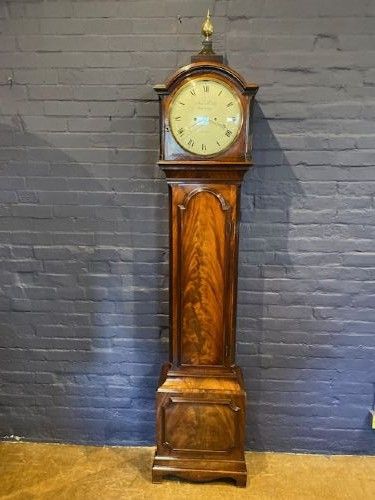
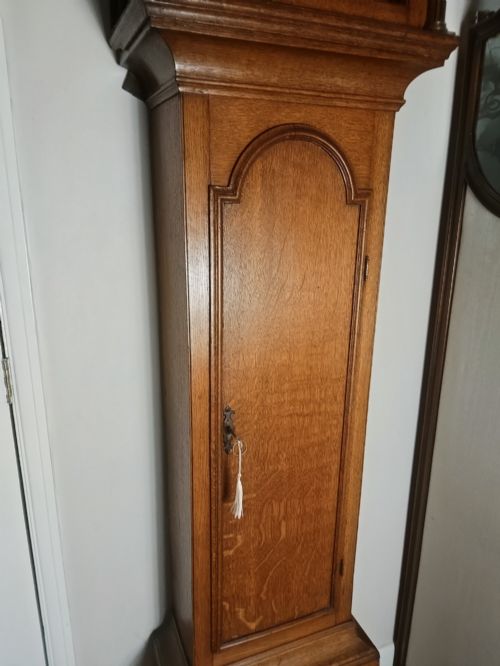
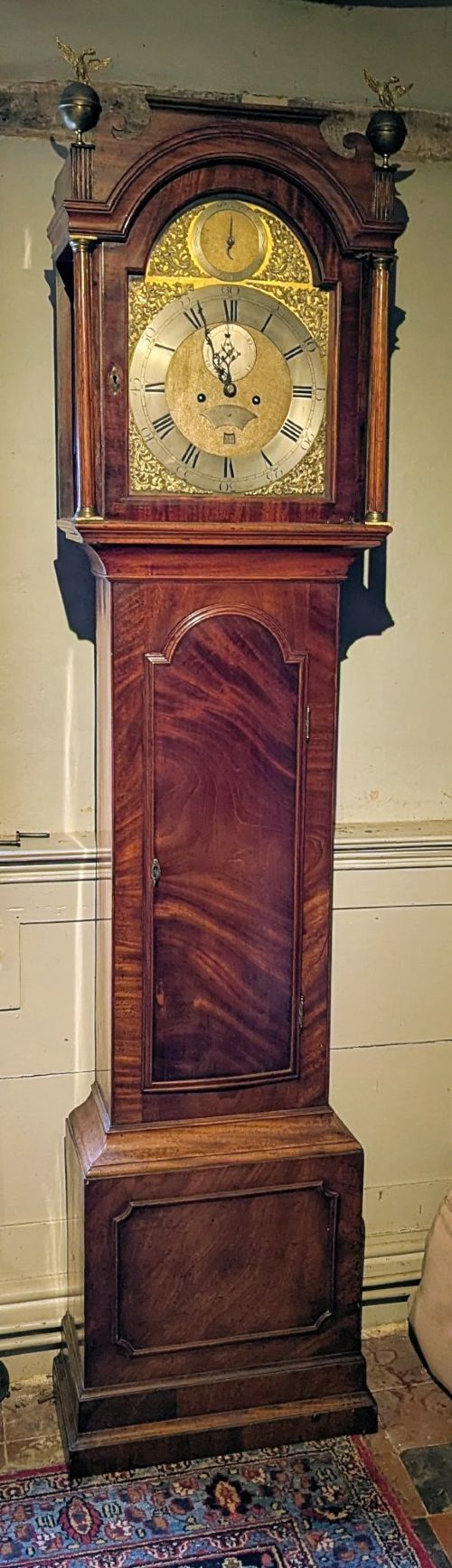
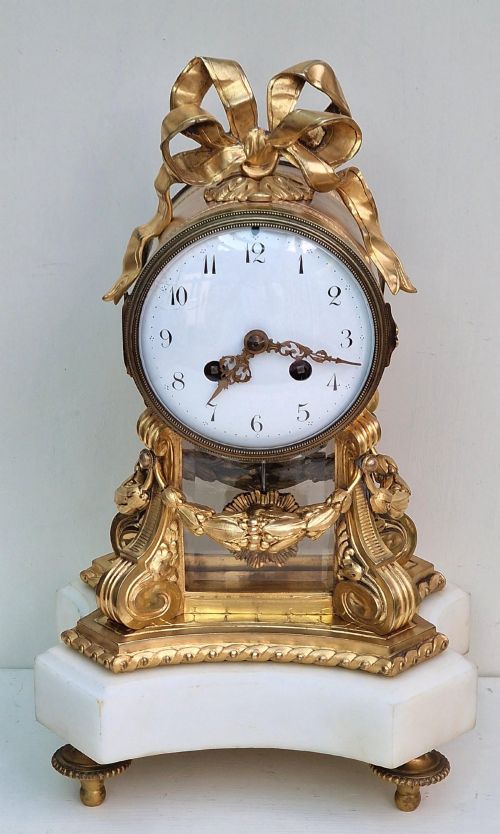
Brass Dial Pendulum Clock
A brass dial pendulum clock brings mechanical rhythm and warm metalwork into a room, spanning grand floor-standing longcases and compact wall-hanging dials.
Brass Dial Pendulum Clock
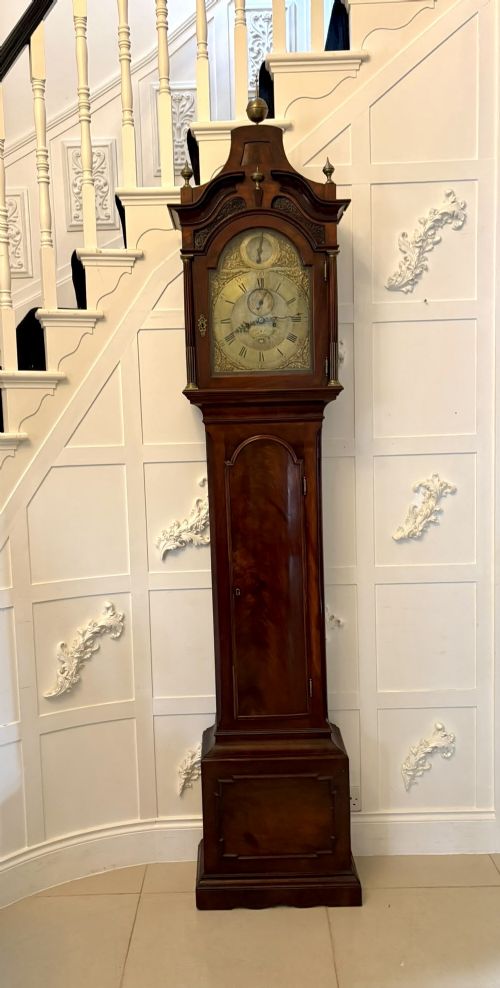
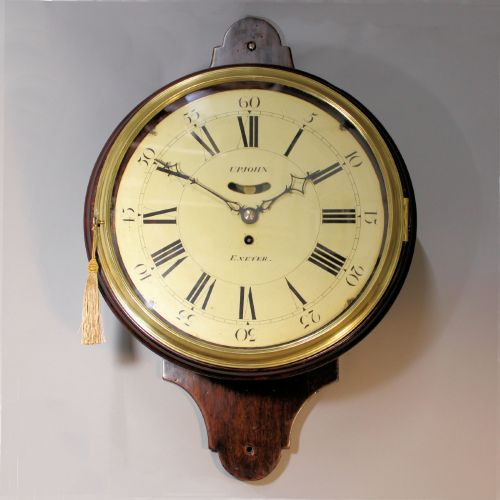
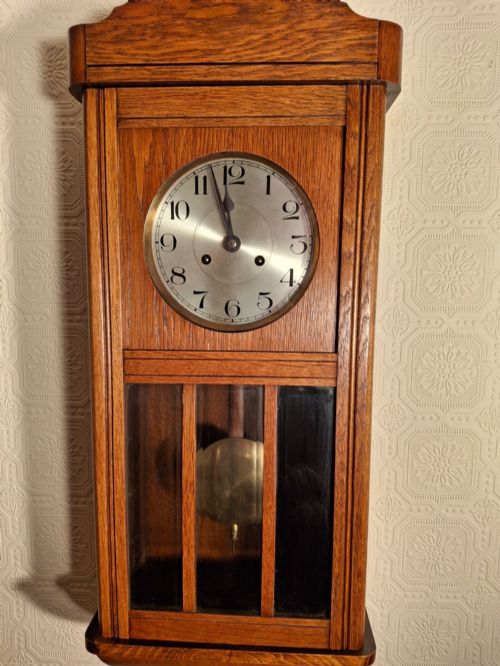
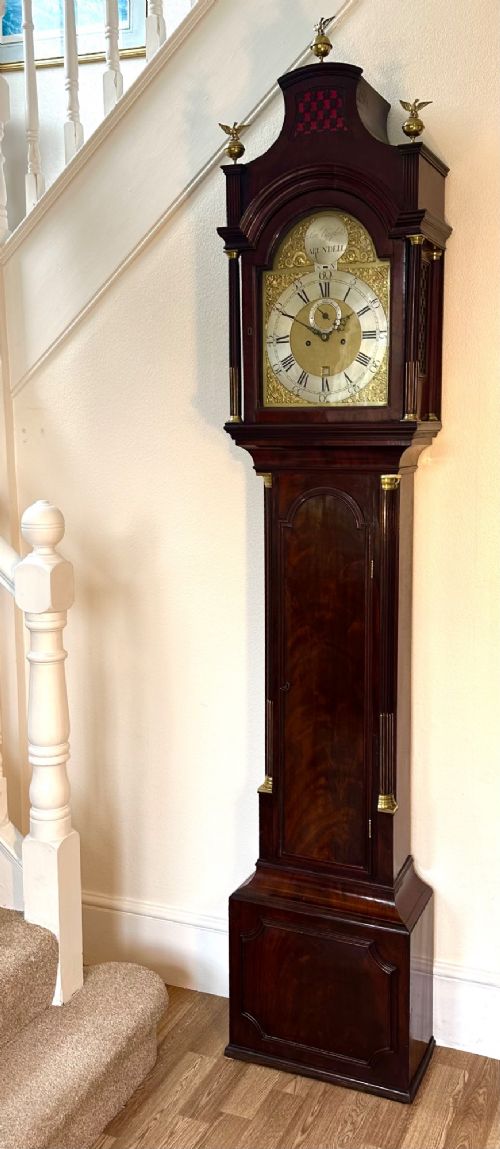
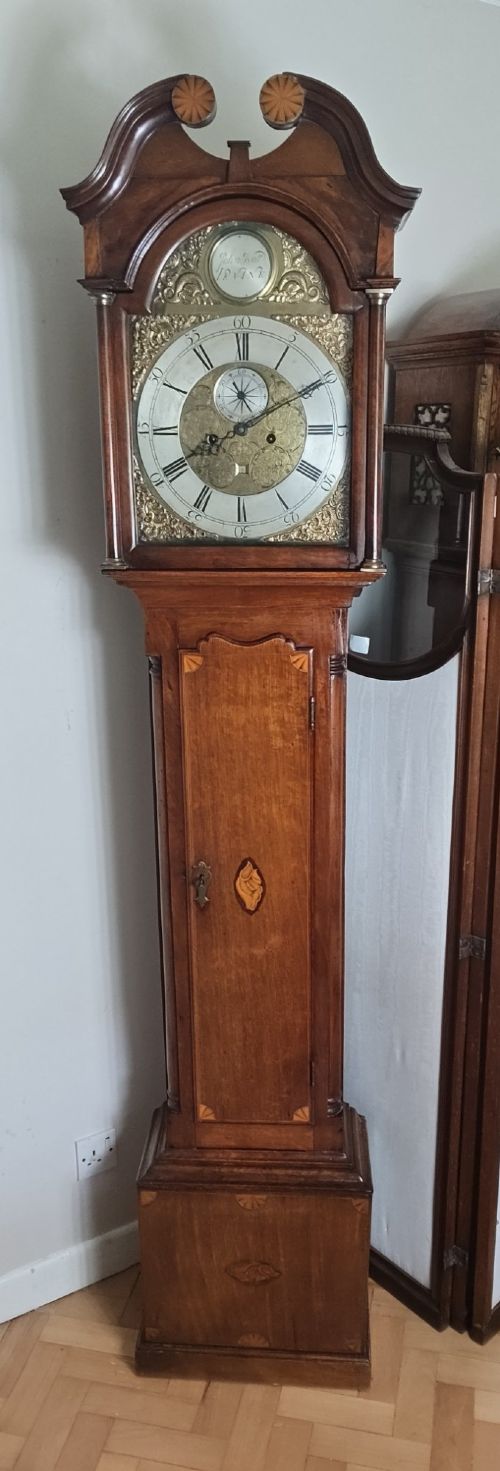
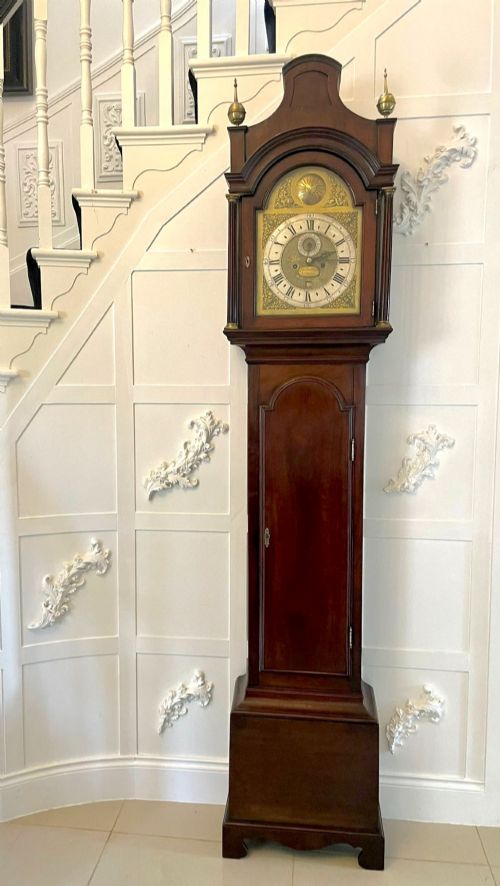
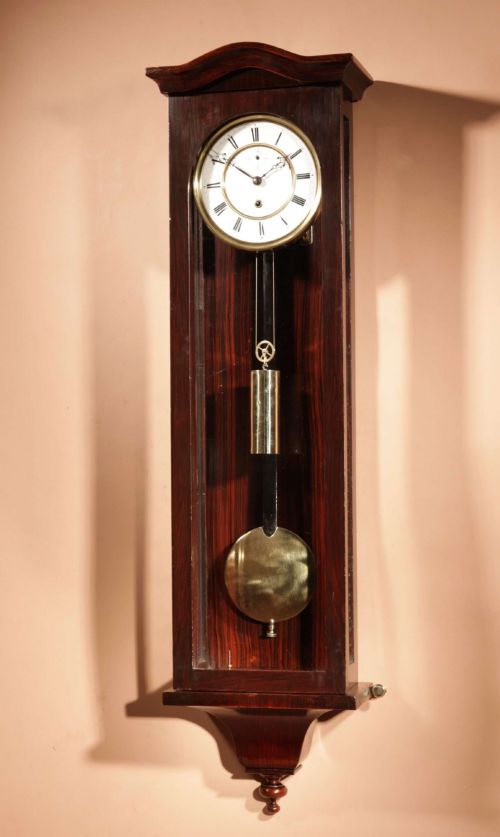
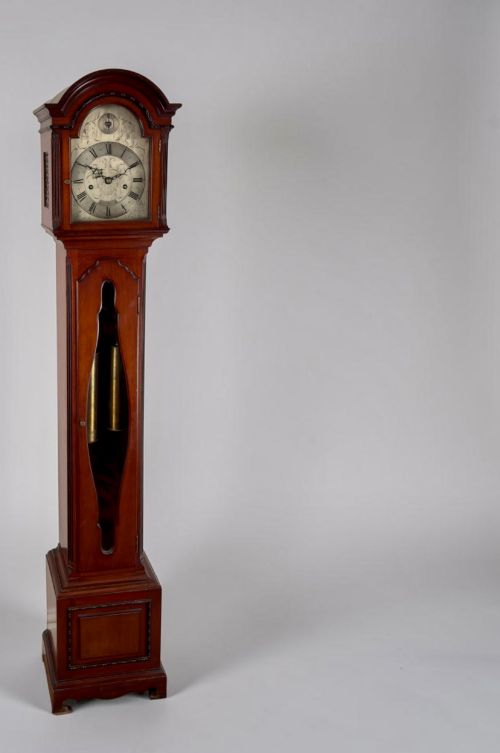
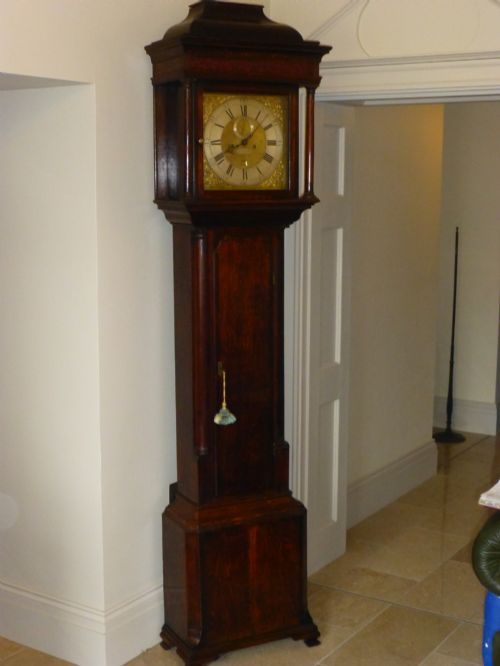
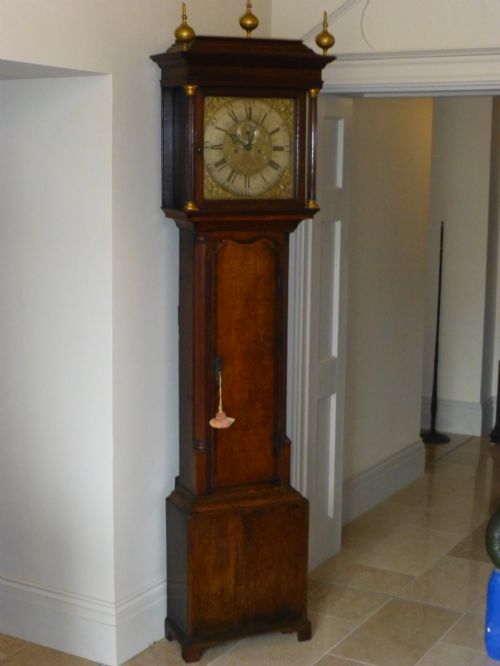
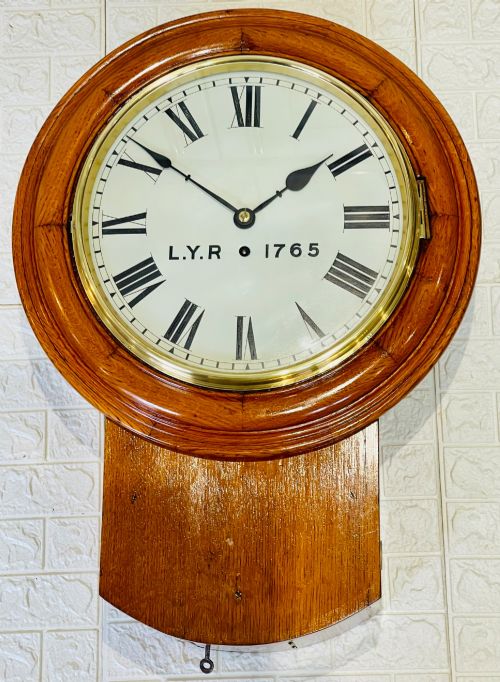
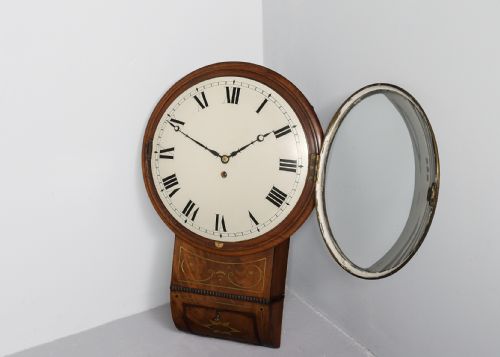
A brass dial pendulum clock is a timekeeper driven by weights or springs, regulated by a swinging pendulum and fronted by a brass face. These pieces range from towering floor-standing longcase grandfather clocks to wall-mounted railway dials and smaller mantel pieces.
The versions most commonly met on this page date from the Georgian and Victorian eras, alongside Edwardian and early twentieth-century examples. Oak, mahogany and walnut cases house movements made in provincial towns and major manufacturing centres alike.
Forms vary from robust provincial oak longcases with square brass dials to refined London mahogany bracket clocks and school house wall dials. Buyers select these objects for their working mechanical movements and the presence of patinated timber.
Materials and construction
Clockmakers built cases using native and imported hardwoods such as oak, walnut and mahogany, often applying veneers and brass inlay to enhance the grain. Dials combine cast and engraved brass plates with applied spandrels, silvered chapter rings and steel hands.
Movements rely on brass gear trains, iron plates and steel arbors, driven by lead or iron weights suspended by cords or chains, or powered by coiled steel mainsprings. Fusee movements incorporate a conical pulley to equalise the pull of the mainspring as it unwinds.
Judging quality
Quality rests on the integrity of the movement, the crispness of the brass engraving on the dial, and the proportion of the timber case. Untouched original dial engraving and signed maker plates distinguish superior workshops from generic production.
Case timber selection dictates visual weight, with figured walnut and dense mahogany showing finer cabinetmaking than utility oak. Movement complexity, such as quarter-chimes or musical barrels, separates standard timekeepers from advanced horological work.
Charles Shuckburgh·Richard Corless·Smith of Chester·James McCabe·J Henry·George Clarke·Benjamin Taylor·Gillett & Johnston
The Brass Dial Pendulum Clock Glossary
- Fusee
- A conical pulley connected to the mainspring barrel by a chain or cord, designed to maintain even driving force as the spring unwinds. This mechanism improves timekeeping consistency across the running cycle.
- Chapter ring
- The metal ring fixed to the dial face that bears the hour numerals. It is often silvered and engraved.
- Spandrel
- The decorative metal corner piece fixed between the square chapter ring and the outer edge of a brass dial. Early examples are cast brass, while later styles are applied or painted.
- Grandfather clock
- A tall floor-standing pendulum clock, also known as a longcase clock, enclosed in a wooden case with a protective hood. Heights generally exceed six feet.
Brass Dial Pendulum Clock: Frequently Asked Questions
How do I wind a longcase clock?
Weights are drawn up using a crank key inserted into winding holes on the dial face, or by pulling chains depending on the mechanism. Care must be taken not to over-wind the movement.
Spring-driven clocks use a separate key applied to arbs on the dial or movement plate. Regular winding ensures the pendulum maintains a consistent arc.
Where should I place a pendulum clock?
A pendulum clock requires a stable, dry interior wall or firm floor to prevent vibrations from interfering with the beat. Exterior walls subject to dampness or temperature swings should be avoided.
The case must be plumb and level so the pendulum swings symmetrically. Floor-standing longcases often include adjustable feet or wall-fixing brackets for stability.
What is a fusee movement?
A fusee movement uses a spiral-grooved cone connected via a chain to the mainspring barrel. As the spring loses tension, the chain moves to a wider part of the cone to maintain equal torque.
This system provides superior timekeeping compared to a direct mainspring drive. It appears frequently in better quality bracket and wall dial clocks.
How do I tell an 18th century clock from a 19th century one?
Eighteenth-century clocks typically feature square brass dials with cast brass spandrels, housed in solid oak or walnut longcase bodies. Movements are often pinned directly to wooden seat boards.
Nineteenth-century examples frequently employ arched white enamel dials, round metal bezels, or mahogany veneer cases. Fusee wall dials and railway clocks become widespread during the Victorian period.