






Brass Desk Organizer
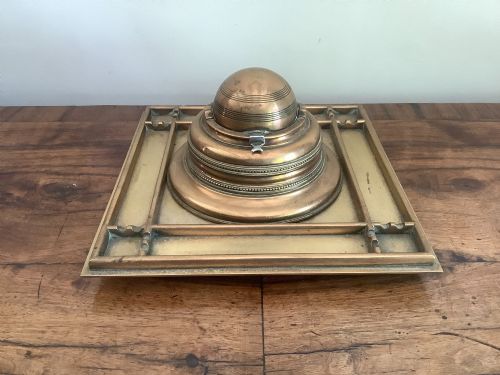
A brass desk organizer keeps correspondence and writing implements in order, bringing period metalwork and timber to the desktop.
Brass Desk Organizer
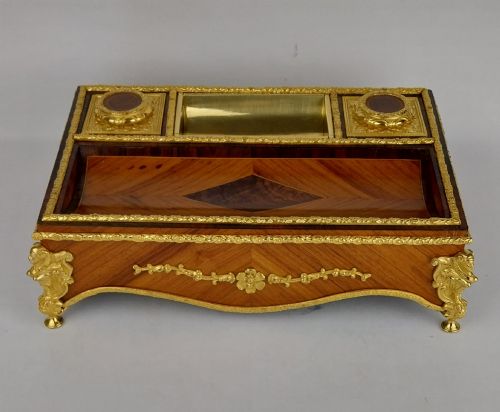
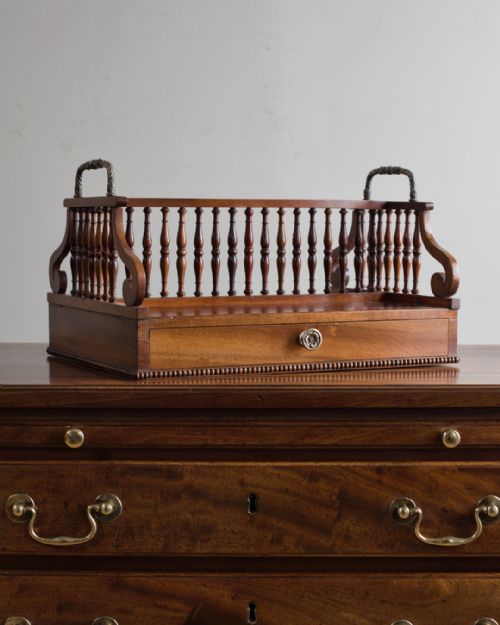
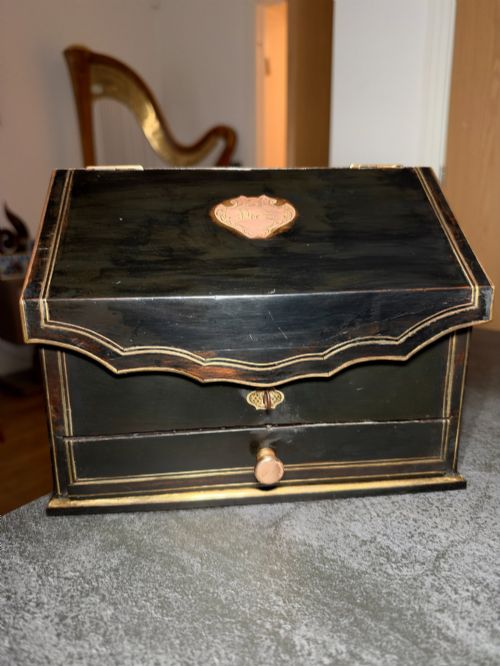
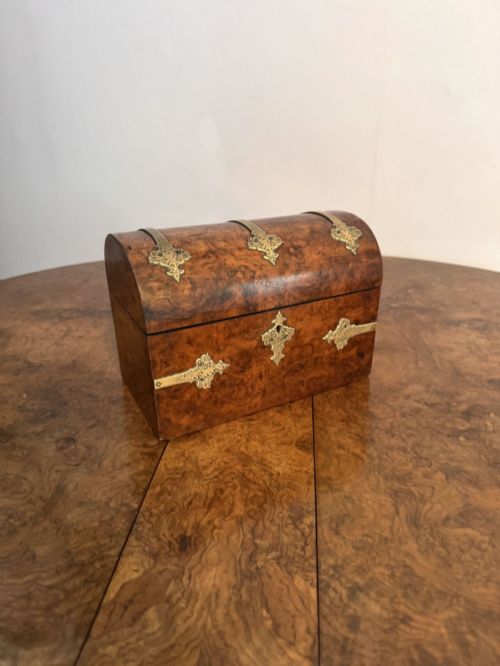
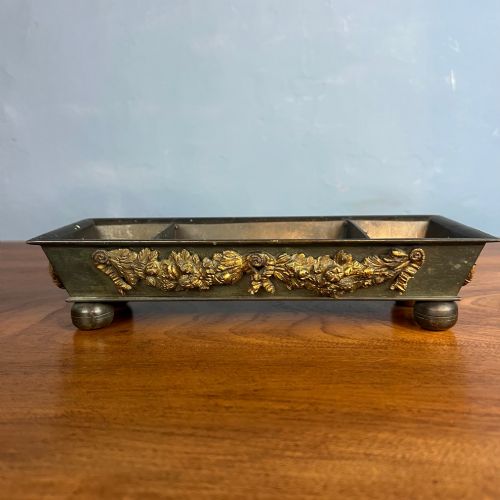
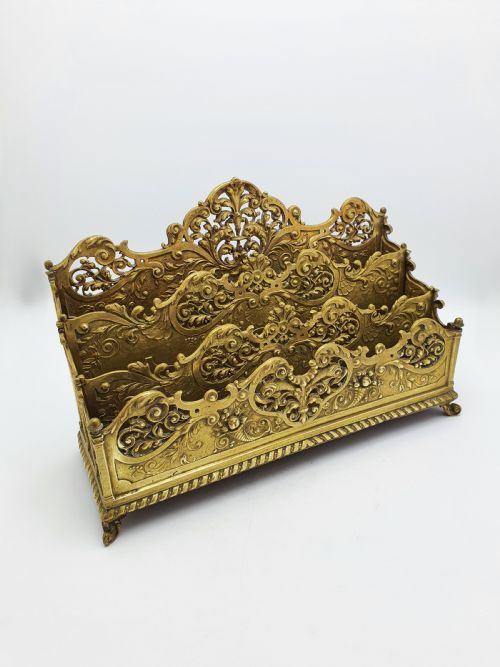
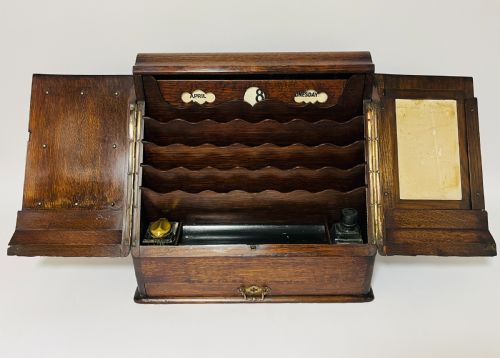
A brass desk organizer encompasses stationery cabinets, letter boxes, inkstands, and book slides from the nineteenth century onward. Buyers find pieces ranging from compact fall-front boxes to elaborate Davenport-style stands designed for country house writing tables.
The material combination of brass and timber dominates the selection, frequently pairing walnut, oak, mahogany, or coromandel with cast or sheet brass mounts. Ormolu, marble, and tortoiseshell also appear on French and English examples from the mid-nineteenth century.
Victorian and Edwardian pieces form the core of the available selection, spanning utilitarian oak tidies to ornate Gothic Revival and Rococo Revival letter racks. Regency rosewood stands and Arts and Crafts copper accessories complete the chronological range.
Materials and Technique
Cabinetmakers constructed the wooden carcases of these organizers using durable hardwoods such as oak, walnut, and mahogany, often applying veneers of coromandel, rosewood, or tortoiseshell. Dovetail joints secured the drawers, while brass hinges and locks provided functional structural support.
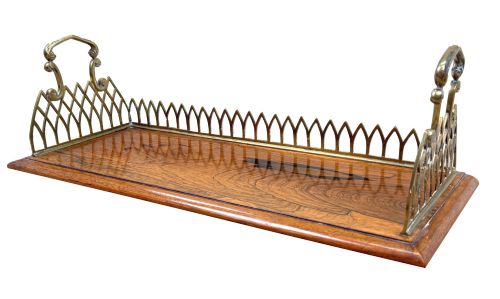
Metalwork elements relied on casting, stamping, and engraving brass and ormolu, which were then fitted to the wooden bodies via flush screws or pins. Applied brass strapwork, pierced galleries, and inlaid brass stringing reinforced the geometric or revivalist motifs popular in period workshops.
Brass Desk Organizer Retail Price Guide 2026
Typical asking prices for brass desk organizer among the pieces listed under this phrase on Sellingantiques today, from the lower quarter to the upper quarter. They describe what is for sale here now, not the wider market.
Listings feature brass combined with oak, walnut, mahogany, coromandel, and rosewood across Victorian and Edwardian periods.
Assessing the Standard
The caliber of a brass desk organizer depends upon the crispness of the metal casting and the precision of the brass inlay work set into the timber carcase. Heavier gauge brass mounts and well-defined chased details distinguish superior items from simpler production pieces.
Internal complexity and fitted components elevate certain items, such as stationery cabinets with working spring mechanisms, glass inkwells with matching brass collars, and secret drawers concealed within miniature desks or letter boxes.
Betjemanns·Gillows of Lancaster
The Brass Desk Organizer Glossary
- Standish
- A portable tray or stand fitted for inkwells, sanders, and penholders, often equipped with a drawer. These desk accessories sat centrally on writing tables in nineteenth-century studies.
- Ormolu
- Gilded bronze or brass applied as decorative mounts on furniture and desk accessories. The technique involves treating brass with an acid amalgam of gold.
- Coromandel
- A dense, heavy timber from Asia featuring dark brown grain with dramatic black streaks. Cabinetmakers utilised this luxury wood for high-end Victorian stationery boxes.
- Book slide
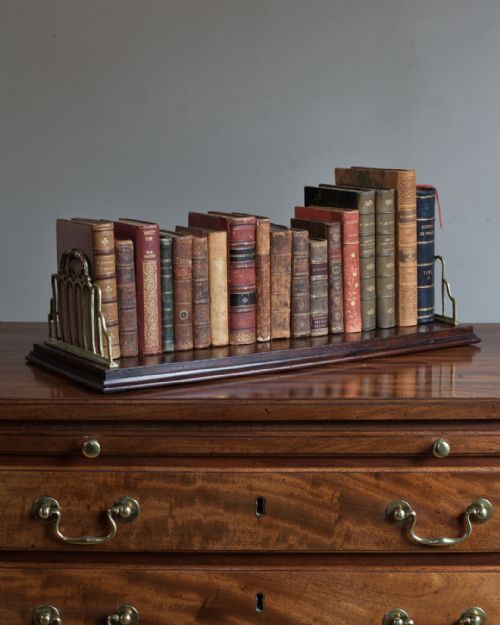
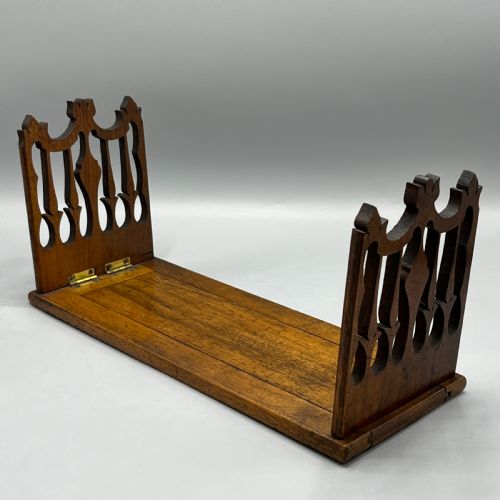
- An expanding desktop rack featuring hinged or sliding ends supported by metal framework. They held small reference libraries upright on a desk.
- Stationery cabinet
- An upright wooden box with a fall-front or doors enclosing fitted compartments for paper and envelopes. They replaced flat blotters on late Victorian desks.
Brass Desk Organizer: Frequently Asked Questions
What is a brass desk organizer used for?
These desk accessories kept writing paper, envelopes, ink, and pens organised on nineteenth-century writing tables and bureau desks.
Stationery cabinets and letter boxes stored incoming mail, while inkstands provided secure wells for liquid ink and feathered quills or steel pens.
How do I date a brass desk organizer?
Dating relies on combining the timber species, the revival style, and the manufacturing techniques visible in the construction.
Heavier Gothic and Rococo Revival brass mounts point to the mid-nineteenth century, whereas simpler oak and brass letter boxes generally belong to the Edwardian era.
Are inkwells included with these desk sets?
Many inkstands and desk tidies retain their original cut-glass inkwells fitted with hinged brass or silver-plated lids.
Replacements do occur due to breakage over the decades, so collectors examine the collar and glass fit carefully.
How should I clean brass desk mounts?
Historic brass benefits from gentle dusting and occasional cleaning with a soft cloth rather than aggressive chemical polishing.
Preserving the dark patination accumulated over generations maintains the authentic character of nineteenth-century metalwork.