
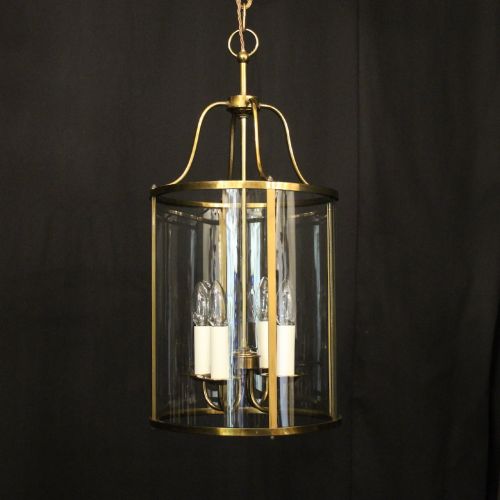
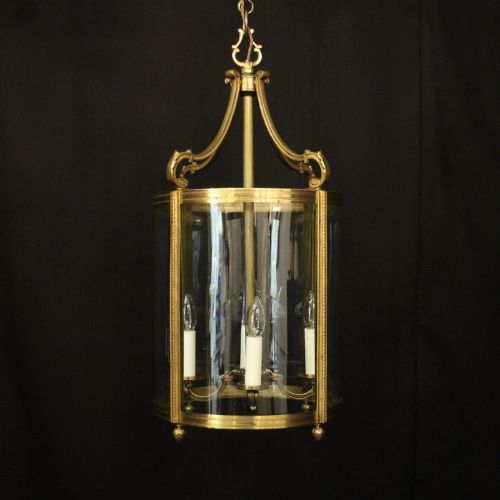


Brass Cylindrical Lantern
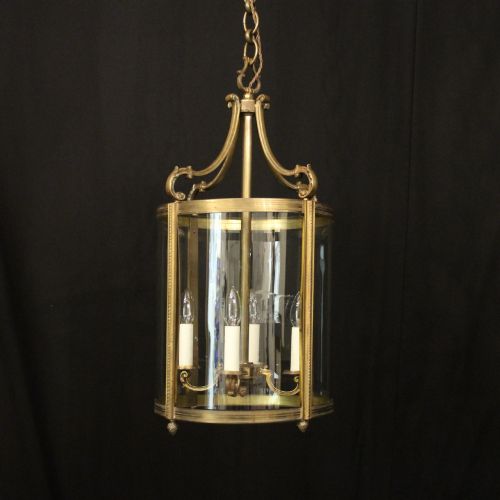
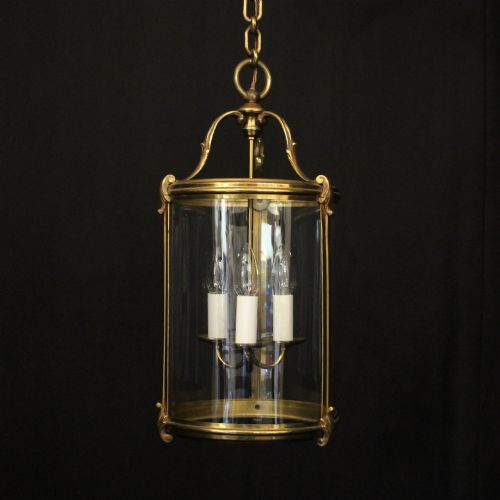
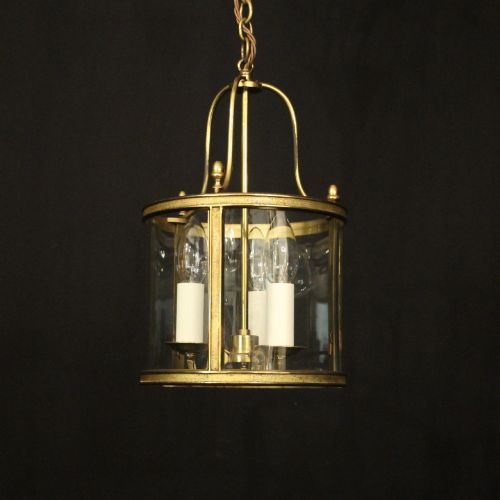
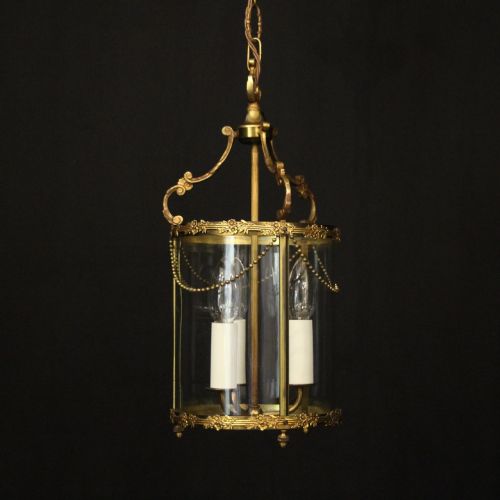
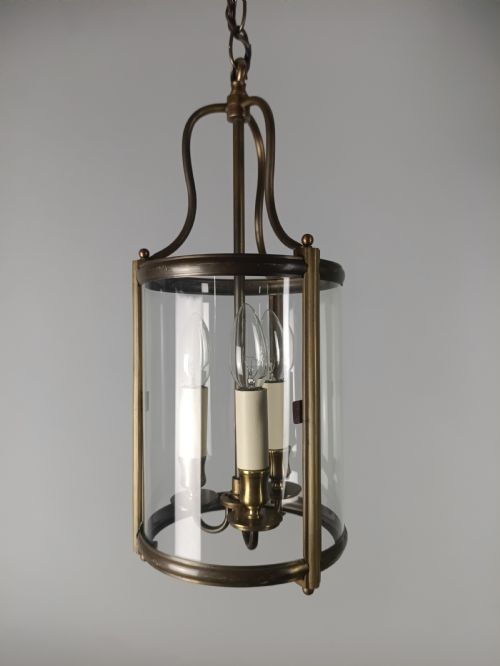
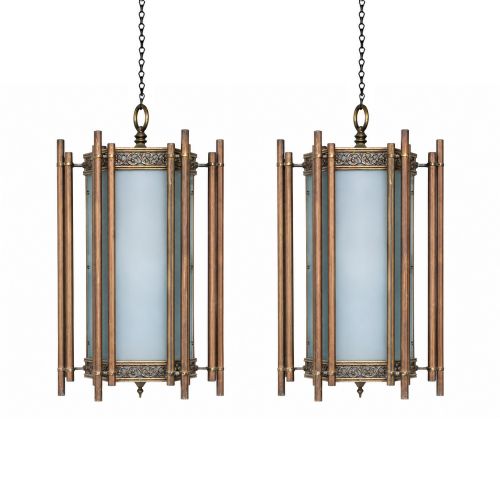
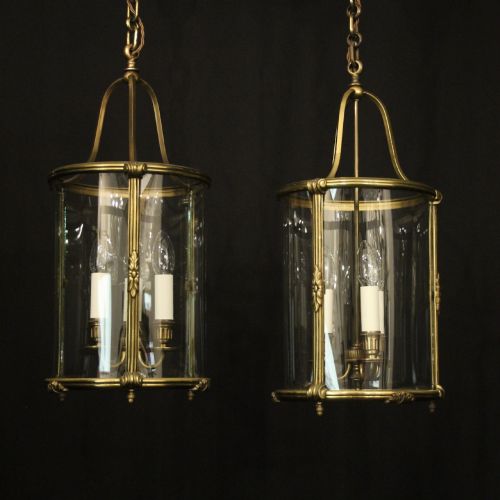
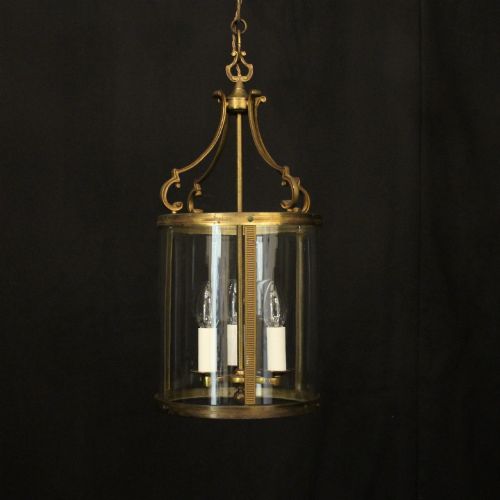
These brass cylindrical lantern pieces are striking hall lights that bring immediate architectural presence and warm illumination to an entrance.
Brass Cylindrical Lantern
A brass cylindrical lantern is a hanging ceiling light designed for hallways and vestibules, shaped in a distinct rounded form. Most examples seen here date from the nineteenth century, the Edwardian period, and the nineteen-twenties and thirties.
The most common versions on this page are French hall lanterns styled in the neoclassical, empire, or louis xv taste, alongside English and American interpretations. Buyers often find these outfitted with single or multiple interior lights to brighten entryways.
Makers and designers produced these fixtures in varied scales, from modest round Edwardian hall lanterns measuring eight inches to monumental hanging pieces. They serve primarily as functional overhead lighting that frames a hallway with period character.
Materials and construction
Makers constructed these lanterns using brass, gilt bronze, gilded brass, and copper frames to hold the structure together. Metalwork often received a gilt finish or polish to catch and reflect the interior light.
Glass panels enclose the metal framework, utilising clear, convex, or frosted glass to diffuse the illumination from the bulbs within. These curved and flat panes fit snugly into the cylindrical metal cages.
Craftsmen built multi-light configurations holding three or four lights, alongside simpler single-bulb fittings, suspended by chains or mounts for ceiling installation.
Styles represented on this site span French neoclassical, empire, louis xv, grand regency, and art deco designs.
Distinctions in quality
The sophistication of the cast metal ornamentation separates standard fixtures from superior examples. Finer pieces feature chased or heavily moulded bronze and brass work reflecting French neoclassical or empire design traditions.
The presence of convex glass panes adds complexity and cost compared to flat glass panels, requiring careful glassblowing and fitting. Scale also dictates quality, as monumental pairs or exceptionally large dimensions demand heavier structural framing to support the weight.
The Brass Cylindrical Lantern Glossary
- Convex glass
- Curved glass panels that project outward. This technique creates distorted, interesting light refraction and gives the lantern body a rounded profile.
- Gilt bronze
- Bronze that has been coated with a thin layer of gold leaf or applied gold wash. It provides a warm, enduring metallic sheen.
- Hall lantern
- A hanging ceiling light specifically scaled for entrance halls and corridors. These fixtures provide focused vertical illumination in transitional spaces.
- Edwardian
- A period spanning the early twentieth century. Pieces from this era often show lighter proportions compared to heavy Victorian predecessors.
Brass Cylindrical Lantern: Frequently Asked Questions
Where should I hang a brass cylindrical lantern?
These lanterns suit entrance halls, vestibules, and stairwells where overhead lighting is necessary. Their vertical drop fits well in spaces with high ceilings.
Ensure you measure the ceiling height and clearance needed for foot traffic below the hanging chain or mount.
How do I date a brass cylindrical lantern?
Dating relies on stylistic clues like French empire or art deco motifs, alongside construction methods in the metal and glass. Edwardian and nineteenth-century pieces exhibit distinct casting weights and patinas.
Compare the metal finish and glass curvature to known periods recorded in historical lighting examples.
Are these lanterns wired for modern electricity?
Most antique lanterns are adapted for modern electrical wiring while retaining their original frames and sockets. It is standard practice to have an electrician inspect the internal wiring before installation.
Multi-light fixtures often accommodate three or four bulbs to provide adequate illumination for a large hall.
What maintenance do these lanterns require?
Routine care involves dusting the glass panels and metal frames with a soft cloth. Avoid harsh chemical cleaners that might strip the gilt or polished brass finish.
Periodically check the hanging chain and ceiling canopy to ensure the secure physical support of the fixture.