

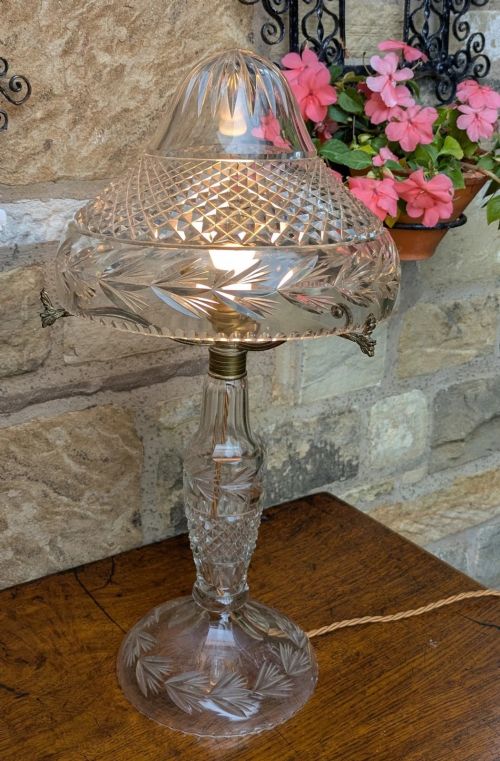
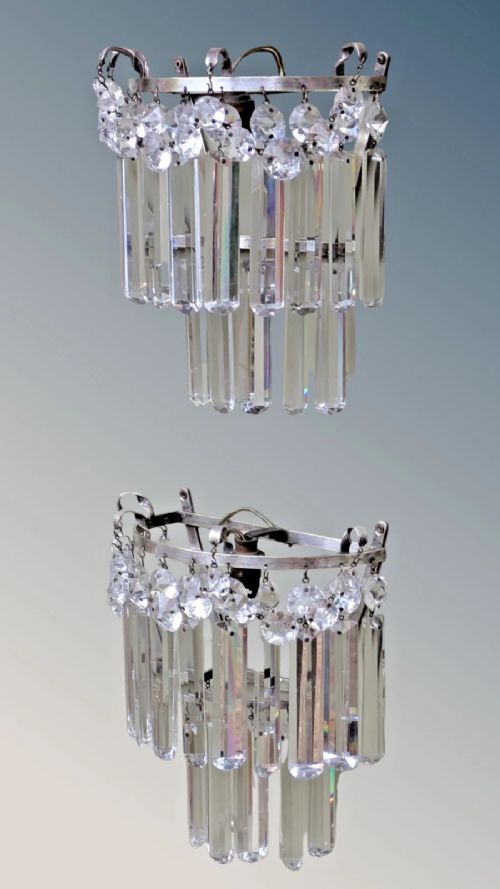
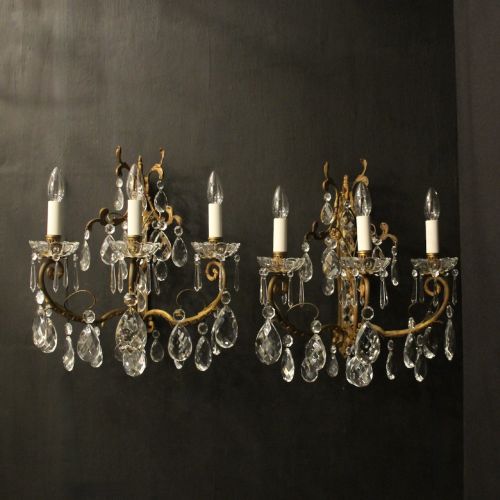
Brass Crystal Lighting
Brass crystal lighting brings together polished metal and hanging glass prisms, offering brilliant reflection and historic character for a room.
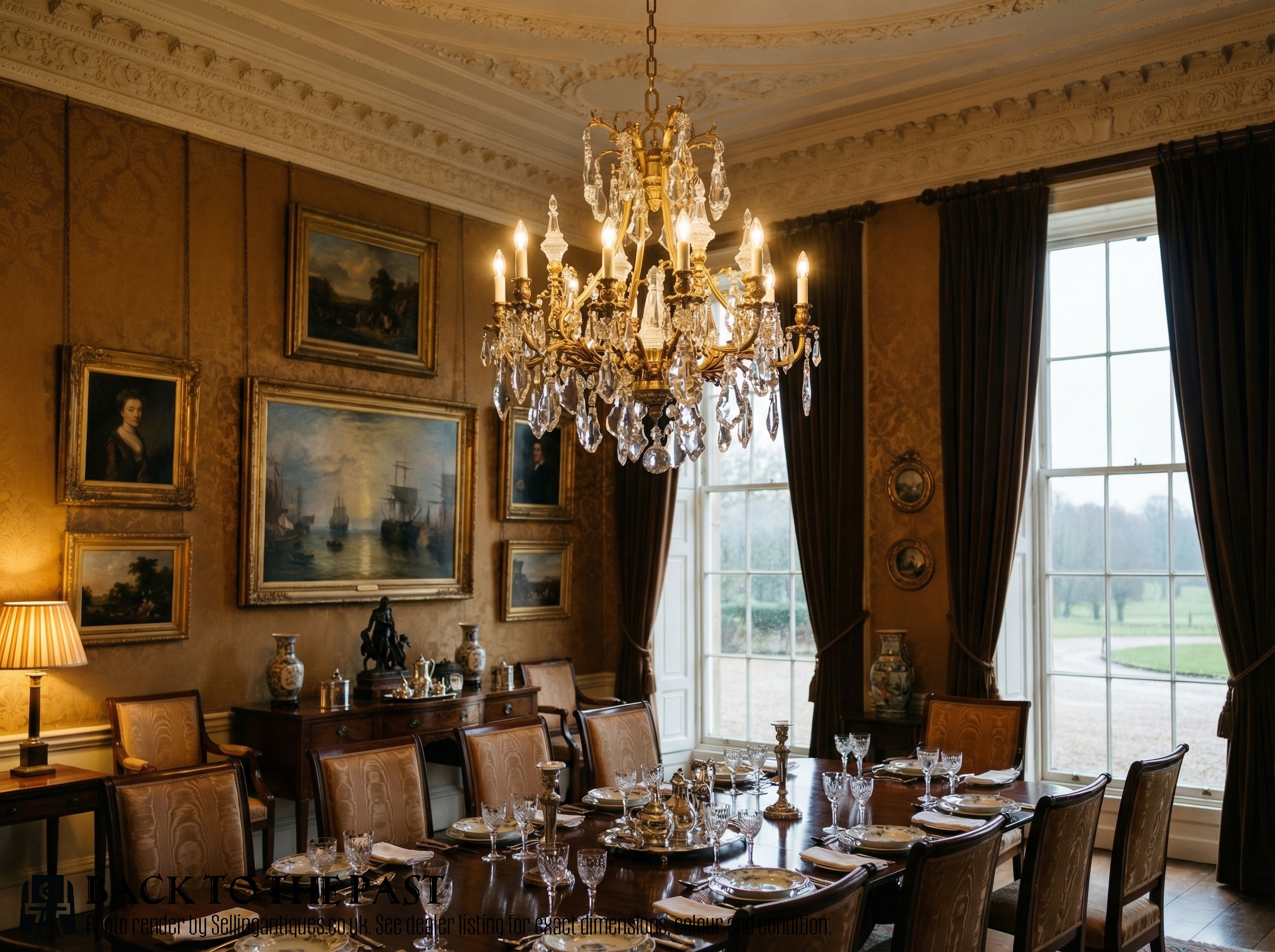
Brass Crystal Lighting
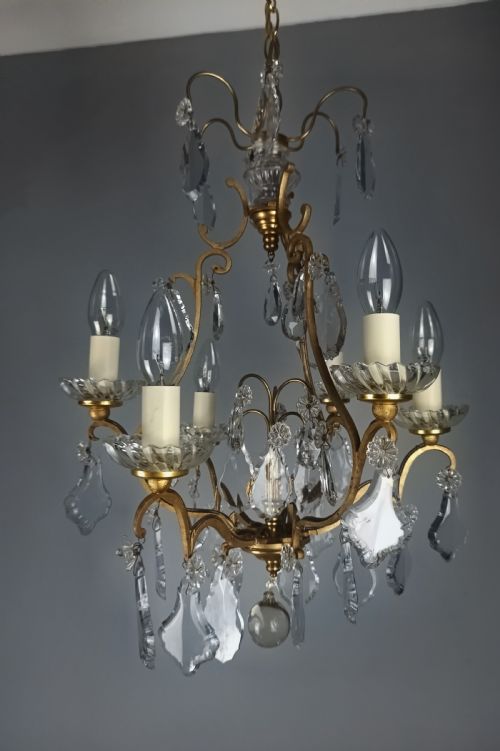
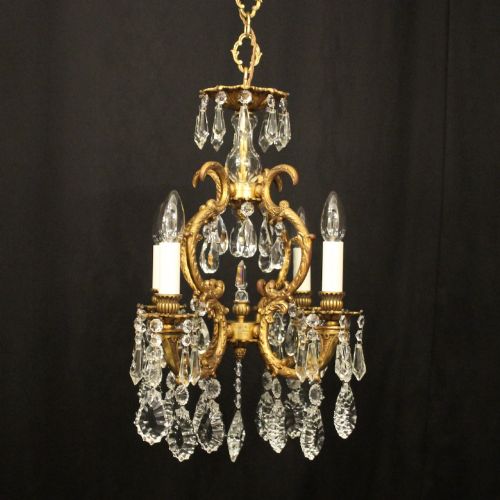
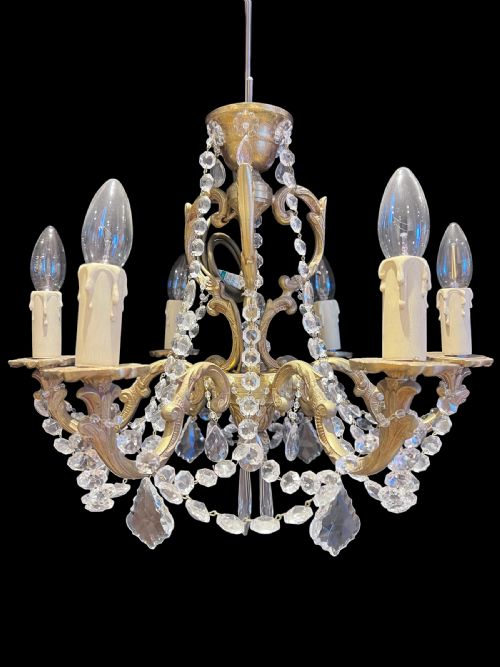
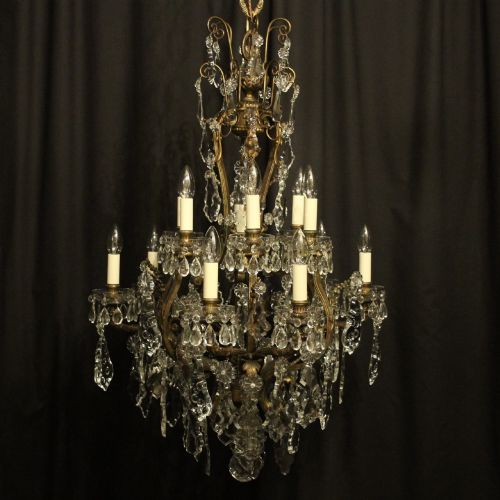
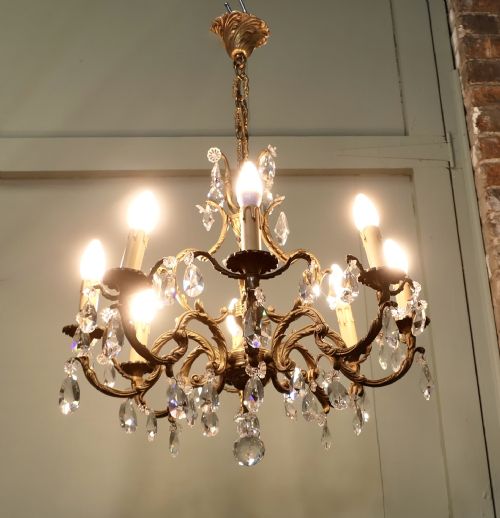
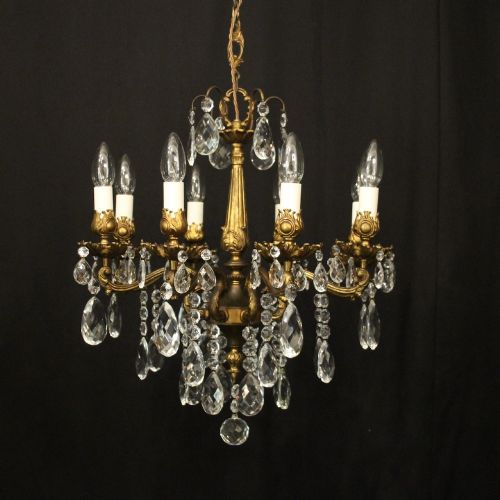
Brass crystal lighting encompasses a wide array of overhead fixtures, wall sconces, and table lamps designed to illuminate spaces through reflective glass drops. When exploring brass crystal lighting, the most common form encountered is the multi-arm chandelier originating from French and Italian workshops.
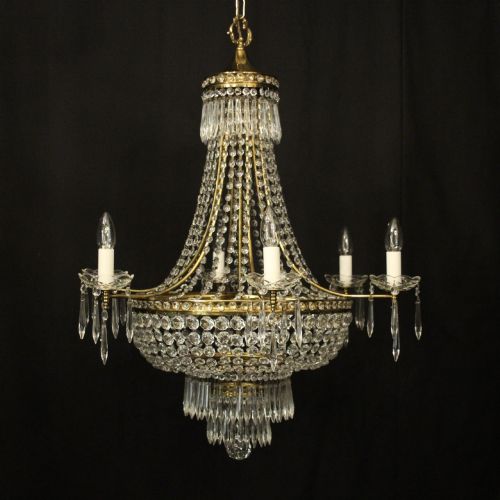
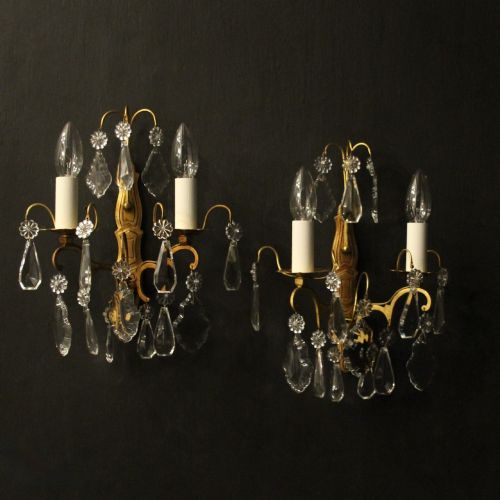
These pieces span from the late nineteenth century through the 1930s, incorporating Edwardian designs alongside ornate continental styles such as French Empire and Italian Florentine. Buyers frequently encounter basket fixtures, tent and waterfall configurations, and matching pairs of wall lights built to bring symmetry to a room.
Materials and construction methods
Makers utilised cast and chased brass, gilt bronze, and gilt metal as the structural framework to support heavy glass components. Metal arms and rings are bolted or pinned together to hold numerous individual glass drops.
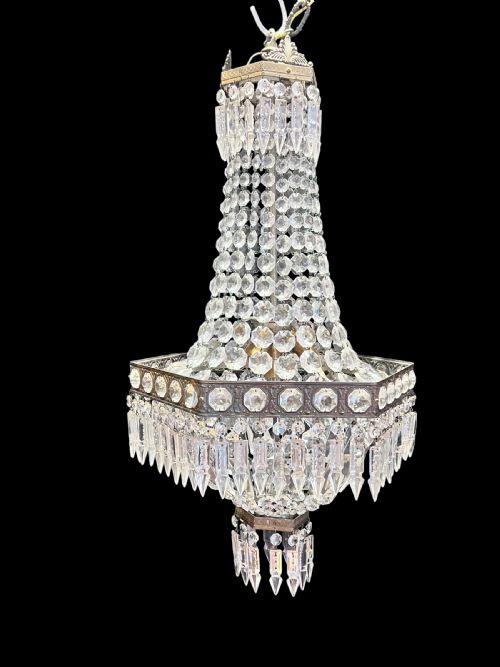
Crystals and cut glass pieces, including spear drops, coffin prisms, and beads, are attached by hand using thin wire loops. This assembly method allows each drop to move freely, catching and refracting light from every angle.
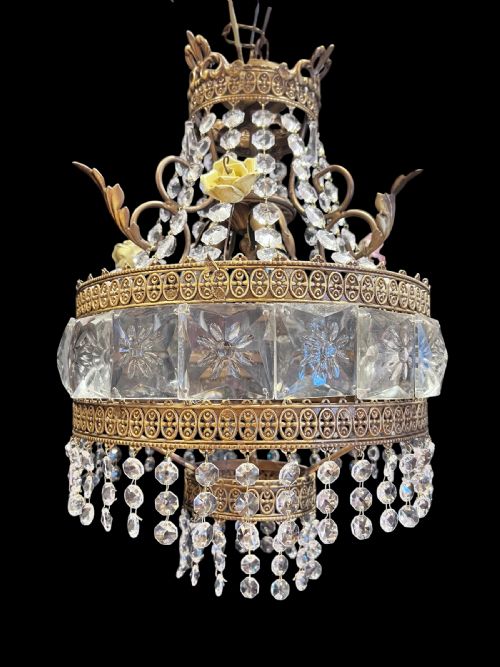
Certain chandeliers incorporate unexpected porcelain flowers nestled among the metal arms, adding a delicate botanical touch to the glittering glass.
Distinctions in quality
Quality rests upon the weight and clarity of the glass elements, alongside the crispness of the metal castings. Heavier cut glass drops display sharper light refraction, whereas moulded glass appears softer.
The density of the framing and the complexity of the arm configurations also determine a piece's standing. Finer examples integrate hand-chased details on the metalwork and intricate wiring patterns that secure numerous crystal pendants without clutter.
The Brass Crystal Lighting Glossary
- Plafonnier
- A ceiling light fitted flush or very close to the ceiling surface, often featuring a glass bowl or dome held in a metal mount.
- Tent and waterfall
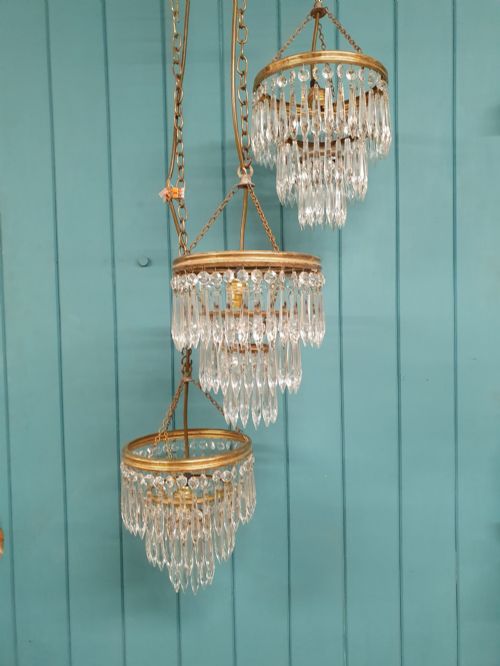
- A chandelier style where strings of beads form an upper tent shape that flows outward into a cascading fringe of hanging crystals.
- Gilt bronze
- An alloy of copper and tin coated with a layer of gold, providing a rich metallic finish that resists tarnishing.
- Coffin prism
- A flat, faceted glass pendant shaped like a wedge, commonly hung from early twentieth-century light fittings.
- Lustre
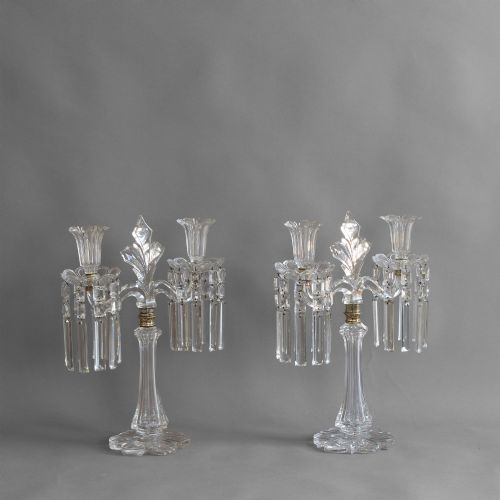
- A decorative tabletop ornament featuring hanging crystal prisms arranged around a central candle holder or stem.
Brass Crystal Lighting: Frequently Asked Questions
How do I hang a heavy chandelier?
These fixtures require direct suspension from a ceiling joist using a rated metal hook and secure mounting hardware. The weight of the metal and glass demands professional installation to ensure structural safety.
Electrical wiring must be routed carefully through the central hollow rod or chain links, matching the age of the fixture with modern safety standards.
What rooms suit wall lights?
Wall sconces and twin arm wall lights work well in pairs flanking a fireplace, mirror, or entryway. They provide balanced accent illumination at eye level.
Placing these fixtures in hallways or dining rooms adds layered brightness without relying solely on a central overhead light.
How do I clean the crystals?
Maintenance involves removing the glass drops individually or wiping them in place with a mild solution of warm water and vinegar. Leaving the crystals attached while cleaning requires a cloth placed underneath to catch drips.
Metal components should be dusted gently with a dry cloth to preserve the original gilt or brass finish without abrasive polishing.
How can I date a fixture?
Dating relies on stylistic clues, wiring types, and construction fasteners like slotted screws versus modern fixings. Edwardian and 1920s pieces often exhibit specific brass casting patinas and distinct glass prism cuts.
Comparing the proportion of the arms to the cut of the crystal helps place the object within the late nineteenth to early twentieth-century timeline.