
Brass Crystal Drop Pendant
A brass crystal drop pendant brings sparkling illumination and classic European elegance to a room.
Brass Crystal Drop Pendant
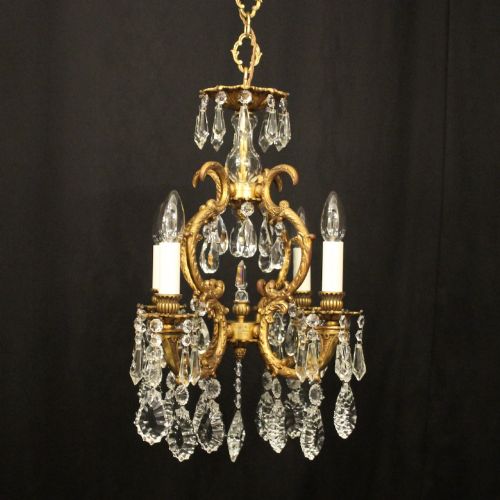
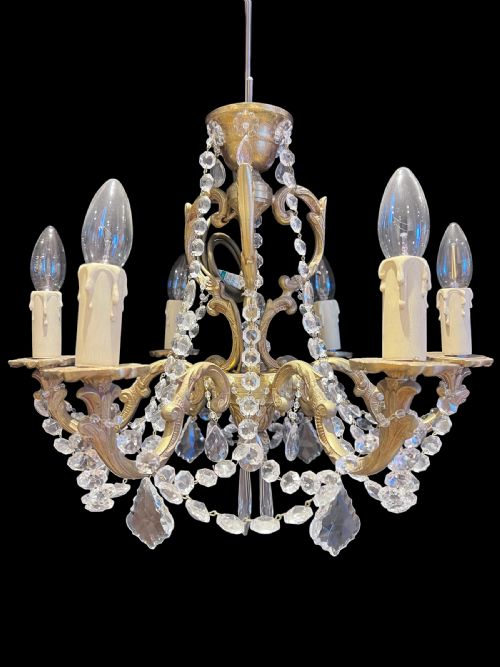
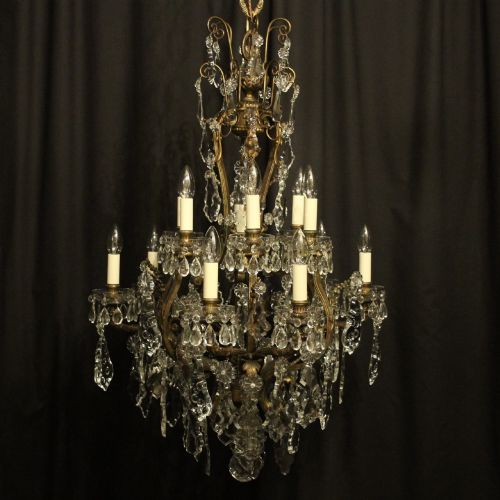
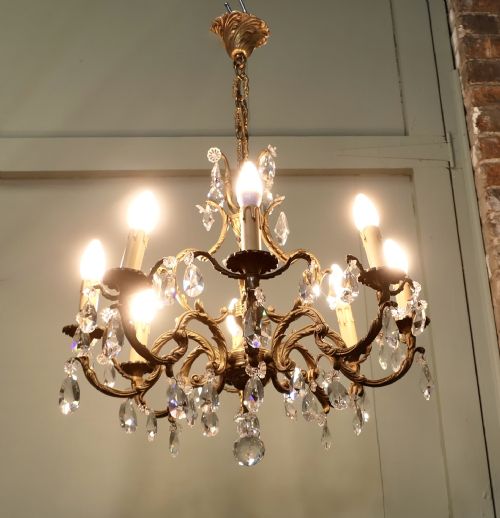
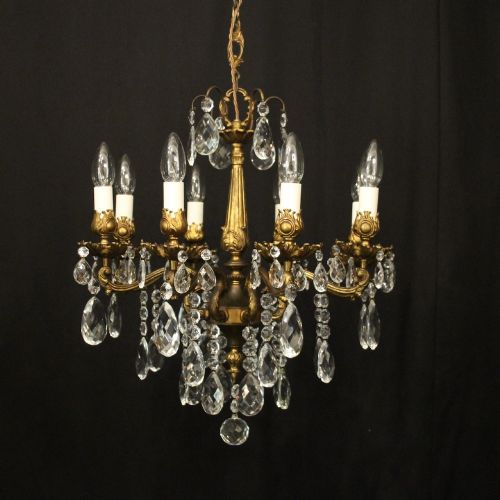
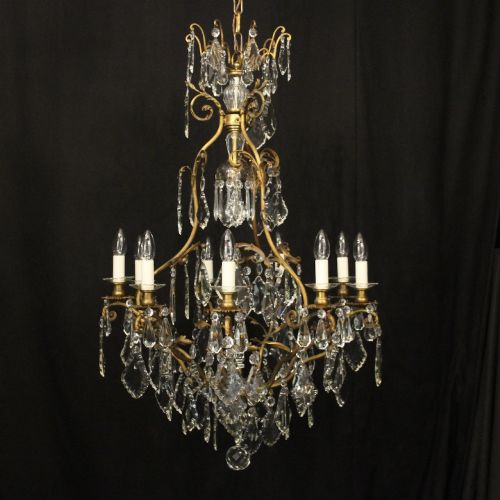
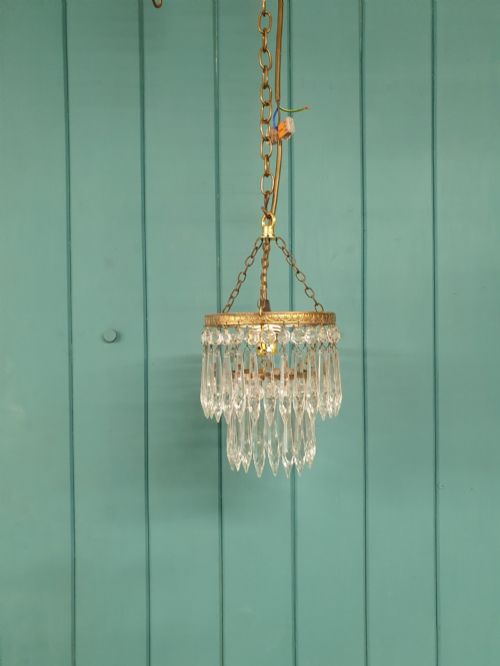
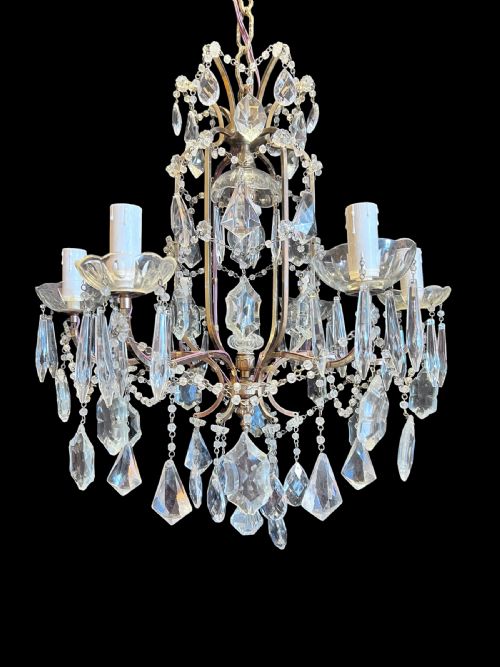
A brass crystal drop pendant combines metallic frames with suspended glass elements to catch and refract light. These fixtures originate from periods spanning the late nineteenth century through the early decades of the twentieth century, with a strong representation of Edwardian and 1920s examples. Buyers searching for a brass crystal drop pendant encounter various forms, primarily chandeliers, ceiling lights, and wall sconces.
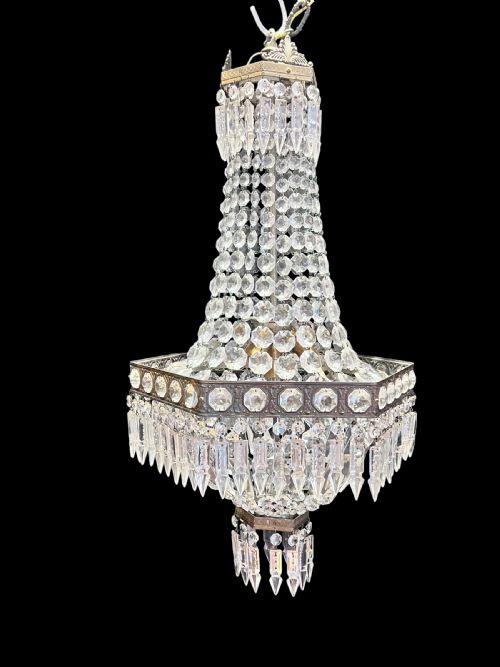
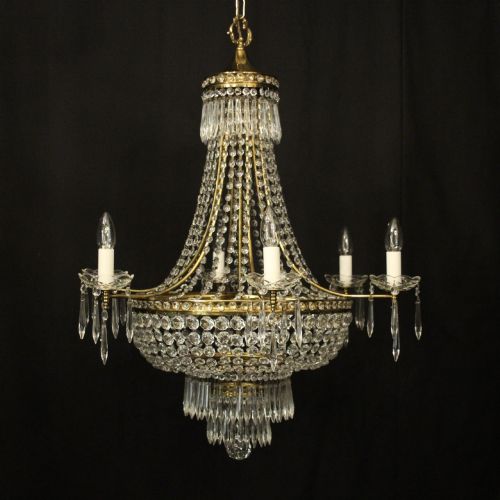
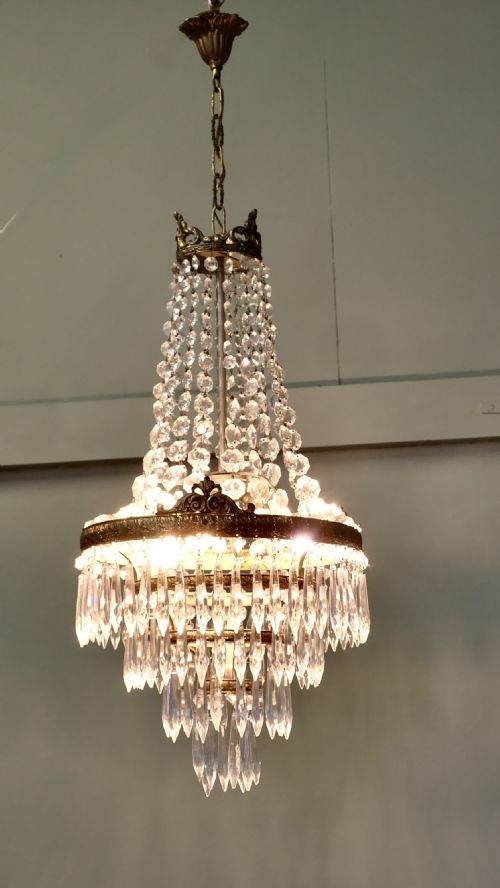
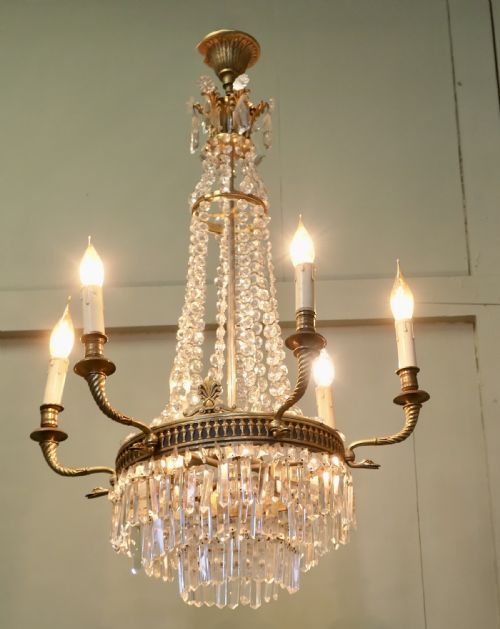
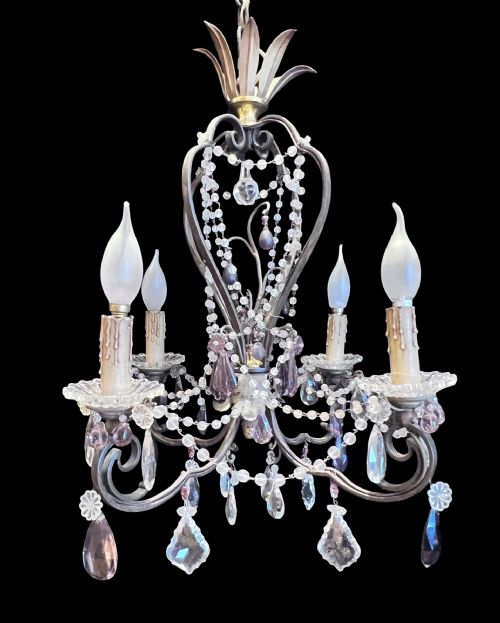
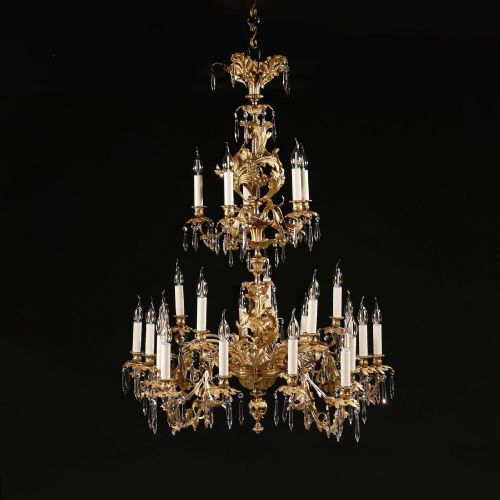
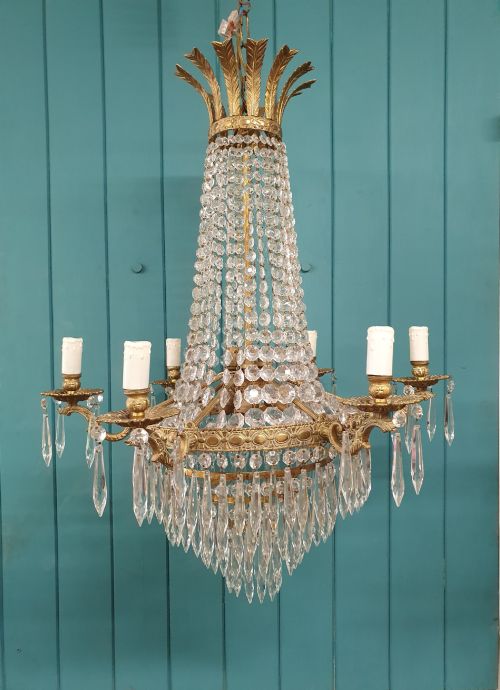
French and Italian designs dominate the selection, showcasing styles such as French Empire, Rococo Revival, and Italian Regency. Pieces take shapes ranging from simple single-light drops and small spike configurations to elaborate tent and waterfall chandeliers with multiple arms. Coloured crystals, amethyst stones, and turquoise details occasionally accent the standard clear glass drops.
Materials and Construction
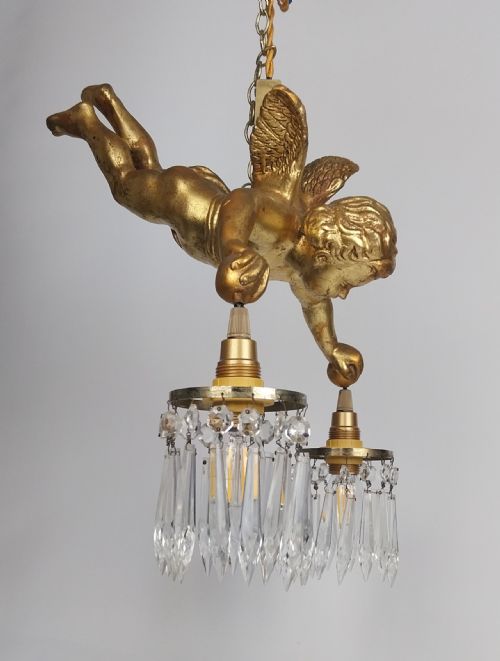
Makers constructed the metal frameworks using brass, gilt brass, and gilt bronze, often shaping them into leafy branches, winged cherubs, or basket frames. These metal structures support numerous glass components, including cut glass, cut crystal, and moulded prisms.
Hanging elements such as crystal lustres, coffin prisms, and spear drops attach to the frames with wire links, creating cascading tent and waterfall effects. Artisans incorporated decorative details like leaf motifs at the top of the arms to finish the metalwork.
Some Edwardian bag chandeliers measure a mere five inches tall, proving that grand crystal drama can arrive in miniature packaging.
Distinctions in Quality
The sophistication of the metal casting and the precision of the glass cutting determine the distinction between average and superior examples. Finer pieces display crisply chased gilt bronze or heavily cast brass frames with integrated sculptural details rather than plain stamped metal.
The clarity and cut of the crystal drops also set fixtures apart, with sharp facets producing superior light refraction compared to softer, pressed glass. Complete assemblies retaining matching, original prisms demonstrate higher integrity than pieces with mixed or replaced components.
The Brass Crystal Drop Pendant Glossary
- Crystal
- High-lead glass prized for its clarity and refractive properties. It forms the primary drop components on these hanging lights.
- Tent and waterfall
- A lighting configuration where strings of beads form an upper tent shape above a wider cascading tier of drops. This style defines many French Empire pieces.
- Coffin prism
- A long, flat, wedge-shaped glass drop with bevelled edges. These hang from the frame to catch and scatter light.
- Lustre
- A glass pendant suspended from a chandelier or wall sconce. Lustres come in various cut shapes including spikes and teardrops.
Brass Crystal Drop Pendant: Frequently Asked Questions
How do I hang a brass crystal drop pendant?
These fixtures suspend from ceilings using matching chains and ceiling roses connected to the main frame. Proper weight distribution and secure ceiling fixings remain essential for heavier multi-armed chandeliers.
Professional installation ensures the electrical wiring safely supports the metal and glass assembly at the correct height above the floor.
What periods do these pendants come from?
The pieces span the late nineteenth century, the Edwardian era, and the 1920s and 1930s. Design motifs often reference earlier French Empire and Regency styles.
Distinguishing between eras involves examining the casting techniques of the brass and the specific cuts of the glass prisms.
How should I clean the crystal drops?
Regular maintenance involves dusting the glass elements with a soft cloth while they hang on the fixture. For deeper cleaning, individual drops detach from their wire links for washing in warm soapy water.
Careful handling prevents chipping the cut glass edges during the removal and reattachment process.
Where do these lighting fixtures work best?
Smaller spike and single-light pendants suit hallways, bedrooms, or compact spaces where intense illumination is unnecessary. Larger multi-light and waterfall chandeliers provide a central focal point in reception rooms and dining spaces.
Wall sconces complement the main overhead fixtures to create balanced ambient lighting throughout a room.