

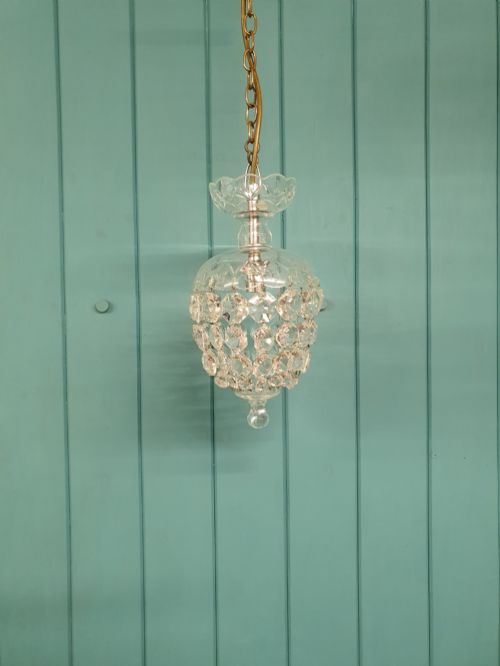
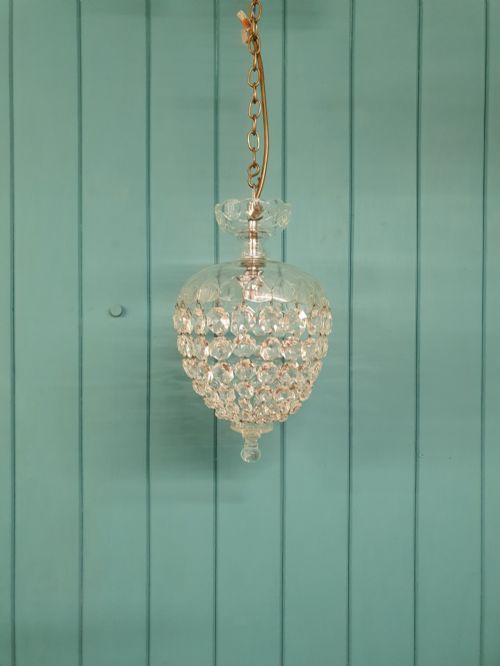


Vintage Crystal Light Shade
A vintage crystal light shade brings genuine sparkle and historic character to a room, scattering light through decades of preserved glass.
Vintage Crystal Light Shade
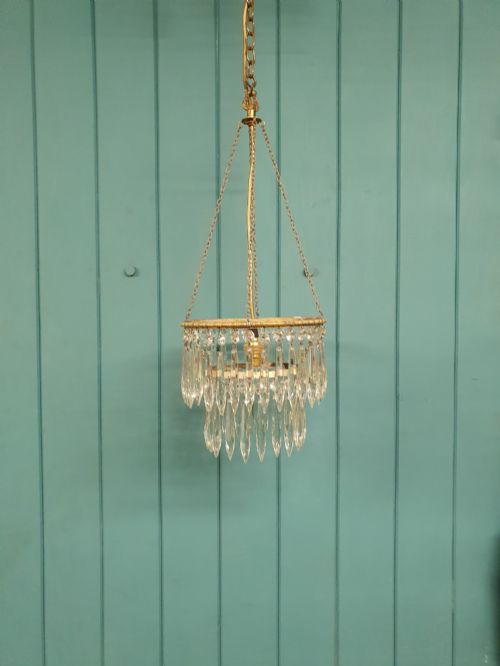
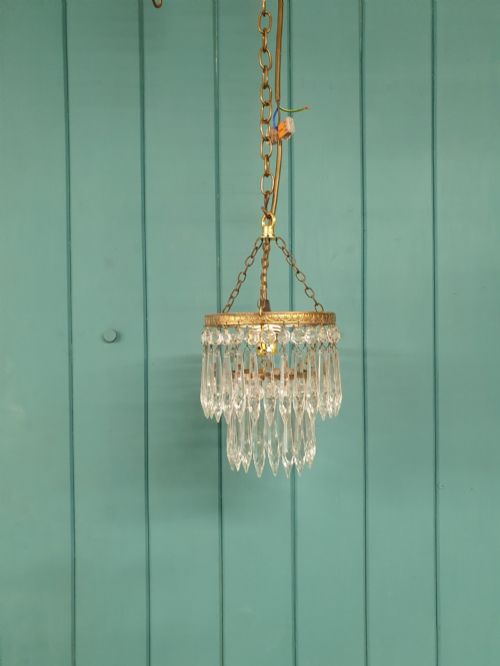
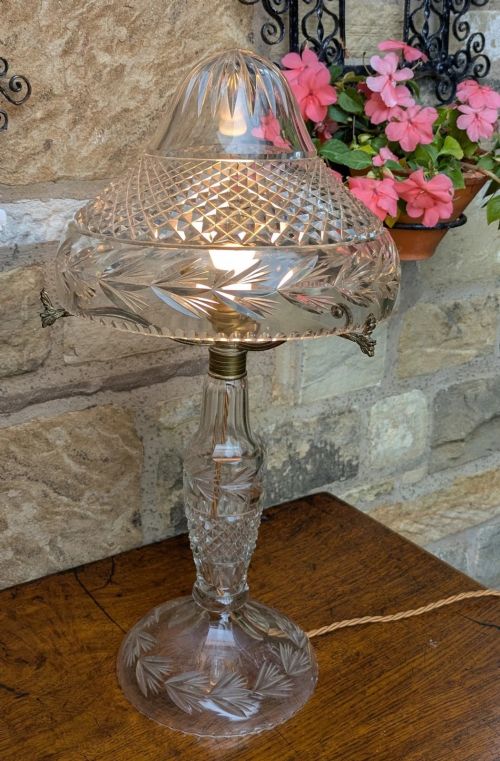
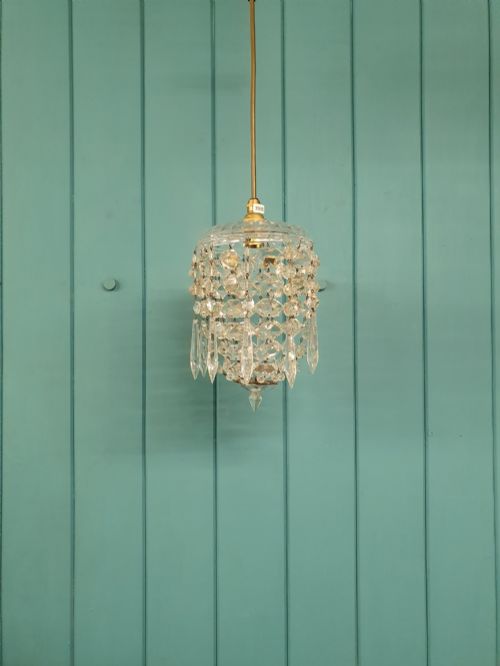
When you search for a vintage crystal light shade, you encounter diverse forms ranging from compact ceiling domes to multi-tiered chandeliers and table lamps. These pieces originate from periods spanning the Victorian era through the 1930s, reflecting changing domestic tastes in illumination.
The selections on this page feature prominent examples of early twentieth century and Edwardian design alongside Art Deco and Victorian iterations. You will frequently find ceiling lights, pendant lamps, and wall lights constructed with cut glass and brass or chrome fittings.
Many items utilise distinct silhouettes such as mushroom lamps, bell jar lanterns, and bag chandeliers. These configurations demonstrate how past makers adapted crystal and glass to diffuse electric or oil light effectively.
Materials and construction methods
Makers built these pieces primarily using cut glass and lead crystal mounted in brass, bronze, chrome, or silver-plated frames. The glass components underwent careful hand blowing, moulding, and diamond cutting to maximise light refraction.
Metal mounts and armatures secured the glass elements using pins, wires, and bezels, often incorporating decorative details like gilt bronze or ormolu. Structural integrity relied on solid brass or iron infrastructure capable of supporting heavy glass prisms and bowls.
Vintage Crystal Light Shade Retail Price Guide 2026
Typical asking prices for vintage crystal light shade among the pieces listed under this phrase on Sellingantiques today, from the lower quarter to the upper quarter. They describe what is for sale here now, not the wider market.
The inventory spans the Victorian period through the 1930s, uniting Edwardian brass wall lights with Art Deco mushroom lamps.
Distinctions in quality and execution
Quality reveals itself in the depth and crispness of the glass cutting, where sharp facets create superior light reflection compared to soft, moulded surfaces. The clarity of the crystal and the absence of impurities determine the overall brilliance of the piece.
The secondary materials also dictate standard, with heavy cast brass or bronze mounts indicating superior craftsmanship over thin sheet metal. Finer examples retain matched sets of original prisms, drops, and metal fixings that maintain the historical unity of the design.
Stuart Crystal·Baccarat·F. & C. Osler
The Vintage Crystal Light Shade Glossary
- Plafonnier
- A ceiling-mounted light fixture that sits flush or very close to the ceiling surface. This style often employs a shallow glass bowl or dome held by metal clips.
- Prism
- A cut glass pendant suspended from a chandelier or light fitting to refract light. Prisms appear in various shapes including spears, drops, and beads.
- Bag chandelier
- A light fixture featuring a flattened backing and a cascading bag-like arrangement of glass beads or crystals. This design directs illumination downward while sparkling across the front surface.
- Bell jar lantern
- Enclosed lighting fixture shaped like a traditional bell jar, frequently featuring hand-blown and cut glass. These items protect the light source while diffusing a soft glow outward.
- Lustre
- A decorative tabletop ornament or candle holder hung with glass prisms. They share identical cutting techniques with contemporary lighting shades.
Vintage Crystal Light Shade: Frequently Asked Questions
Can these antique shades use modern bulbs?
Many vintage ceiling lights and lamps accommodate modern LED or standard bulbs, provided the wattage matches the capacity of the original wiring. Consult a professional electrician to verify safety standards before installation.
Rewired fixtures appear frequently in the inventory, ensuring compliance with contemporary electrical requirements while retaining historic glass shades.
What is the difference between glass and lead crystal?
Lead crystal contains a high proportion of metallic oxide, which increases the weight, refractive index, and overall brilliance of the material. This composition allows for deeper, sharper facet cutting.
Standard glass is lighter and typically lacks the intense sparkle and heavy resonance associated with genuine lead crystal pieces from the Victorian and Edwardian eras.
How do I date a crystal light shade?
Dating relies on examining the mounting hardware, screw threads, metal alloys, and the cutting style of the glass. Victorian and Edwardian pieces often feature heavy brass fittings and hand-cut facets.
Later items from the 1930s frequently incorporate chrome, streamlined Art Deco motifs, or simplified geometric patterns that distinguish them from earlier production periods.