





Brass Covered Box
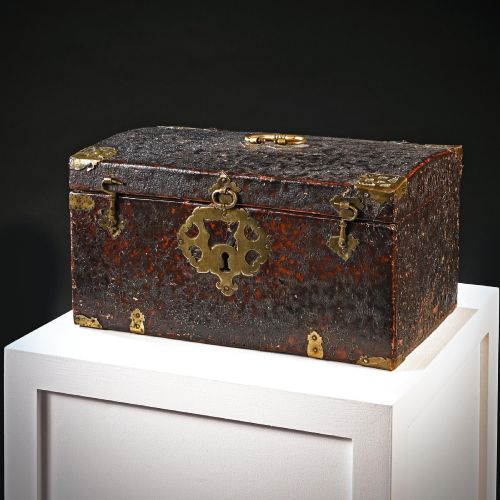
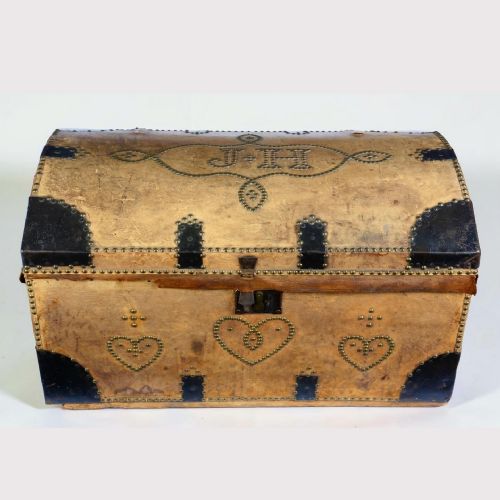
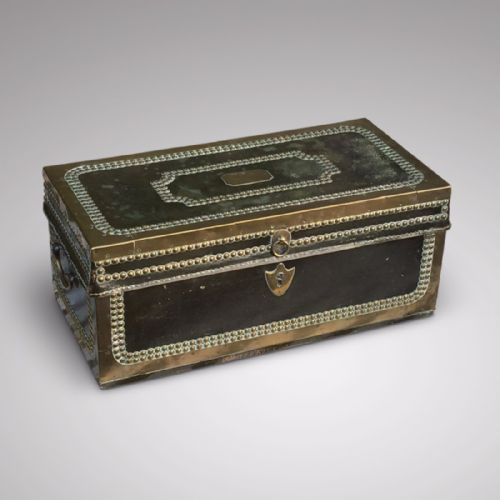
These brass covered box examples are utilitarian vessels bound in metal and hide, built to endure travel or hold hearth supplies.
Brass Covered Box
A brass covered box combines protective metalwork with wood, leather, or camphor cores to create durable storage. Buyers seeking this phrase encounter items ranging from travelling trunks and chests to decorative boxes and log containers.
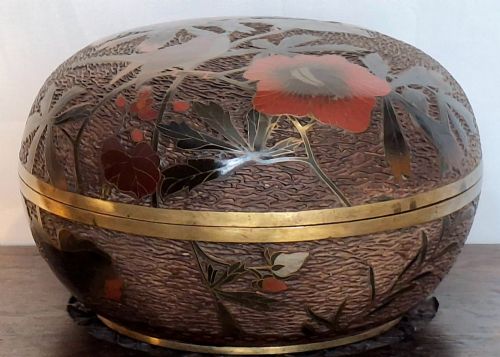
The pieces on this page span the late seventeenth century through the Victorian era and the nineteen-thirties, drawing on English, French, Persian, Japanese, and China Trade origins. Forms shift from studded travelling trunks to lidded bowls and tissue boxes.
Domestic and travel utility dictate the shapes seen here, including domed trunks, campaign chests, square plant stands, and fireside log boxes. Each variant employs metal cladding to reinforce corners, edges, and surfaces against hard use.
Materials and construction
Construction relies on timber cores such as camphor wood, overlaid with brass sheets, leather, hide, or iron bindings. Artisans secured these outer coverings with brass studwork and metal straps to add structural rigidity.
Surface ornamentation ranges from plain sheet metal and studded patterns to intricate Persian Khatamkari inlay and Japanese cloisonne enamel. Workmanship balances utilitarian strength with decorative metalworking techniques appropriate to each region.
Brass Covered Box Retail Price Guide 2026
Typical asking prices for brass covered box among the pieces listed under this phrase on Sellingantiques today, from the lower quarter to the upper quarter. They describe what is for sale here now, not the wider market.
Listings feature periods ranging from the seventeenth century through the Victorian era to nineteen-thirty, utilising brass, camphor wood, leather, and cloisonne enamel.
Judging quality in metal-clad containers
Quality rests on the integration of the metal covering with the underlying wood or leather substrate. Superior examples show precise alignment of brass studwork, secure joints, and well-fitted lids that maintain their alignment over time.
The refinement of the secondary materials, such as aromatic camphor wood interiors, fine hide bindings, or detailed enamel work, distinguishes standard utilitarian chests from finer decorative pieces.
Arthur Wannop·Seabrook of St.Pauls
The Brass Covered Box Glossary
- Camphor wood
- An aromatic timber frequently used for campaign chests and trunks to deter insects. Its distinctive scent often lingers inside the box.
- Studwork
- The arrangement of decorative brass nails or tacks driven through leather or metal sheeting into the wooden core. It provides both visual rhythm and structural reinforcement.
- Khatamkari
- A Persian technique of marquetry involving delicate geometric inlay of wood, bone, and metal. Pieces utilising this method display intricate mosaic patterns.
- Cloisonne enamel
- A decorative metalwork process where enamel paste is applied within compartments defined by soldered wires. Firing creates coloured glassy areas flush with the metal partitions.
- Campaign chest
- A modular piece of furniture designed to dismantle or travel easily during military campaigns. These units typically feature recessed brass handles and reinforced corners.
Brass Covered Box: Frequently Asked Questions
What were brass covered boxes used for?
These containers served practical roles in travel, domestic storage, and fireside management. Trunks and chests protected clothing and valuables on journeys, while other forms held fuel by the hearth.
Over time, smaller decorative variants evolved to hold tissues, small items, or dry goods. Their metal and hide coverings were chosen specifically to withstand frequent handling and transport.
How do I care for a brass covered box?
Maintain the timber and leather elements by keeping them away from direct heat sources and excessive moisture. Dust the metal surfaces gently with a soft cloth to preserve the finish without stripping patination.
Avoid abrasive metal polishes that can damage surrounding hide or remove historic surface wear. Proper humidity control helps keep the underlying wooden cores stable.
How do I date a brass covered box?
Dating relies on examining construction methods, timber types, and the style of metalwork. Seventeenth-century examples often feature heavy leather and simpler iron or brass bindings, whereas Victorian pieces frequently incorporate stamped brass and detailed studwork.
Geographic origins also provide clues, such as nineteenth-century China Trade camphor wood chests or nineteen-thirties Persian Khatamkari work. Comparing hardware styles helps narrow down the period.
Where were these boxes made?
The pieces originate from diverse workshops across Britain, France, Persia, Japan, and trade ports in the East. Each region applied local materials and decorative traditions to the basic form.
British makers produced utilitarian campaign chests and studded trunks, while overseas workshops contributed items featuring cloisonne enamel or intricate marquetry.