





Brass Corner Campaign Trunk
A brass corner campaign trunk provides robust travelling storage, combining sturdy timber construction with protective metal mounts built to withstand arduous journeys.
Brass Corner Campaign Trunk
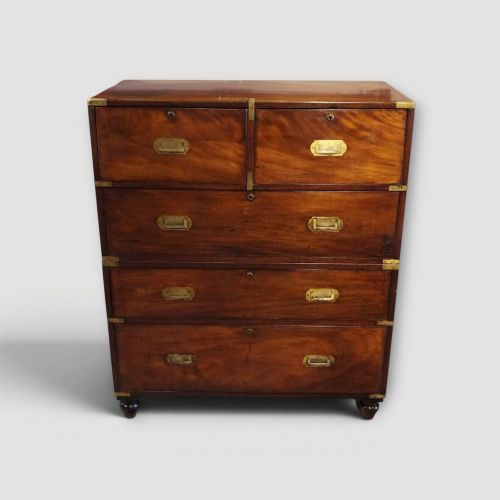
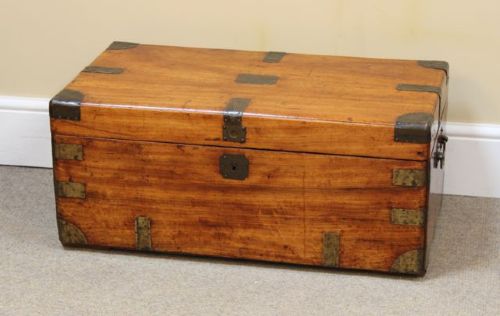
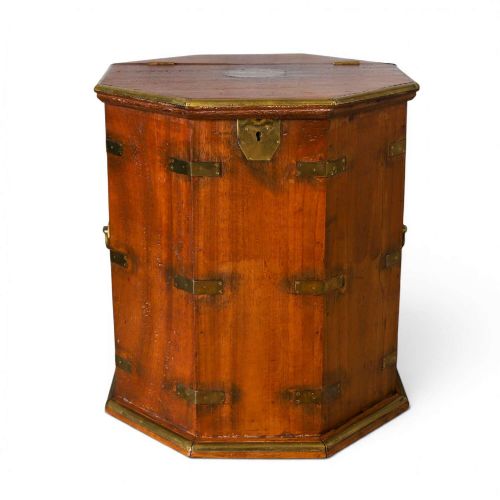
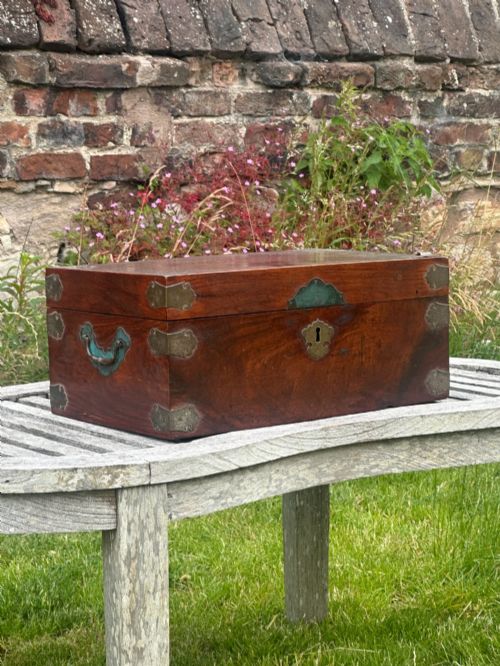
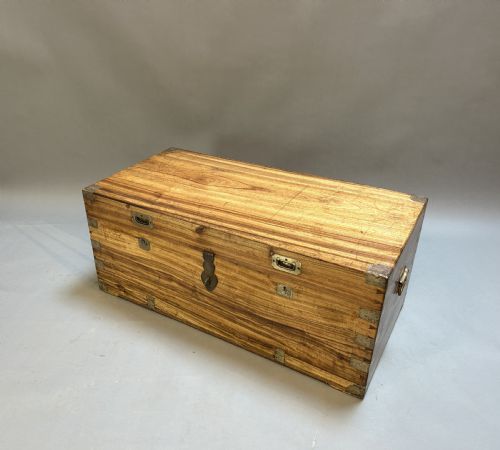
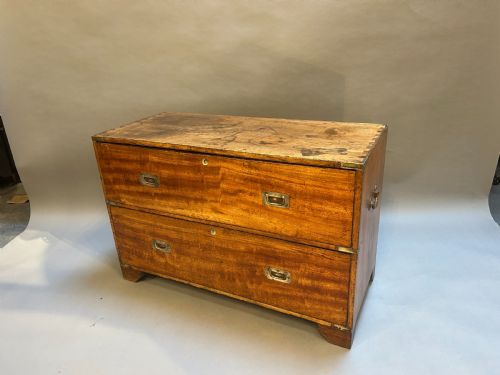
When searching for a brass corner campaign trunk, buyers encounter portable storage furniture designed for officers and travellers during the nineteenth century. These pieces include lift-up trunks, chests of drawers, and deed boxes originating from periods such as the Georgian, Victorian, and Edwardian eras. Most examples on this page are constructed from fragrant timbers like camphor wood or teak, fitted with protective metal work.
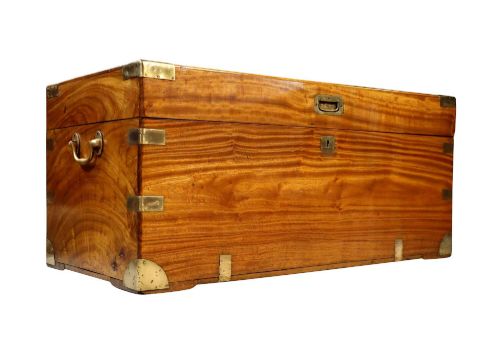
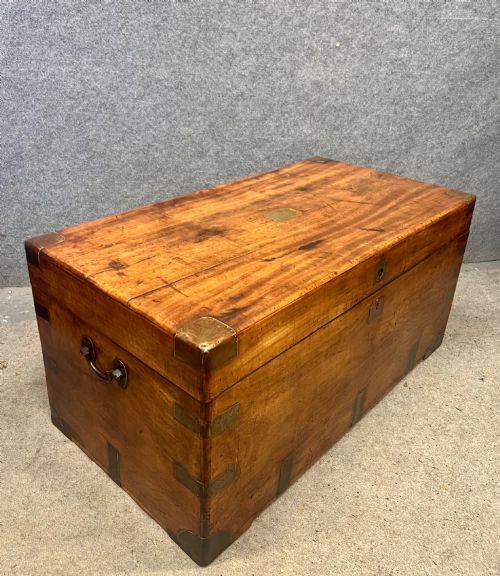
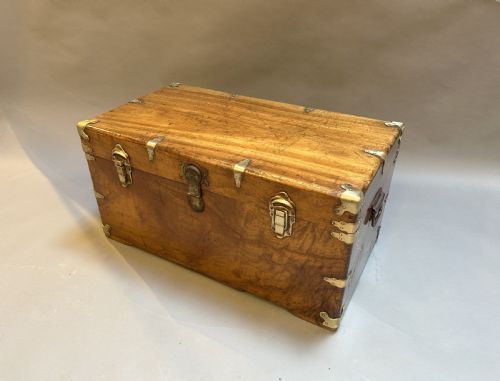
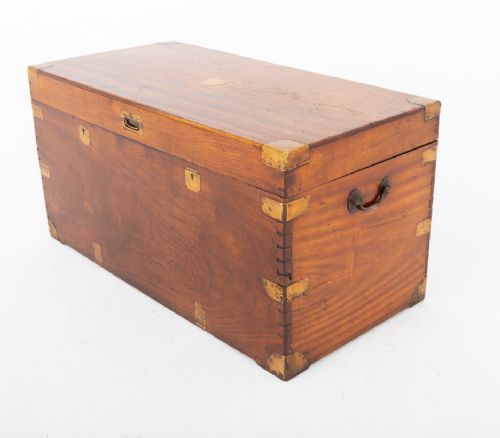
The primary form met here is the camphor wood or teak chest featuring flush brass corners, strapwork, and recessed handles. Such items served practical purposes during military deployments and colonial travel, requiring modular designs that could withstand rough handling. These pieces now function domestically as coffee tables, blanket boxes, or bedroom storage.
How they were made
Constructed predominantly from durable tropical hardwoods such as camphor wood, teak, padouk, oak, and mahogany, these trunks utilise dense timbers chosen for their resistance to humidity and insects. Camphor wood remains the most prevalent timber, prized for its aromatic qualities and stable grain. Selected pieces also incorporate iron elements alongside brass fittings.
Joinery techniques focus on resilience, employing dovetailed corners and reinforced panels to handle the strains of transit. Heavy brass binding, protective corner pieces, and strapwork are secured with numerous screws or pins, reinforcing the structural integrity of the wooden carcase while guarding against knocks.
Brass Corner Campaign Trunk Retail Price Guide 2026
Typical asking prices for brass corner campaign trunk among the pieces listed under this phrase on Sellingantiques today, from the lower quarter to the upper quarter. They describe what is for sale here now, not the wider market.
Opening an antique camphor wood trunk often releases a distinct, centuries-old aromatic breeze from the timber itself.
What varies in quality
Quality in these trunks is dictated by the selection and figuring of the timber, alongside the weight and completeness of the brass hardware. Finely grained camphor wood or richly patinated teak sit at the upper end, accompanied by heavy, hand-beaten or cast brass corners and strapping rather than thin metal sheeting.
The presence of original fitted interiors, functioning locks, and recessed folding brass handles distinguishes superior examples. Pieces retaining their structural robustness, clean internal compartments, and uncompromised timber surfaces demonstrate the level of craftsmanship invested in their original production.
The Brass Corner Campaign Trunk Glossary
- Campaign trunk
- A portable chest built for military officers or travellers, designed with reinforced corners and recessed handles for ease of transport. These items often separate into modular sections or feature lift-up lids.
- Camphor wood
- A fragrant tropical timber widely utilised for nineteenth-century campaign furniture due to its natural insect-repellent properties and dimensional stability. Its distinct aroma helps protect stored textiles.
- Brass bound
- A method of reinforcing wooden furniture edges and corners with metal strips and brackets to prevent impact damage during transit. This hardware is typically flush-fitted to the timber surface.
- Recessed handle
- A pull or drop handle set into a shallow cavity carved into the wood, ensuring the metal does not project beyond the plane of the trunk during handling. This design prevents snagging in transit.
Brass Corner Campaign Trunk: Frequently Asked Questions
What are campaign trunks made of?
These trunks are constructed primarily from durable hardwoods selected for travel, most notably camphor wood and teak. Additional materials include oak, mahogany, padouk, and iron or brass for structural reinforcement.
Timber choice often depended on the region of manufacture and the intended destination. Camphor wood was heavily favored for its natural fragrance and insect resistance.
How were campaign trunks used originally?
Officers and colonial administrators used these chests to transport uniforms, documents, and personal belongings during military campaigns and long sea voyages. Their robust construction allowed them to endure rough handling on carts, ships, and pack animals.
Many pieces featured sectional designs or fitted internal compartments to keep belongings organised on the move. Recessed handles and protective metal corners ensured the trunks survived frequent loading and unloading.
How do I use a campaign trunk at home?
A campaign trunk serves well as a living room coffee table, offering substantial internal storage for blankets, books, or board games. Their distinctive brass hardware and timber grain add character to both traditional and modern interiors.
Positioning them at the foot of a bed provides convenient linen storage. Their sturdy construction allows them to function reliably as everyday furniture pieces.
How can I tell the age of a campaign trunk?
Dating relies on observing construction methods, timber types, and the style of the brass hardware. Pieces originating in the Georgian and early Victorian periods often display hand-cut dovetailing and heavier cast brass mounts.
Later nineteenth-century and Edwardian examples may show machine-sawn elements and standardised fixings. Comparing the patina of the wood and the wear on the metal fittings helps determine the manufacturing period.