
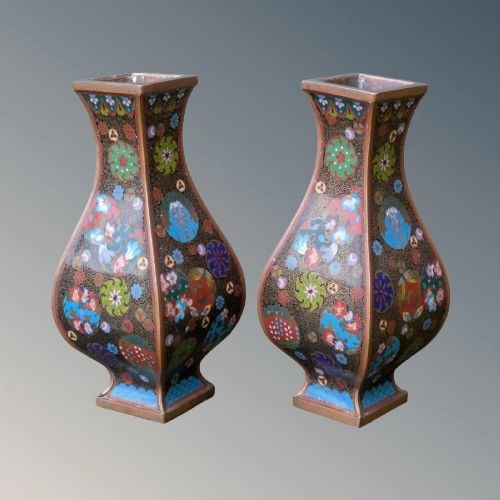


Brass Cloisonne Vase
A brass cloisonne vase brings together intricate metalwork and vibrant enamelling, offering the collector a rich piece of decorative history.
Brass Cloisonne Vase
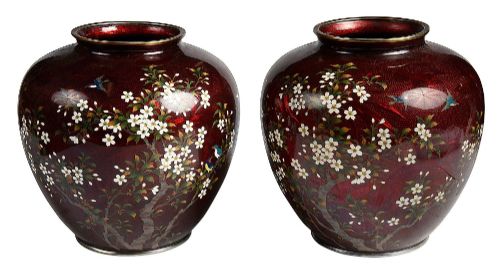
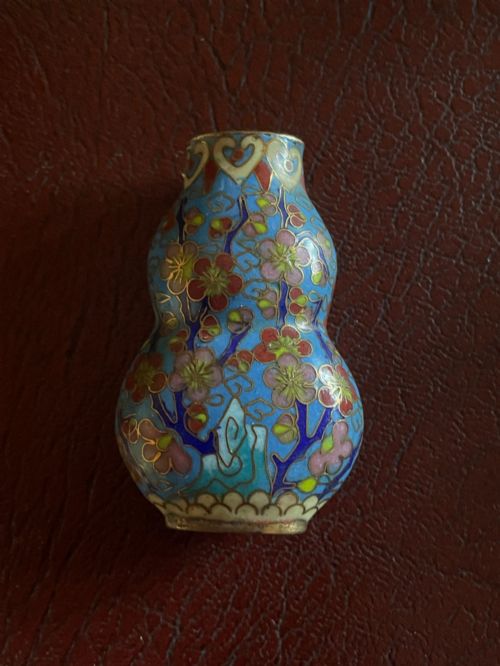
When you search for a brass cloisonne vase, you enter a world of decorative metalwork originating predominantly from China and Japan. These pieces span the nineteenth and early twentieth centuries, encompassing the Meiji period, Qing dynasty, and Edwardian eras. Buyers encounter various forms, including miniature vessels, twin-handled jars, and larger decorative items.
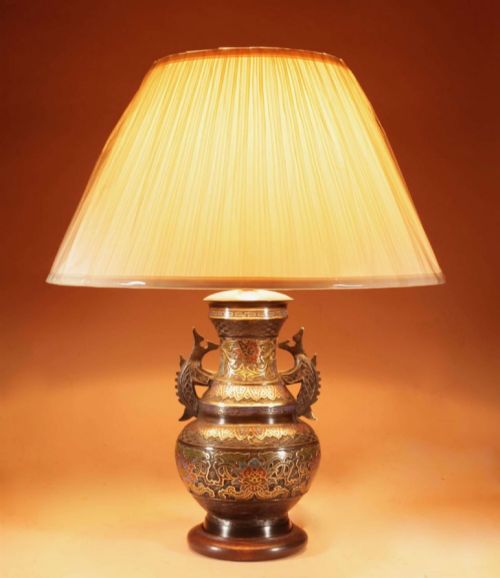
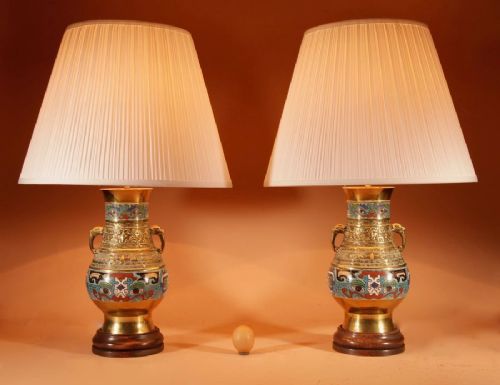
The version most commonly met on this page is the pair of vases, frequently adapted as table lamps. These items combine traditional Oriental styles with practical household lighting from the late nineteenth and early twentieth centuries. The inventory reflects both Chinese export pieces and Japanese Meiji period craftsmanship.
How they were made
The construction relies on soldering thin metal wires, known as cloisons, onto a metal base of brass, copper, or bronze to form raised compartments. Artisans then fill these compartments with coloured enamel paste before firing the vessel at high temperatures. Gilt bronze and champlevé techniques also appear, where troughs are carved directly into the metal rather than using soldered wires.
Following the firing process, the surface undergoes extensive grinding and polishing until the metal wires and the hardened enamel sit flush. This technique demands precise handiwork to ensure the intricate patterns remain even and the metallic boundaries stay sharp. Fabric and wood components occasionally support these vessels, particularly when adapted into lamps.
Many of these sturdy vases spent a century moonlighting as reading lamps, quietly holding up lightbulbs after retiring from looking pretty on a mantelpiece.
What varies in quality
Quality rests upon the crispness of the wirework and the density of the enamel filling. Superior examples display impeccably straight wires without bubbling or pitting in the coloured pastes, whereas lesser pieces show uneven thickness and cloudy enamel surfaces. The weight of the metal base and the refinement of the polishing also distinguish standard production from finer work.
The intricacy of the decorative motifs further separates ordinary items from exceptional pieces. Finely executed geometric and floral patterns demonstrate greater control by the artisan. Adaptation into lamps alters the original vessel, so the preservation of the body and the subtlety of any electrical conversion influence the desirability of the piece.
The Brass Cloisonne Vase Glossary
- Cloisonne
- An enamelwork technique where metal wire is soldered to a base to create cells filled with paste. This method produces intricate multicolored patterns across the surface of the vessel.
- Champleve
- A technique where troughs or cells are hollowed directly into the metal surface rather than building up wires. The depressions are then filled with enamel and fired.
- Meiji Period
- The era in Japanese history spanning from 1868 to 1912, noted for a surge in decorative arts exported to Western markets. Pieces from this time often exhibit highly refined cloisonne enamel.
- Qing Dynasty
- The final imperial dynasty of China, lasting from 1644 to 1912, famous for rich export wares and substantial bronze and brass vessels. Items from this period display traditional motifs and deep enamel colours.
Brass Cloisonne Vase: Frequently Asked Questions
Were these vases originally made as lamps?
Most pieces started life purely as decorative vases or jars before being converted into table lamps later in their lifespan. This adaptation often occurred during the Edwardian period or mid-twentieth century to suit contemporary domestic lighting needs.
Buyers should examine the base and collar fittings to understand how the vessel was altered. Original drilling is common in pieces adapted for electrical wiring.
How do I tell Chinese and Japanese pieces apart?
Chinese cloisonne typically employs heavier brass or bronze foundations with thicker wirework and robust, earthy enamel tones. The decorative schemes often reference classical imperial motifs and symmetrical floral arrangements.
Japanese pieces from the Meiji era frequently feature finer, thinner wires and exceptionally smooth, translucent enamels. The palette can be more restrained, focusing on naturalistic asymmetry and subtle pictorial details.
What is the difference between cloisonne and champleve?
Cloisonne involves soldering thin ribbons of metal onto the surface of a vase to create individual compartments for enamel. This leaves a distinct network of raised lines defining every part of the design.
Champleve gouges or casts the pattern directly into the bronze or brass body itself, creating recessed areas for the enamel. The surrounding metal remains part of the structural design rather than applied wire.