



Brass Church Candleholders
Brass church candleholders bring solemn character to a room, offering sturdy metalwork and enduring ecclesiastical design for the modern interior.
Brass Church Candleholders
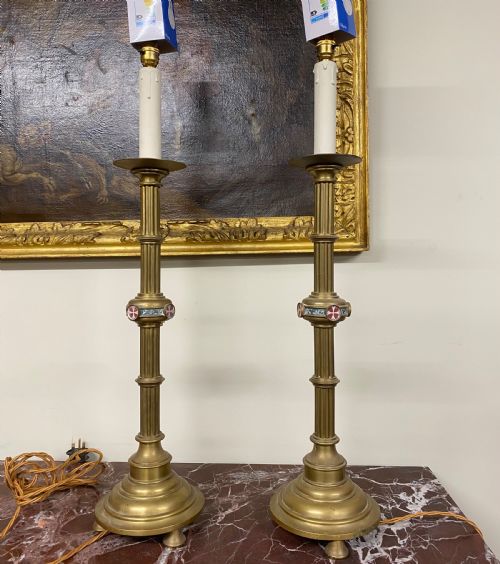
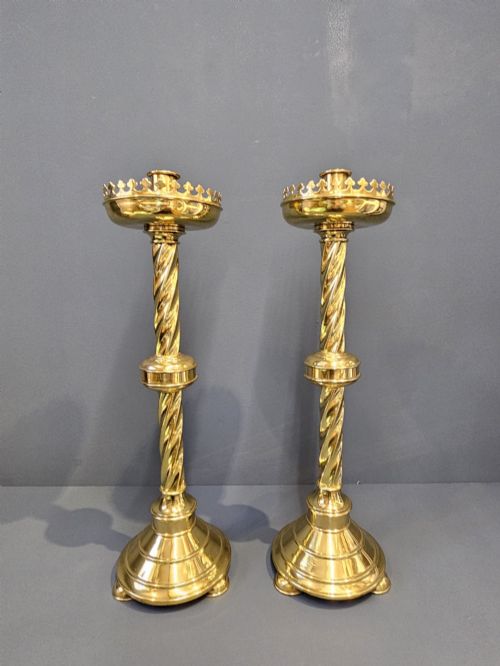
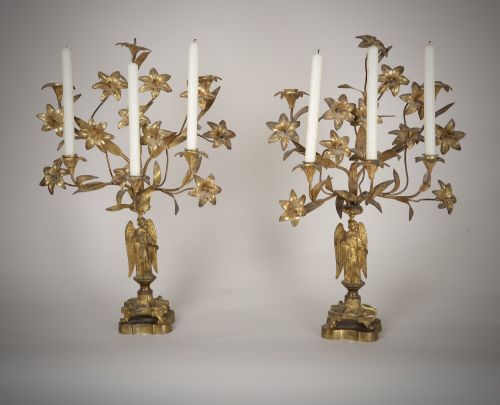
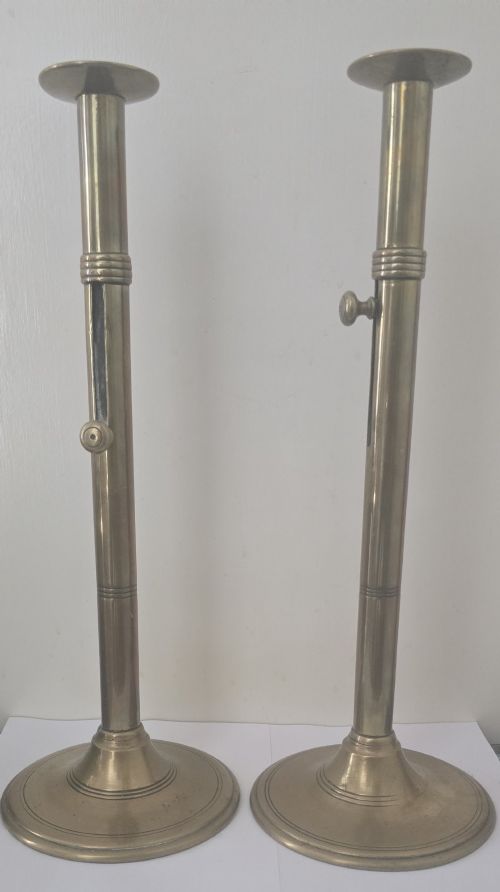
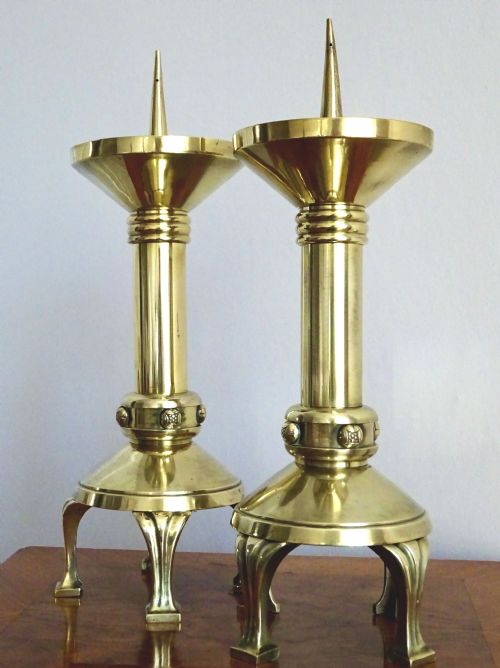
Brass church candleholders encompass sturdy ecclesiastical pieces designed for altars, chancels and sanctuaries during past centuries. When searching for brass church candleholders, a buyer encounters candlesticks, candelabra and wall sconces spanning the Georgian, Victorian and Edwardian eras. The selection frequently includes matched pairs, from modest heights to impressive tall examples utilised in liturgical settings.
Makers and designers drew upon various historical aesthetics, producing items in Gothic Revival, 17th Century Baroque and Amsterdam School styles. These objects served functional roles in places of worship before finding their way into domestic settings as decorative focal points. The surviving pieces demonstrate the heavy, durable construction required for daily ecclesiastical use.
Materials and construction methods
The primary material across the selection is brass, often utilised in cast or heavy sheet forms to provide structural stability. Workshops also employed gilt brass, ormolu, bronze and wrought iron to achieve contrasting textures and decorative finishes. Some examples incorporate enamel details, adding subtle colour to the metal framework.
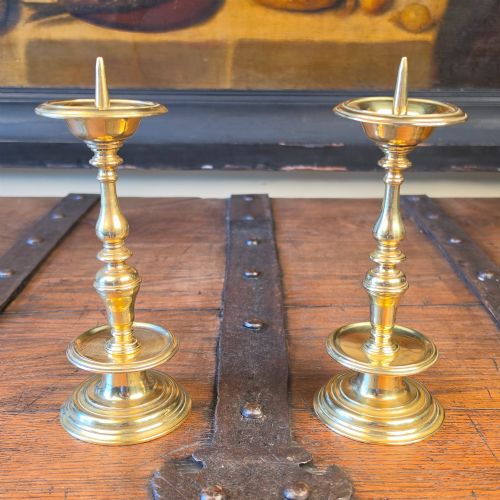
Construction techniques relied heavily on casting and metal-spinning, allowing artisans to create substantial pricket spikes, side ejectors and multi-light sconces. The combination of cast brass components with iron elements resulted in durable objects capable of supporting heavy wax candles safely.
Brass Church Candleholders Retail Price Guide 2026
Typical asking prices for brass church candleholders among the pieces listed under this phrase on Sellingantiques today, from the lower quarter to the upper quarter. They describe what is for sale here now, not the wider market.
Listings feature 19th Century, Victorian, Edwardian, 1900 and 1930 periods, utilising brass, gilt brass, ormolu, wrought iron, enamel, cast brass and bronze.
Assessing quality and craftsmanship
Quality in these pieces depends on the weight of the metal cast and the crispness of the decorative detailing. Superior examples exhibit well-defined Gothic motifs, balanced proportions and secure joints that withstand centuries of handling.
The finish also separates standard production from finer workshop output, with polished gilt surfaces, carefully applied enamel or intact patination showing superior original craftsmanship.
T Thomason & Co
The Brass Church Candleholders Glossary
- Pricket
- A sharp metal spike on a candlestick designed to secure the base of a large candle. This traditional form appears frequently on ecclesiastical altar pieces.
- Candelabra
- A branched candlestick holding multiple candles on separate arms. These pieces often provide a wider spread of light than single sticks.
- Side ejector
- A mechanical lever attached to a candlestick shaft to push up remaining candle stubbs. This practical feature aids in removing spent wax safely.
- Wall sconce
- A light fixture fixed directly to a vertical wall surface. Ecclesiastical versions project outward to illuminate specific architectural areas.
Brass Church Candleholders: Frequently Asked Questions
What is a pricket candlestick?
A pricket candlestick uses an upright metal spike instead of a socket to hold the candle in place. This design was standard for large altar candles in churches.
Buyers often find that these spikes require candles with a pre-drilled base or a follower plate to sit securely on top of the metal point.
How do I clean antique brass?
Cleaning antique brass depends entirely on the level of patination you prefer to keep on the metal surface. Gentle dusting with a soft cloth removes everyday dirt without disturbing the historic finish.
Avoid harsh chemical dips that strip away the aged character accumulated over centuries of ecclesiastical use.
Were these used in homes?
Original pieces were made primarily for churches, chapels and cathedrals rather than domestic parlours. Their heavy construction and ecclesiastical motifs reflect this sacred origin.
Today, collectors place them on sideboards, mantels and dining tables to add historic weight and height to a room.
How are pairs matched?
Pairs of church candleholders were cast and finished together in workshops to ensure uniform height, weight and decorative detail. Matching pairs command strong interest from buyers seeking symmetry for mantelpieces or altars.
Minor variations in casting or wear often confirm the hand-finished nature of these antique items.