

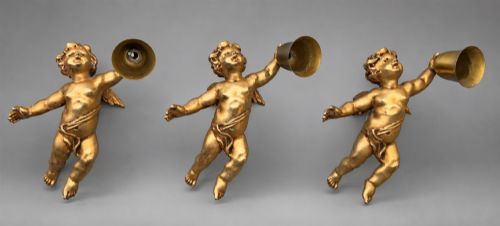
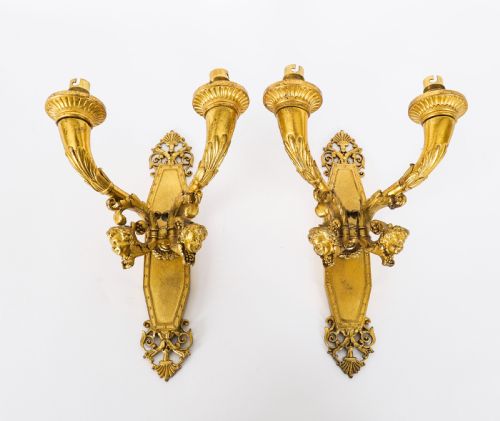
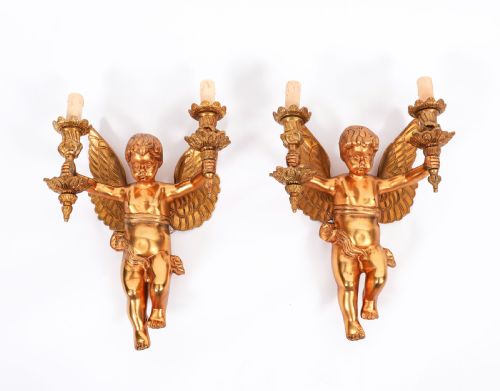
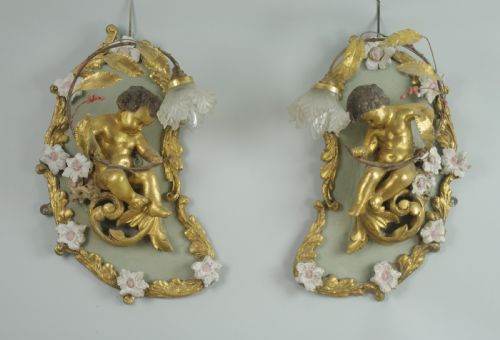
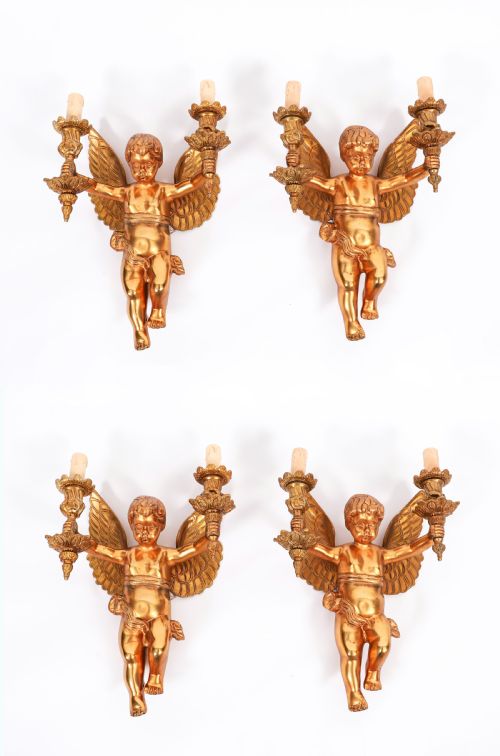


Brass Cherub Wall Sconces
Brass cherub wall sconces bring sculptural figures and warm metal illumination to a room, cast in bronze, brass, and ormolu during the nineteenth and early twentieth centuries.
Brass Cherub Wall Sconces
Brass cherub wall sconces are ornamental light fittings designed to mount directly onto walls, featuring sculpted putti or cherub figures alongside candle branches or electric sockets. When you search for brass cherub wall sconces, you encounter pieces that combine functional illumination with figurative sculpture, originating mostly from French and Italian workshops.
The selections available here span from the mid-nineteenth century up through the early twentieth century, taking the form of pairs, sets of four, and individual light fittings. You meet variations that draw upon French Rococo Revival, Louis XIV Revival, and Victorian design vocabulary.
Makers of these pieces utilised traditional casting methods to render flying, standing, or bracket-mounted cherubs holding multiple branches. The resulting wall lights serve as both functional lighting and prominent decorative accents within interior spaces.
How they were made
The primary materials recorded in these pieces are brass, gilt bronze, and ormolu, often paired with glass elements and porcelain components. Founders utilised metal casting techniques to shape intricate putti and scrolling branches, applying gold gilt or ormolu finishes to create a luminous surface.
Many fixtures incorporate multiple branches radiating from a central backplate, secured with threaded fasteners and pinned joints. Additional decorative components such as glass lustres or fabric shades were integrated into the designs during assembly.
Brass Cherub Wall Sconces Retail Price Guide 2026
Typical asking prices for brass cherub wall sconces among the pieces listed under this phrase on Sellingantiques today, from the lower quarter to the upper quarter. They describe what is for sale here now, not the wider market.
Listings feature brass, gilt bronze, ormolu, and glass materials across periods spanning the nineteenth century through the 1930s.
What varies in quality
The distinction between standard and superior pieces rests on the crispness of the metal chasing and the depth of the casting detail in the cherub figures. Finer examples display delicately rendered facial expressions, feathered wings, and cleanly defined musculature rather than softened contours.
Surface finishes also determine quality, with thick ormolu and mercury gilding retaining a rich warmth compared to flat painted metal. Furthermore, heavier gauge brass and bronze provide structural rigidity to multi-branch wall lights, preventing the arms from sagging over time.
The Brass Cherub Wall Sconces Glossary
- Ormolu
- A technique of applying finely ground high-carat gold to a bronze object using a mercury amalgamation process. This finish provides a distinct golden lustre that resists tarnishing.
- Putto
- A plump, naked male child figure frequently depicted in classical art and revival decorative objects. These winged figures form the central sculptural element of the sconces.
- Gilt Bronze
- Bronze metal that has been coated with a thin layer of gold or gold-coloured leaf. It combines the structural strength of bronze with a golden surface.
- Chasing
- The artful finishing of a metal casting using hammers and punches to refine details. Skilled chasing creates sharp lines and textures on feathers and drapery.
- Wall Sconce
- A decorative bracket light fixed to a wall for holding candles or electric lamps. The form projects outward to cast light across surrounding surfaces.
Brass Cherub Wall Sconces: Frequently Asked Questions
How do I wire old sconces?
Most antique brass wall sconces require modern internal rewiring to meet contemporary electrical safety standards. A qualified electrician can thread modern wire through the existing channels without altering the outer metalwork.
Care must be taken to preserve original lampholders and backplates where possible while integrating safe insulating materials inside the mounting assembly.
Are these French or Italian?
Many surviving sconces originate from French and Italian workshops influenced by Louis XIV, Rococo, and Neoclassical revival styles. French pieces often employ gilt bronze and sophisticated chasing, while Italian workshops frequently produced ornate ormolu configurations.
Stylistic markers such as acanthus leaf motifs, asymmetrical scrolls, and the posture of the putti help identify the probable regional origin.
How were they originally lit?
Original examples were designed to hold wax or tallow candles in drip pans mounted at the end of each branch. The metal bobeches caught dripping wax before it reached the wall below.
Later Victorian and early twentieth-century iterations were frequently adapted for gas or electricity, often incorporating glass shades or crystal lustres.
How do I clean gilt bronze?
Cleaning gilt bronze and ormolu requires gentle dusting with a soft, dry brush to remove surface particulate. Water and chemical polishes should be avoided, as they strip the historic gold finish from the underlying bronze.
Professional conservation is recommended for pieces with heavy grime accumulation to prevent accidental abrasion of the delicate metal surface.