
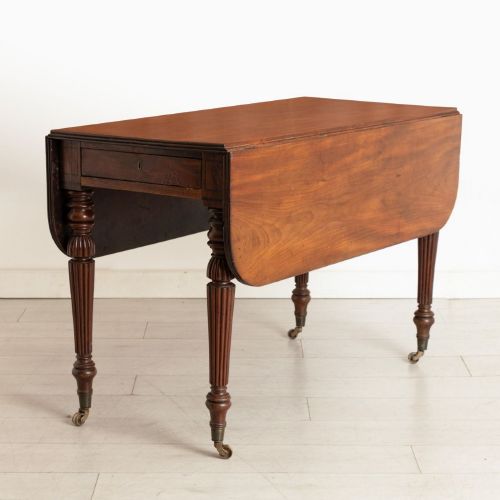


Brass Castor Accent Table
A brass castor accent table brings versatile mobility and classic timber warmth to a room, offering a practical surface set upon traditional metal wheels.
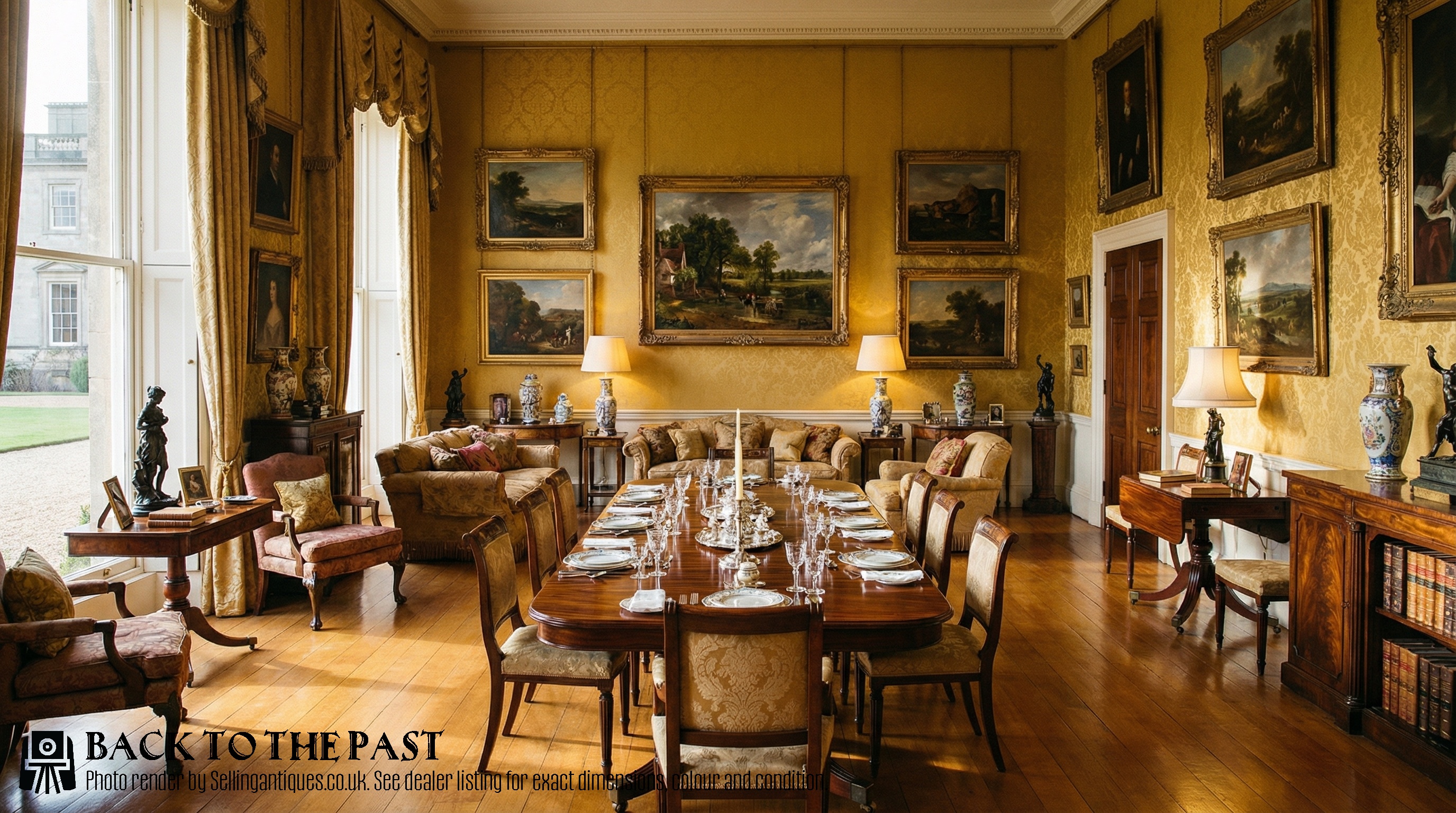
Brass Castor Accent Table
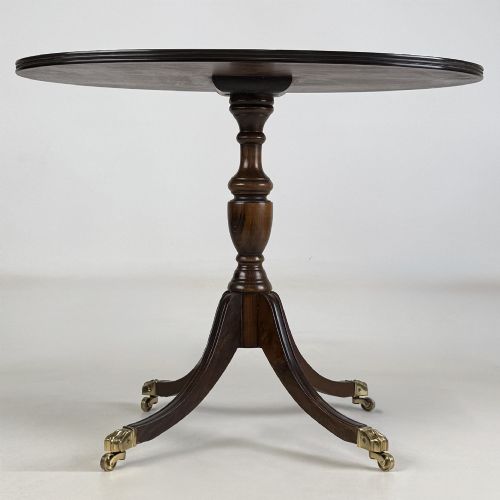
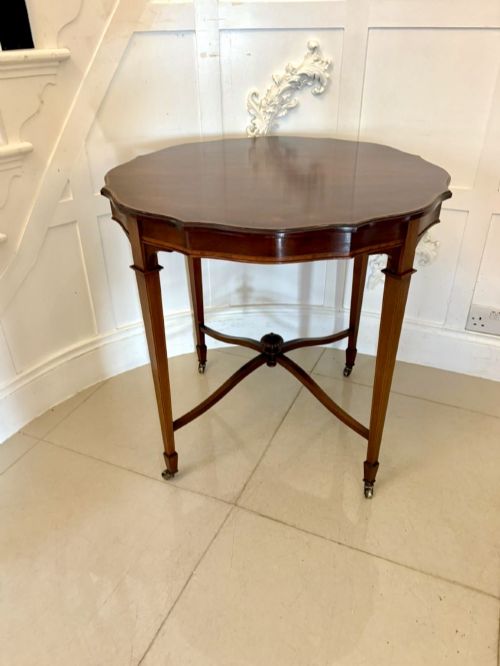
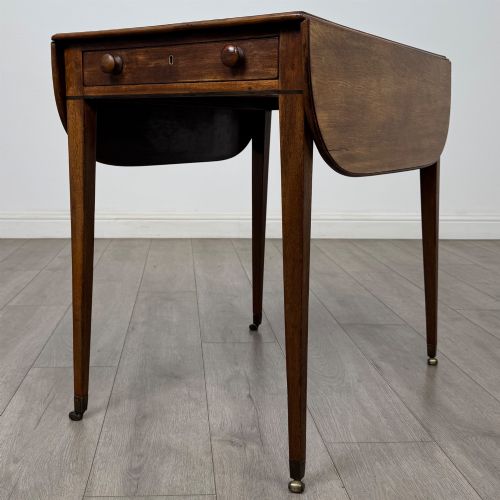
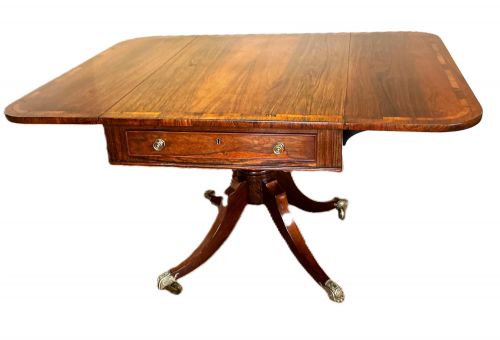
A brass castor accent table encompasses adaptable occasional furniture pieces designed for easy movement across floors, featuring small metal wheels at the base of the legs. When searching for a brass castor accent table, buyers encounter forms such as pembroke tables, sofa tables, drop-flap library tables, and occasional side tables.
The pieces on this page span several historical periods, originating predominantly from the Georgian, Regency, Victorian, and Edwardian eras. Mahogany is the most frequent primary timber, accompanied by satinwood, rosewood, oak, burr oak veneer, and amboyna.
Makers and cabinet makers of the past produced these versatile tables primarily as functional household items for the library, parlour, or dining room. Drop leaves, drawers, and tiered platforms appear frequently across the selection to maximise utility in smaller spaces.
What varies in quality
Quality in these tables is evident in the crispness of the timber grain, the precision of the wood inlay, and the integration of the brass castors into the leg structure. Finer examples display superior figuration in the mahogany or rosewood and delicate, well-executed satinwood stringing.
Construction methods also separate standard production from superior pieces, particularly in the hand-cut joinery of drawers, the stability of drop-leaf flap mechanisms, and the original patination of the timber.
Listings span the Georgian, Regency, Victorian, and Edwardian periods, utilising mahogany, satinwood, rosewood, and oak alongside brass and leather.
Gillow
The Brass Castor Accent Table Glossary
- Pembroke table
- A small occasional table with hinged drop leaves on two opposing sides. These tables often include one or two small drawers and were originally designed for multiple uses around the home.
- Castor
- A small swivelling wheel fitted to the foot of a table leg. They allowed heavy timber tables to be moved across carpets and floors with minimal effort.
- Satinwood
- A pale, hard exotic timber native to India and Sri Lanka, prized for its golden sheen. It was frequently used for inlay, banding, and veneering during the Georgian and Edwardian periods.
- Sofa table
- A rectangular occasional table traditionally placed in front of or beside a sofa. These pieces usually feature drop flaps and double pedestals or end supports.
- Drop-flap
- A hinged leaf attached to the main top of a table that can be raised to extend the surface area or lowered when space is limited. Support brackets swing out from the frame to hold the leaf in position.
Brass Castor Accent Table: Frequently Asked Questions
What is a pembroke table?
A pembroke table is a versatile small table equipped with hinged drop leaves on two sides, allowing the surface area to expand or contract. They often incorporate a small drawer and stand on slender legs fitted with castors.
Cabinet makers designed these pieces to be easily moved around rooms for writing, sewing, or serving tea.
How do I identify a Regency table?
Regency tables generally date from the early nineteenth century and display classical lines influenced by Greek and Roman design. They frequently feature rich mahogany or rosewood timbers alongside brass mounts and castor feet.
Proportions during this period tended to be clean and architectural, often utilising pedestal bases with splayed legs.
Were these tables used for dining?
Certain larger forms, such as specific drop-leaf and pedestal designs, served multiple domestic purposes including light dining. Smaller versions functioned primarily as side, occasional, or lamp tables.
The inclusion of brass castors allowed owners to reposition the table easily depending on daily household requirements.
What woods were commonly used?
Mahogany forms the primary timber for the vast majority of these tables, valued for its rich colour and stable grain. Makers also utilised rosewood, satinwood, oak, and burr oak veneer for decorative contrast.
Inlay work and fine crossbanding in lighter woods frequently highlight the borders of the table tops.