


Brass Carriage Lights
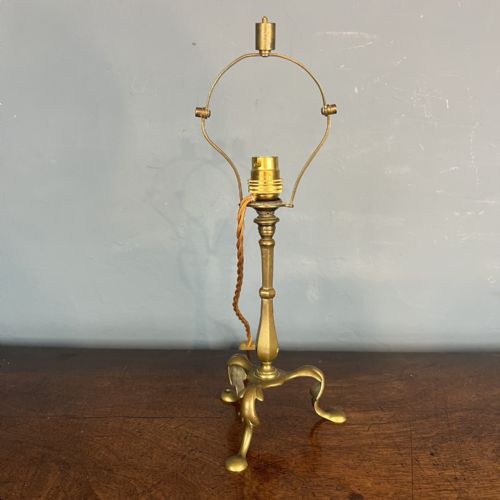
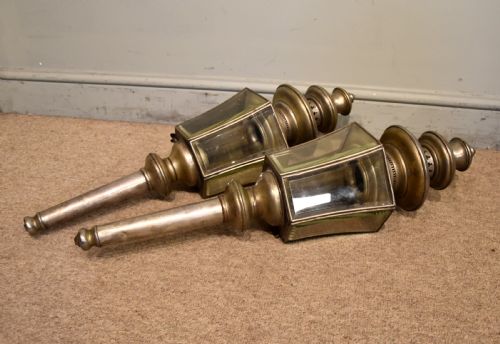
These brass carriage lights are sturdy functional fittings built for travel and transport, offering robust illumination with heavy metal frames and glass panels.
Brass Carriage Lights
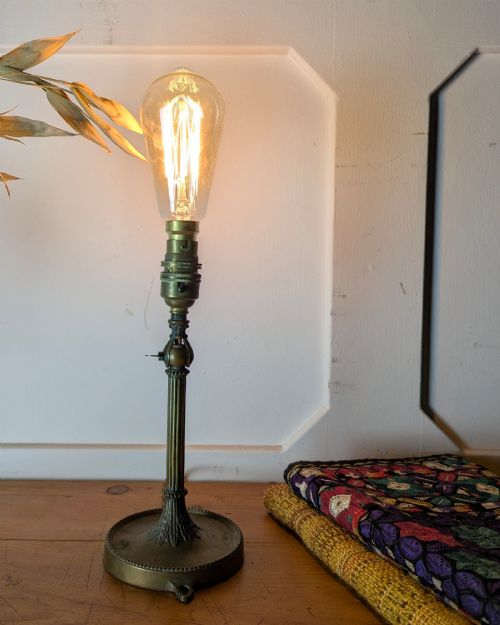
Brass carriage lights encompass durable fittings designed originally for transport vehicles, railways, and maritime use, surviving now as versatile wall lights, table lamps, and lanterns. When you search for brass carriage lights, you encounter items ranging from Victorian coaching lamps to Edwardian and Arts and Crafts Pullman lamps.
The pieces on this page heavily feature Victorian and 19th-century designs alongside early twentieth-century railway and Pullman variants. Common forms include paired wall lanterns, gimbal lamps, and heavy coaching lamps meant to withstand motion and weather.
How they were made
Manufacturers built these lights using heavy combinations of brass, cast iron, and steel to ensure structural rigidity on moving vehicles. Glass panes, sometimes opaline, protected the flame or bulb while diffusing light effectively.
Many items incorporate nickel plating over the base metal to prevent corrosion and provide a brighter finish. Gimbal mechanisms appeared on marine and train versions to keep the light vertical despite swaying surroundings.
Listings span the 19th century through the 1930s, featuring brass, iron, nickel plating, and opaline glass configured as wall sconces, coaching lamps, and Pullman table lamps.
What varies in quality
Quality rests in the heaviness of the casting and the crispness of the metalwork, distinguishing utilitarian mass-produced pieces from refined domestic or French Empire style examples. The weight of the brass and the integrity of the original joints dictate longevity.
The presence of undamaged original glass and functional mounting brackets elevates a piece significantly. Maker attribution, such as work by Veritas Lamp Works or Daris, further separates standard transport hardware from collectible examples.
Veritas Lamp Works·Daris
The Brass Carriage Lights Glossary
- Gimbal
- A pivoted support ring that allows a lamp to remain upright regardless of the motion of a ship or train. This mechanical feature is typical of maritime and railway lighting.
- Coach lamp
- A heavy exterior light designed to mount to the side of a horse-drawn carriage or early automobile. These often feature distinctive tapered bodies and protective glass panels.
- Pullman lamp
- A compact lighting fixture designed for use inside railway carriages, particularly sleeping cars. They frequently double as wall or table lamps with adjustable brackets.
- Opaline
- A milky, translucent glass used to soften and diffuse glare from the light source. It appears commonly in Edwardian interior transport fittings.
Brass Carriage Lights: Frequently Asked Questions
What are brass carriage lights?
These are robust light fixtures originally manufactured for use on coaches, carriages, trains, and ships. They combined heavy metal frames with protective glass to withstand outdoor travel conditions.
Today, they are adapted for interior and exterior domestic use as wall lights, table lamps, and lanterns, bringing industrial and maritime character to a space.
How were carriage lights used?
Carriage lights mounted to the exterior sides of horse-drawn vehicles or early motorcars to illuminate the road ahead and signal the vehicle's presence. Interior versions, such as Pullman lamps, provided reading and general illumination inside passenger compartments on trains.
In modern settings, they function as wall sconces, porch lights, or statement table lamps utilising their original heavy brackets and weatherproof construction.
How do I mount a carriage light?
Most carriage lights feature heavy mounting brackets, plates, or gimbal rings designed to secure them firmly to a vertical surface. Because they were built for moving transport, their original fixings are often substantial and require secure wall anchors.
Wiring them for modern electrical use typically involves running cable through the original bracket pathways or mounting them directly over standard junction boxes.
How can I tell the period of a carriage light?
Dating relies on materials, manufacturing techniques, and stylistic cues such as Victorian ornamentation, Arts and Crafts simplicity, or French Empire detailing. Earlier 19th-century examples often use heavier cast iron and brass combinations with hand-soldered joints.
Later Edwardian and 20th-century pieces introduce nickel plating, standardised fittings, and specific railway company markings like GWR to help narrow down their exact era.