





Brass Carriage Clock Style
Brass carriage clock style items combine heavy metal framing with bevelled glass panes, bringing portable timekeeping tradition to desks and mantelpieces.

Brass Carriage Clock Style
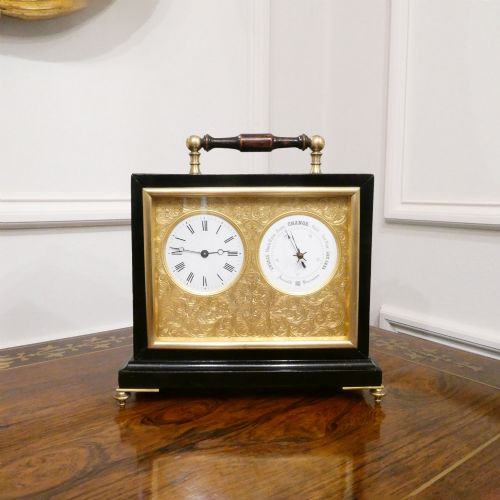
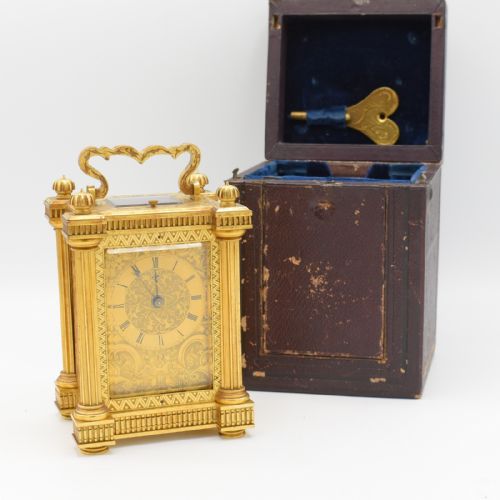
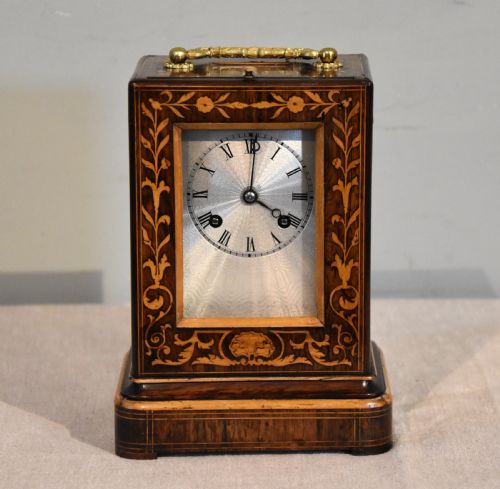
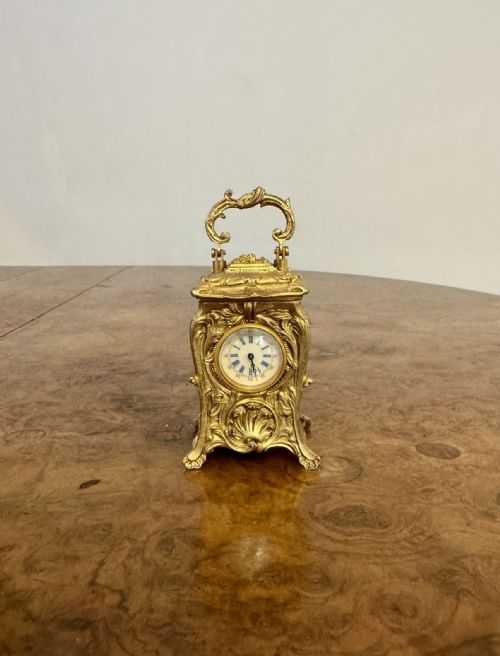
When searching for a brass carriage clock style, you encounter portable timepieces and related desk clocks housed in glazed metal cases. The selection spans the Victorian and Edwardian eras, alongside mid-century examples from the nineteen sixties.
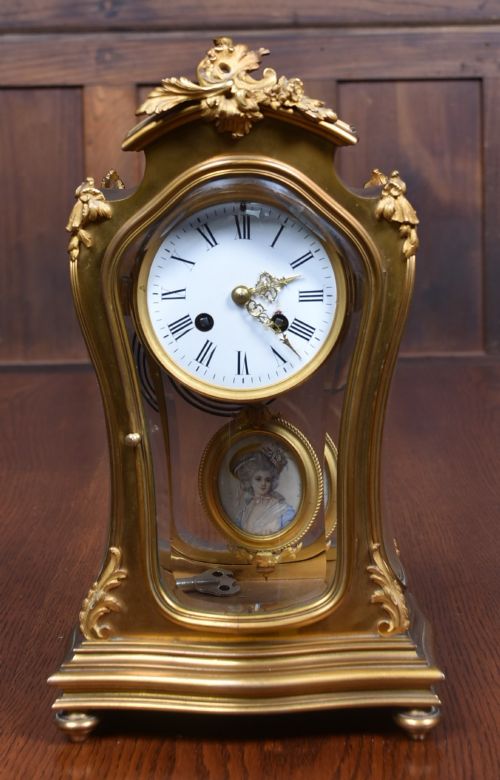
Most pieces on display originate from French or English workshops, ranging from standard rectangular carriage designs to architectural four-glass mantel clocks and miniature bedside variants.
Cases draw upon historical idioms including French Rococo Revival, Gothic Revival, and Empire styles, often incorporating ornamental handles, columns, or detailed cast mounts.
Materials and construction
Cases are primarily constructed from brass, gilt brass, gilt bronze, gilded brass, or ormolu, sometimes paired with ebonised wood or inlaid rosewood bodies. Metal components are frequently cast, chased, and gilded to achieve a bright or burnished finish.
Bevelled glass panels are set into the top, sides, and door of the framework to expose the inner movement, occasionally accompanied by painted enamel dials and delicate hands.
Materials recur across brass, gilt bronze, ormolu, enamel, and heavy bevelled glass panels.
Assessing quality and execution
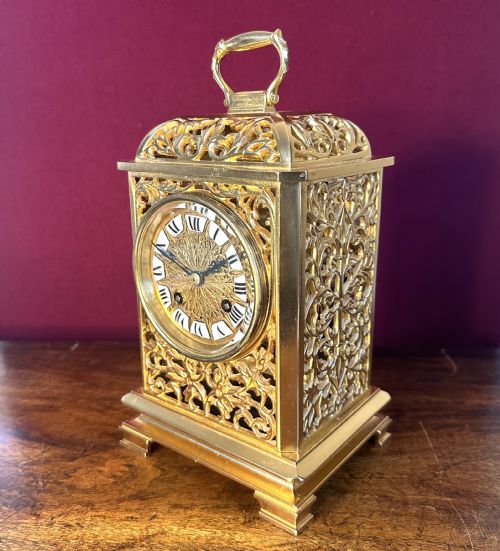
Quality rests upon the weight and crispness of the metal case, distinguishing heavily cast gilt bronze or ormolu from lighter pressed sheet brass. Ornate filigree work, signed dial plates, and robust repeating or alarm complications separate standard production items from workshop highlights.
The precision of the bevelled glass panes and the integration of decorative cast mounts further determine the standard of an individual clock, reflecting the skill of the maker and the ambition of the design.
Howell & James London·Pickford of London·L Epee·Tiffany·Dent·Garrard & Co·Malecot of Paris
The Brass Carriage Clock Style Glossary
- Carriage clock
- A small, portable spring-driven timepiece originally designed for travel during the nineteenth century. These clocks typically feature a rectangular brass case with glass panels and a folding handle at the top.
- Four-glass clock
- A mantel clock featuring glass panels on all four sides and the top, allowing an unobstructed view of the mechanical movement within. They frequently sit upon stepped brass or gilt bases.
- Ormolu
- Gilded bronze produced by applying a finely ground high-carat gold-mercury amalgam to a bronze object before heating. The technique creates a durable, rich golden surface sheen found on finer nineteenth-century French pieces.
- Repeater
- A mechanical complication that strikes the hours and quarters when a plunger or cord is activated by hand. This function allowed users to check the time in darkness without reading the dial.
- Capucine
- An early French alarm clock style characterised by brass pillars, a bell mounted on top, and a carrying handle. It forms a precursor to the standard nineteenth-century carriage clock.
Brass Carriage Clock Style: Frequently Asked Questions
What is a carriage clock?
A carriage clock is a portable timepiece housed in a brass case with glass windows, designed originally for officers on the move.
Most examples rely on a spring-driven movement and feature a handle on top for transport.
How do I wind a brass carriage clock?
Winding typically requires a specific key inserted into arbors located on the underside or back plate of the movement.
Care should be taken not to overwind the mainspring, turning the key steadily until resistance is felt.
What is a four glass clock?
A four glass clock is a mantel timekeeper enclosed by glass panels on the front, back, and both sides, exposing the inner mechanism.
These pieces emerged during the nineteenth century and often sit on heavy brass or gilt feet.
How do I date a brass clock?
Dating relies on stylistic clues, case materials, escapement types, and any maker signatures or serial numbers inscribed on the movement plate.
Victorian and Edwardian models display distinct casting details and revival motifs compared to mid-century items.
Where should I place a desk clock?
Desk clocks suit stable, level surfaces away from direct sunlight, excessive moisture, and temperature fluctuations that might affect the oil.
Placing them on mantelpieces or studies allows the escapement tick to remain audible without disturbance.