



Brass Cane Rack
A brass cane rack organises hallway walking sticks and umbrellas cleanly, combining robust metal frames with practical utility for daily use.
Brass Cane Rack
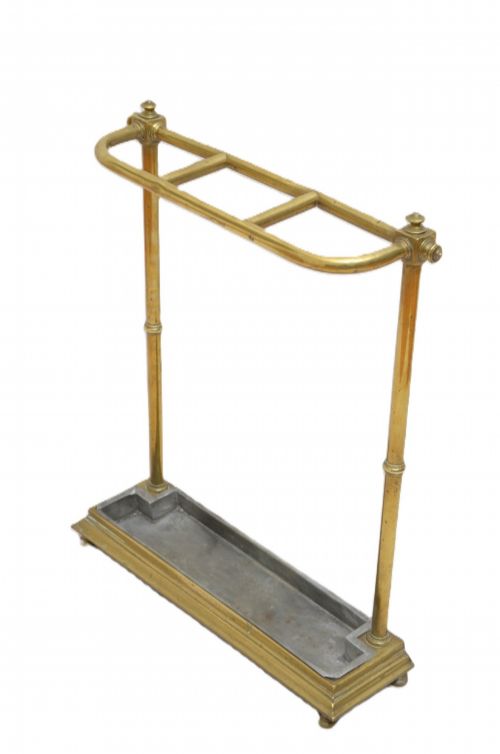
When searching for a brass cane rack, collectors encounter hallway furniture designed to hold walking sticks, canes and umbrellas together in a single upright frame. These pieces serve domestic entryways by keeping wet weather gear and walking aids orderly and accessible near the front door.
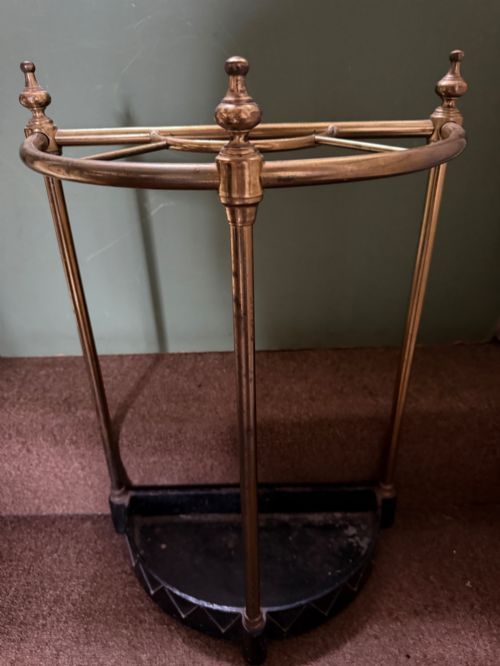
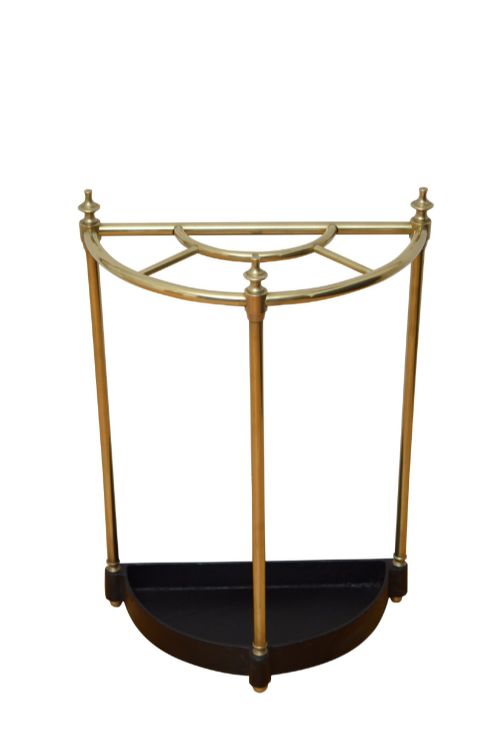
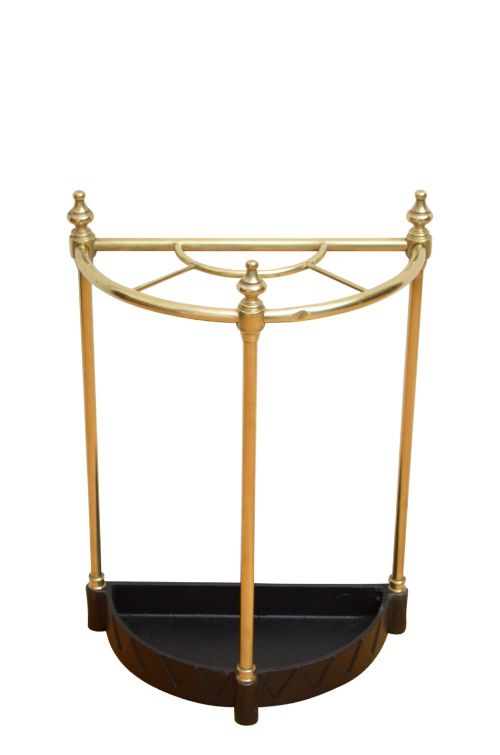
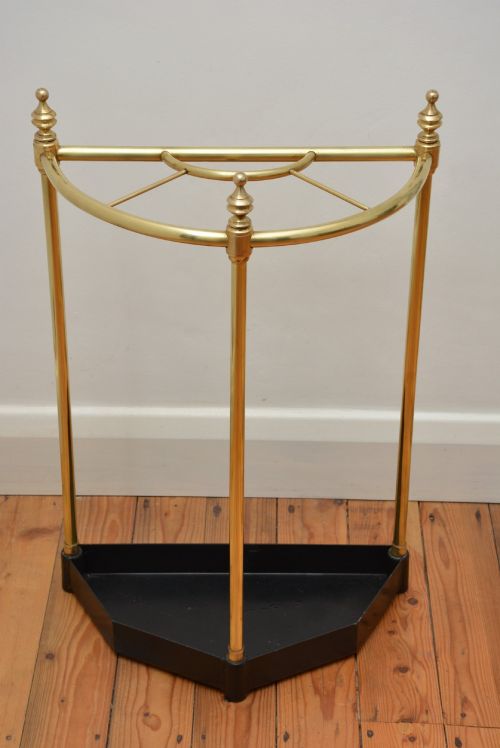
The versions most commonly met on this page date from the Victorian and Edwardian periods, stretching into the early twentieth century. Many take a demi lune or half moon shape designed to sit flush against a hallway wall, alongside circular and corner configurations.
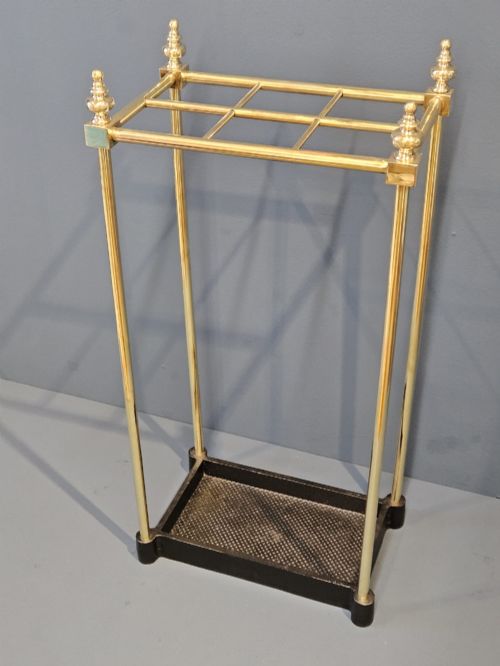
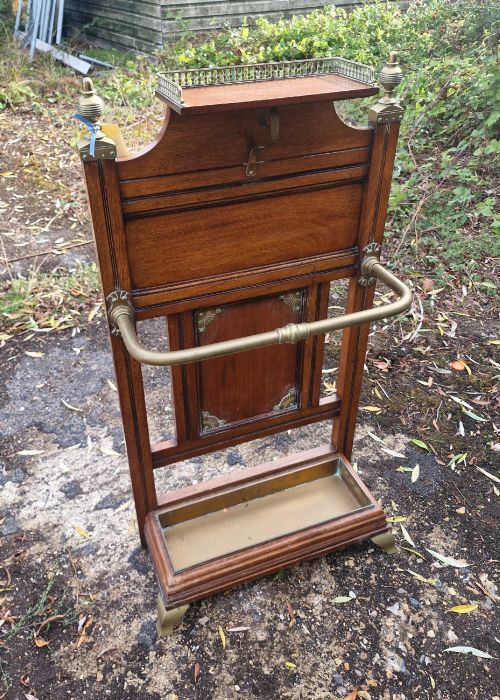
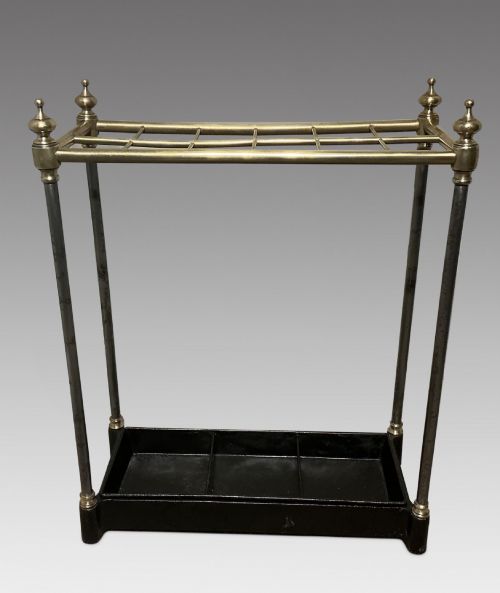
Makers utilised brass frequently in combination with cast iron, oak and mahogany to provide structural stability at the base. Such examples reflect domestic interior trends from the nineteenth century onward, often incorporating drip trays to protect hallway floors.
Materials and construction methods
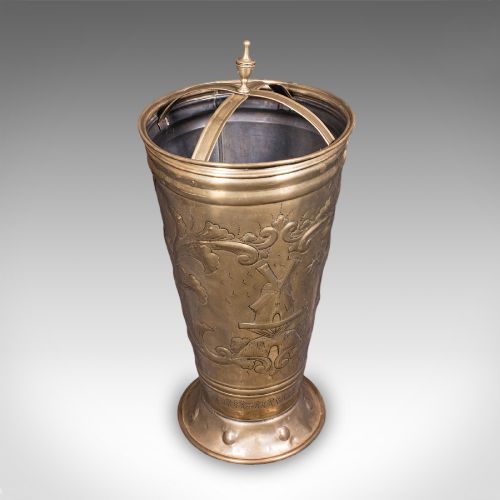
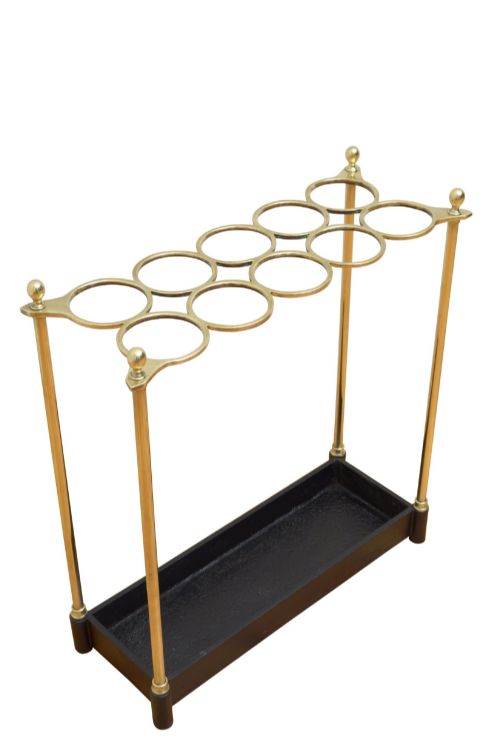
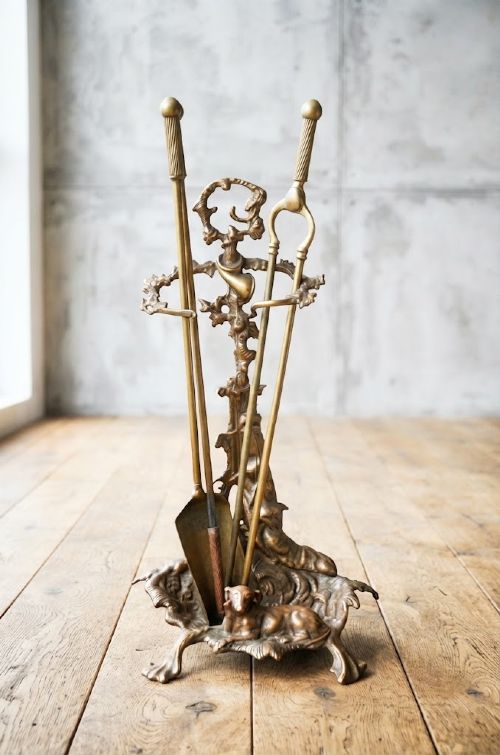
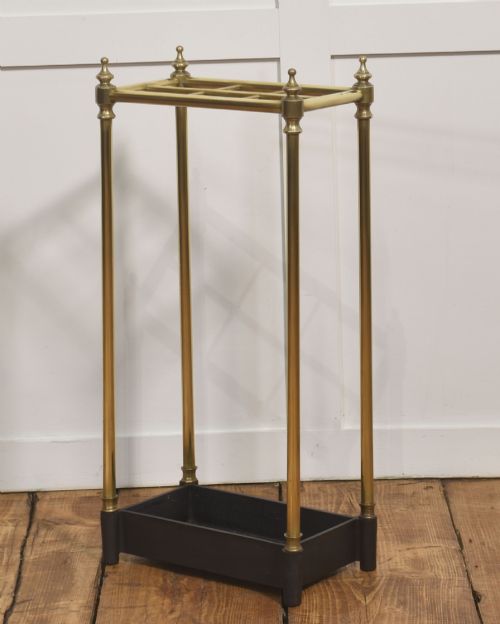
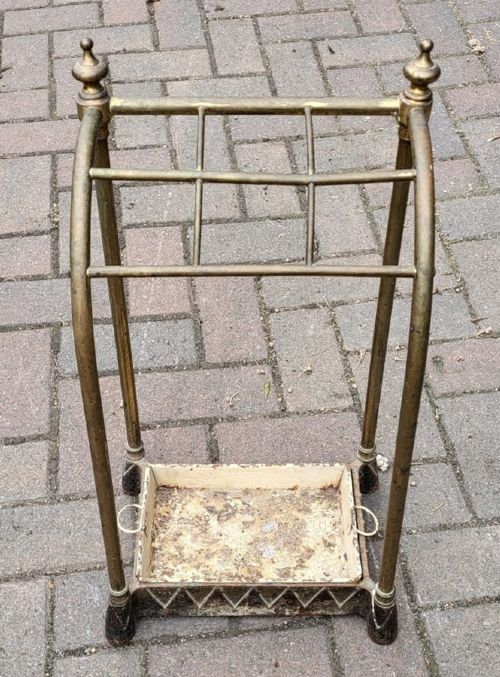
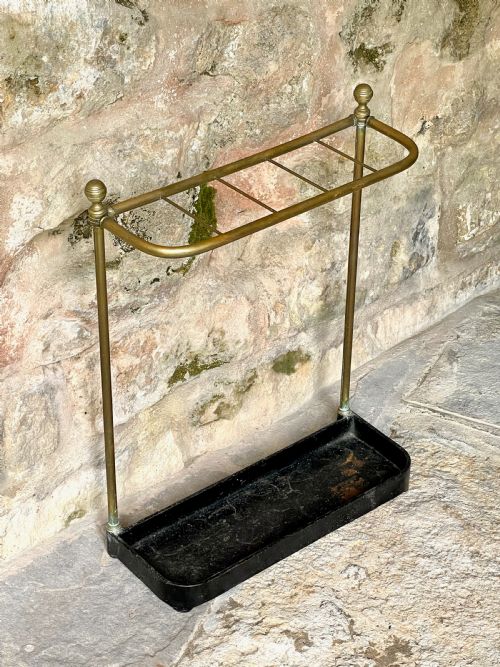
Makers constructed these racks using sheet and tubular brass paired with heavy cast iron or wooden bases to prevent tipping under the weight of wet umbrellas. Metal components frequently feature decorative ball finials, cast stick loops and applied motifs such as hunting scenes.
Frames incorporate iron and steel supports for rigidity, while lower sections include ceramic or metal drip trays to catch rainwater. Oak and mahogany frameworks occasionally appear with brass mounts and rails, merging timber cabinetry with metalwork.
Brass Cane Rack Retail Price Guide 2026
Typical asking prices for brass cane rack among the pieces listed under this phrase on Sellingantiques today, from the lower quarter to the upper quarter. They describe what is for sale here now, not the wider market.
Listings feature materials including brass, cast iron, oak, mahogany, ceramic, copper and iron across Victorian and Edwardian periods.
Distinctions in manufacture and design
Quality in a brass cane rack rests upon the thickness of the metal gauge and the weight of the base casting. Heavier cast iron or substantial timber bases provide proper balance, whereas lighter versions lack stability when fully loaded with walking sticks.
The refinement of the casting and detailing separates standard production from finer work. Pieces featuring crisp decorative finials, well-fitted drip trays and integrated Art Nouveau or Gothic Revival stylistic elements demonstrate superior craftsmanship.
Shoolbred
The Brass Cane Rack Glossary
- Demi Lune
- A half moon shape designed to stand flat against a hallway wall. This profile saves floor space in narrow entryways.
- Drip Tray
- A removable metal or ceramic tray positioned at the base to catch water from umbrellas. It protects the floor beneath the rack.
- Stick Loop
- An individual metal ring or divider that keeps walking canes separated and upright. These loops form the upper framework of the rack.
- Finial
- A decorative terminal ornament, often shaped as a ball, positioned at the top corners of the stand. It adds height and visual finish to the brass structure.
- Gothic Revival
- A nineteenth century design style referencing medieval architecture. Pieces in this style utilise pointed arches and ecclesiastical motifs.
Brass Cane Rack: Frequently Asked Questions
What is a brass cane rack?
A brass cane rack is a hallway stand built to hold walking sticks, canes and umbrellas upright. They combine metal frames with drip trays for daily domestic organisation.
Most examples date from the Victorian and Edwardian eras, utilising brass tubing and cast iron bases.
How do I place one in a hallway?
Demi lune shapes sit flat against a wall, making them suitable for narrow corridors and tight entrance spaces. Circular and corner stands fit well in larger vestibules.
Ensure the floor space accommodates the base and that the drip tray remains accessible for cleaning.
How do I date a brass cane rack?
Dating relies on stylistic clues such as Art Nouveau floral motifs or Gothic Revival architectural details. Victorian examples often feature heavy cast iron components and ball finials.
Later pieces from the early twentieth century adopt simpler geometric lines and lighter metal gauges.
Are these racks suitable for daily use?
These pieces were built for functional domestic service in nineteenth and twentieth century hallways. Their solid brass and iron construction handles regular placement of umbrellas and walking sticks.
Using the included drip tray prevents moisture from damaging floors beneath the stand.