

Brass Burner Table Lamp
A brass burner table lamp brings period warmth and glowing glass colour to a room, drawing the eye with polished metal and hand-blown shades.
Brass Burner Table Lamp
A brass burner table lamp is a domestic lighting piece designed to burn oil or paraffin, combining a heavy metal reservoir and stem with a specialised metal burner mechanism. Buyers hunting for these items will encounter numerous examples originating from the Victorian and Edwardian eras, spanning the nineteenth and early twentieth centuries.
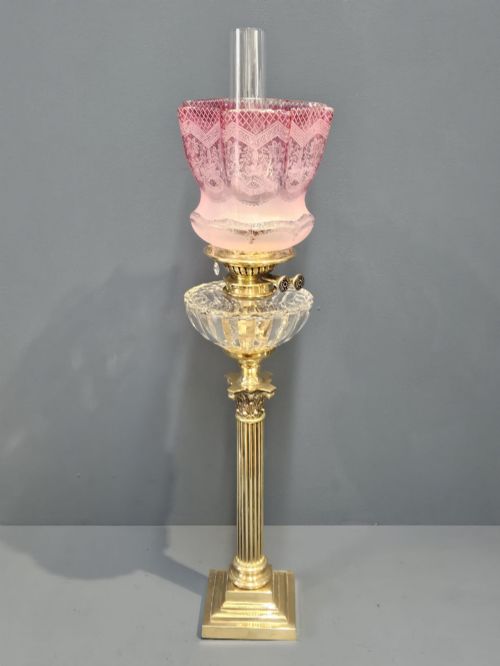
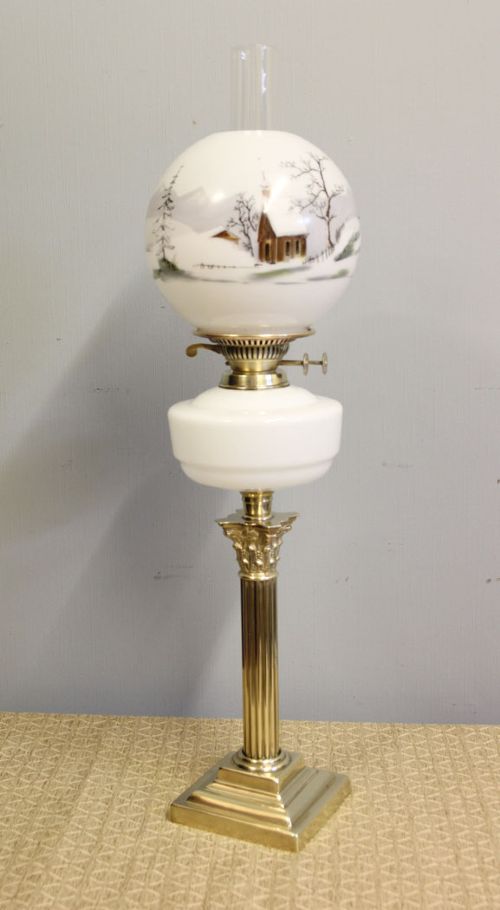
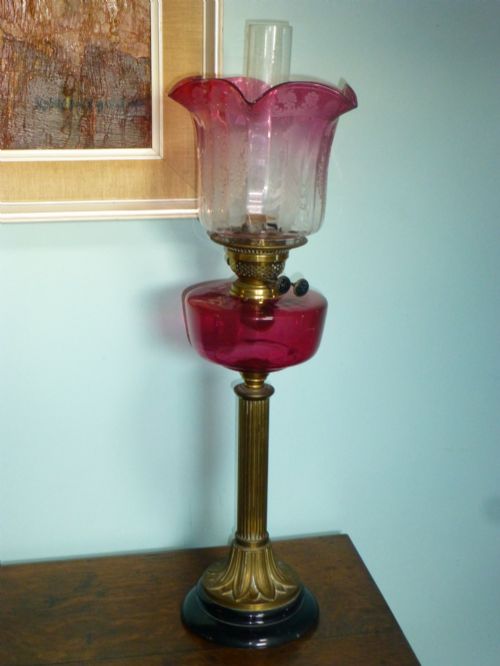
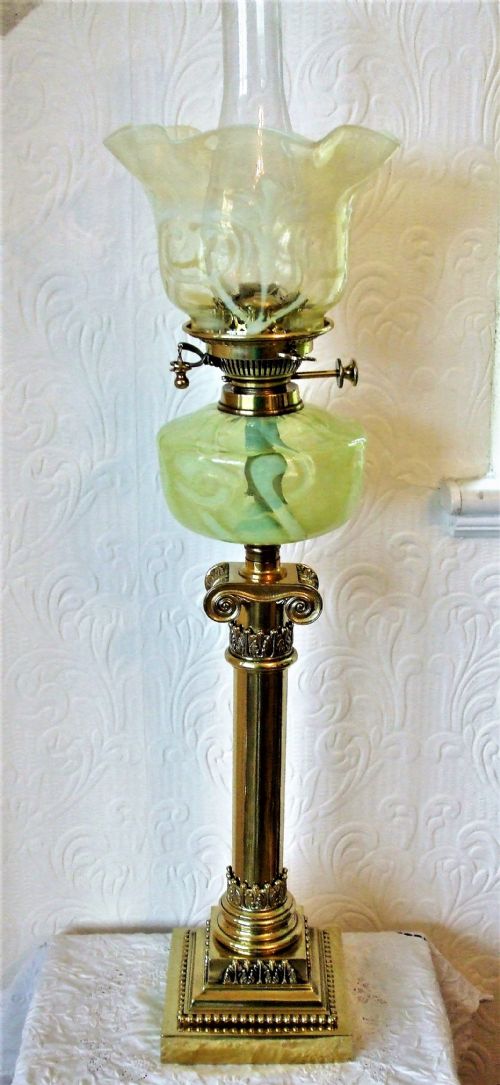
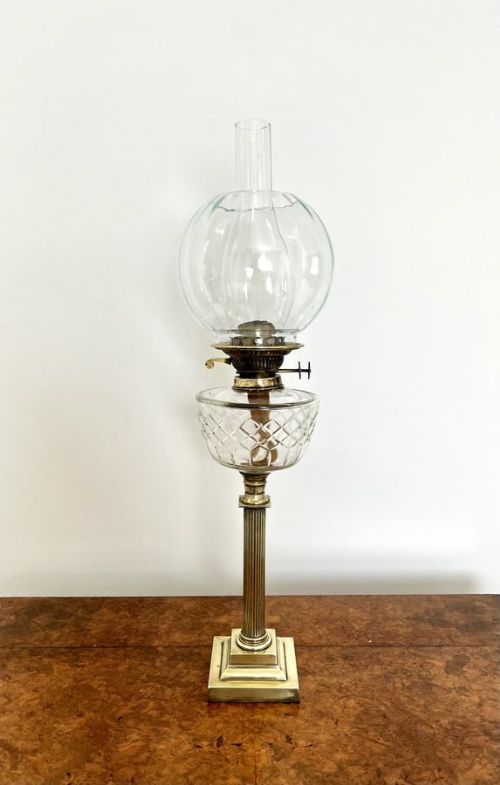
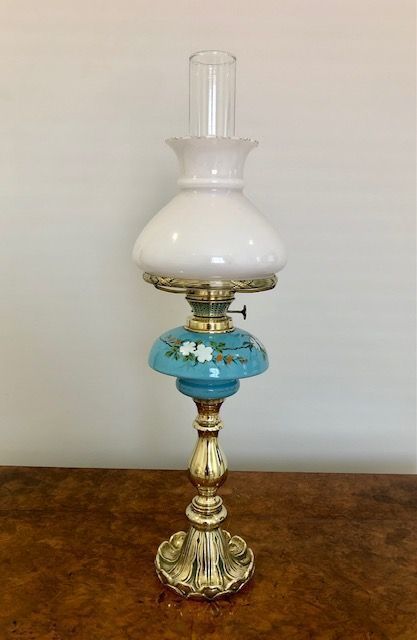
The most common form on this page is the tall column lamp, frequently featuring classical architectural orders like Corinthian or Ionic capitals. These standard pieces often pair a polished brass base with coloured glass fonts and matching patterned shades.
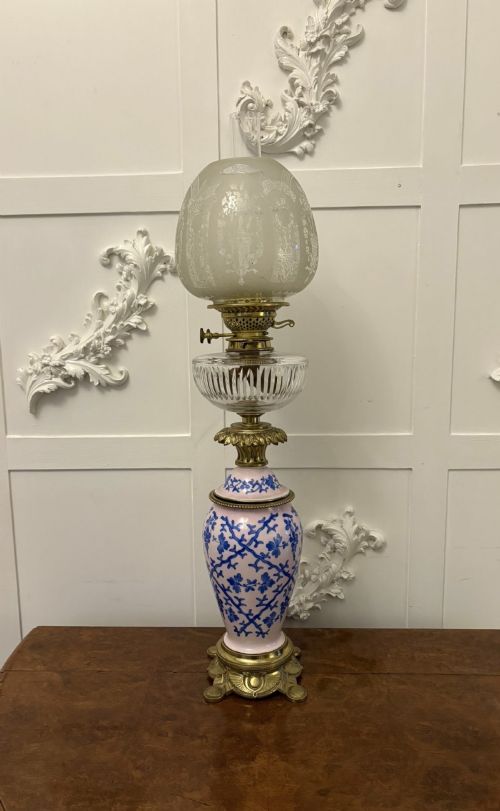
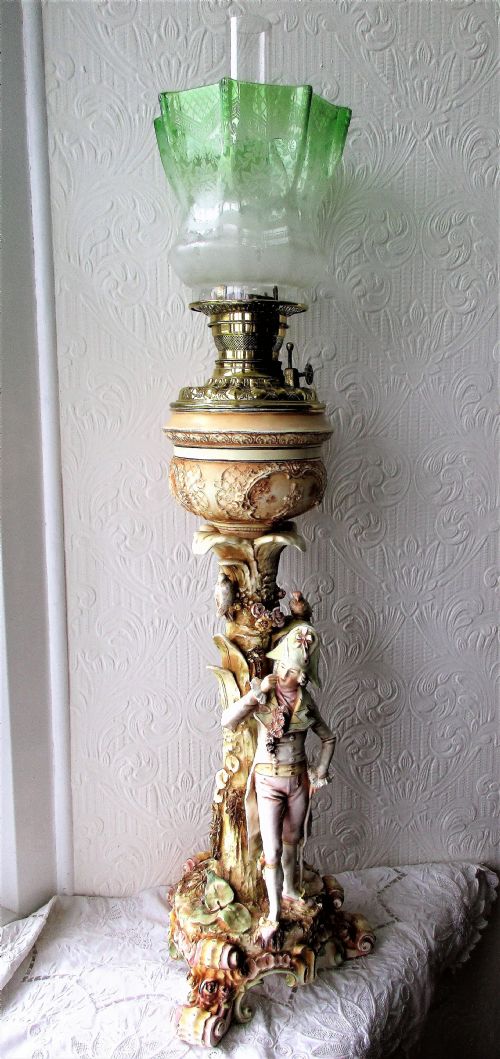
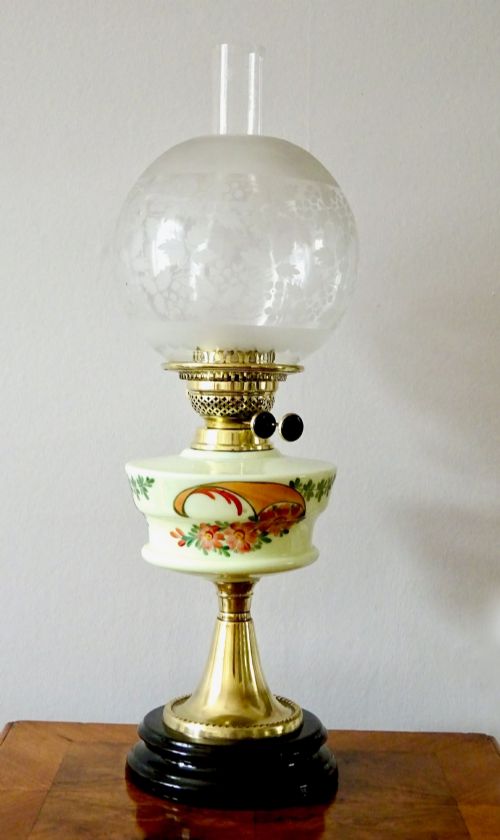
Heavier and more elaborate specimens incorporate figural ceramics, porcelain bodies, or telescopic mechanisms designed to adjust the height of the light. Collectors also meet twin-burner duplex systems and specialised maker-stamped hardware that elevate standard domestic lighting into decorative works of art.
Materials and construction methods
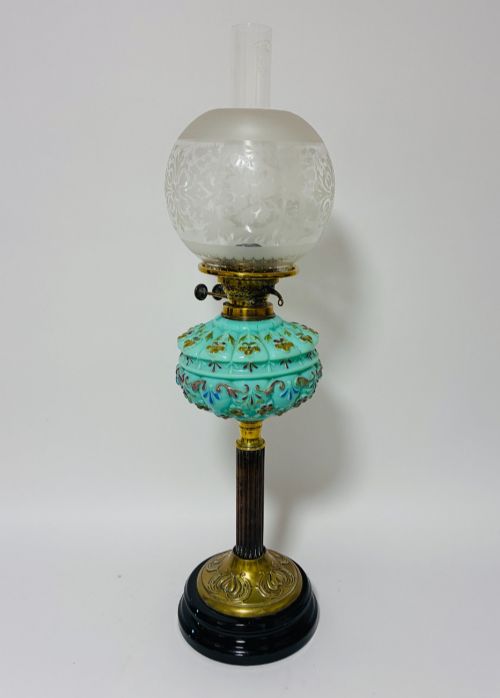
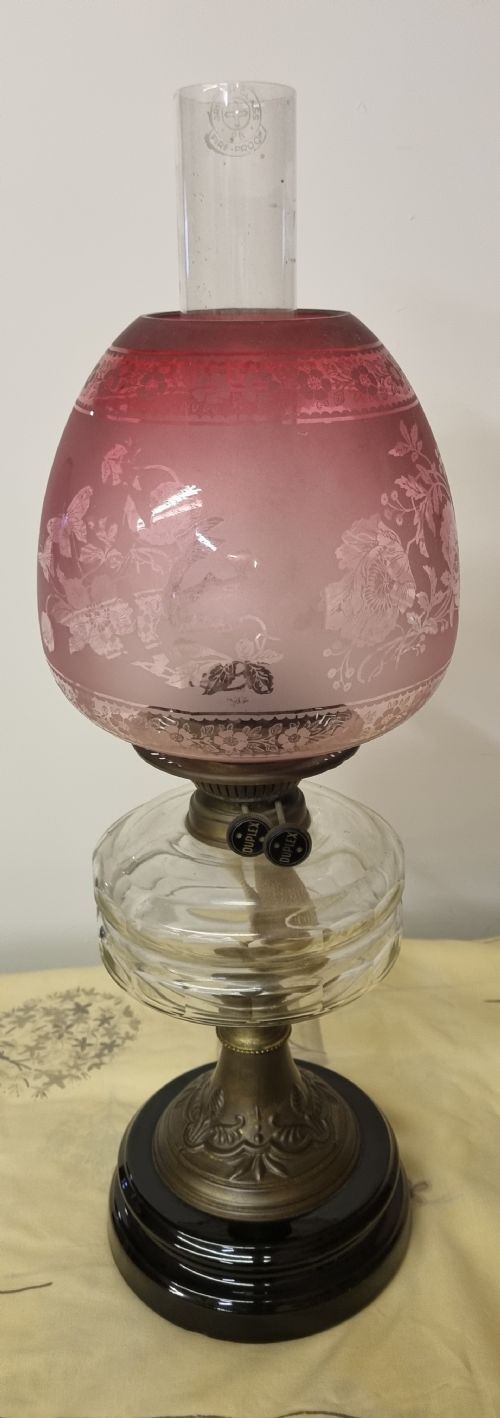
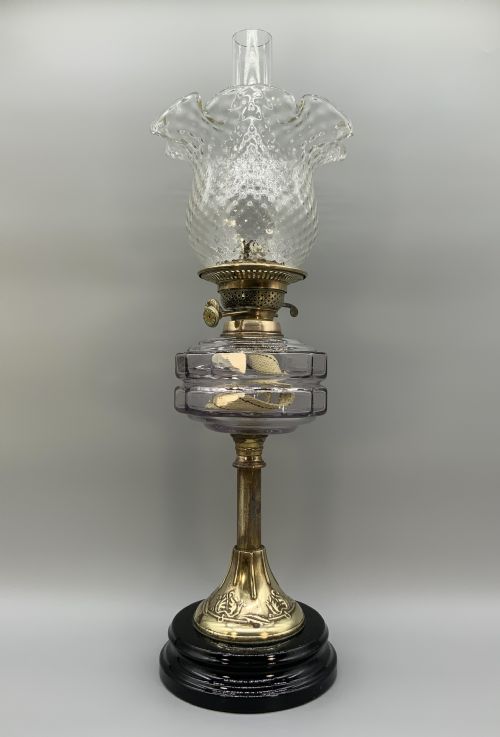
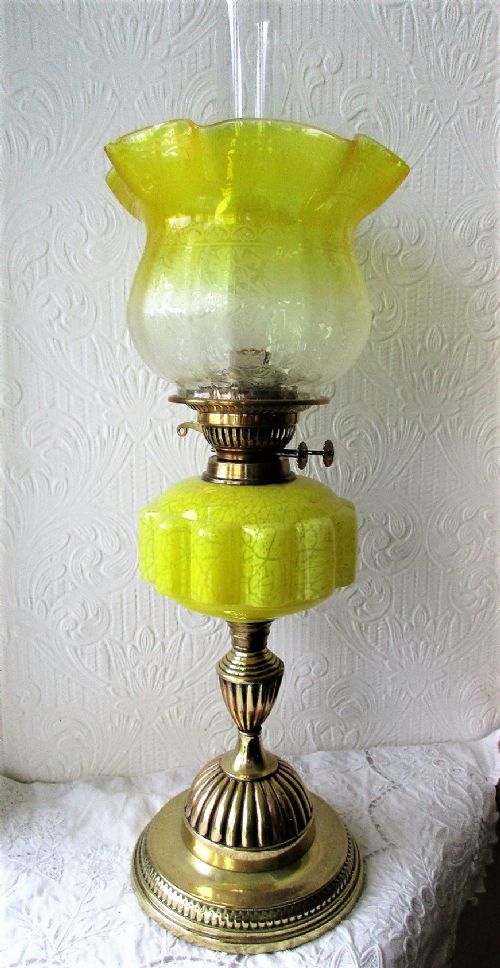
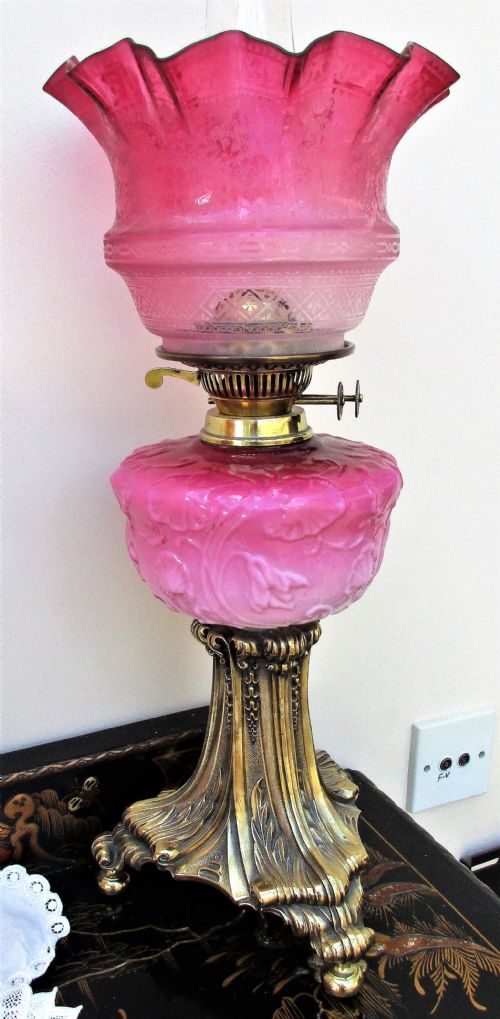
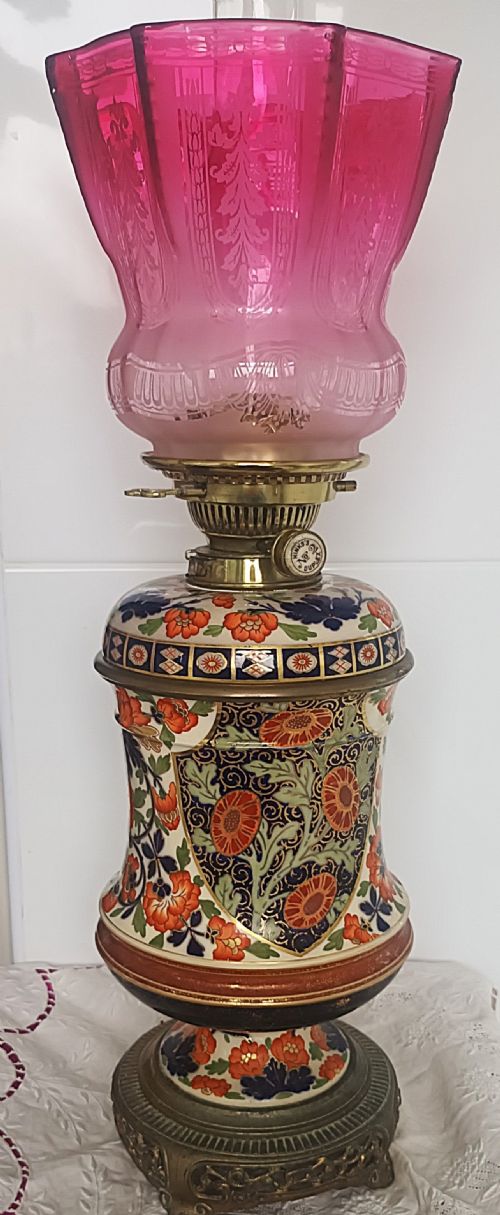
Construction relies heavily on cast and spun brass for the structural columns, fonts, and burner assemblies. Metal components are frequently paired with contrasting materials such as clear, cut, opaline, or cranberry glass, alongside decorated porcelain and ceramic reservoirs.
Shades display significant craft, utilising hand-blown glass techniques to achieve frosted textures, etched floral motifs, and rich, saturated colour palettes. Burner mechanisms and metal collars are precision-machined to house wicks securely and regulate flame height effectively.
Some telescopic models let Victorians raise or lower their reading light like a miniature architectural lighthouse.
Assessing craftsmanship and execution
Quality reveals itself in the weight and crispness of the brass casting, where sharper fluting on Corinthian columns and heavier metal gauges distinguish superior examples from lighter, mass-produced alternatives. The complexity of the burner mechanism also dictates grade, with double-burner duplex systems representing a more advanced level of manufacture.
The integration between disparate materials marks the difference at the top of the range. Seamless mounting between porcelain bodies, cut glass fonts, and metal bases indicates careful assembly, while hand-blown and etched shades with deep, even colouration complete a high-tier composition.
Hinks·Taylor Tunnicliff·Wild and Wessel
The Brass Burner Table Lamp Glossary
- Duplex burner
- A burner mechanism utilising two parallel wicks to produce a significantly brighter flame than single-wick designs. This mechanical arrangement requires a wider gallery and chimney to manage the increased heat output.
- Corinthian column
- A classical architectural column style featuring an ornate capital decorated with acanthus leaves. Many Victorian lamps adopt this column form for their central brass stem.
- Font
- The oil reservoir of the lamp, positioned above the base and below the burner. Fonts are frequently cast in brass, cut glass, or brightly coloured ceramic.
- Peg lamp
- A small oil lamp fitted with a tapered lower metal peg designed to drop directly into an existing candlestick or chamber holder. This versatile form allowed owners to convert standard candlesticks into lighting receptacles.
- Opaline glass
- An opaque, milky-white glass often tinted with soft pastel tones. This material diffuses the glare of the burner while casting a gentle, even ambient glow.
Brass Burner Table Lamp: Frequently Asked Questions
Can these lamps be converted to electricity?
Many owners choose to wire these lamps for modern electric bulbs, a process that can be accomplished with or without altering the original brass burner components permanently. Reversible wiring kits allow the vintage aesthetic to remain intact while providing safe, modern illumination.
Leaving the original burner mechanism unaltered preserves the historical integrity of the piece for collectors. Professional wiring ensures the metal body is safely earthed and suitable for daily use.
How do I tell Victorian lamps from Edwardian ones?
Victorian examples tend to be heavier and more ornate, frequently featuring classical Corinthian columns, rich cranberry glass, and elaborate figural ceramics. The decorative language leans toward heavy ornamentation and deep, saturated colour palettes.
Edwardian pieces often display a lighter touch, favouring simpler brass stems, opaline shades, and cleaner silhouettes influenced by emerging design movements. Art Nouveau elements also appear in this later period, introducing organic, fluid lines to the metalwork.
How do I clean and polish antique brass?
Cleaning antique brass requires a gentle approach to preserve the natural aged patina that collectors value. Mild soapy water and a soft cloth remove surface dust without stripping the character built up over a century.
Avoid harsh chemical dips or aggressive abrasive compounds that can permanently damage the surface texture and reduce the item's historical value. Light dusting is usually sufficient for regular maintenance.