


Brass Bound Writing Desk
A brass bound writing desk is a portable or fitted writing surface reinforced with metal corners and straps, designed for travel and home use alike.
Brass Bound Writing Desk
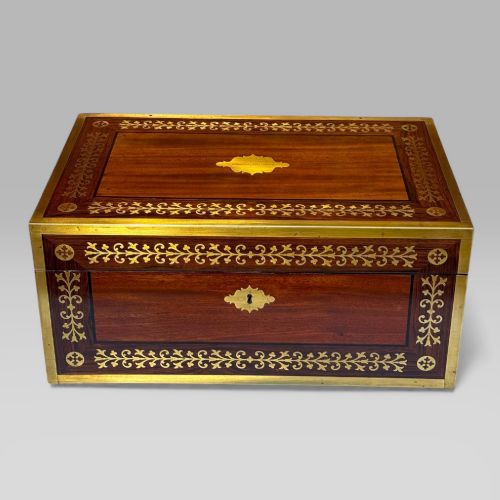
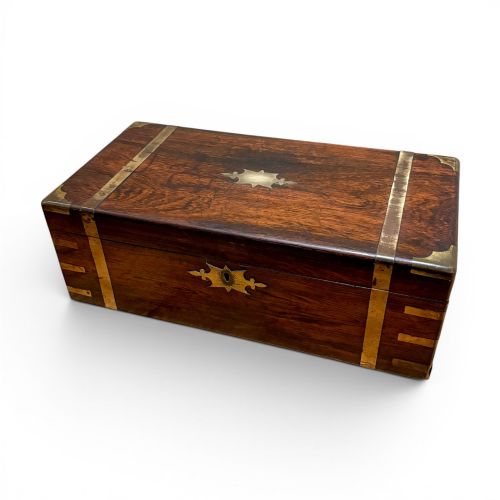
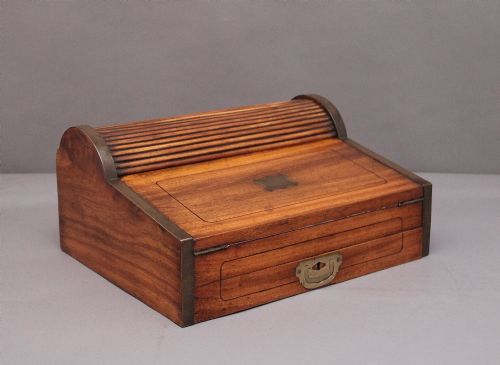
When you search for a brass bound writing desk, you encounter a variety of portable forms including writing slopes, lap desks, campaign boxes, and military chests. These pieces originate primarily from the Georgian, Regency, and Victorian periods, reflecting an era when correspondence required dedicated, sturdy enclosures.
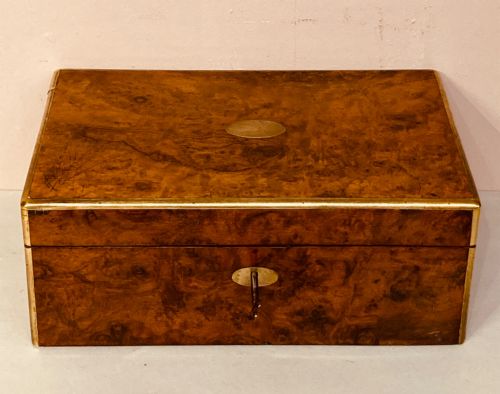
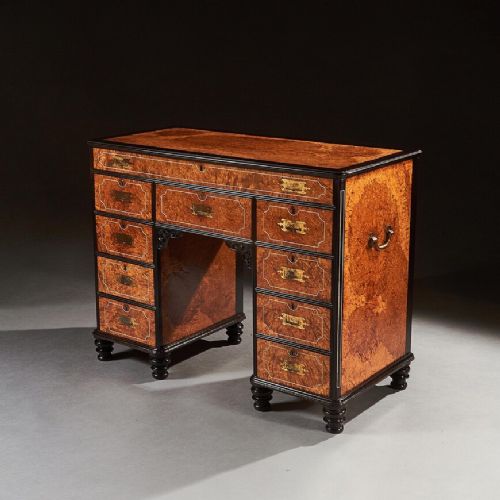
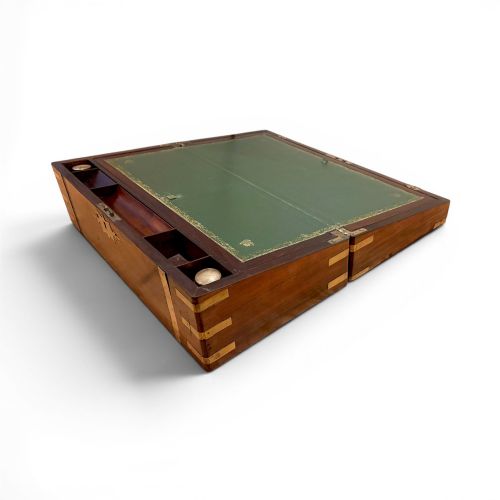
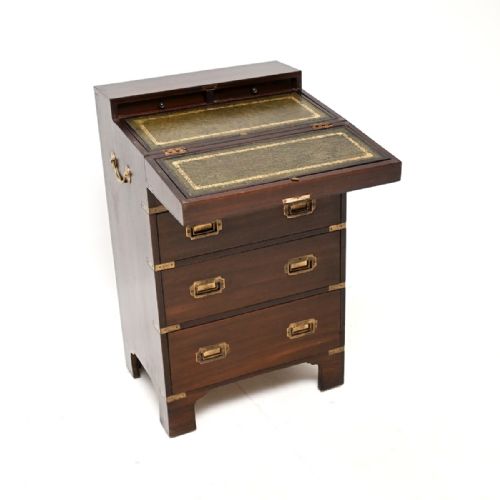
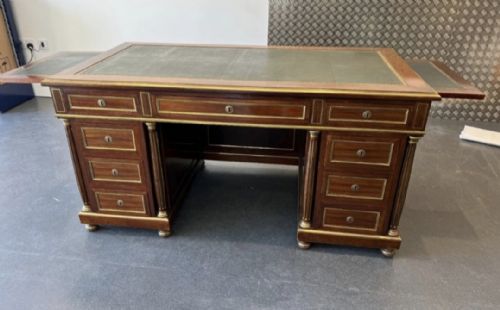
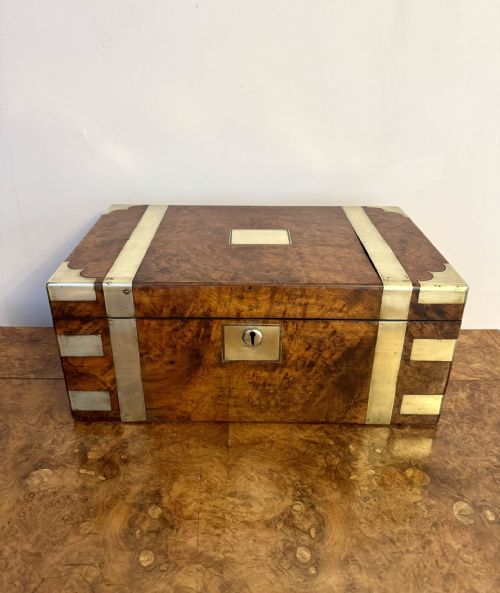
The most common form on this page is the Victorian mahogany or walnut writing slope, often fitted with secret drawers and inset brass corners for protection during travel. Larger examples expand into pedestal desks and secretaire military chests, accommodating stationery and documents in sectional frameworks.
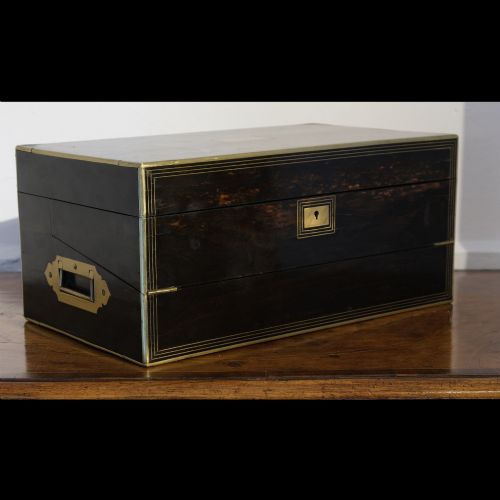
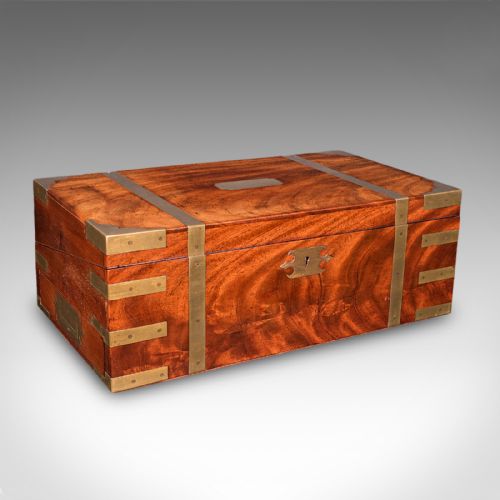
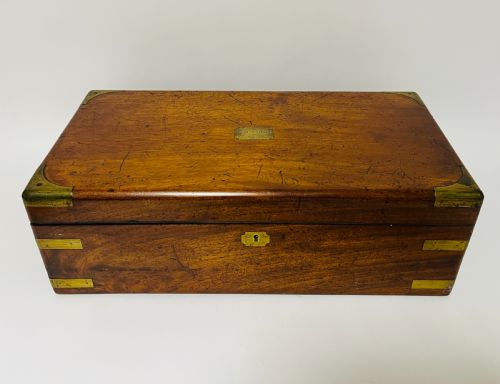
Exotic timbers such as rosewood, coromandel, camphor wood, and amboyna appear frequently among the pieces, sometimes associated with Chinese Export or Anglo Indian origins. Simpler domestic examples utilise solid mahogany or pollard oak with brass banding, corner mounts, and flush carrying handles.
Materials and Construction
Cabinetmakers constructed these objects using dense hardwoods like mahogany, walnut, and rosewood, often veneered over sturdy secondary timbers to prevent warping during transit. Decorative surfaces frequently employ burr walnut, amboyna, or coromandel, selected for distinctive grain patterns.
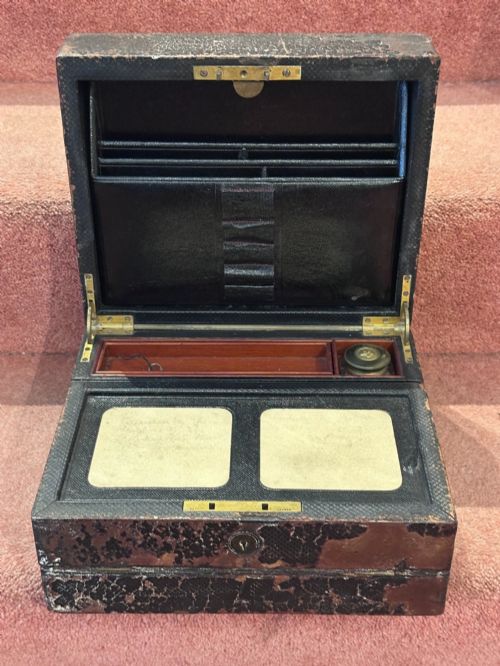
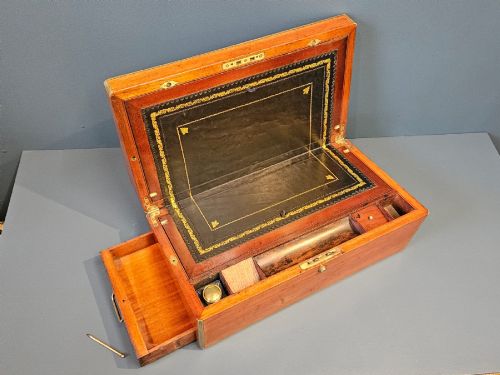
Protection and structural rigidity rely upon heavy brass binding, corner plates, and flush-fitting strapwork secured by numerous tiny screws. Interiors integrate fitted compartments, pen trays, inkwells, and sloping writing surfaces lined in leather or velvet.
Several writing boxes include secret drawers triggered by hidden wooden pins, rewarding curious hands with forgotten hiding spots.
Judging Quality
The standard of a piece depends on the weight and gauge of the brass mounts, the precision of the mitred joints, and the selection of timber veneers. Superior items incorporate secret drawers operated by concealed release mechanisms, substantial brass carrying handles, and original working locks with matching keys.
Refinement shows in the harmony of the grain across the lid and the quality of the internal fittings, such as glass inkwells with brass collars and compartments lined in watered silk or tooled leather. Simpler utility boxes lack these decorative niceties, prioritising rugged durability over internal complexity.
Austin
The Brass Bound Writing Desk Glossary
- Writing slope
- A portable box with an angled lid that opens to reveal a sloping surface for writing and compartments for stationery. These fold flat when closed for transport.
- Campaign style
- Furniture constructed for military use in the field, typically featuring brass corners, recessed drop handles, and sectional construction for ease of movement. Such items use durable timbers like camphor wood and mahogany.
- Secretaire
- A chest of drawers or cabinet featuring a pull-out writing drawer or drop-front desk flap concealing pigeonholes and small drawers. This integrates desk functionality into a larger storage unit.
- Secret drawers
- Concealed compartments hidden behind false partitions or released by sliding pins within a writing box. These secure valuables and private papers.
- Coromandel
- A dense, heavily figured timber from South Asia and Southeast Asia displaying dark brown and black streaking. Cabinetmakers utilised it for luxury Victorian stationery boxes.
Brass Bound Writing Desk: Frequently Asked Questions
What is a brass bound writing desk?
A brass bound writing desk is a portable wooden box or compact piece of furniture reinforced with brass corners and straps. These items were designed to hold stationery, ink, and paper securely during travel.
Most examples open to reveal a sloping writing surface lined with leather or velvet. Inside, partitioned compartments organise pens, nibs, and documents while keeping the user's workspace tidy.
How were these desks used?
Owners used these boxes for correspondence, record-keeping, and writing letters while away from a fixed home or office. The fitted interior kept writing tools from shifting during transport.
Travellers, military officers, and diplomats relied on these portable surfaces before modern postal systems and stationery were widely available. The lockable lid protected confidential papers from prying eyes.
How do I identify a Victorian piece?
Victorian examples generally date from the mid to late nineteenth century and frequently employ walnut, rosewood, or mahogany. They often feature extensive brass inlay, escutcheons around the keyholes, and elaborate internal secret drawers.
Earlier Georgian and Regency variants tend to display simpler lines with heavy brass banding and corner mounts. Later Victorian iterations sometimes incorporate stationers' boxes or combined document compartments.
Where should I place one at home?
These boxes sit well on side tables, chests of drawers, or dedicated desks as functional display pieces. Their compact footprints allow them to fit into smaller living spaces without overwhelming a room.
Many collectors keep the lid closed to showcase the grain of the wood and the polished brass mounts, opening them only when writing notes. Placing them away from direct sunlight protects the timber and leather linings from fading.