



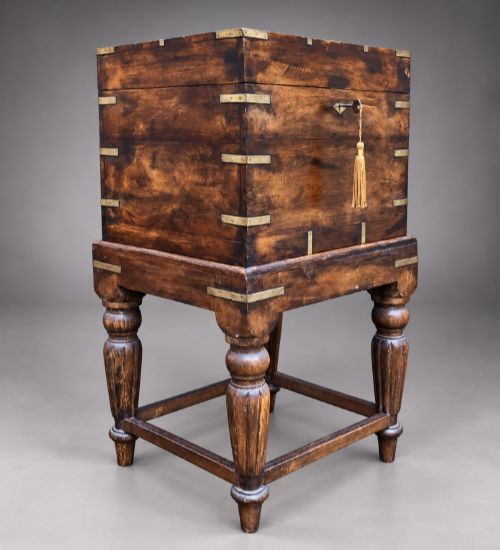
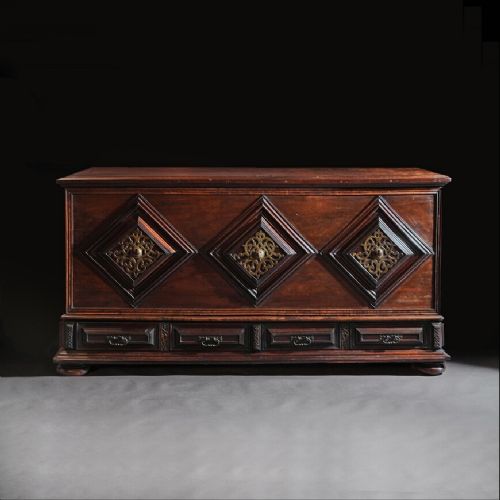
Brass Bound Wood Box
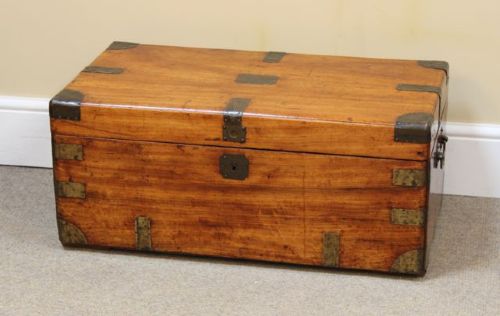
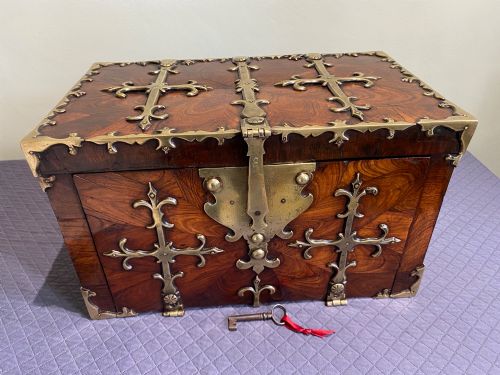
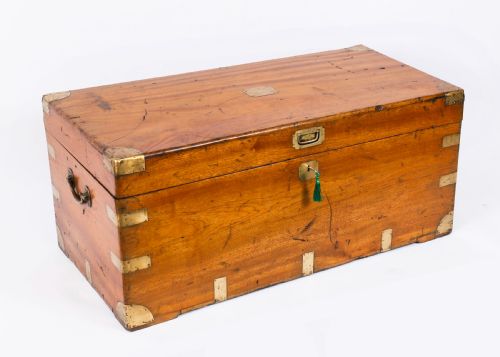
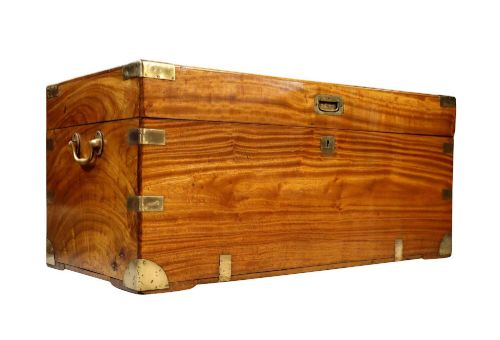
When you search for a brass bound wood box, you enter a world of campaign chests, writing slopes, and travel trunks built to survive long journeys.
Brass Bound Wood Box
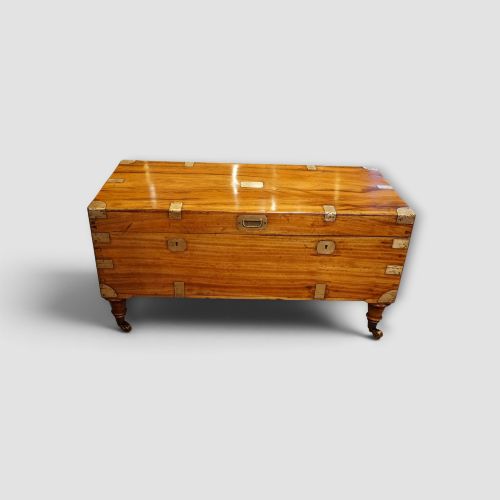
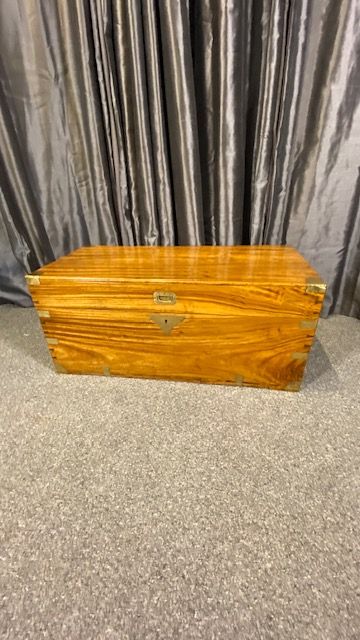
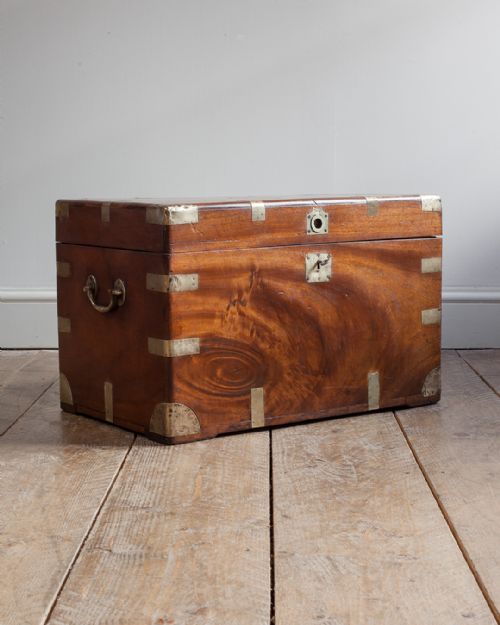
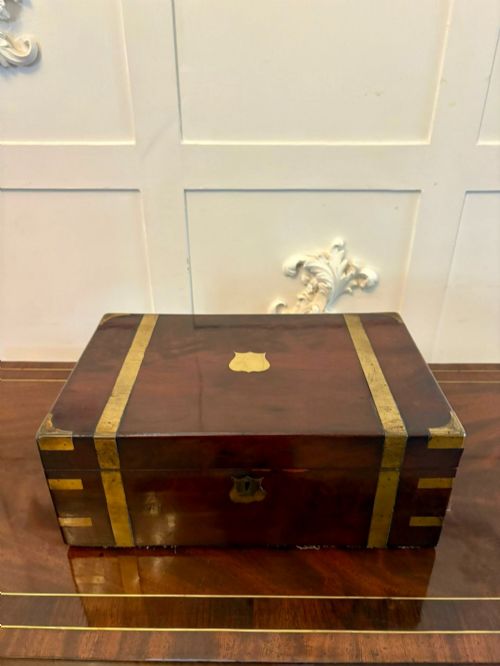
A brass bound wood box serves practical storage and travel needs, ranging from large campaign chests and blanket boxes to smaller writing slopes, vanity cases, and table boxes. These vessels accommodated personal belongings, documents, and valuables during transit across the British Empire and domestic journeys alike.
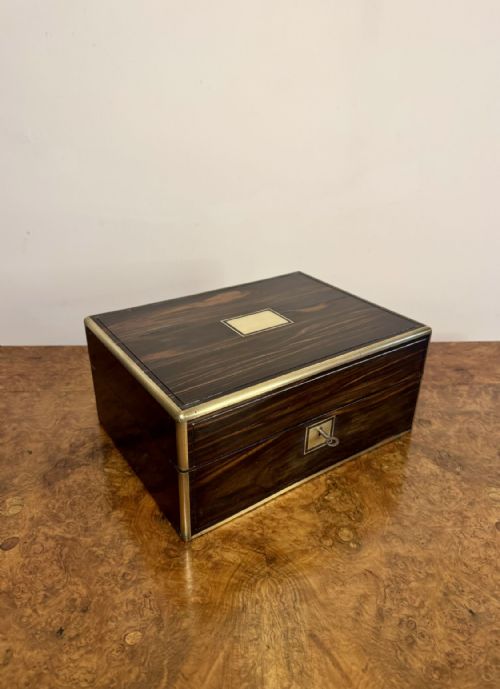
The most frequent examples encountered on this page are nineteenth-century camphor wood trunks and rosewood writing boxes fitted with brass corners and straps. Alongside these sit cellarettes, tea caddies, and jewellery boxes spanning from the seventeenth century through the Victorian era.
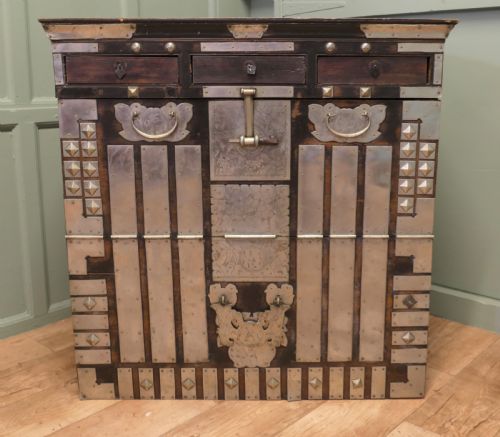
Origins stretch from English workshops to colonial centres including Anglo-Indian, Portuguese Colonial, and Chinese export hubs. Such pieces reflect the movement of military officers, traders, and administrators who required robust containment for their portable property.
Materials and Construction
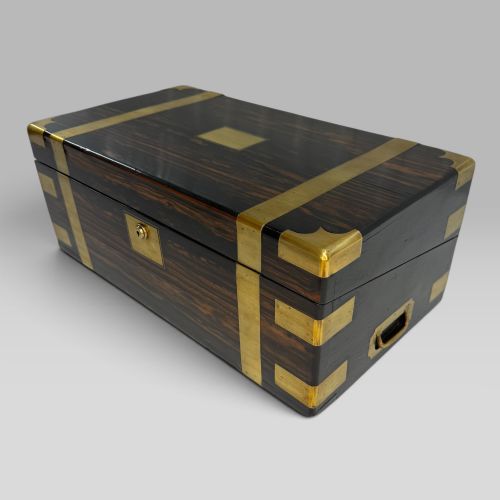
Makers utilised dense timbers selected for durability and resistance to warping or insects, principally camphor wood, rosewood, mahogany, and coromandel, occasionally incorporating kingwood, padouk, and teak. These woods provided a stable carcass capable of withstanding shifting climates during sea voyages.
Protection and structural rigidity came from brass banding, corner brackets, and strapping secured with flush-fitting screws or pins. This metalwork absorbed the impacts of loading and stacking while reinforcing the mitred or dovetailed joints of the wooden box.
Brass Bound Wood Box Retail Price Guide 2026
Typical asking prices for brass bound wood box among the pieces listed under this phrase on Sellingantiques today, from the lower quarter to the upper quarter. They describe what is for sale here now, not the wider market.
Several boxes arrive with their original working keys still functioning after nearly two centuries of travel.
Distinctions in Quality
Superior examples display precise carpentry with tight joints, well-fitted internal compartments, and substantial gauge brass work that sits flush with the timber surface. Lesser pieces often reveal simpler internal arrangements and thinner brass sheeting that lacks structural contribution.
H Mitchell
The Brass Bound Wood Box Glossary
- Campaign chest
- A modular chest of drawers or trunk designed to separate into distinct sections for ease of transport by military officers on campaign. These units typically feature recessed brass handles and corner binding.
- Writing slope
- A portable desk featuring a hinged, angled writing surface that folds down to enclose a storage well for paper and ink. Many examples include velvet inserts and specialised compartments for pens and nibs.
- Cellarette
- A lockable container or chest designed to hold bottles of wine and spirits safely during transport or dining use. They frequently appear in mahogany or padouk with internal partitions.
- Casket
- A small, highly decorative box used for holding jewels, documents, or precious items. Early versions often incorporate intricate metal mounts and fine timber veneers.
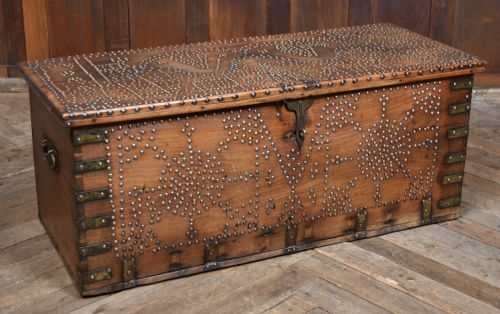
- Zanzibar chest
- A heavy storage chest originating from East African trade routes, characterised by brass stud decoration and striking strapwork. These pieces often employ camphor wood or padouk.
Brass Bound Wood Box: Frequently Asked Questions
What were brass bound wood boxes used for?
These boxes provided secure containment for clothing, correspondence, and valuables during travel by sea and land. Officers and merchants relied on them to protect delicate items from moisture and rough handling.
Smaller variants functioned as portable desks or dressing cases for daily use in temporary lodgings or permanent residences.
Why use camphor wood for campaign trunks?
Camphor wood naturally repels insects and resists damp conditions encountered during tropical voyages. Its distinct aromatic qualities helped preserve textiles and paper contents over long periods.
Cabinetmakers valued its stability and relatively light weight relative to its strength when building large transport chests.
How do you distinguish a writing slope from a jewellery box?
A writing slope opens to reveal an inclined writing surface alongside inkwell recesses and stationery storage. Jewellery boxes generally open to fitted trays and velvet-lined compartments designed for ornaments.
Both forms frequently share exterior brass banding and rosewood construction, requiring an inspection of the internal layout to confirm the primary function.
Where were Anglo-Indian boxes made?
Anglo-Indian pieces were produced in workshops across the Indian subcontinent for British residents and export markets. They combined traditional local timber species like padouk and shisham with European furniture forms.
Makers often incorporated local decorative techniques, including ivory inlay and elaborate brass studding, alongside standard campaign hardware.