



Brass Bound Teak Furniture
Brass bound teak furniture comprises robust campaign pieces designed for travel, offering utilitarian strength combined with rich timber and metal detailing.

Brass Bound Teak Furniture
When you search for brass bound teak furniture, you encounter sturdy portable items built for officers and travellers during the eighteenth and nineteenth centuries. These pieces were engineered to dismantle or withstand arduous journeys across colonies and campaigns.
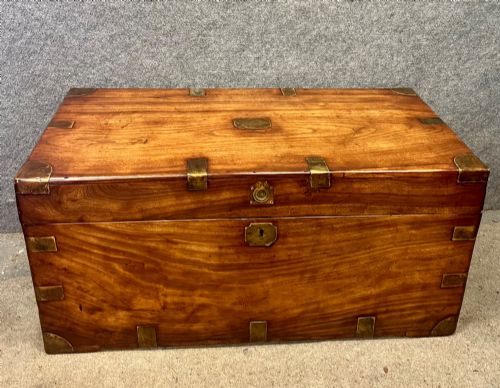
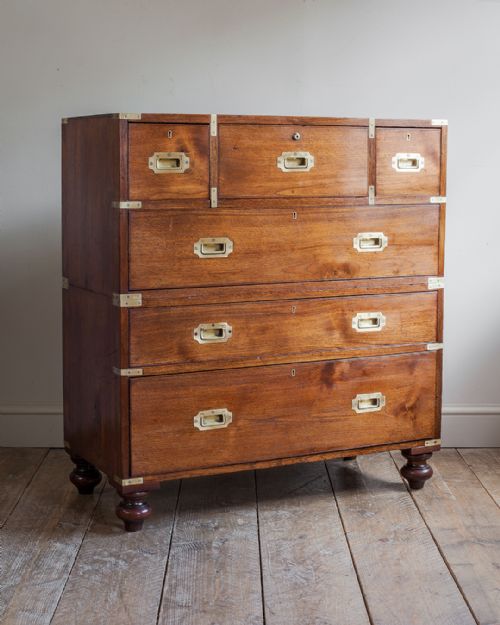
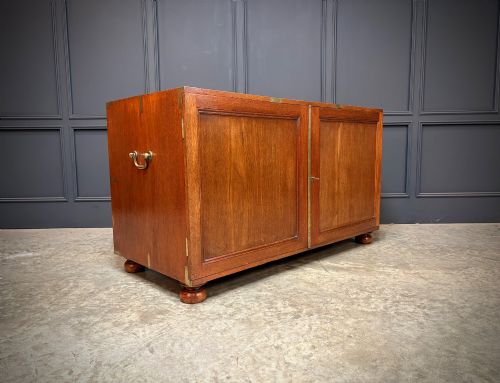
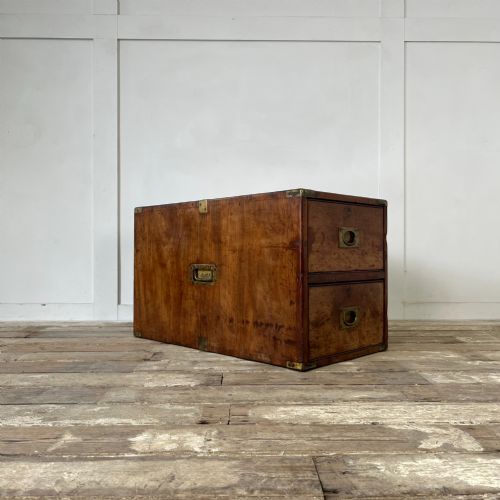
The selection centres heavily on military campaign chests of drawers, often constructed in two separate sections for ease of transport. Alongside these chests, you find trunks, side cabinets, secretaire bureaus, and desktop storage units.
Origins span Victorian military workshops, Anglo-Indian makers, and Dutch colonial outposts. Teak dominates the construction, frequently paired with contrasting brass corners and straps to protect the edges during transit.
How they were made
Construction relies heavily on dense, oil-rich teak combined with secondary timbers like mahogany and padouk. This dense timber resists humidity and warping, making it ideal for tropical climates and constant movement.
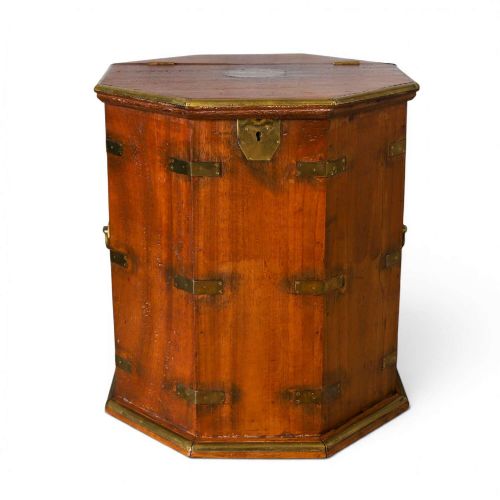
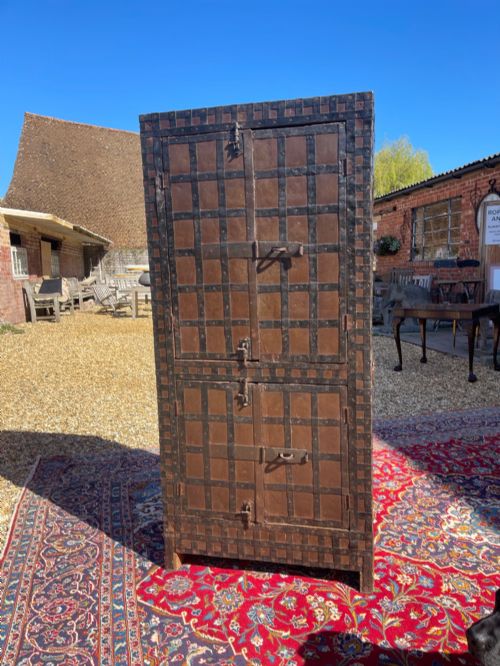
Corner brackets, strapwork, and flush-fitting recessed handles are fabricated from brass or sometimes iron. These metal reinforcements protect vulnerable joints and allow multiple sections to lock securely together without protruding handles catching on transit straps.
What varies in quality
Quality rests in the precision of the joinery and the integration of the brass hardware into the timber. Superior pieces feature tightly fitted dovetails, smooth-running drawers, and brass mounts countersunk flush with the surrounding wood.
The complexity of the interior fitted work also separates standard chests from finer examples. Secretaire drawers containing pigeonholes, small drawers, and leather-lined writing surfaces indicate higher-grade commissions intended for officers or merchants.
Army And Navy
The Brass Bound Teak Furniture Glossary
- Campaign chest
- A modular chest of drawers built in two or more stacking sections designed for military transport. These units feature inset brass carrying handles on the sides.
- Secretaire chest
- A chest of drawers featuring a pull-out top drawer with a drop-front revealing a fitted writing interior. This combines storage with a compact desk for field use.
- Teak
- A durable, resinous hardwood native to South and Southeast Asia that resists moisture and insect attack. Its natural oils give the timber a warm golden-brown tone.
- Flush handle
- A metal pull or ring inset into the surface of a drawer or door so it does not project outward. This prevents snagging during transit and packing.
- Anglo-Indian
- A descriptive term for furniture made in India during the British colonial period, often combining local dense timbers with European forms.
Brass Bound Teak Furniture: Frequently Asked Questions
Why are campaign chests built in two parts?
Two-part construction allowed heavy furniture to be divided into manageable loads for pack animals and shipping.
Each section fitted securely onto the one below using locking pins or brackets.
What is a secretaire chest used for?
The drop-front top drawer functioned as a writing desk while the lower drawers held personal belongings and paperwork.
This eliminated the need to carry a separate writing box on campaign.
How do I care for teak furniture?
Teak requires minimal maintenance due to its natural oils, benefiting from occasional light waxing.
Keep pieces away from direct heat sources to prevent timber shrinkage around the brass mounts.
Are all campaign chests made of teak?
While teak is the primary timber found in these portable pieces, makers also utilised padouk and mahogany.
Metals varied too, with brass providing corrosion resistance alongside occasional iron bracing.